Church of Saint Quentin: A Romanesque Parish Church in Tournai, Belgium
Site at a Glance
- Rating
- 4.4
- Popularity
- Very Low
- Country
- Belgium
- Primary era
- Medieval
- External website
- Open
- Eras represented
- Medieval, Early Modern, Modern
- Civilizations
- French
- Site type
- Religious
- Remains
- Church
On this page12 sections
History
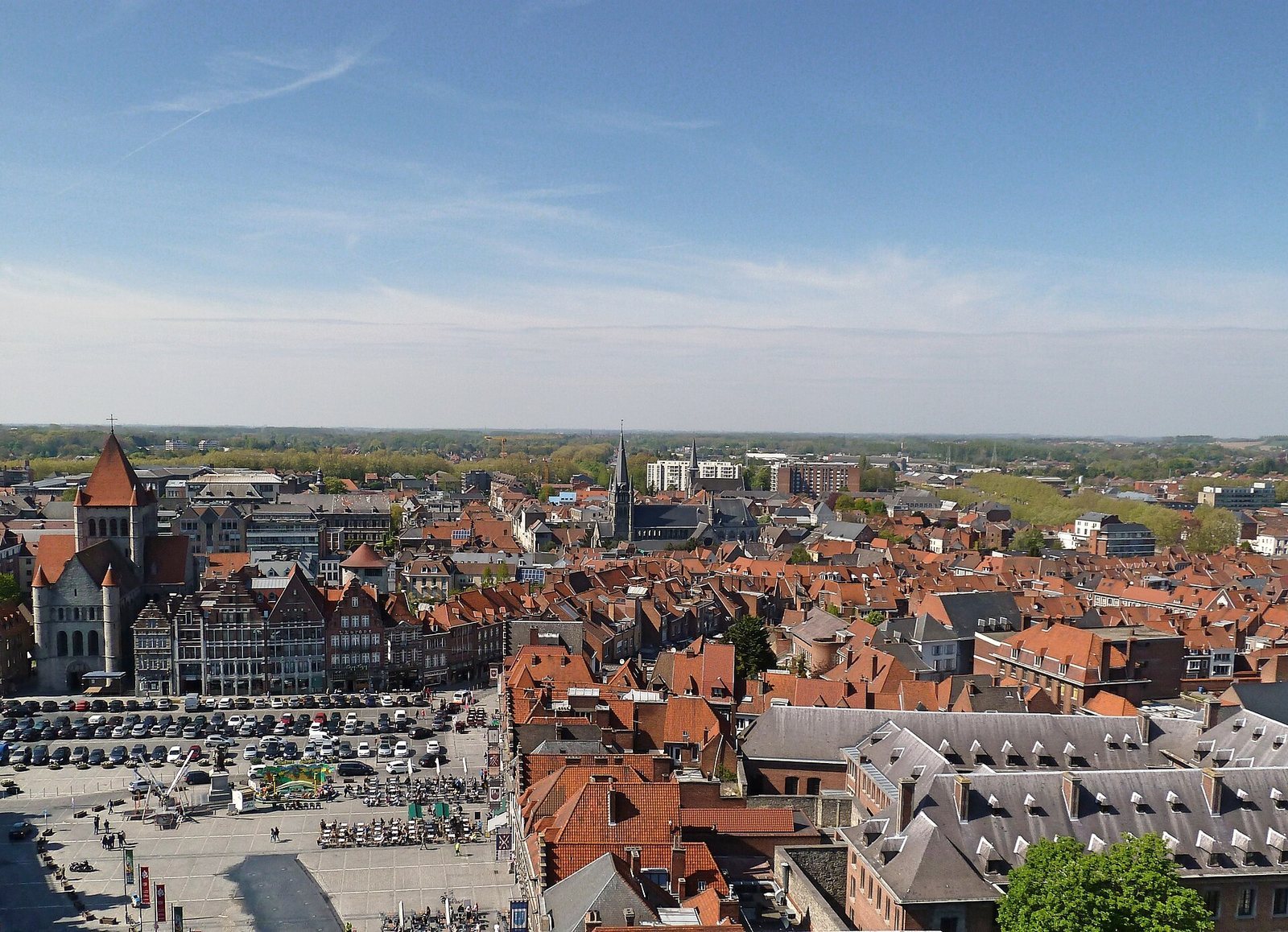
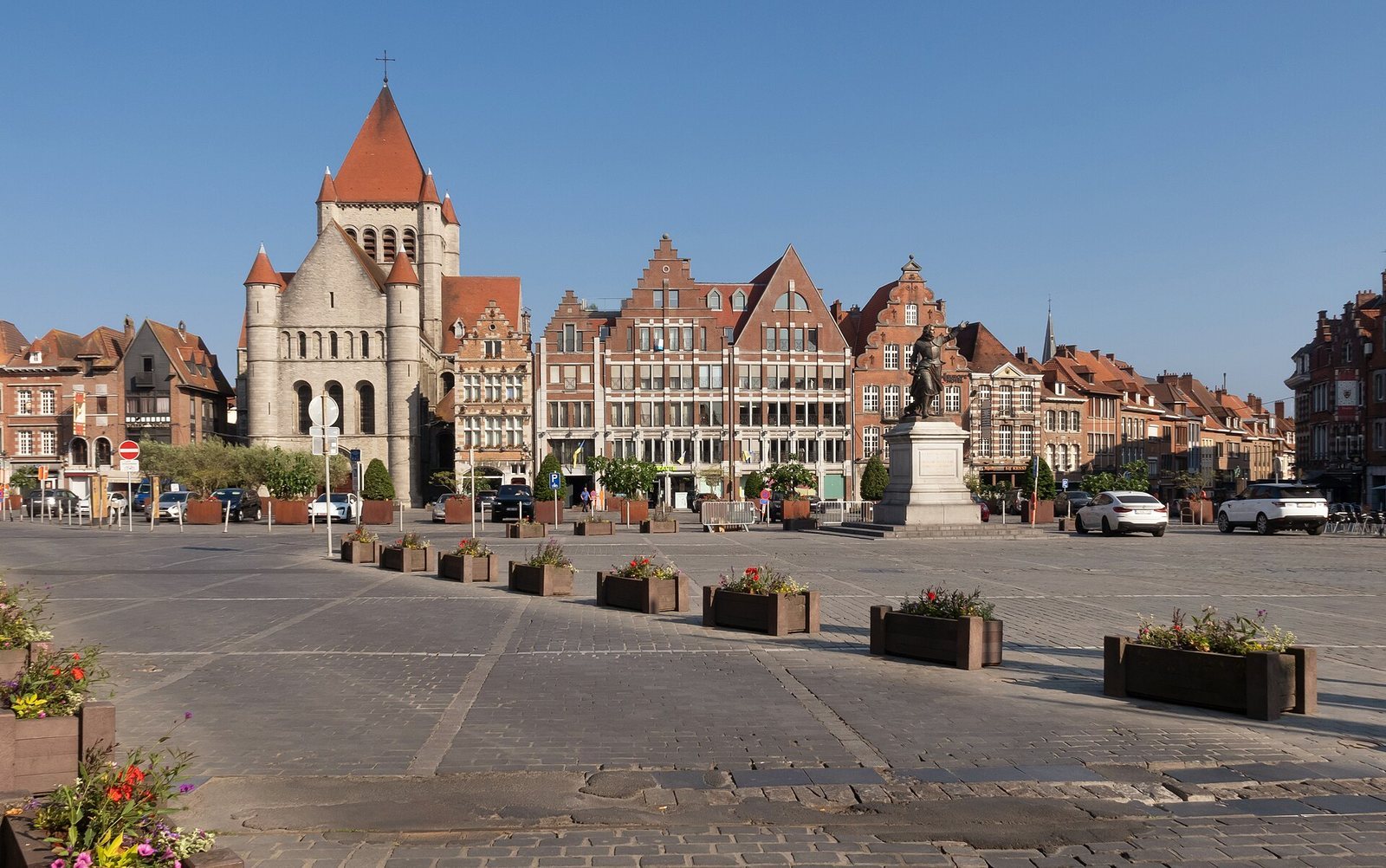
The Church of Saint Quentin is a Roman Catholic parish church in Tournai, Belgium, dedicated to Saint Quentin, an early Christian martyr traditionally associated with the third century. It stands at the far end of the Grand-Place, on a site associated with a large Gallo-Roman cemetery, and belongs to the Diocese of Tournai, the territorial district of the Catholic Church overseen by a bishop. The church is documented from the tenth century, while the present Romanesque building was constructed around 1200.
Origins and Romanesque construction
The church may have developed in connection with the earlier cemetery, although its documented history begins in the tenth century. The building created around 1200 had a nave, transept, chancel, and four side chapels. A transept is the cross-arm of a church plan, while the crossing is the space where the nave and transept meet. During the thirteenth century, the chancel and the arms of the transept were vaulted, introducing forms that stood between Romanesque architecture, with its substantial masonry and rounded arches, and the emerging Gothic style.
Late-medieval rebuilding
The chancel was rebuilt during the 1460s, with the work completed around 1469. The earlier side chapels were transformed into an ambulatory, a passage around the chancel, and three projecting chapels. Arcades in the Flamboyant Gothic style, a late Gothic style known for flowing and highly ornamental forms, separated the chancel from the ambulatory.
This rebuilding was partly financed by Pasquier Grenier, a Tournai tapestry maker and supplier to Philip the Good, Duke of Burgundy, and by Grenier’s wife, Marguerite de Lannoye. They paid for the columns supporting the chancel vaults and for the chapel behind the high altar. They established four weekly Masses there and were buried in the central chapel, where Grenier was interred in 1493. In 1475, Grenier also donated a tapestry series depicting the Seven Sacraments, the principal sacramental rites of the Roman Catholic Church. The series was later dispersed, and examples entered collections in New York, London, and Glasgow. It was subsequently found in England, and Grenier may appear in it with his family.
Nineteenth-century changes and wartime damage
The church was altered further in the nineteenth century under the architect Bruno Renard. Restoration followed in the early twentieth century under Constant Sonneville and François Ladavid. The building received protected heritage status in 1936.
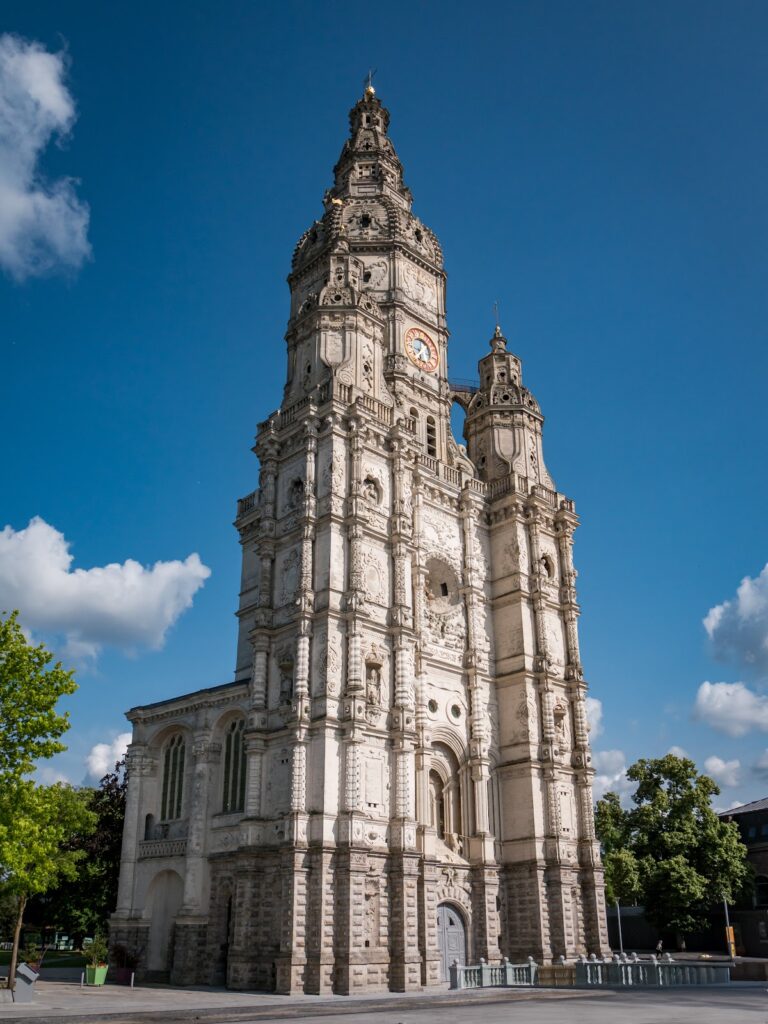
In May 1940, German bombing by the Luftwaffe severely damaged the church during the Second World War. Reconstruction after the war continued until 1968, when the church reopened for services. The present facade and tower belong to this reconstruction period, which gave the church much of its current external appearance.
Remains
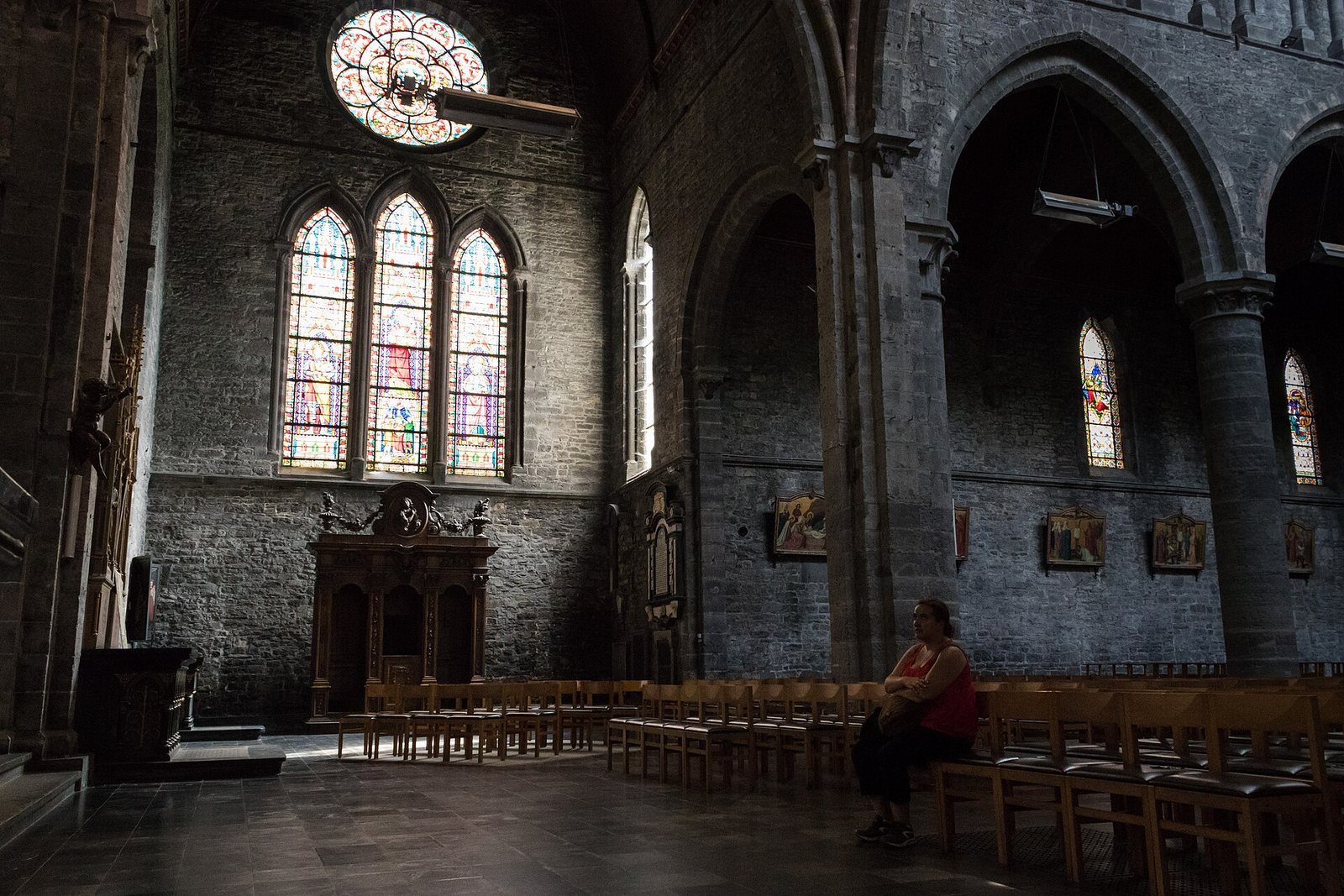
The surviving church is predominantly a Romanesque stone building with a tiled roof, organized around a four-bay nave, a large crossing, transept arms, and a two-bay chancel. Except for the nave and crossing, the interior is covered by rib vaults, ceilings supported by intersecting stone ribs. The transept and chancel vaults preserve forms associated with the transition from Romanesque to Gothic architecture.
Nave, crossing, and tower
Nave and crossing
The Romanesque nave is four bays long and ends at the large crossing. In the original building, the lowest windows were placed within deep arcades, while higher windows formed part of a gallery extending around the facade. Only some of the original chapels were vaulted. The present facade is a 1960s reconstruction in a neo-Romanesque manner.
Central tower
A square central tower rises above the crossing. The tower is described as dating from the thirteenth century and as having a double triforium, a narrow passage or arcaded gallery within an upper church wall. The tower now visible is a reconstruction from the 1960s, and the medieval church probably did not originally have this same form. A large G. Delmotte organ was installed in the right transept in 1987. It has three keyboards, a pedalboard, and thirty-six stops.
Chancel and chapels
Chancel and ambulatory
The two-bay chancel is enclosed by an ambulatory and three projecting chapels, the arrangement created during the late-medieval rebuilding. The chapel vaults carry murals, and the coats of arms of Pasquier Grenier and Marguerite de Lannoye remain discernible. A marble balustrade closing the chancel dates from the seventeenth century.
Chapel tomb
Two chapels stand between the nave and the transept. One contains the tomb monument of Jacques Castaigne, dated 1327. Its mourning figures survive but show considerable wear.
Annunciation sculptures
The Annunciation group comprises sculptures of the Virgin Mary and the archangel Gabriel. The Annunciation is the Christian episode in which Gabriel announces to Mary that she will become the mother of Jesus. Made in 1428, the figures are attributed to the Tournai sculptor Jean Delemer, while their painted decoration is attributed to Robert Campin, a major painter associated with Tournai and the early Netherlandish tradition. Approximately 1.80 metres high, they are carved from white Avesnes stone and reflect the influence of contemporary painting.
The sculptures were originally made for Tournai’s former Church of Saint Peter, which was demolished in 1821. They were installed in Saint Quentin on 25 March 2010 and have remained on display there since then. A major restoration completed in 2010 retained earlier interventions, including nineteenth-century heads, hands, and wings. Their colours and heads had also undergone more recent restoration. The group is regarded as an early and historically significant example of the Late Gothic sculptural style that later dominated sculpture in the Netherlands and much of Europe.