Santa Maria ad Ogni Bene dei Sette Dolori: A Baroque Minor Basilica in Naples
Site at a Glance
- Rating
- 4.6
- Popularity
- Very Low
- Country
- Italy
- Primary era
- Early Modern
- External website
- Open
- Eras represented
- Early Modern
- Civilizations
- Kingdom of Naples, Spanish
- Site type
- Religious
- Remains
- Basilica
On this page14 sections
History
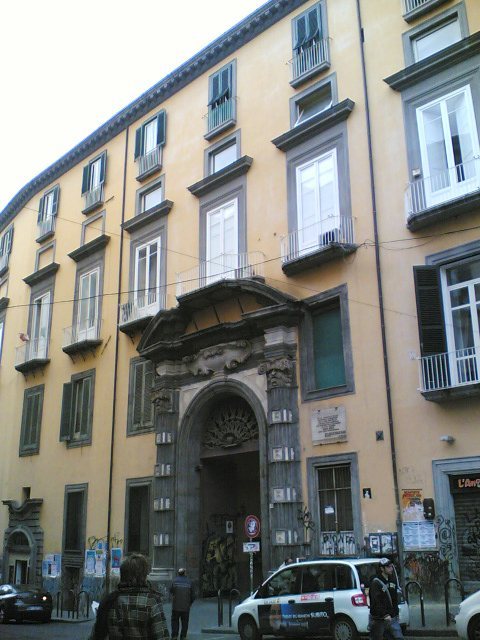
Santa Maria ad Ogni Bene dei Sette Dolori is a Roman Catholic church in Naples, Italy, in the Montecalvario district at the western end of the Spanish Quarters. Its origins reach back to 1411, when a shrine containing a statue of the Virgin Mary was transformed by local inhabitants into a rural chapel outside the city walls. Dedicated to Santa Maria ad Ogni Bene, the foundation is also attributed to Margaret of Durazzo. The church is now associated with devotion to the seven sorrows of Mary, the principal sufferings traditionally attributed to the Virgin through Christian scripture and tradition.
Origins and Servite administration
After the plague of 1516, the chapel and its statue came under the care of the Servites, a Catholic religious order devoted especially to the veneration of Mary as Our Lady of Sorrows. The Servites administered the site as a church and convent. In 1583, the convent was enlarged and partly rebuilt by the Servite architect Giovanni Vincenzo Casali. The same year saw the establishment of the Confraternity of the Crucifix at the complex, followed later by the creation of a parish in the church.
When the Servites left, the convent became the house of the Pious Workers, a separate Catholic congregation associated with parish and educational activity. They occupied it for 33 years. In 1630, the nobleman Francesco Magnocavallo founded a separate church named Santa Maria Ognibene, after which the Servites returned to their original establishment.
Expansion and Baroque transformation
The church was enlarged in 1640 according to a design by the engineer Giovanni Cola Cocco. Between 1731 and 1735, it underwent an extensive remodeling in the Baroque style under Nicola Tagliacozzi Canale. His eighteenth-century work included the design of the chapel decoration and helped shape the interior that survives today. In 1732, the Italian composer and musician Giovanni Battista Pergolesi became the church’s chapel master. A maiolica-tiled floor was installed in 1752, using maiolica, a form of tin-glazed decorated earthenware.
Parish restoration and later history
During the nineteenth century, the convent was suppressed and the Servites were expelled. They took the statue of Our Lady of Sorrows with them. During the cholera epidemic in Naples in 1836, the parish recovered the statue and placed it on the main altar in 1837. The parish was restored in 1849, and Pope Pius IX raised the church to the status of a minor basilica, a papally granted rank recognizing a church’s religious, historical, or pastoral importance.
From the final decades of the twentieth century, the former convent was converted into civilian housing. The complex was damaged by the 1980 Irpinia earthquake, and the damage was still reported as unrepaired in 2018. Later additions also altered the building, including the blocking of two windows on the right side of the nave. The church forms part of the UNESCO World Heritage designation for the Historic Centre of Naples, inscribed in 1997.
Remains
Church exterior and layout
Façade and approach
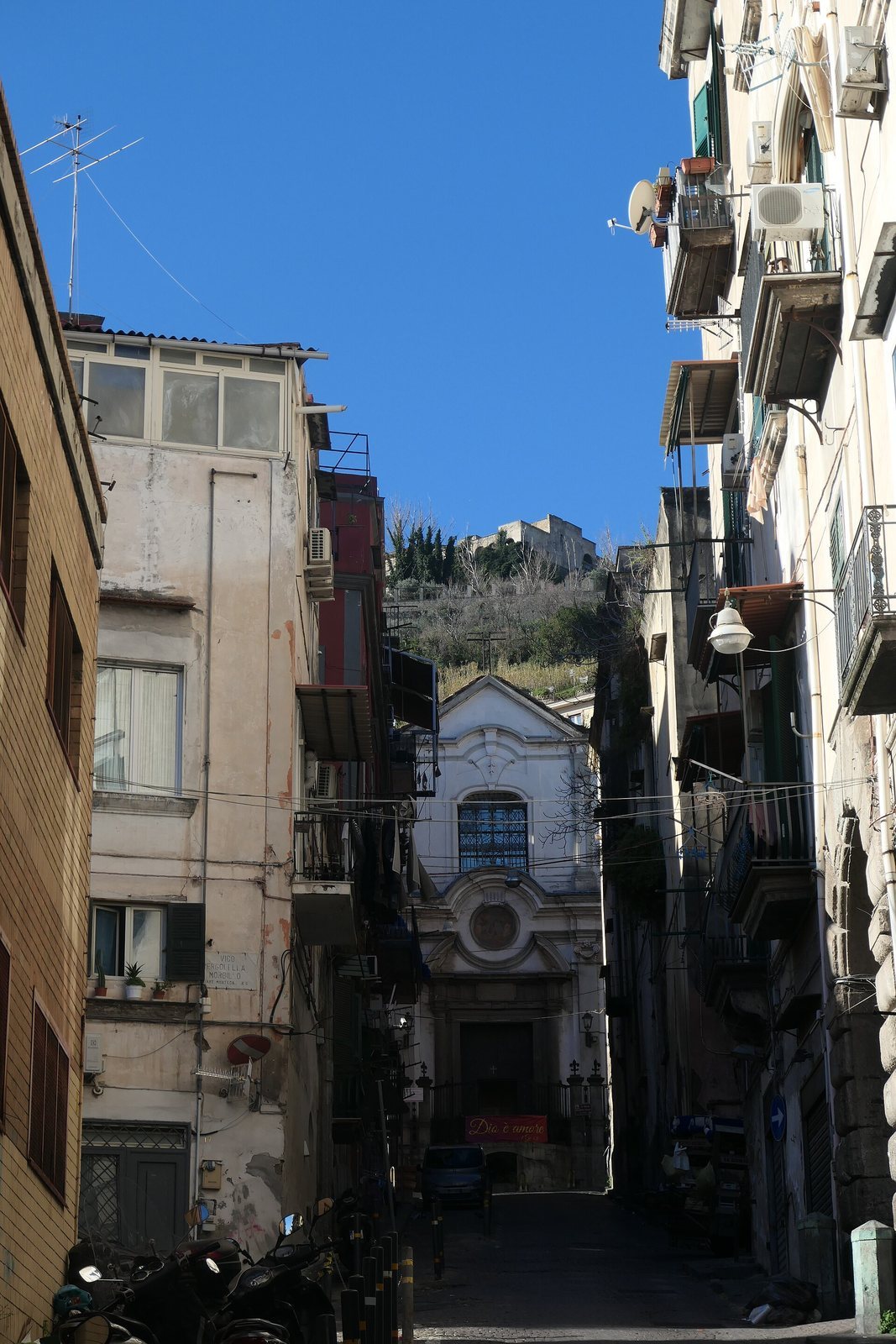
The church stands on a hill overlooking Spaccanapoli, the modern name for the straight route crossing Naples’ historic center along the line of an ancient Greek-Roman decumanus. It faces the former convent of Santissima Trinità delle Monache, and the site was historically known as a belvedere because of this view. An external staircase of piperno leads to the two-order façade. Piperno is a hard volcanic stone traditionally used in Naples for stairways, portals, architectural details, and paving.
The portal, also made of piperno, dates from the end of the sixteenth century. Above it is a roundel containing a fresco of Our Lady of Sorrows, which provides the visual focus of the Baroque façade.
Nave and chapels
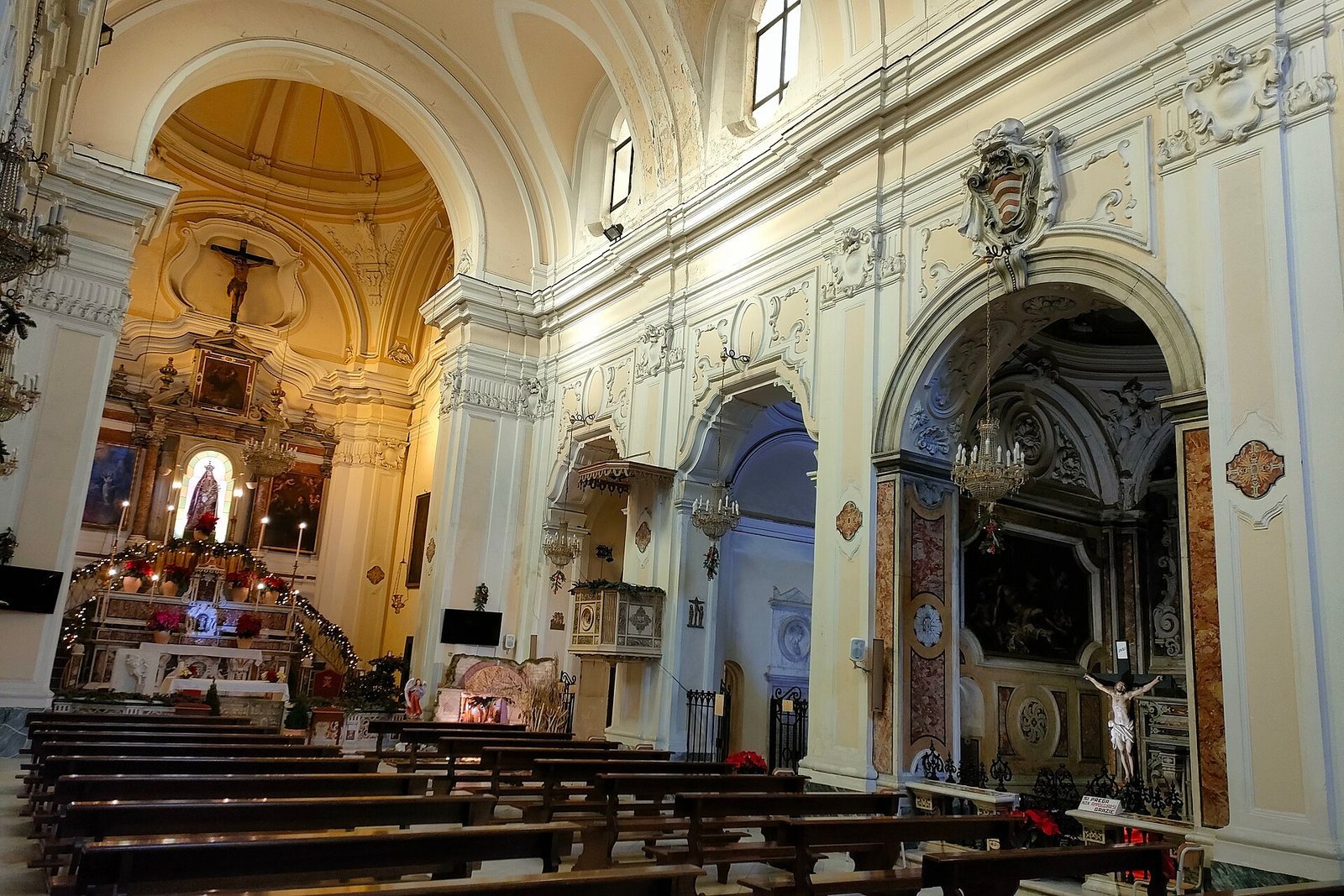
The interior is organized around a nave, presbytery, apse, and dome. Five side chapels flank each side of the nave. Their unusually shaped arches and the vault carry stucco decoration designed in the eighteenth century by Nicola Tagliacozzi Canale. The presbytery, the area around the main altar reserved for the clergy, forms the liturgical center of the interior.
Carafa di Maddaloni Chapel
The Carafa di Maddaloni Chapel occupies the center of the right side of the nave. It was commissioned as the burial chapel of Duchess Carlotta Colonna. The family coat of arms appears above the entrance arch and again on the funerary slab set in the middle of the floor. Two late-Baroque paintings by Giacomo del Pò, The Journey to Calvary and The Dead Christ, accompany a dome decorated with angels. An oil painting by an unknown artist, executed on slate, is set into the chapel’s polychrome-marble altar.
Main altar and paintings
The eighteenth-century main altar is made of inlaid polychrome marble. Its ciborium door, belonging to the liturgical container for consecrated hosts, is decorated with mother-of-pearl inlay. Two side ramps lead to a wooden statue of the Virgin attributed to Giacomo Colombo. Above the altar ensemble is Paolo Finoglio’s painting of the Eternal Father.
The church preserves paintings associated with Fabrizio Santafede, Filippo Vitale, Paolo Finoglio, Giacomo del Pò, Paolo De Matteis, Domenico Antonio Vaccaro, Nicola Maria Rossi, Carlo Malinconico, Francesco Saverio Altamura, and other unidentified artists. Works connected with the chapels include Paolo De Matteis’s Christ Healing the Lame Saint Pellegrino Laziosi, paintings by Carlo Malinconico’s son, an attributed Baptism by Silvestro Buono, and an attributed Saint Francis of Paola by Marco Cardisco.
Near the entrance to the sacristy hangs a horizontally oriented painting of Saint Jerome attributed to Filippo Vitale. The sacristy also preserves fragments of fresco decoration and a marble lavabo with maiolica facing attributed to Ignazio Giustiniani. A painting of Saint Sebastian by Mattia Preti formerly stood in the fourth chapel on the right. It remained in the church until 1974 and is now held by the Museo di Capodimonte.
Burial of Cosimo Fanzago
Cosimo Fanzago, the Italian sculptor and architect associated particularly with the Baroque art and architecture of Naples, was buried in the church in 1678. The presence of his actual remains there is uncertain.
Confraternity oratory and former convent
Oratory of the Seven Sorrows
The Oratory of the Confraternity of the Most Holy Crucifix of the Seven Sorrows adjoins the church. It can be reached through the third chapel on the left or through an independent entrance in Vico della Congregazione dei Sette Dolori. Its principal artwork is Michele Ragolia’s Elevation of the Cross, placed on the main altar.
Former convent cloister
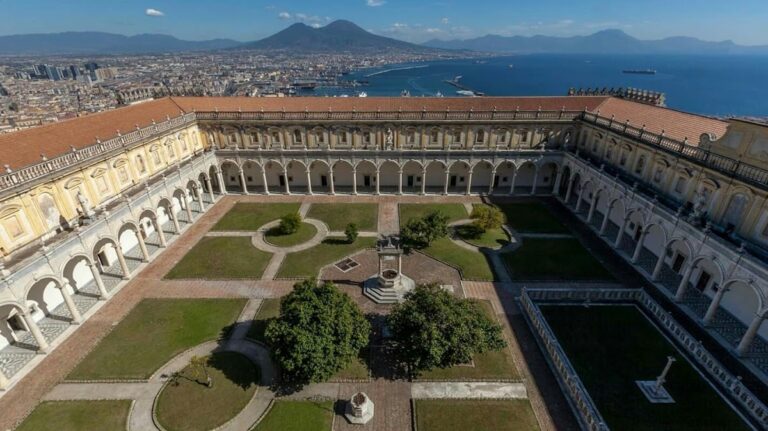
The former convent contains a cloister with three arcades on each side, arranged on two levels. The cloister is divided into separate parts and is damaged, reflecting the altered and partly residential condition of the former convent complex.