Basilica in Szczepanów: A Roman Catholic Sanctuary and Minor Basilica in Poland


Site at a Glance
- Rating
- 4.7
- Popularity
- Low
- Country
- Poland
- Primary era
- Modern
- External website
- Open
- Eras represented
- Medieval, Modern
- Civilizations
- Habsburg, Kingdom of Poland
- Site type
- Religious
- Remains
- Basilica
On this page10 sections
History
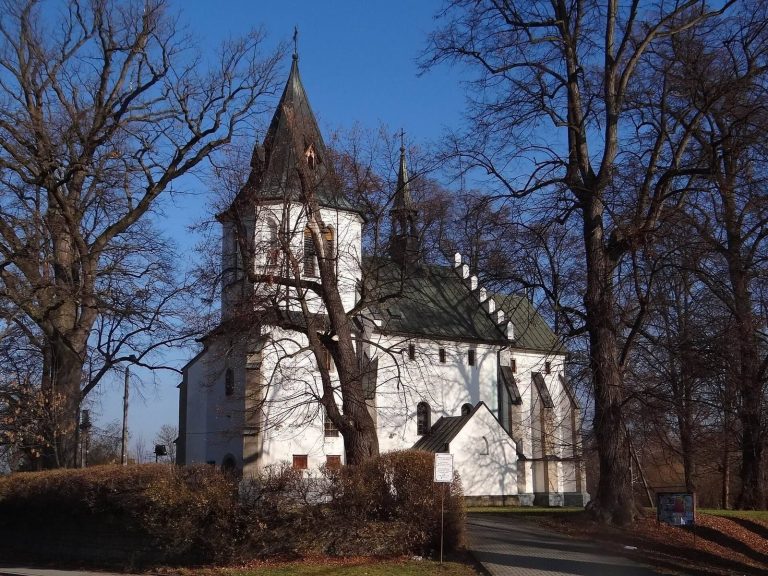
The Basilica in Szczepanów is a Roman Catholic sanctuary in Szczepanów, Poland, dedicated to Mary Magdalene and Saint Stanislaus, the eleventh-century bishop of Kraków and one of Poland’s principal patron saints. The present church was built between 1911 and 1914 in the Neo-Gothic style, incorporating an older fifteenth-century church as its right side aisle. The sanctuary belongs to the Tarnów Diocese, received protected cultural-monument status in 1989, and was proclaimed a minor basilica by Pope John Paul II in 2003. This papal title recognizes the church’s importance in Catholic religious life and is distinct from the architectural use of the word “basilica.”
The Fifteenth-Century Church
An earlier brick church was built at the site around 1470 on the initiative of Jan Długosz, a Kraków canon, chronicler, and historian. The Kraków mason Marcin Proszko carried out the work. Local tradition holds that the building replaced a wooden church erected at the request of Saint Stanislaus’s parents. The older church remained beside the new building and was incorporated into it as the right side aisle.
Construction, Fire, and Rebuilding
The larger church was erected from 1911 to 1914 on the initiative of Father Prelate Szczepan Kossecki, the parish priest. Its architect was Jan Sas-Zubrzycki of Kraków. During construction, the former freestanding bell tower and a side aisle added in the seventeenth century were demolished.
Shortly after construction ended, the First World War began. On 23 November 1914, wartime hostilities caused a fire in the church’s older section. The fire damaged the roof, wooden ceiling, and historic interior furnishings. Reconstruction took place between 1925 and 1927 under Father Marcin Dybiec, with the cooperation of a Restoration Committee. Auxiliary Bishop Edward Komar consecrated the rebuilt church on 26 May 1930. Some historic furnishings from the older church were rescued and transferred to the Diocesan Museum in Tarnów.
Remains
The Older Gothic Church
The fifteenth-century church is a small, single-nave Gothic brick building with a three-sided chancel. Its chancel has a cross-ribbed vault, a vaulted ceiling supported by intersecting ribs, while the nave retains a flat wooden ceiling. As part of the later basilica, the building now forms the right side aisle.
Traces of fifteenth- or sixteenth-century wall paintings survive on the east wall. The western entrance has a stone Gothic stepped portal, with coats of arms above it and elsewhere inside the church. A Gothic portal leads to the lost former sacristy, while a Renaissance portal opens to the newer sacristy. The latter bears the Ostoja and Dębno coats of arms, heraldic emblems associated with Polish noble families.
The Neo-Gothic Basilica
The newer church is a larger, three-aisled basilica built of unplastered brick. Some of its later bricks were machine-made. Its exterior combines Neo-Gothic and eclectic elements, while the interior vaults use cross-ribbed construction. A tall, five-storey tower rises above the entrance portal. The church has one tower and two bells, cast in 1519 and 1534.
Altars and Interior Features
Main Altar
Jan Sas-Zubrzycki designed the main altar. Its central image shows Saint Stanislaus, flanked by statues of Saint Peter and Saint Paul. Above the image is a Piast eagle, the emblem associated with Poland’s early ruling dynasty. Scenes from the life of Saint Stanislaus appear at the sides, while the base of the altar mensa contains four biblical scenes of offerings made to God.
Side Altars and Pulpit
The left aisle contains a Neo-Baroque altar dedicated to the Sacred Heart of Jesus. In the right aisle, within the older church, stands a Late Baroque altar dedicated to Our Lady of Perpetual Help. It dates from the eighteenth or nineteenth century and was transferred from the parish church in Bochnia. A pulpit between the chancel and nave, at the triumphal arch, is decorated with bas-reliefs of the four Evangelists.
Paintings and Organ
M. Makarewicz executed the wall paintings between 1959 and 1961. The organ has 30 stops and two manuals, adding a substantial musical installation to the church’s furnishings.