Saint Maximilian Kolbe Church in Binowo: A Medieval Catholic Filial Church
Site at a Glance
- Rating
- 4.9
- Popularity
- Very Low
- Country
- Poland
- Primary era
- Medieval
- Eras represented
- Medieval
- Civilizations
- Duchy of Pomerania, Holy Roman Empire
- Site type
- Religious
- Remains
- Church
On this page6 sections
History
Medieval origins
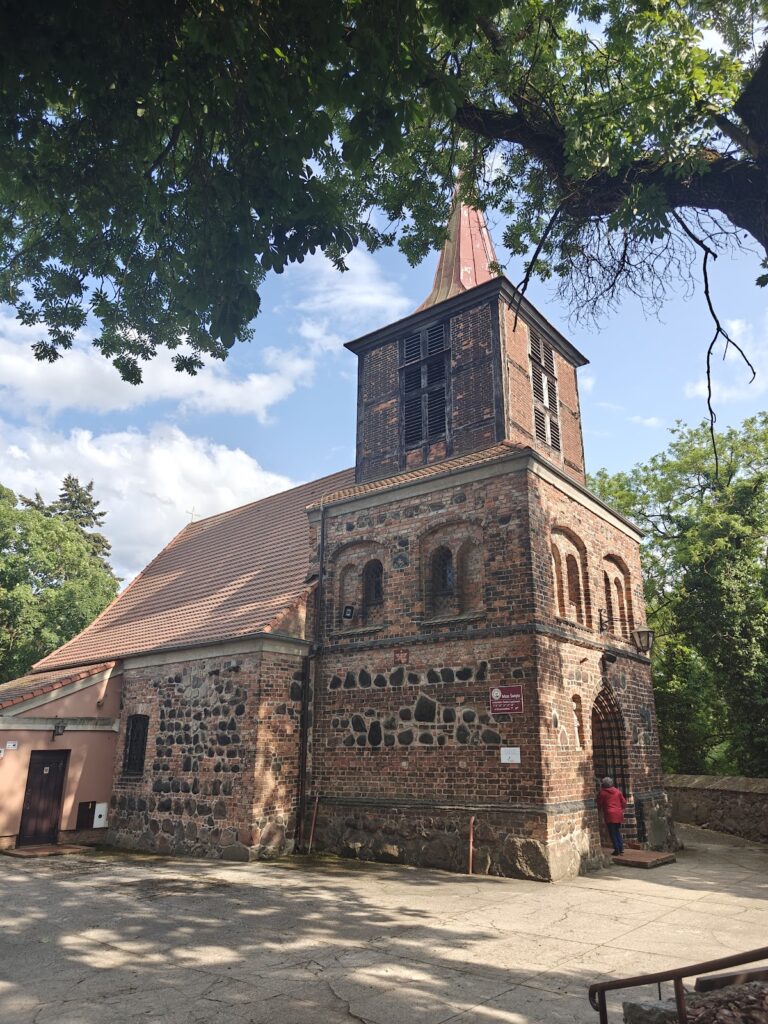
Saint Maximilian Kolbe Church is a Catholic filial church in Binowo, Poland, dating from the late fourteenth century. A filial church is a subordinate church served by a larger parish rather than the principal parish church. The building belongs to the parish of the Holy Apostles Peter and Paul in Szczecin-Podjuchy and is dedicated to Saint Maximilian Kolbe, a Polish Conventual Franciscan friar and Catholic martyr who died at Auschwitz during the Second World War and was canonized in 1982.
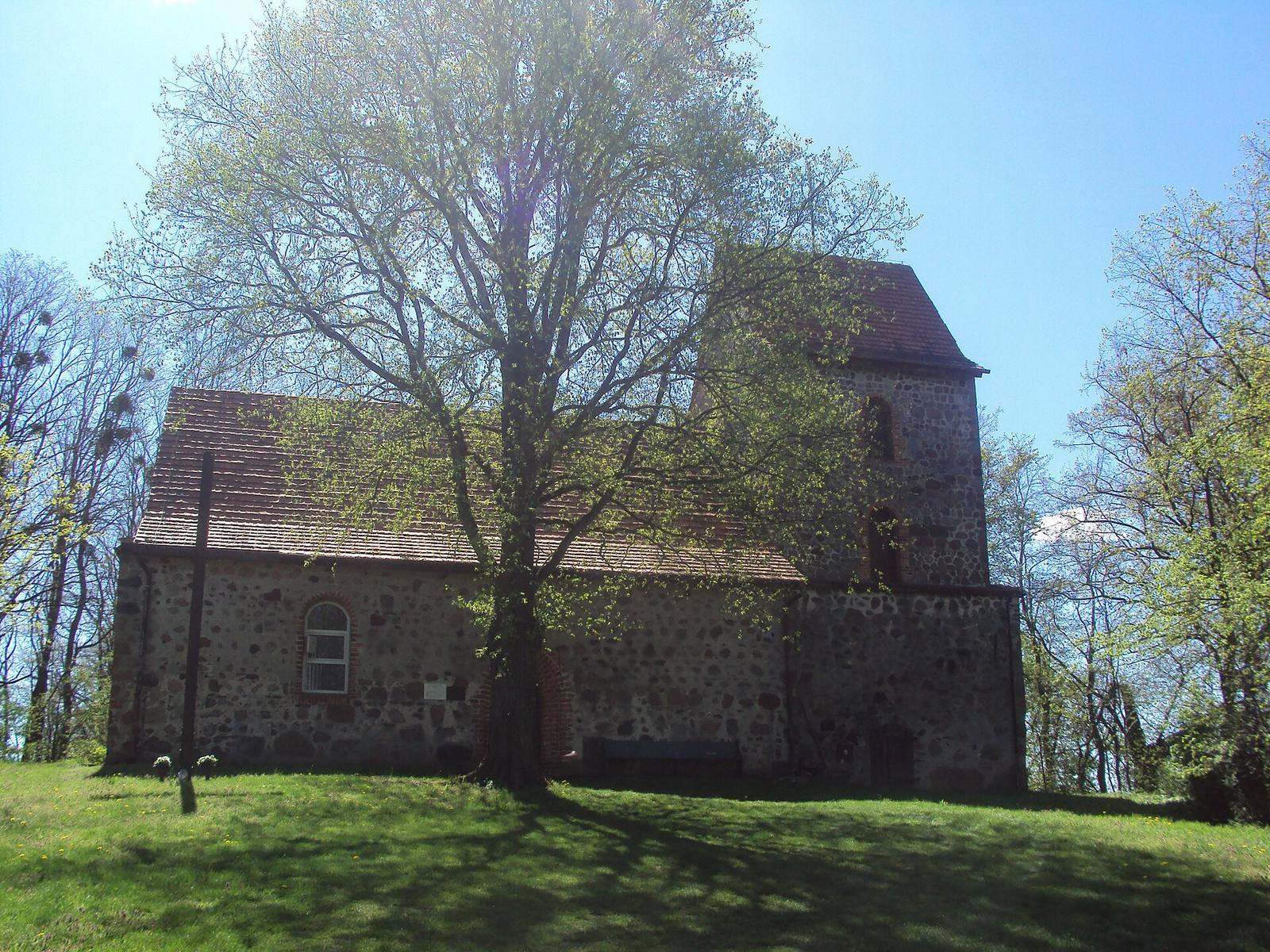
The church was entered in the heritage register under number A-1000 on 26 July 1979. A cemetery beside the building was laid out in the first half of the nineteenth century and is partly enclosed by a stone wall.
Destruction and rebuilding
After 1945, the church fell into ruin. It was rebuilt between 1979 and 1982, after which it was dedicated as a Catholic church on 7 November 1982 by Jan Gałecki, auxiliary bishop of Szczecin-Kamień. The rebuilding established the church’s present role as a place of Catholic worship while retaining elements of its medieval structure.
Remains
Church building
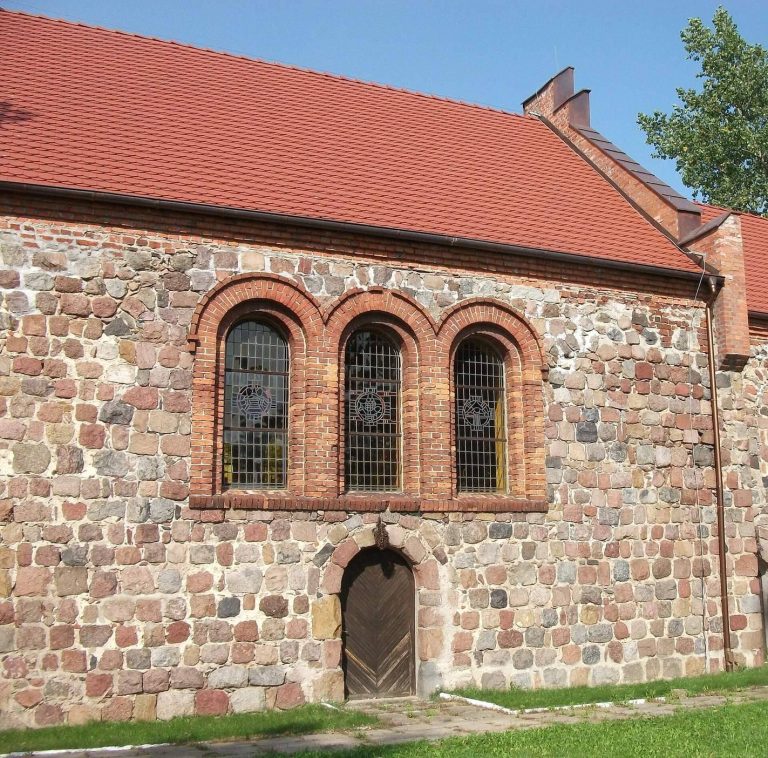
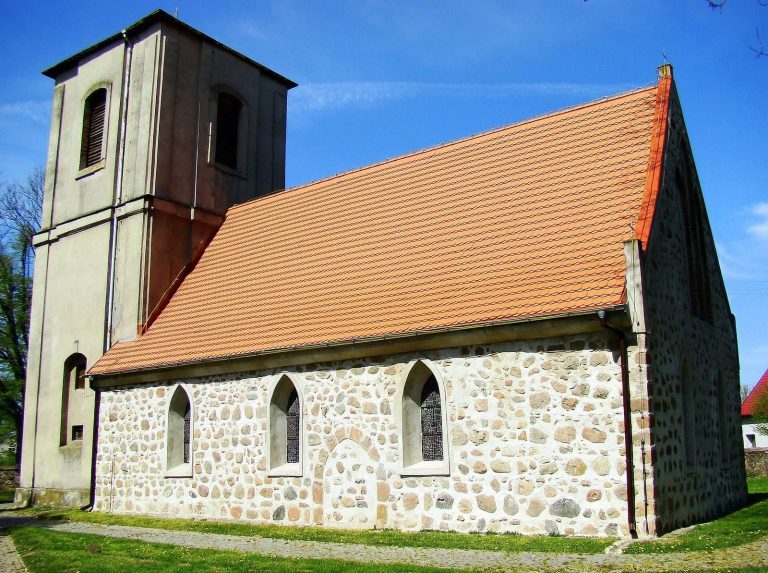
The church stands on a slight elevation in the centre of Binowo. Its quadrangular plan is formed from stone and brick, with a quadrangular tower closing the building on the west. The tower has a gabled roof topped by a cross. On the north side, a pointed-arch Gothic entrance portal made of brick survives. A Gothic pointed arch is formed by two curves meeting at a point.
The east wall is strengthened by two later buttresses and retains a pointed-arch window. Its gable is decorated with blind arches, which are recessed decorative arches that do not open into passages. Inside, a modern wooden ceiling has a broken profile, while the presbytery, the area around the main altar reserved for clergy, ends in a straight wall. A sacrarium, a special sanctuary basin or drain used for water associated with sacred rites, has also survived.
Cemetery and medieval altar
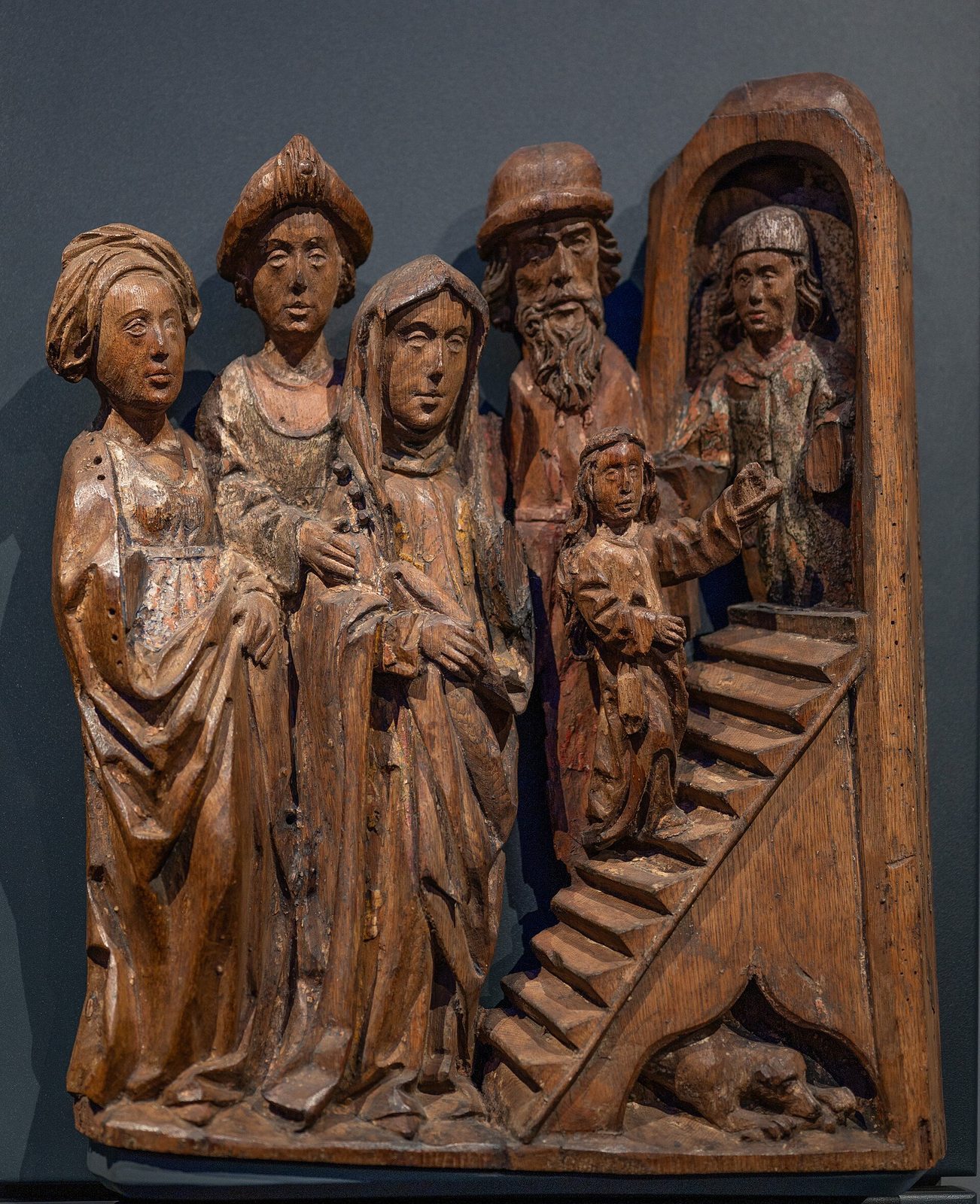
The adjoining cemetery belongs to the nineteenth-century phase of the site and remains partly bounded by its stone wall. The church’s medieval altar was transferred to the National Museum in Szczecin in 1901 by the pastor then serving at Binowo. Made around 1510 by an anonymous artist from a West Pomeranian workshop influenced by Lübeck art, the altar was a triptych, meaning an altarpiece with a central panel and two wings. Its oak figures have lost their original polychromy, or multicoloured surface paint.
The altar’s central scene shows the family of Mary, the mother of Jesus. Its wings present episodes from the lives of Mary and Saint Anne, traditionally regarded as Mary’s mother, together with Joachim, her father: the rejection of Joachim’s offering, the meeting at the Golden Gate, Mary’s entry into the Temple, and the Marriage of Mary. The figural scenes are displayed in the National Museum’s permanent exhibition The Mystery of Light: Medieval Art in Pomerania, while the altar case is kept in storage.