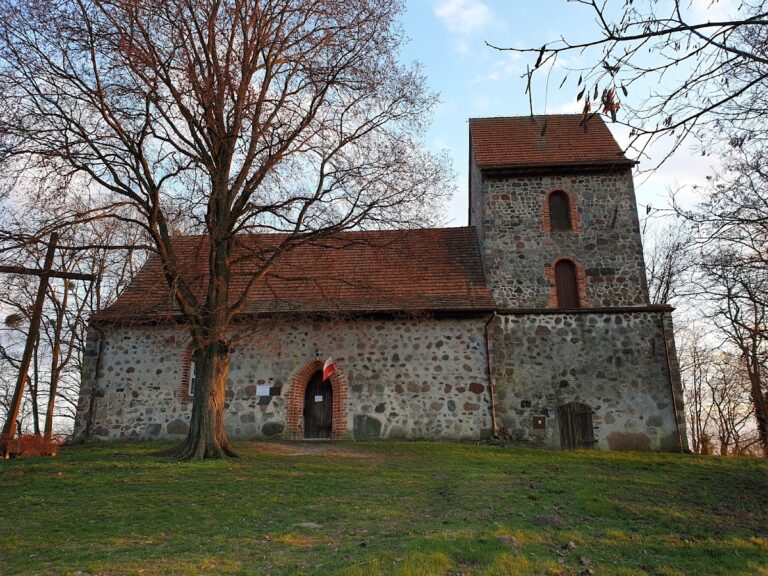
Immaculate Conception Church in Szczecin Dąbie: A Gothic and Neo-Gothic Parish Church


Site at a Glance
- Rating
- 4.5
- Popularity
- Low
- Country
- Poland
- Primary era
- Modern
- External website
- Open
- Eras represented
- Medieval, Modern
- Civilizations
- Duchy of Pomerania, German, Holy Roman Empire
- Site type
- Religious
- Remains
- Church
On this page16 sections
History
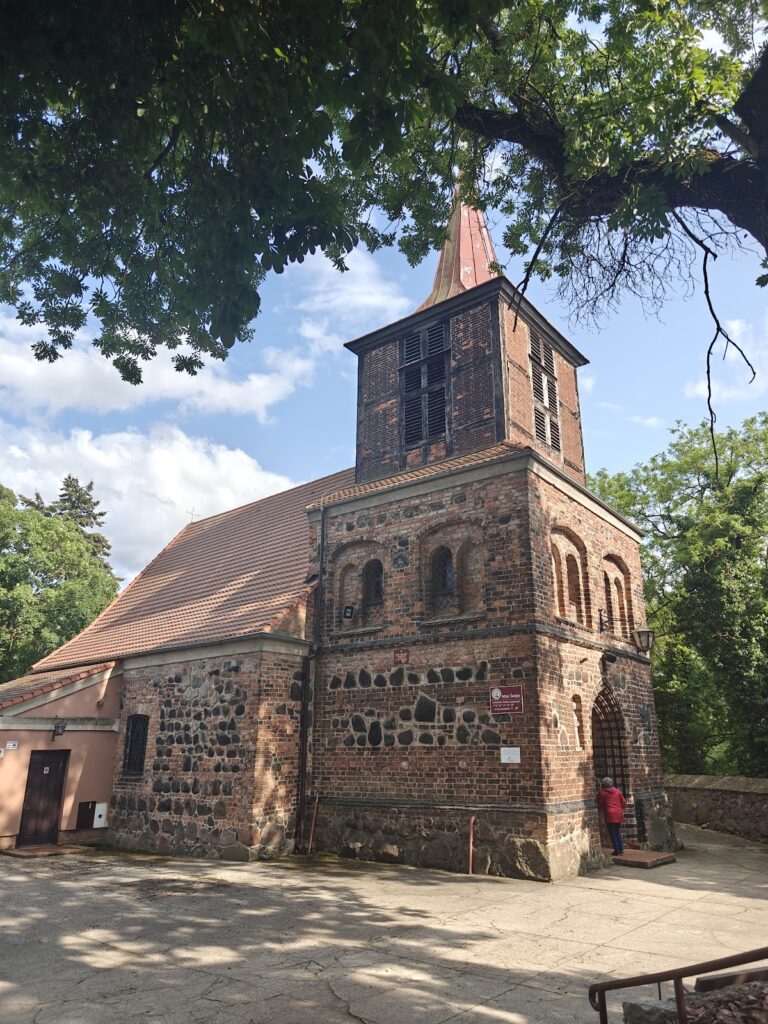
Immaculate Conception Church in Szczecin Dąbie, Poland, is the oldest church of the former town of Dąbie, later incorporated into Szczecin. Its origins reach back to the thirteenth century, when a church dedicated to the Virgin Mary began to rise in 1268 in the Gothic period. The church now serves as the parish church of the Assumption of the Blessed Virgin Mary and is dedicated to the Immaculate Conception of the Blessed Virgin Mary, whose liturgical feast is celebrated on 8 December. Its original dedication was to Saint James the Elder, one of the apostles, as at the present Szczecin cathedral.
Medieval Foundation
In 1182, Bogusław I, a medieval duke of Pomerania, transferred the estate then known as Damba to the Cistercian monastery at Kołbacz. The Cistercians were a Western Christian monastic order associated with monasteries and the management of their estates. In 1260, Barnim I founded a benefice for the parish planned at Dąbie. A benefice was an endowed source of income supporting a church office or ecclesiastical institution.
Construction of a church dedicated to the Virgin Mary began in 1268 under the direction of the parish priest Herman, using granite stone. References from the early fourteenth century confirm the church’s presence as the town developed. The first building was a small rural wooden church. The growth of Dąbie later led to its replacement by a larger three-aisled Gothic hall church of brick and stone, with a tower and chancel. A hall church has aisles approximately as high as its central nave, while the chancel is the part reserved for the altar and clergy.
Fires, War, and Nineteenth-Century Rebuilding
The church was taken over by Evangelicals in 1534. Evangelicals were Protestant Christians shaped by the Reformation. Fires in 1540, 1592, and 1652, followed by the effects of Swedish invasions and the Prussian wars, repeatedly damaged the structure. During the seventeenth century, the tower received a very tall cap. Lightning struck it in 1863, causing a fire that destroyed a large part of the building.
Between 1864 and 1866, the church was rebuilt to a Neo-Gothic design by the architect Karl Brecht. Parts of the medieval walls were retained, while the upper sections, chancel, chapels, pillars, and vaulting were newly constructed. The rebuilding gave the church much of the form and interior character visible today.
War Damage and Restoration
The church suffered damage in 1945, including destruction affecting the upper termination of the tower and the stained-glass windows. It was blessed on 12 December 1945. Postwar work cleared the building and recreated damaged polychrome decoration, including sculptural motifs on the arcades. Polychromy means painted architectural or sculptural decoration.
The tower was repaired from 1973 to 1976. Work on the walls and interior followed between 1977 and 1981, restoring the appearance of the Neo-Gothic furnishings, including the altar, pulpit, choir galleries, and organ. Józef Hermanowicz’s firm from Gorzów carried out building and repair work. Antoni Juszczak’s workshop from Poznań undertook the interior Gothic Revival work and painting under the supervision of Dean Czesław Wich. The church was consecrated on 19 December 1982. It entered the heritage register as number 162 on 28 August 1956.
Remains
Building and Tower
The present church is a three-aisled, six-bay hall built primarily of brick. It is approximately 50 metres long and 20 metres wide, with a three-sided chancel and a square tower aligned with the western facade. The main nave rises 16.5 metres high. The tower reaches 75.6 metres and incorporates some medieval masonry from the tower that stood before the fire of 1863. From the postwar period until 12 January 2008, it was the tallest church tower in Szczecin, when the reconstructed cap of Szczecin’s Cathedral of Saint James was installed.
Altars and Pulpit
Main Altar
The Neo-Gothic main altar is richly formed with gable tracery, finials, numerous pinnacles, rosettes, and quatrefoil motifs. Sculptures of saints occupy its outer faces and the bases of its gables. The central section contains The Resurrection by Carl Gottfried Pfannschmidt, who lived from 1819 to 1887. Its light color scheme corresponds with the rest of the church interior.
Side Altar
The Neo-Gothic side altar is arranged in three sections. An image of the Holy Trinity by an unknown artist occupies the centre, while figures of saints stand in the outer sections. A large finial and numerous pinnacles crown the upper part, and a Neo-Gothic rosette fills the central gable. Walenty Trzciński’s firm in Poznań made the altar in 1880.
Pulpit
The richly decorated pulpit follows the same Neo-Gothic style as the altars. Its canopy has pinnacles and tracery, while the pulpit is covered with oil-painted polychromy coordinated with the other furnishings.
Organ and Bells
Organ
In 1866, the Szczecin organ builder Barnim Grüneberg constructed and installed a mechanical-action organ with 26 stops, designated opus 87. A mechanical-action organ connects its keys and valves directly through mechanical parts. The instrument stands on an organ gallery. Its Neo-Gothic case carries polychrome decoration, gilded ornament, figurative cornices, pinnacles, trefoils, quatrefoils, and three rosettes. The specification was later partly altered, and some stop knobs were permanently disconnected or blocked.
Bells
The tower holds three large cast-iron bells and two smaller signal bells made by the German foundry Ulrich & Weule. The smallest of the three large bells is used daily.
Earlier Furnishings
Medieval Altar Fragments
Elements of the former furnishings are preserved in the National Museum in Szczecin. They include early-sixteenth-century oak reliefs from the main altar, depicting the Lamentation, the Entombment, and groups of the apostles Bartholomew, Simon, Andrew, Paul, Thomas, and James the Elder. A local workshop carved the reliefs.
Pietà
The museum also preserves an oak Pietà dating from 1520. A Pietà depicts Mary mourning over the dead Christ. A Szczecin workshop made the sculpture under the influence of Westphalian art, and it was originally covered with polychromy.