St. Johann Baptist: A Late Gothic Parish Church in Germany
Site at a Glance
- Rating
- 4.7
- Popularity
- Very Low
- Country
- Germany
- Primary era
- Medieval
- External website
- Open
- Eras represented
- Medieval, Modern
- Civilizations
- Duchy of Bavaria, Holy Roman Empire
- Site type
- Religious
- Remains
- Church
On this page7 sections
History
Late Gothic origins and expansion
St. Johann Baptist is a Roman Catholic parish church in Truchtlaching, Germany. Built between 1432 and 1435 in the Late Gothic period, the church was originally a single-nave building. Its dedication recalls John the Baptist, the early Christian preacher who baptized Jesus.
During the second half of the fifteenth century, a south aisle incorporating the tower was added. This alteration changed the original church into a hall church, a form in which the nave and aisles have broadly similar interior heights and create a unified space. The nave was extended westward by one bay in 1956, bringing it to four bays.
Parish history and musical development
St. Johann Baptist belongs to the Traunstein deanery and the Archdiocese of Munich and Freising. It forms the Seeon parish association with St. Aegidius in Seeon and St. Thomas and St. Stephan in Seebruck.
The church received its first organ in 1847, built by Georg Schmid of Eggenfelden. In 1890, Franz Borgias Maerz of Munich replaced that instrument with an organ containing ten stops. The church is included in Seeon-Seebruck’s official list of protected architectural monuments under designation number D-1-89-143-68.
Remains
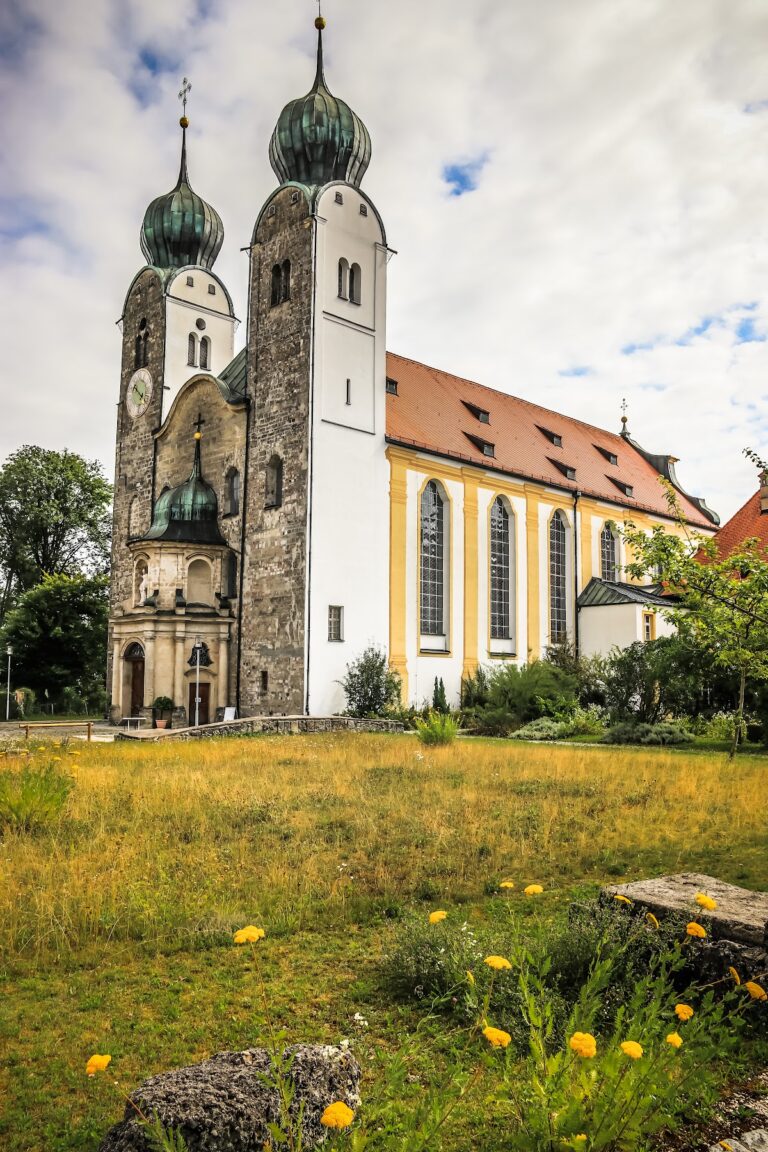
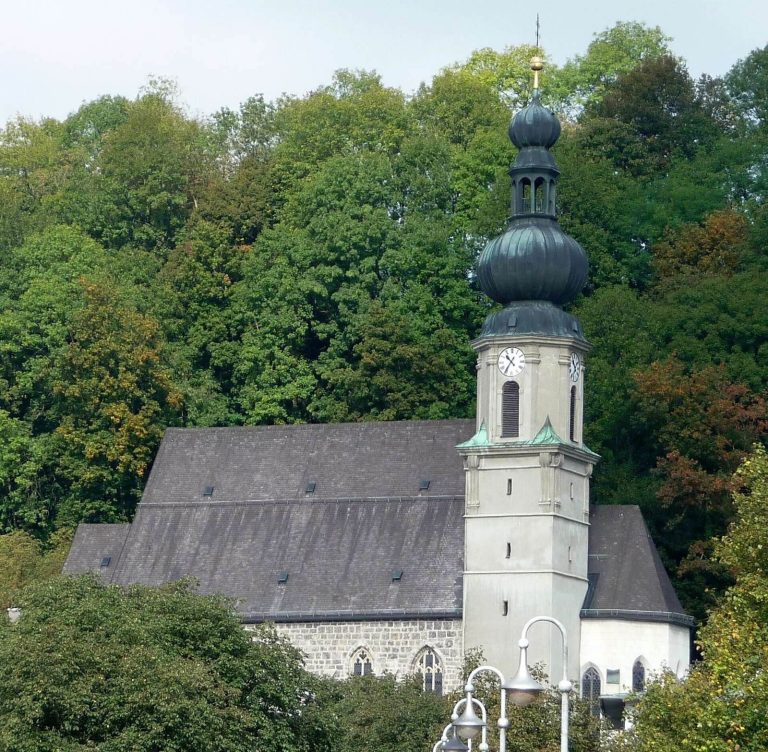
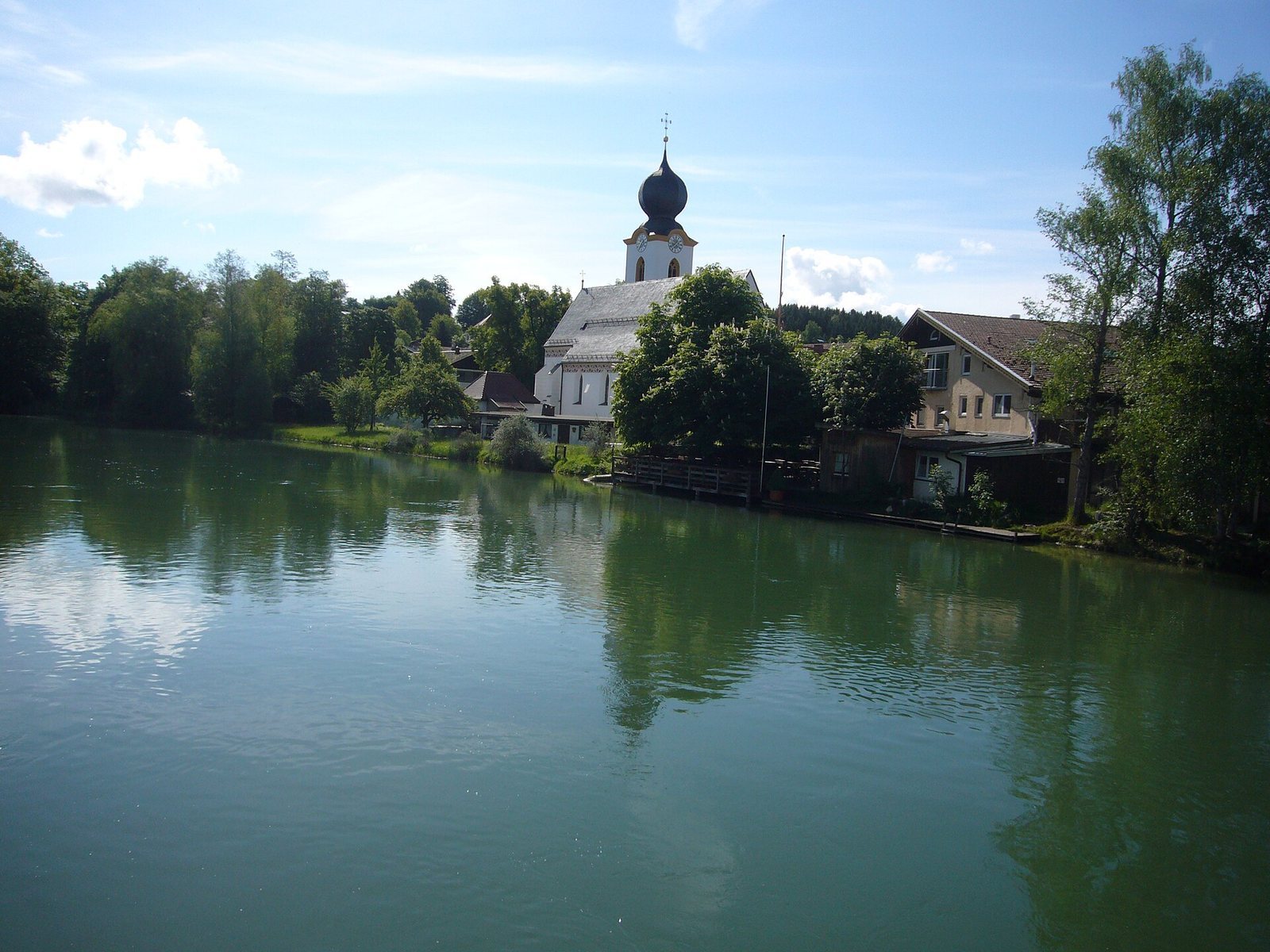
The surviving church consists of a nave, a recessed choir ending in an exterior five-eighths termination, and a tower beside the choir. The five-eighths termination is a polygonal end formed by five sides of an imagined eight-sided figure. The tower is topped by an onion dome, while its upper storey contains the clock and bell frame. Its ground floor serves as the sacristy.
Gothic structure and vaults
The nave is covered by a net vault, a Gothic vault whose ribs form a network pattern, and the choir has a similar vault carried on corbels. The south aisle contains a star vault with ribs arranged in a star-like pattern. A rib vault, supported by projecting structural ribs, covers the tower’s ground floor.
Altar and religious furnishings
The principal furnishing is a winged altar made in 1947 by the German artist Roland Friederichsen, who lived from 1910 to 1992. Modelled on Gothic art, the altarpiece has hinged panels that can be opened or closed. Its central group represents the risen Christ, with John the Apostle on his right and John the Baptist on his left. These three figures came from the former altar.
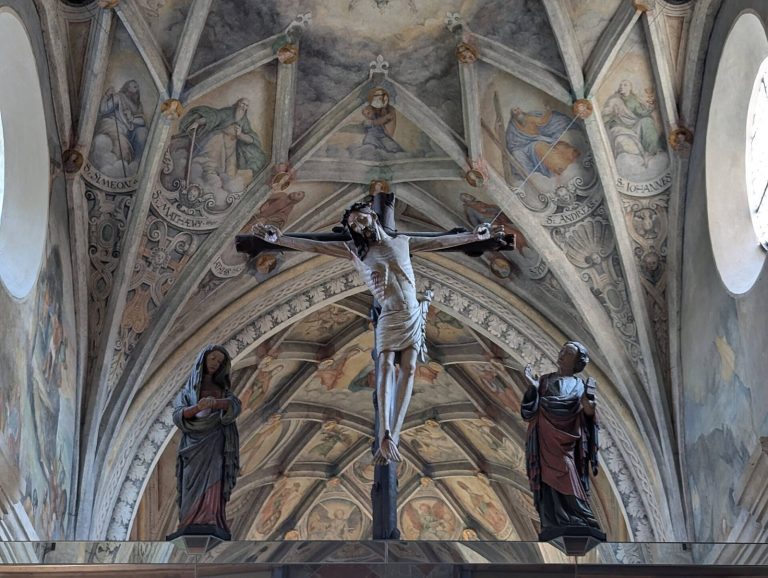
The altar wings carry reliefs of biblical scenes. The upper left panel shows the Visitation of Mary, with the baptism of Jesus in the Jordan below it. On the right wing, the Crucifixion appears above Mary and the Apostle John beneath the cross. The doors of the lower section of the two-storey tabernacle show the Annunciation in relief. A crucifix stands above the tabernacle, and the upper ornamental structure contains a statue of the Archangel Michael between two smaller angels.
Organ and bells
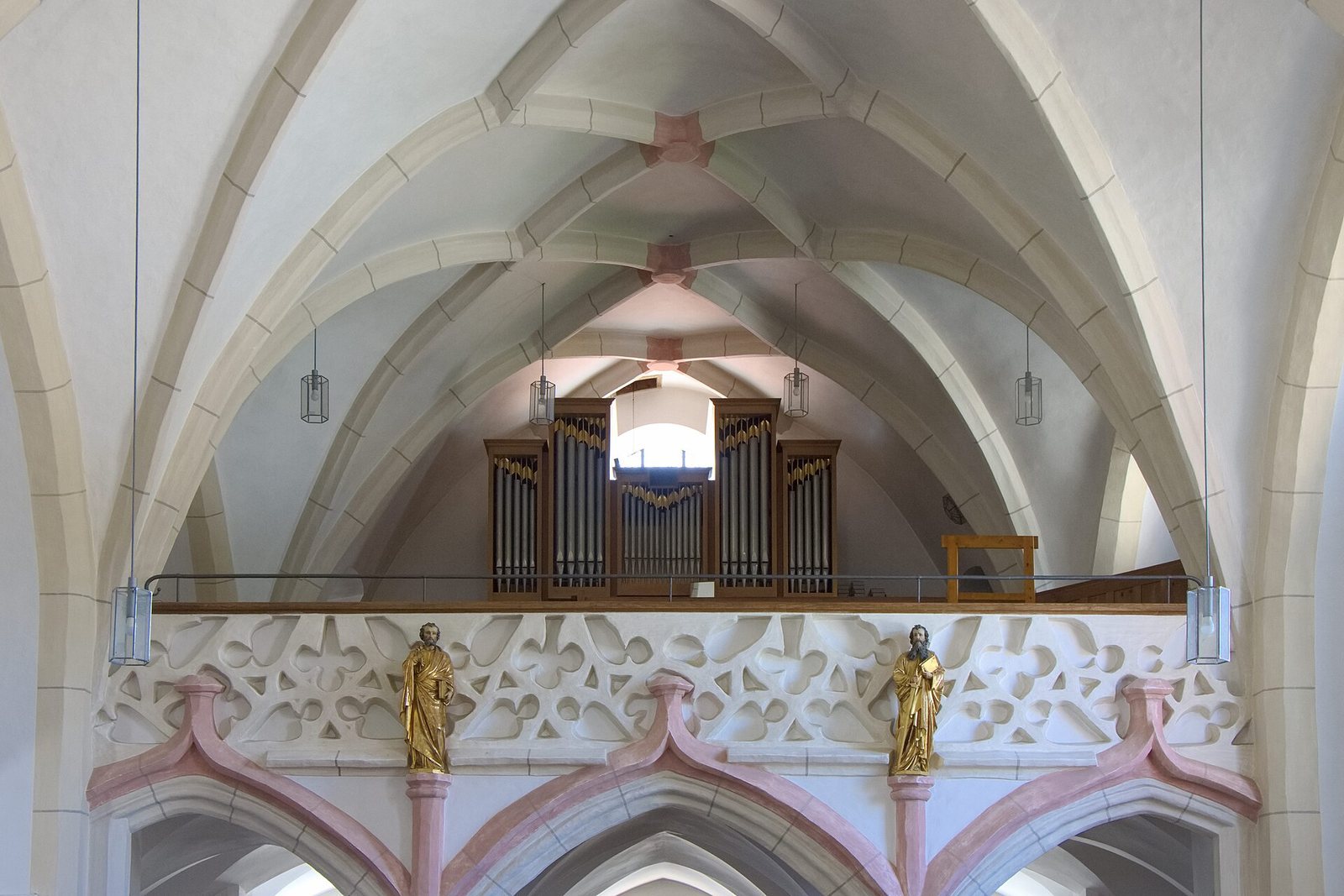
The present organ stands on the western gallery of the nave. Anton Staller of Grafing built it in 1980. The instrument has fifteen stops, two manuals, and a pedal. Its entirely mechanical slider-chest action uses sliders in the wind-chest to open or close the air supply to individual stops.
Four bells hang in the tower from straight wooden yokes within a wooden bell frame. Their arrangement is associated with a Salve Regina motif.