Eidsberg Church: A Medieval Protestant Parish Church in Norway
Site at a Glance
- Rating
- 4.6
- Popularity
- Very Low
- Country
- Norway
- Primary era
- Medieval
- External website
- Open
- Eras represented
- Medieval, Early Modern, Modern
- Civilizations
- Norwegian
- Site type
- Religious
- Remains
- Church
On this page6 sections
History
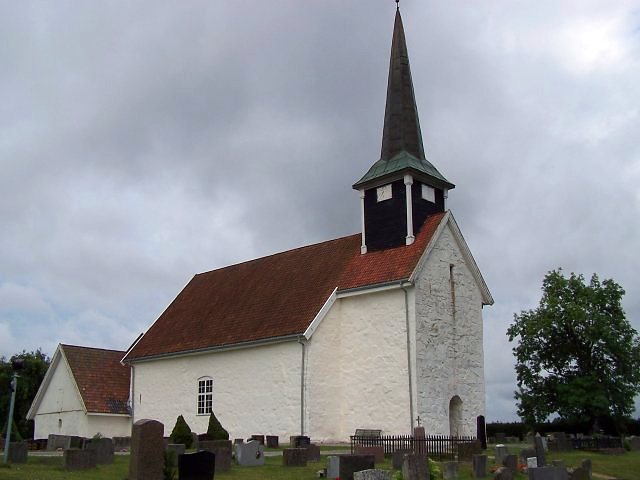
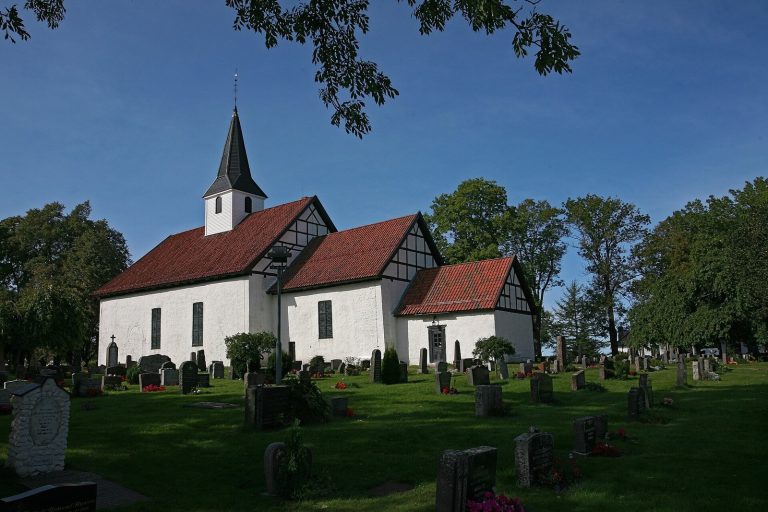
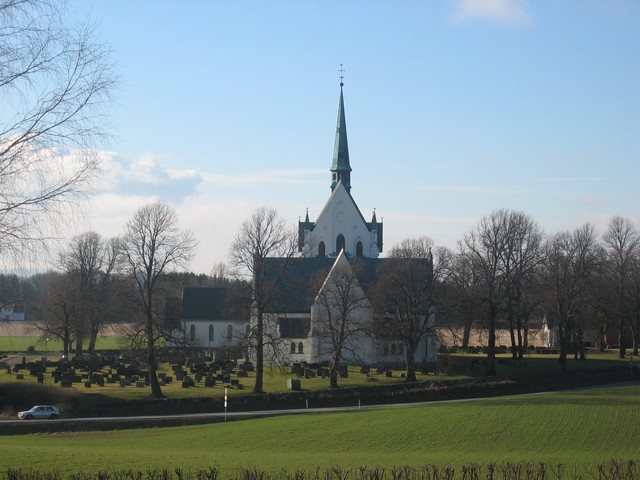
Eidsberg Church is a Protestant parish church in Norway, probably built in the latter half of the 12th century in the Romanesque style. Consecrated around 1250 to 1260, it is dedicated to St. Olav, also known as Olaf II of Norway, the country’s principal medieval patron saint. The church is the only preserved medieval church in the village and is associated with the Østre Borgesyssel Deanery of the Diocese of Borg. A deanery groups several parishes, while a diocese is the larger church jurisdiction governing several deaneries.
Medieval origins and Tenor Chapel
The stone church was damaged by a fire around 1420. In the late 13th century, a separate medieval chapel known as Tenor Chapel was built north of Eidsberg Church. It was closed in 1536 and had stood deserted from about 1560. Bishop Niels Simonsen Glostrup recorded its closure in 1619, while most of the chapel’s walls were still standing in the early 18th century.
Reconstruction and restoration
An extensive reconstruction in 1880 and 1881 transformed the church into its present Neo-Gothic cruciform form. Neo-Gothic was a 19th-century revival of medieval Gothic architecture. The work followed designs by Paul Due, a Norwegian architect associated with late-19th-century historicist and Neo-Gothic buildings. Further restoration was carried out during the 1920s and again in 1959 and 1960. The ruins of Tenor Chapel were excavated between 1952 and 1956 by Bernt C. Lange and Håkon Christie, and a new chapel was built at the site in 1932.
Remains
The main church
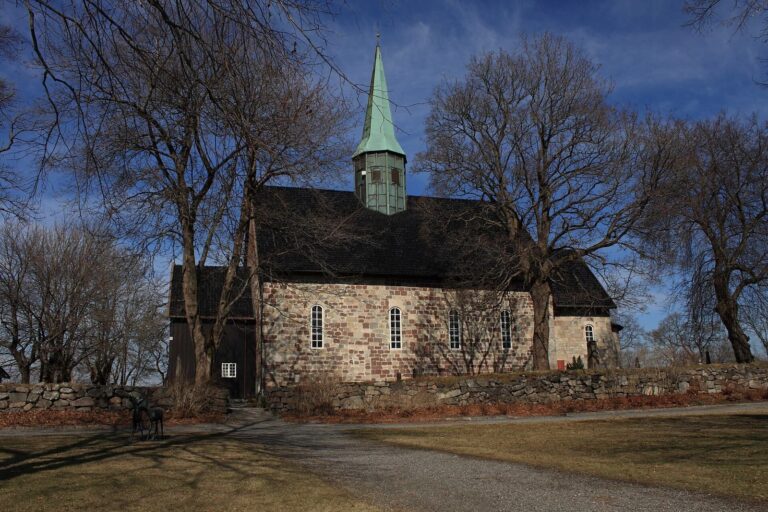
Eidsberg Church stands beside the Glomma River and is built of stone. Its current cruciform plan and Neo-Gothic appearance derive from the reconstruction of 1880 and 1881. A stone sculpture of St. Olav is placed above the entrance. The medieval interior decoration is represented by a 13th-century baptismal font, a vessel used for Christian baptism. Carved from soapstone, it has a cup-shaped form.
The church also contains a Baroque altarpiece donated in 1651. Baroque was a highly dramatic and ornate artistic style prominent in Europe during the 17th and early 18th centuries. The altarpiece depicts the Crucifixion of Jesus and was made by the craftsman Christopher Ridder, who also designed the pulpit. The oak pulpit has figures of Christ and the Evangelists set within portal fields.
Tenor Chapel ruins
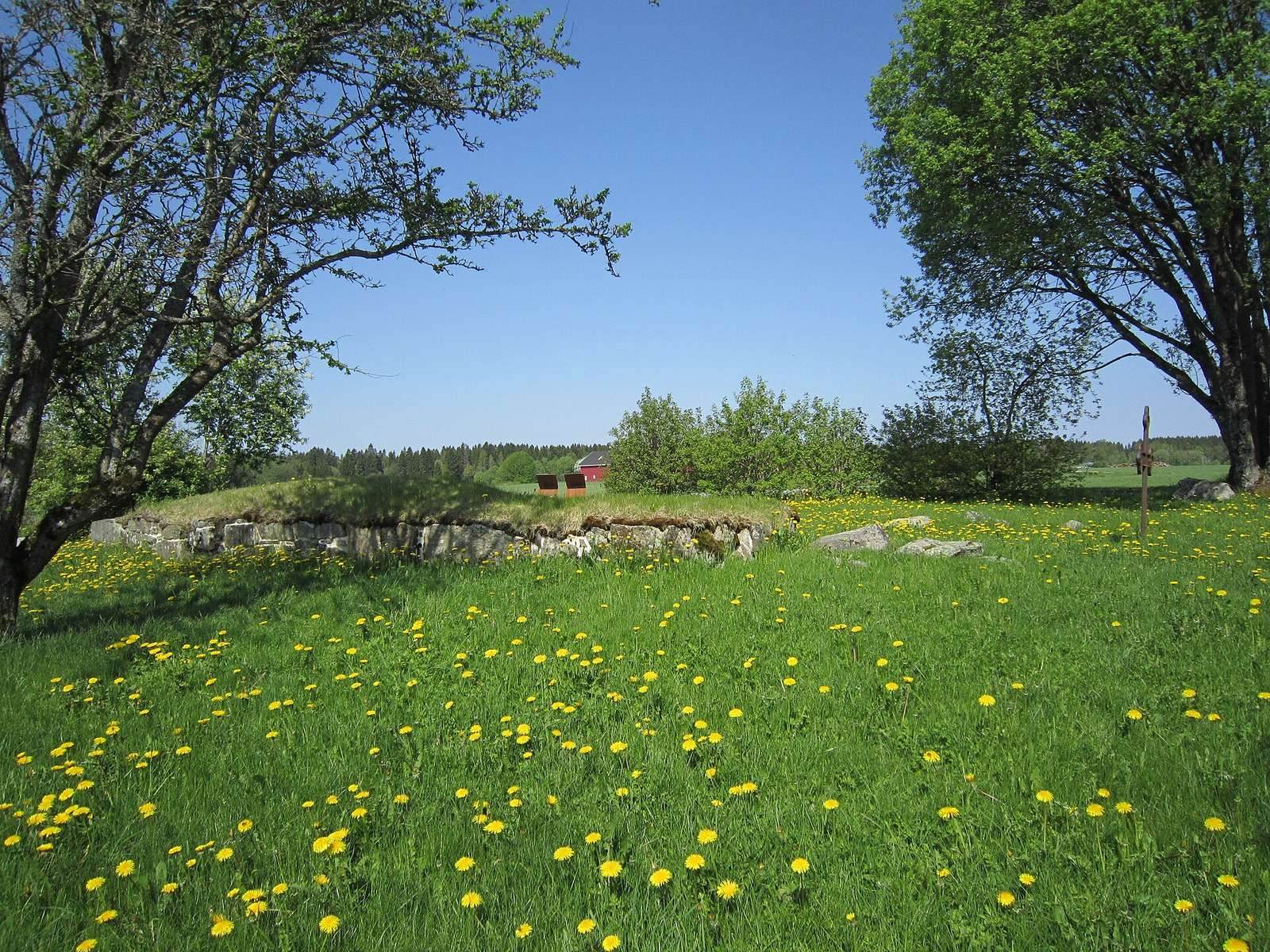
The ruins of Tenor Chapel lie north of Eidsberg Church. The medieval chapel was constructed from brick and rubble stone, and excavation revealed its surviving wall ruins. A new chapel was constructed on the site in 1932, alongside the remains of the medieval building.