Hablingbo Church: A Medieval Romanesque and Gothic Church on Gotland
Site at a Glance
- Rating
- 4.5
- Popularity
- Very Low
- Country
- Sweden
- Primary era
- Medieval
- External website
- Open
- Eras represented
- Medieval, Early Modern
- Civilizations
- Swedish
- Site type
- Religious
- Remains
- Church
On this page11 sections
History
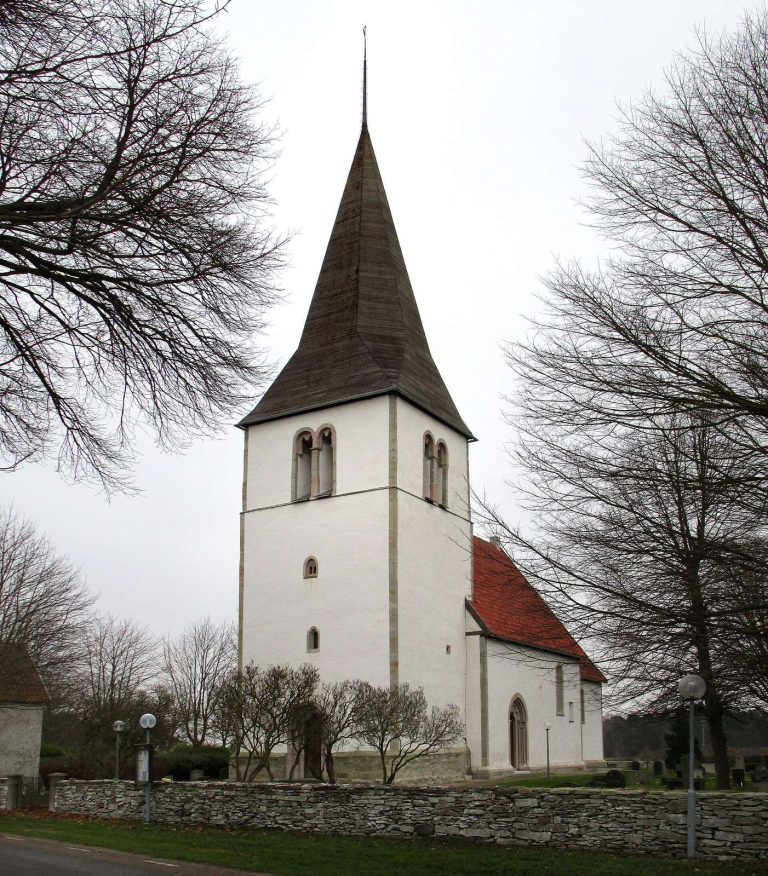
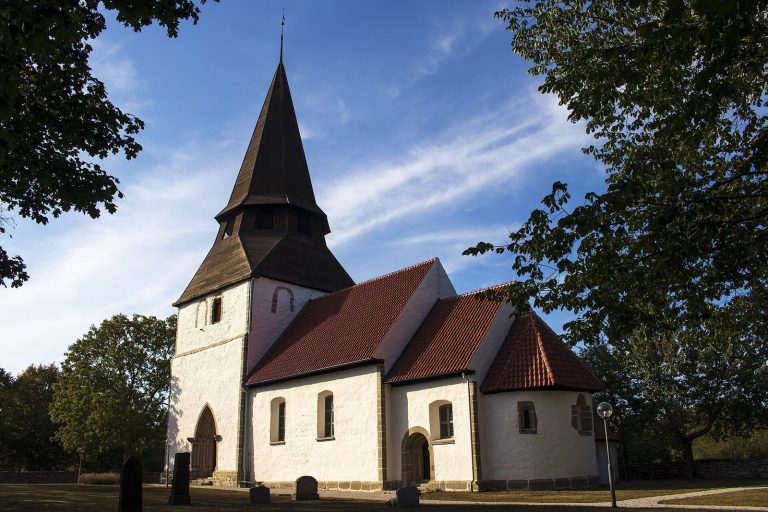
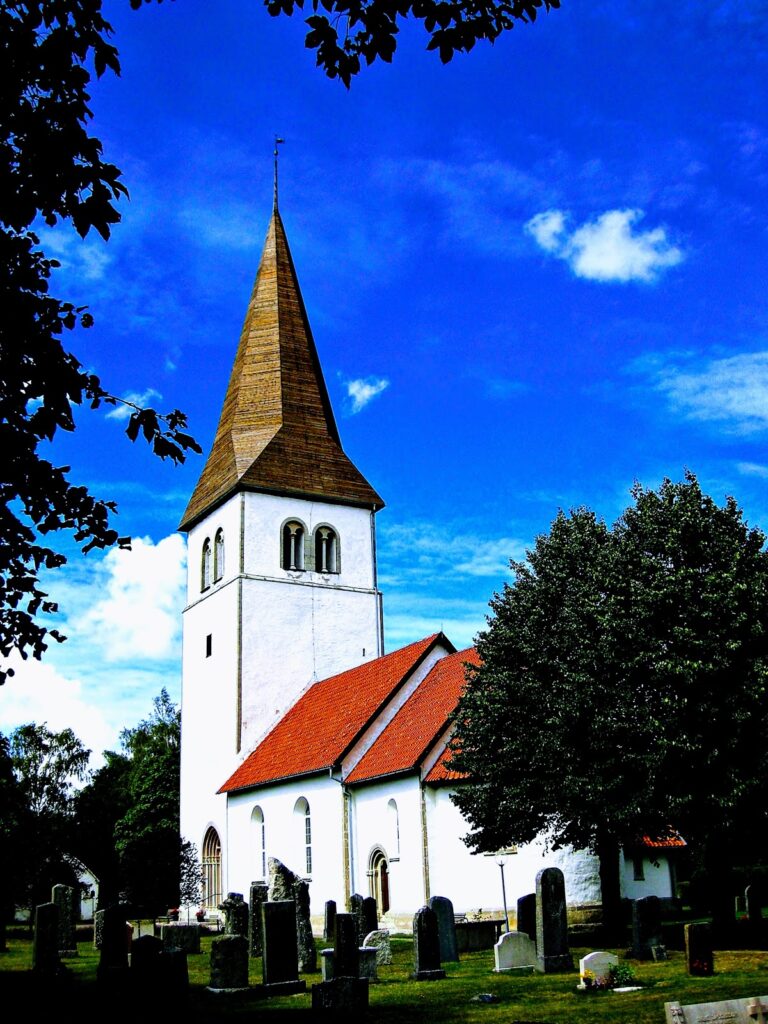
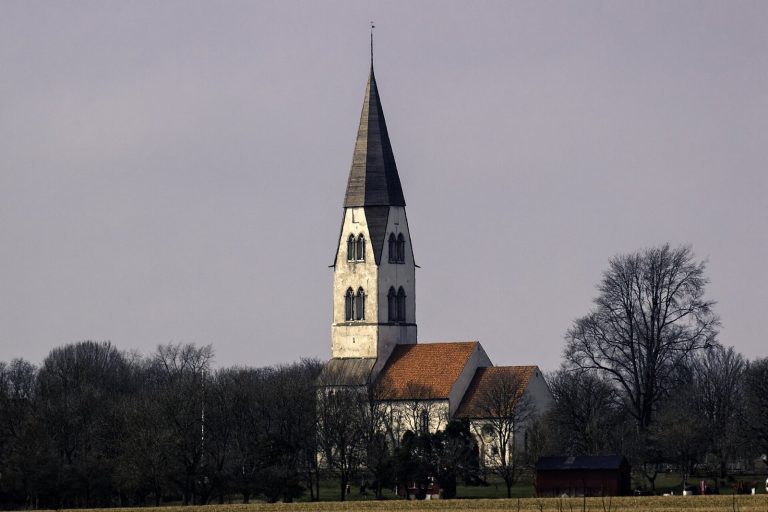
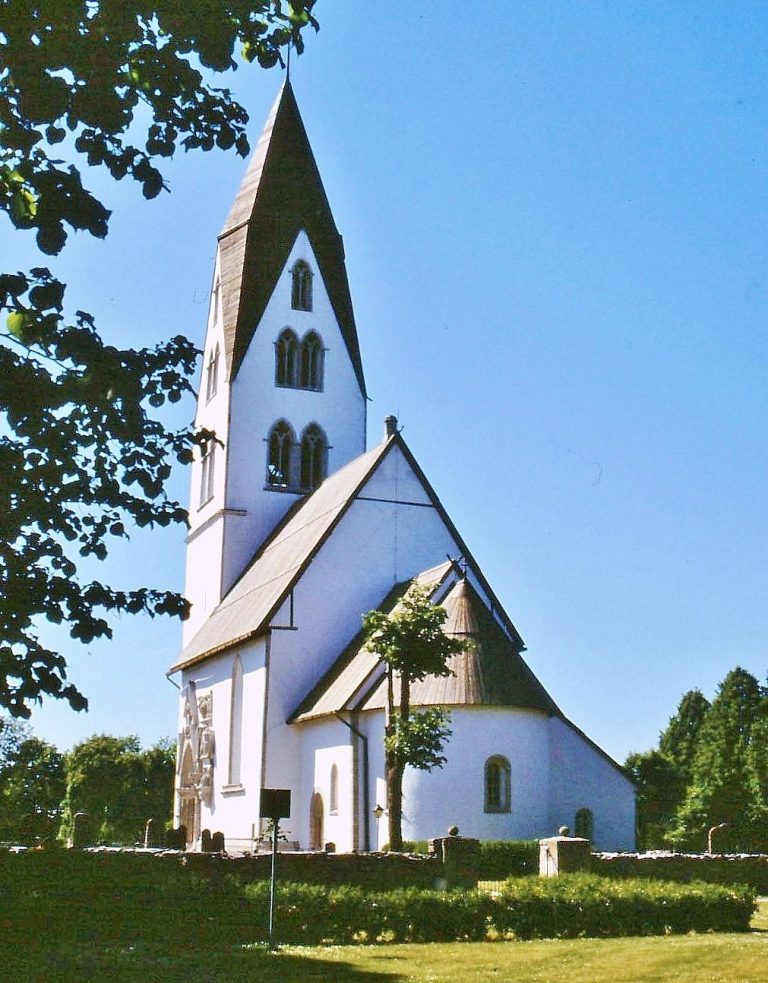
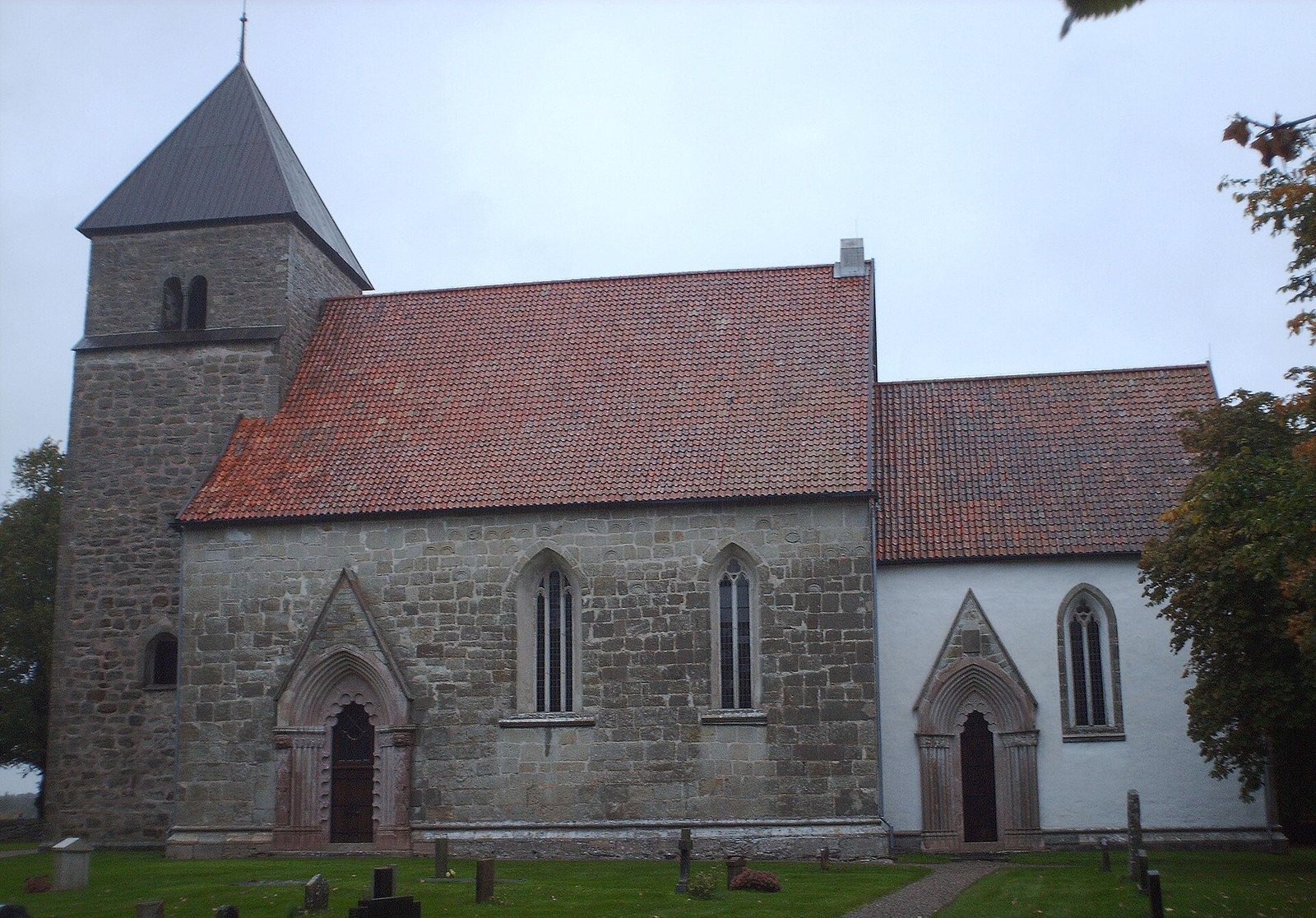
Hablingbo Church is a medieval church in Sweden, on southern Gotland in the area known as Sudret. Its Romanesque tower belongs to a building phase around the transition from the twelfth to the thirteenth century, while the nave and choir were rebuilt in the fourteenth century in the Gothic style. The church is one of Gotland’s largest and remains a place of Protestant worship within the Church of Sweden, Sweden’s Lutheran national church, in the Diocese of Visby.
Early churches and the Romanesque tower
The earliest church at the site was a stave church, a medieval timber building formed around upright wooden posts, constructed no later than the early twelfth century. It was later replaced by a Romanesque stone church. The tower from that earlier stone building survives as part of the present church and represents the oldest standing phase of the masonry structure.
The tower’s walls preserve historical graffiti, including recognizable ships. These marks form part of the building’s long human use and add to the evidence for the way medieval visitors interacted with its surfaces.
Fourteenth-century rebuilding
During the fourteenth century, the nave, the main central part of the church, and the choir, the eastern area reserved for clergy and the liturgy, were completely rebuilt. The work gave the church its present Gothic character, with a broad-bayed nave, high vaults, massive columns, and heavy capitals. As is common in Gotlandic churches, the choir does not end in a separately expressed apse, a distinct rounded or polygonal termination.
Only limited architectural changes followed this rebuilding. A sacristy, a room for vestments and sacred equipment, was added in the eighteenth century. Several damaged medieval wooden furnishings, including a triumphal cross and figures of saints, were later removed and placed in museums. The church and its surviving medieval sculpture, paintings, labyrinths, and runic monument remain important parts of Gotland’s architectural and cultural history.
Later religious use and discoveries
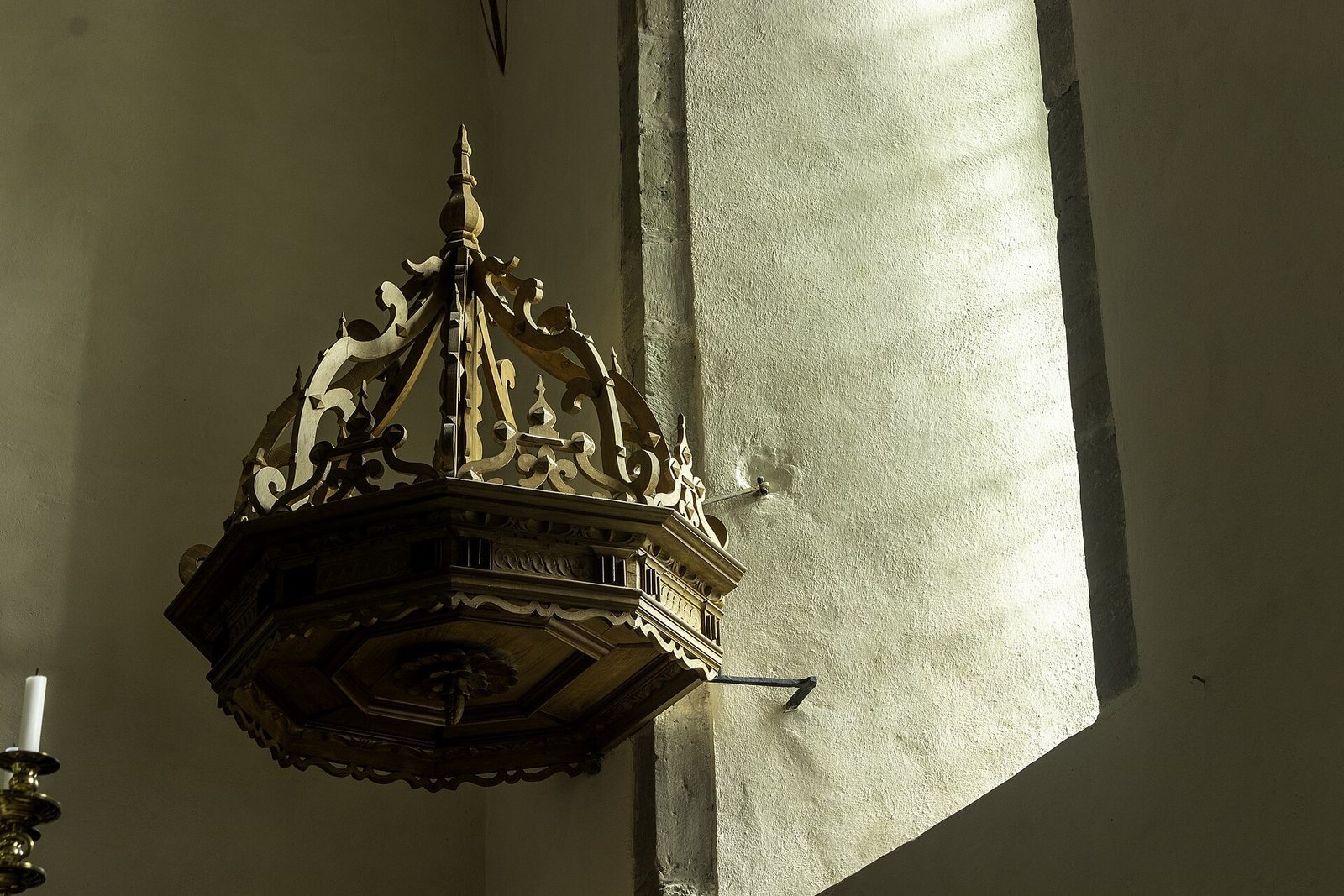
The church continued in religious use and now serves Protestant worship within the Church of Sweden. A seventeenth-century baptismal font replaced an earlier medieval font after the older object had become badly damaged. The sandstone altarpiece was made in 1643 by Peter van Eghen and his son Gert van Eghen, and the overpainted pulpit is probably a seventeenth-century work by the Visby carpenter Jochim Sterling or his workshop. The pews date from the 1890s and are Neo-Gothic.
In 1988, a runic picture stone was found in the church cemetery. It appeared to remain in its original position, with supporting stones still in place. After restoration, it was set up in the tower chamber, adding an unusually early Gotlandic monument to the church’s medieval historical record.
Remains
Medieval church fabric and sculpture
Romanesque tower
The Romanesque tower is the only surviving component of the earlier stone church. It is incorporated into the monumental present building, whose broad nave, tall vaults, heavy columns, and large capitals reflect the fourteenth-century Gothic rebuilding. Historical graffiti covers the tower walls, and several of the recognizable marks depict ships.
Carved portals
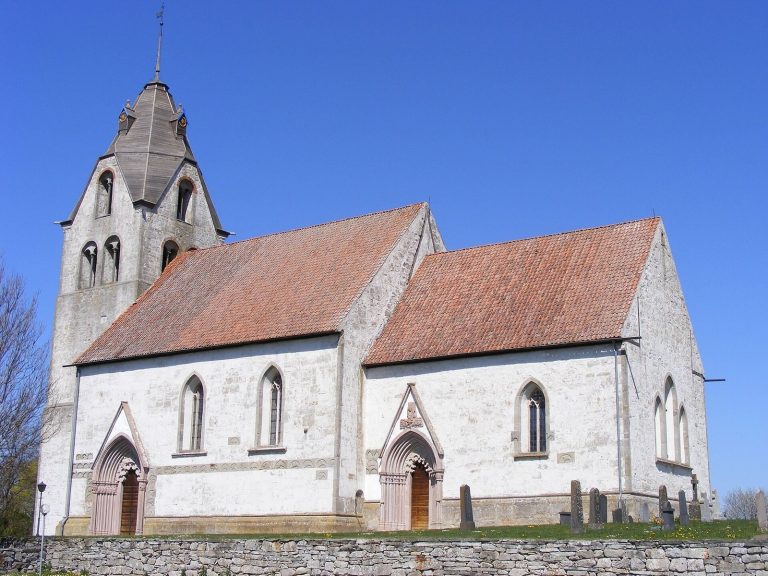
Three richly carved stone portals provide major evidence of the church’s medieval sculpture. The north portal is Romanesque and was made in the second half of the twelfth century by the anonymous sculptor conventionally called Majestatis. Its tympanum, the decorated area above the doorway, contains a relief associated with the story of Cain and Abel. The portal also includes one of the earliest known Scandinavian depictions of the Devil and is regarded as an outstanding surviving example of Romanesque art in Sweden.
The north portal originally served as the main entrance on the south side of the earlier church before being moved to the north facade. On the south side, the nave portal carries extensive Gothic relief sculpture, although much of it is now heavily damaged. Its surviving imagery includes male figures holding scrolls, large grotesque masks on the outer jambs, and representations of Augustine, Ambrose, Gregory, and Jerome, the four early Christian theologians known as the Church Fathers. Only the Coronation of Mary remains recognizable on the severely damaged tympanum.
The smaller south portal of the choir has carved capital bands, the decorated upper parts of its supporting columns, with scenes from the early life of Jesus. The carvings also include a sheep and a sow suckling five piglets. This sculpture is probably associated with the workshop of the anonymous medieval master known as Egypticus.
Paintings, capitals, and labyrinths
Remnants of medieval wall paintings survive in the choir. Probably created in the mid-fifteenth century, they show Saint Michael as a dragon-slayer beside the triumphal arch, the major arch separating the nave from the choir. Peter, Paul, John the Baptist, and other saints, including Bernard of Siena, appear on the north wall. Bernard was an Italian Franciscan preacher and religious reformer who was canonized in 1455.
Stylized facial masks on an eastern capital helped the Swedish art historian Johnny Roosval identify and name the anonymous fourteenth-century sculptural master or workshop as Egypticus. The church also preserves two drawn labyrinths of the form traditionally called a Trojaburg in Gotland. One, on the inner wall of the tower chamber, measures about one metre across, contains 19 winding passages, and is partly painted over. A second labyrinth on the south wall is unfinished, with its basic pattern and first three loops drawn. If completed, it would have contained 12 passages. The unfinished design provides evidence for how these drawn labyrinths were constructed.
Later furnishings
The sandstone altarpiece from 1643 is Baroque and depicts scenes of the Last Supper. The pulpit, probably made in the seventeenth century by Jochim Sterling or his workshop, has been overpainted. A seventeenth-century baptismal font replaced an earlier damaged medieval font, while the pews installed in the 1890s are Neo-Gothic.
Runic picture stone
The runic picture stone found in the cemetery is about 1.9 metres high and 1.2 metres wide at the base. Its carving is almost completely preserved, and the stone is only slightly damaged. The surface was smoothly cut and chipped away so that the decoration projects in half-relief. It carries a ring cross, foliate ornament, and banded interlace.
The inscription begins at the head of a serpent and follows its raised body. It states that Vatar, whose reading is uncertain, and Hallgair raised the stone for their father Helge, who had travelled west with Vikings. When discovered, the stone lay 30 to 40 centimetres below the surface with its carved side facing upward, and its supporting stones remained in place. Following restoration, it was installed in the tower chamber.