Santa Maria Maddalena (Fontanellato): A Former Templar Church at Cerro di Toccalmatto
Site at a Glance
- Rating
- 4.4
- Popularity
- Very Low
- Country
- Italy
- Primary era
- Medieval
- Eras represented
- Medieval
- Civilizations
- Crusader, Knights Templar
- Site type
- Religious
- Remains
- Church
On this page6 sections
History
Santa Maria Maddalena is a Roman Catholic church in Italy, at Cerro di Toccalmatto, a hamlet of Fontanellato. The Knights Templar built it around 1160 as part of a religious and military complex beside a ford across the Rovacchia stream, on land donated by the Pallavicino marquises. The original domus included a small chapel, a hospital, the commander’s residence, and agricultural buildings, combining religious, charitable, administrative, and agricultural functions.
The Templar domus
The complex initially controlled the dependent Templar house of San Tommaso Becket at Cabriolo, near Borgo San Donnino. That mansio, meaning a dependent establishment of a larger religious or military order, became independent during the following century. The first surviving document naming the “ecclesia-domus de Cerro” dates from 1230. By then the church was dedicated to Saint James. Brother Lanfranco of Fiorenzuola later referred to the church during the Templar trial held in Florence in 1312, saying that it may have hosted a provincial chapter of the order toward the end of the twelfth century.
Knights Hospitaller and later history
After the Templars were suppressed, the domus was granted in commendam to the Knights Hospitaller of Saint John of Jerusalem, an arrangement placing a religious institution under the administration of a designated commander. The order later became known as the Knights of Malta. In 1530, Charles V, Holy Roman Emperor, stayed at the site and directed the restoration of the small chapel and nearby residence. He probably also chose to dedicate the church to Saints Cornelius and Cyprian.
The Knights of Malta probably left Cerro di Toccalmatto at the beginning of the nineteenth century, during Napoleon’s suppression of religious orders. The surviving buildings were then sold to private owners. The church was later rededicated to Saint Mary Magdalene, remained open for worship until about 1960, and was completely closed around 1980. After abandonment, it was probably used for certain Satanic rites. In 2006, the owning family donated the church to the Catholic Templars of Italy, who restored the building in work completed around 2009. It is now a Roman Catholic place of worship of the Roman rite in the Diocese of Parma and remains associated with the Templar tradition.
Remains
The church
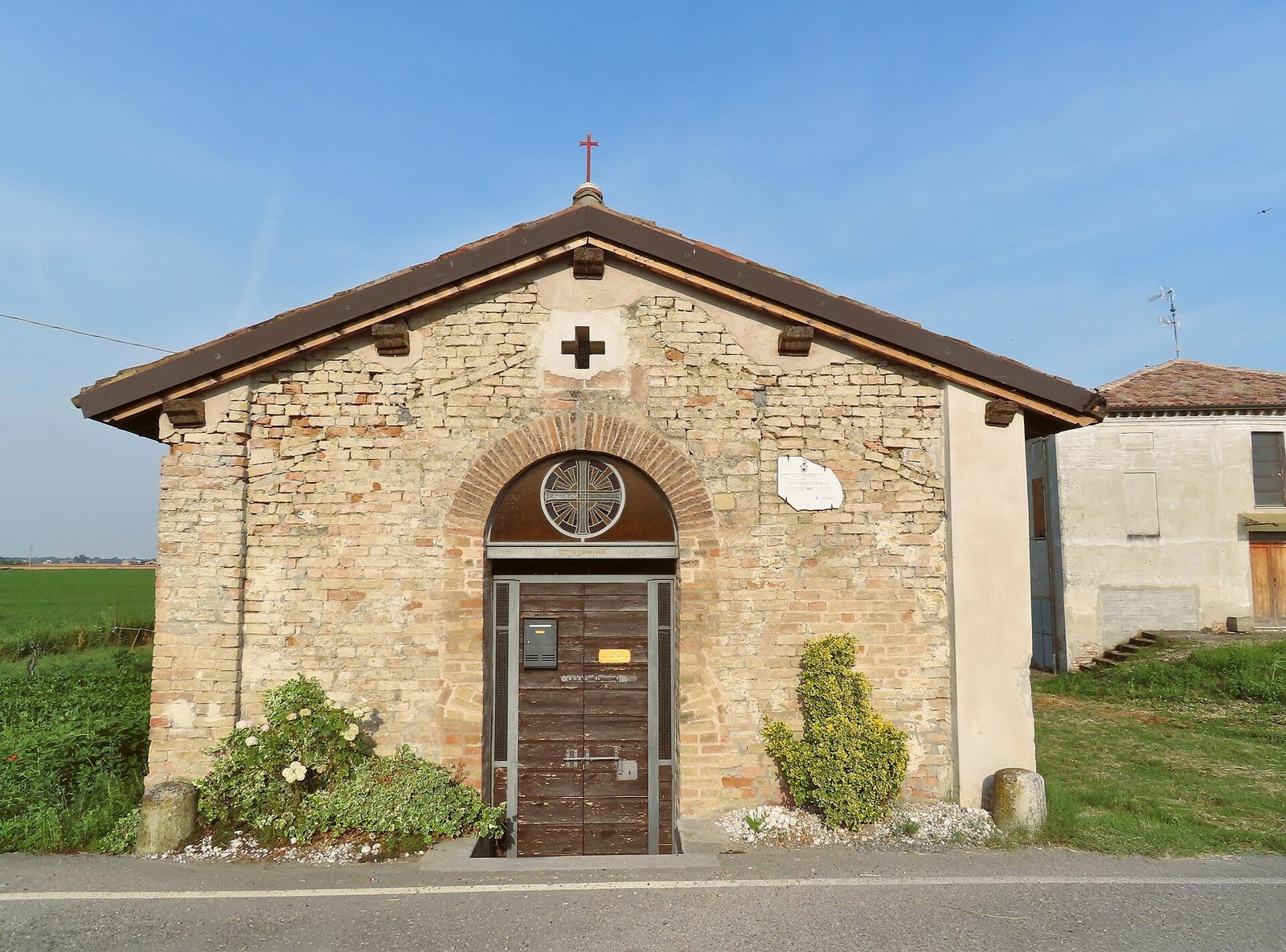
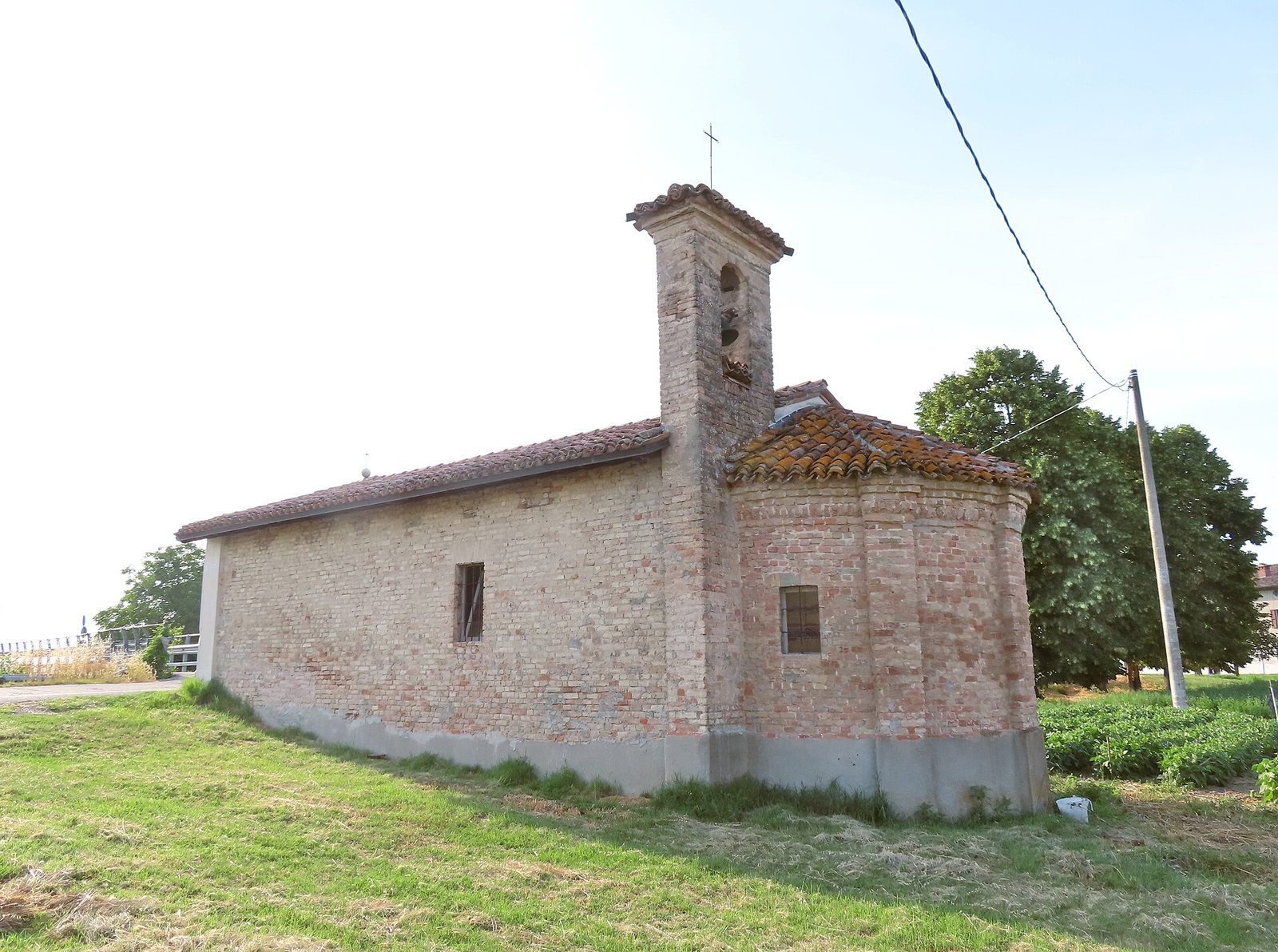
The small church stands opposite the bridge over the Rovacchia stream. Its single nave runs from a western entrance to an eastern apse. The simple gabled facade, like the rest of the building, is faced entirely with brick. A central round-arched portal is topped by a small window shaped as a Greek cross, while two pilasters frame the front. A small bell-gable rises at the end of the right-hand side wall.
Several steps lead down into the interior. The nave has a timber-truss roof, whose trusses were recovered during the restoration, and plastered walls articulated by pilasters. Two small rectangular windows open in the side walls of the nave, while two further openings are set into the sides of the brick-faced apse. The presbytery, the part of the church surrounding the main altar and traditionally reserved for clergy, is slightly raised above the nave. It contains a large high altar restored in 2009.
The former residence and farm
The building beside the church, now used as a farm, is the other surviving part of the former Templar complex. Inside the former residence is a Baroque-style fireplace whose mantel bears the inscription, “Ill. et multum Rev. Dominus Commendatarius frater Nicolaus de la Marra.” The words identify Brother Nicolaus de la Marra as an illustrious and very reverend commendator. The inscription preserves the surviving evidence of the period when the site was administered by the Knights of Malta.