Church of Elijah in Solnechnaya Dolyna: A Medieval Active Church in Crimea
Site at a Glance
- Rating
- 4.9
- Popularity
- Very Low
- Country
- Ukraine
- Primary era
- Medieval
- Eras represented
- Medieval
- Civilizations
- Byzantine
- Site type
- Religious
- Remains
- Church
On this page8 sections
History
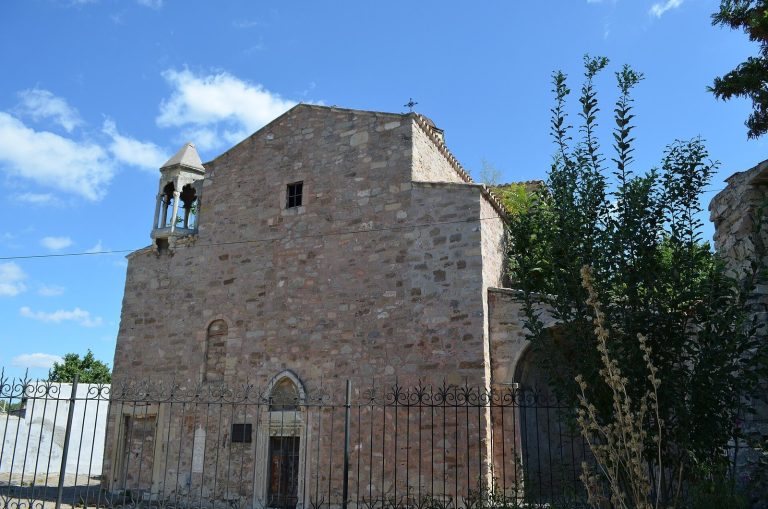
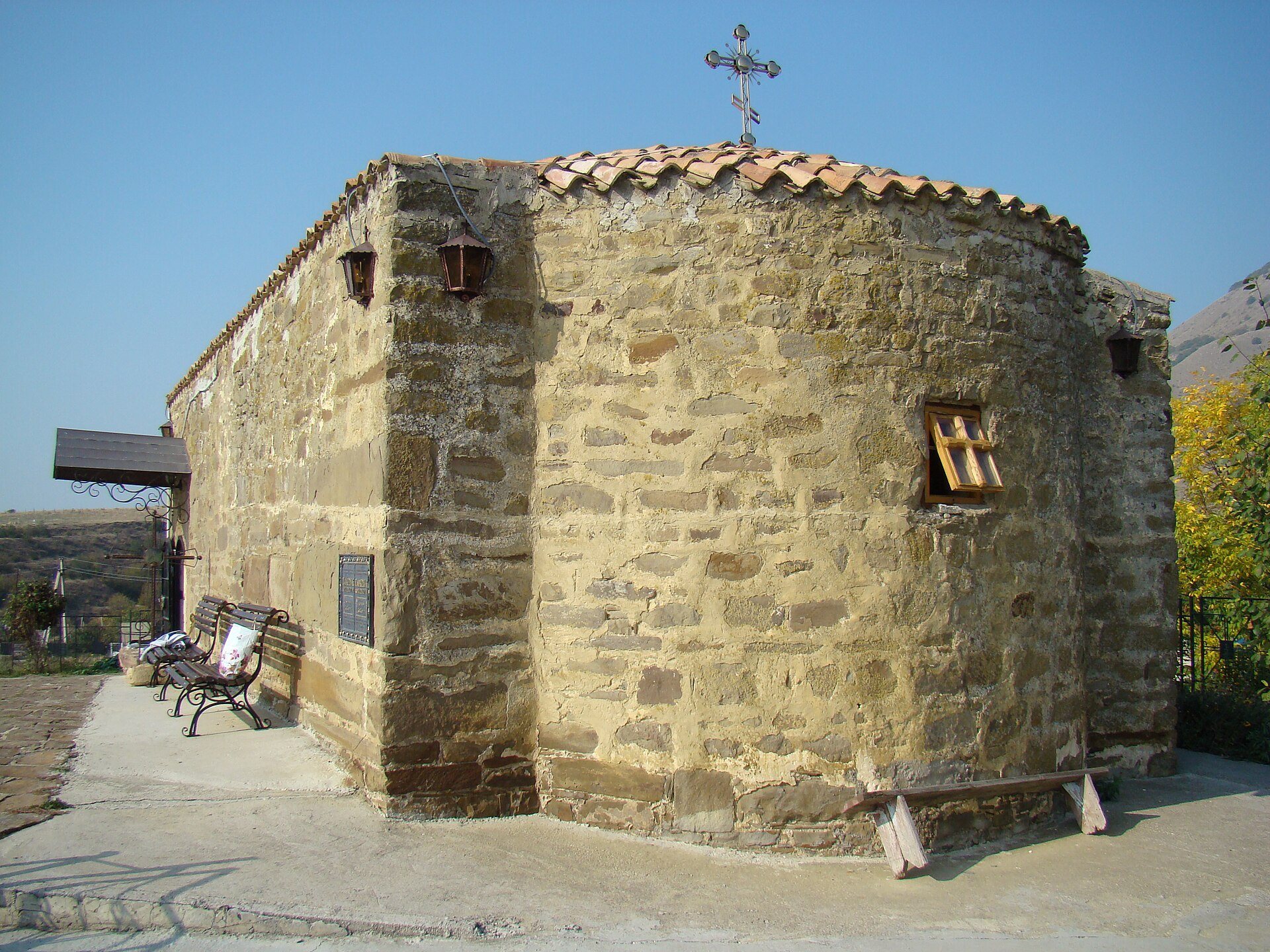
The Church of Elijah in Solnechnaya Dolyna is a medieval Greek church in Ukraine, constructed between the tenth and twelfth centuries in the architectural tradition of ancient Armenian churches. It is described as the oldest surviving active church in Crimea. Excavations beside the building indicate that an earlier church may have stood on the same site before the tenth century.
Greek Origins and Local Religious Life
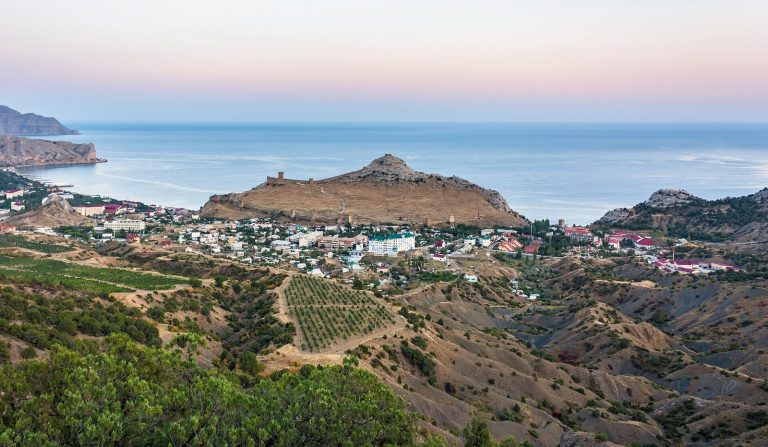
The church was initially Greek and remained connected with the Greek population of the area. After local Greeks moved to the Azov region in 1778, residents of Kozy village cared for the building. Kozy was the former name of Solnechnaya Dolyna until 1944. The church also formed part of the spiritual life of the Crimean Armenian community, an Armenian population historically established in Crimea.
War and the Priest Peter
In 1771, Russian forces commanded by Prince Dolgorukov, a Russian nobleman with a military command, defeated the Turkish army and occupied Kafa, now Feodosia. In response, the Turks killed Peter, the Orthodox priest of the Church of Elijah.
Eyewitness testimony describes a solemn Good Friday custom associated with Peter’s death. On that day, his body was dressed in vestments, placed in a shrine, and carried around the church while chants were sung.
Twentieth-Century Changes
Religious services continued until 1936. The church was then converted into a power station and grain store. During the war, it briefly reopened for Romanian military personnel. Restoration began in the 2000s, following earlier repair and painting work carried out in 1904.
The church entered the Ukrainian architectural-monuments register through a resolution of the Council of Ministers of the Ukrainian SSR dated August 24, 1963, under protection number 282. It is also listed as a nationally significant architectural heritage monument of Ukraine and as a federal cultural-heritage site of Russia.
Remains
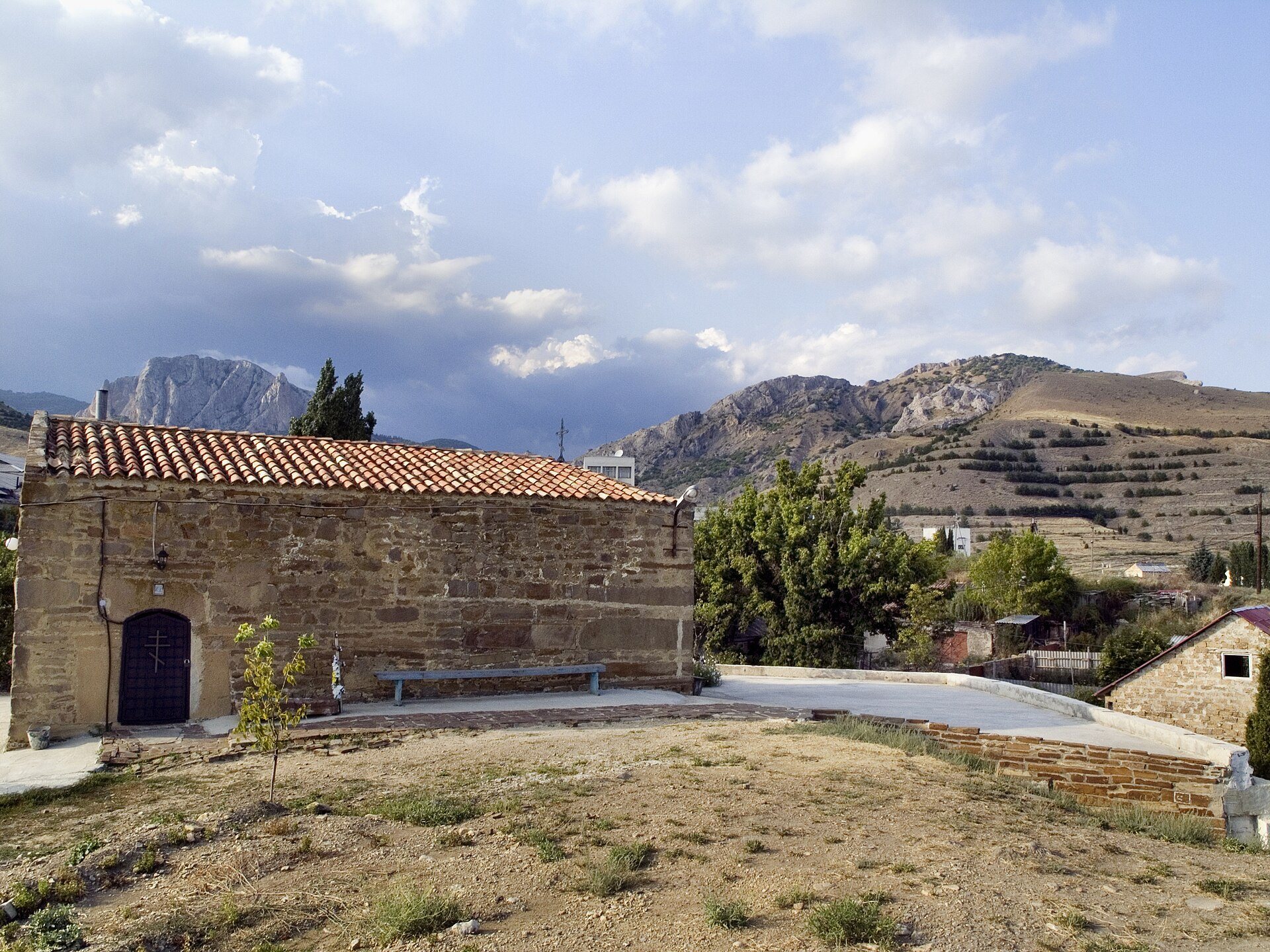
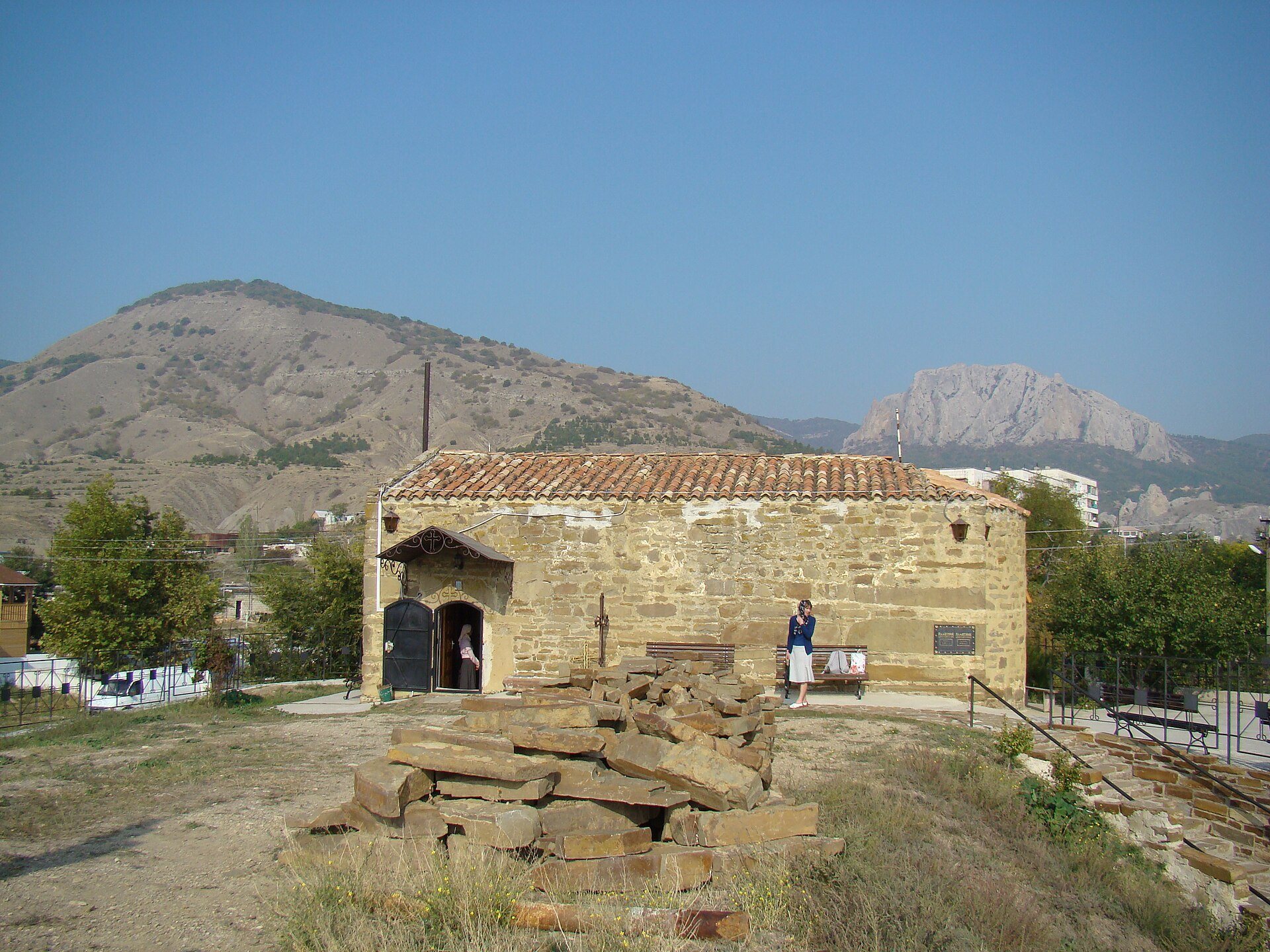
The church stands in Solnechnaya Dolyna on Chornomorska Street. Its compact form follows the unusual type of ancient Armenian churches. The building’s surviving details, together with archaeological remains beside it, preserve evidence of both its medieval construction and the earlier religious activity associated with the site.
Structure and Entrance
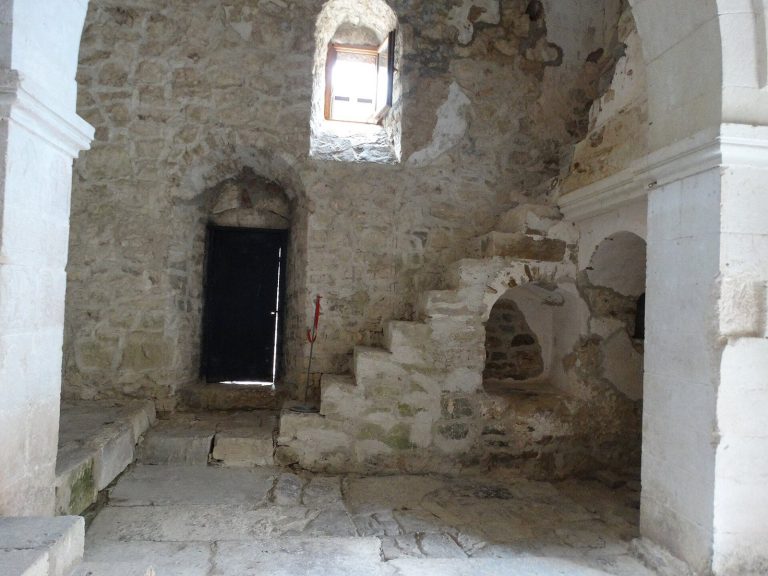
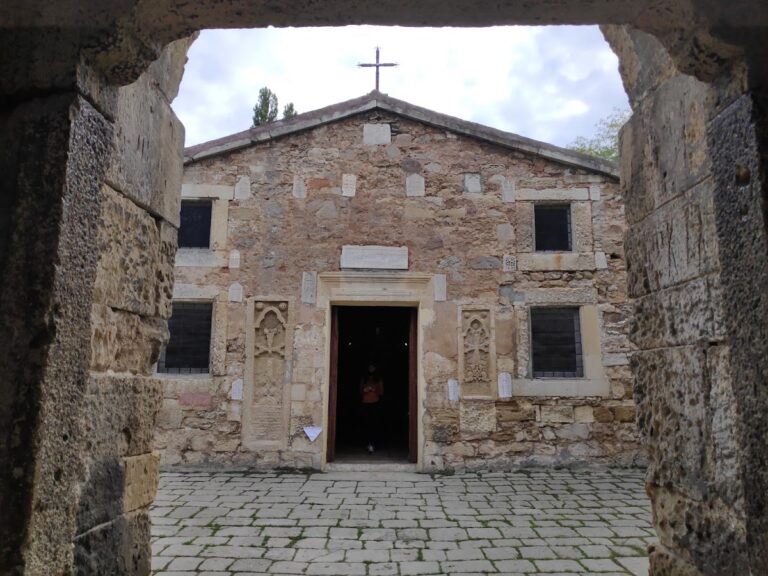
The altar consists of three stone slabs fixed closely against the east wall, leaving no passage around it. Entry is through the south wall, where the doorway is notably low. A large stone above the entrance carries five carved rosettes, each containing a Greek cross. Two small windows admit sunlight into the interior.
Baptismal Font
An ancient marble baptismal font remains in the church and is still used for baptism, the Christian rite in which water is applied as a sign of entry into the faith. The basin was carved from a column capital, the uppermost part of a column, taken from a pagan temple dated to the fourth or fifth century. The marble may have come from Proconnesus and been transported to Crimea from Constantinople.
Earlier Building and Altered Setting
Excavations beside the church revealed fragments of masonry set in clay. These remains support the supposition that an earlier church occupied the site before the tenth century. The surrounding setting was later altered: a lake formerly located near the building was drained in the 1960s, and an adjoining hill was cut down.