Tempelhaus: A Medieval Johanniter Castle and Church in Mosbach
Site at a Glance
- Rating
- 4.4
- Popularity
- Very Low
- Country
- Germany
- Primary era
- Medieval
- External website
- Open
- Eras represented
- Medieval, Early Modern, Modern
- Civilizations
- Holy Roman Empire, Knights Hospitaller
- Site type
- Military
- Remains
- Castle
On this page8 sections
History
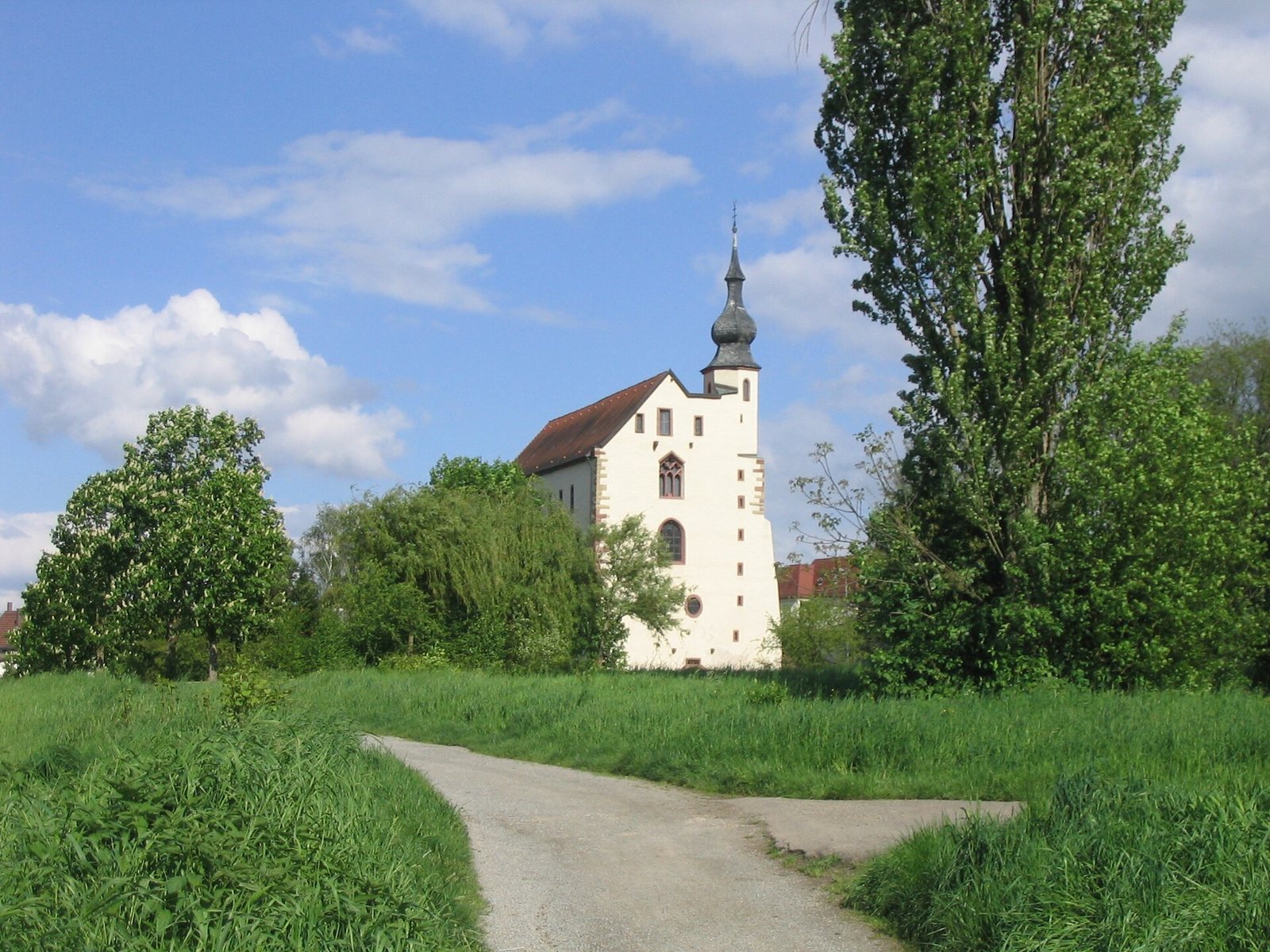
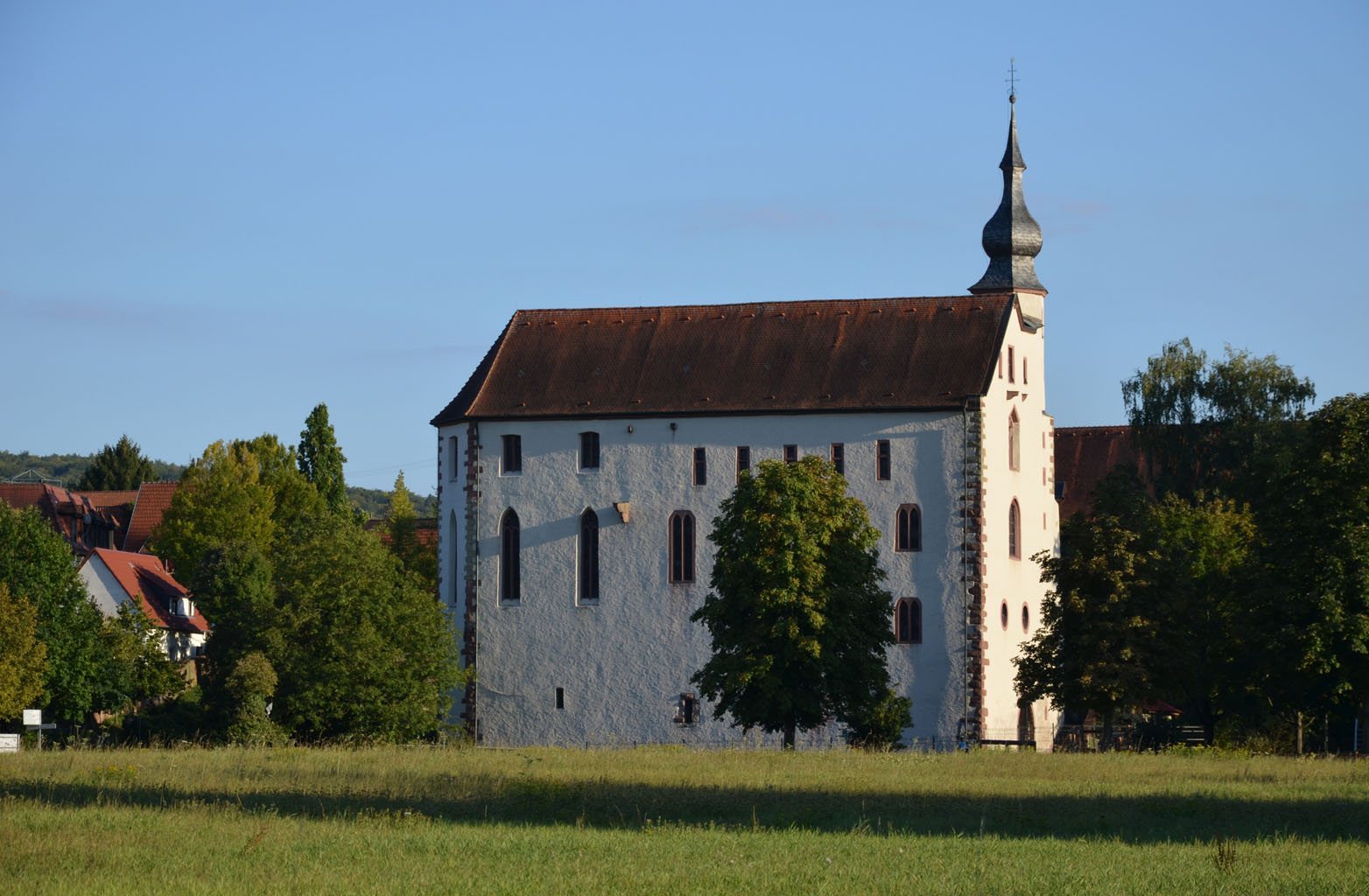
Tempelhaus is a medieval Johanniter castle and former church in Germany, located in Neckarelz, part of Mosbach. Its origins lie in a residential tower probably built around 1200 in connection with the nearby Hohenstaufen palatinate at Wimpfen. The site later became a hospital and chapel of the Johanniter Order, also known as the Knights Hospitaller, a Catholic religious and military order that operated hospitals and fortified commanderies. Tempelhaus is regarded as the second-oldest building in Mosbach after Lohrbach Castle and is described as the only Johanniter castle in Baden-Württemberg preserved in its authentic form.
Medieval Johanniter castle
The lowland castle near the former course of the Elz is first recorded on 11 June 1300, when the Johanniter already maintained an establishment in the existing building. The order had probably acquired the castle toward the end of the thirteenth century and converted it into a hospital with an associated chapel. The surviving fabric of that chapel forms the present choir. After about fifty years, on 5 February 1350, the Johanniter sold the complex to Engelhart von Hirschhorn.
The building belonged to the Count Palatine of Mosbach in 1422 and passed to the Electoral Palatinate in 1500. The Electoral Palatinate was a major territorial state of the Holy Roman Empire, governed by a count palatine who held the privilege of electing the emperor. In 1581, the official Hans Albrecht Eysenmenger first used the name Tempelhaus. The name did not indicate a connection with the Knights Templar, since the building had never belonged to that order. An external entrance to the lower storey was added in 1606, supporting the building’s use for storage.
Conversion into a Catholic church
Catholic worship resumed in the former castle chapel in 1688 after a religious change in the Electoral Palatinate, while the rest of the building continued to serve as a barn and granary. In 1698, Elector Johann Wilhelm ordered Catholics and Protestants to use the nearby Martinskirche simultaneously. The Palatinate Church Division of 1705 then assigned the eastern part of Tempelhaus permanently to the Catholics, who ceremonially occupied it in 1707.
The chapel initially had no direct entrance, so worshippers reached it by a circuitous route through the storage rooms. Between 1731 and 1735, the entire first floor was converted into a church. It was consecrated in 1737 for the Assumption of Mary, the Catholic feast commemorating Mary’s being taken into heavenly glory, and became known as Maria Assunta. The church had no bell until 1875, and the Catholic congregation used the right to ring the bells of the Protestant Martinskirche.
Later ownership and restoration
In 1803, the complex passed to the Principality of Leiningen. The Catholic parish of Neckarelz acquired it in 1872 and added a sacristy in 1879. Other parts of the building retained their agricultural functions, and the lower storey was still rented to a gardening business in 1903.
Between 1926 and 1929, the cellar was converted into a lower church. The removal of an eighteenth-century wooden ceiling from the main church room allowed a second gallery to be installed. After the Second World War, the Catholic population of Neckarelz grew through the arrival of refugees and expellees. The new Marienkirche, built in 1955, then became the parish church.
Extensive renovation followed from 1963 to 1965. A wooden ceiling was reinstated in the church room, allowing the upper floor to be used again and providing easier access to the chapter room, a meeting and administrative room in a religious institution. In 2001, repairs were made to the load-bearing walls, and the original fourteenth-century interior color scheme was restored.
Remains
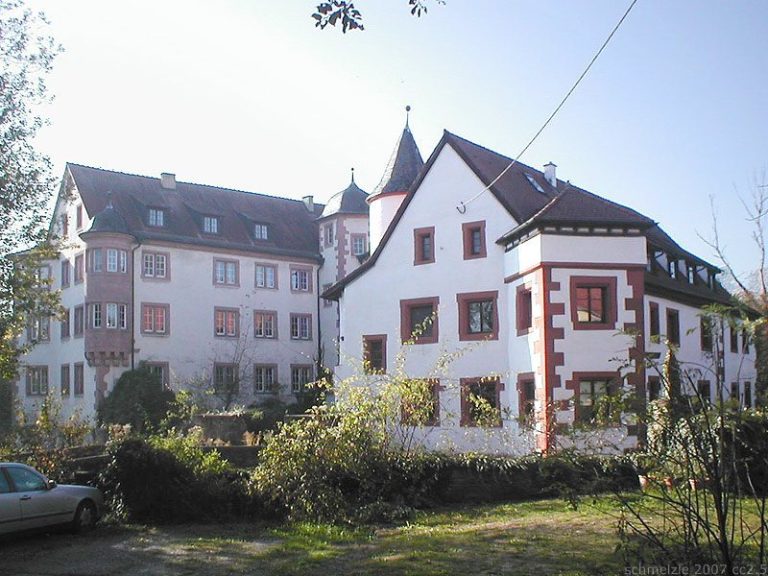
Tempelhaus is a long, multi-storey stone building approached from the south across a stone bridge and a forecourt. Several stone figures dated 1752 stand in the forecourt. The church occupies the main floor, while the surviving medieval and later structures preserve evidence of the site’s development from fortified residence to religious and agricultural use.
Choir and church interior
The east-facing choir has a polygonal plan, Gothic tracery windows, and a ribbed cross-vault. Its ornamental bosses include a leaf-mask motif, and its surfaces retain a fourteenth-century color scheme. A historical fresco of Saint Christopher was uncovered on the choir’s south wall. The nave occupies the remainder of the church floor, where historical coats of arms belonging to noble families survive in the walls around the windows.
Memorials and furnishings
The north wall contains the Conradusstein, a historical tomb slab whose inscription cannot be interpreted with certainty. Recent research identifies it probably as the tomb slab of Konrad von Büchel, who died in 1302 and is said to have founded the Johanniter castles at Neckarelz and Boxberg.
A carved historical altar depicting Saint George stands at the western gable end. It was originally placed in the choir, later stored on the upper floor, and moved to its present position after restoration. The organ was built in 1967 by the Vleugels company of Hardheim and has nine stops.
Upper floor and stair tower
A stair tower added at the southwest corner provides access to the upper floor. Above the choir, a polygonal room has another ribbed cross-vault. The upper floor is used as exhibition space on special occasions and contains historical exhibits connected with Tempelhaus.
Three bronze church bells cast by Friedrich Wilhelm Schilling in 1965 hang in a steel bell frame inside the stair tower. Together with the restored church room, the upper-floor spaces and the surviving medieval fabric express the building’s successive religious, domestic, storage, and exhibition functions.