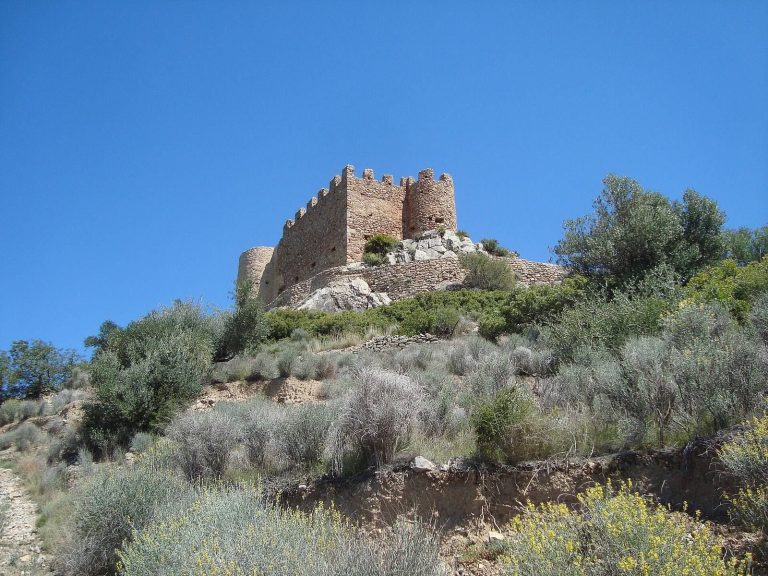
Ermita de la Font de la Salut: A Historic Hermitage in Castellón de la Plana


Site at a Glance
- Rating
- 4.4
- Popularity
- Very Low
- Country
- Spain
- Primary era
- Early Modern
- Eras represented
- Early Modern
- Civilizations
- Spanish
- Site type
- Religious
- Remains
- Chapel
On this page7 sections
History
The Ermita de la Font de la Salut, also known as the Ermita de la Virgen de la Salud, is an abandoned private hermitage in Castellón de la Plana, Spain. Dedicated to the Virgin of Health, it belongs to the Diocese of Segorbe-Castellón and stands within the rural district of la Magdalena. Its present appearance is attributed to an eighteenth-century reform, although the building existed before 1693.
Early landscape and medieval setting
The surrounding landscape enters the historical record in 1178, when Alfonso II, king of Aragon, and Queen Sancha gave the castle and town of Khadrell to the Diocese of Tortosa, a Roman Catholic ecclesiastical territory governed by a bishop. The donation named a boundary place called “Fons-calens,” which experts identify with the Font de la Salud.
The wider area had already been inhabited since the Bronze Age. Archaeological sites at les Serretes, the Magdalena hill, Mas de Boira, and Mas de Rambla attest to this long occupation. At the Font de la Salud itself, the surviving archaeological evidence is associated with the Islamic period, when the nearby Castell Vell, the remains of a medieval Islamic-period castle, was also inhabited.
Construction and later protection
Bishop Severo Tomás Auter visited the hermitage in 1693 and listed it under the Latin name Fontis Salutis. This reference places the building before that date, while its current form reflects an eighteenth-century renovation. It is regarded as the last of the numerous hermitages that once lined the modern Caminás route and as one of four hermitages built in the municipality during the seventeenth century, together with Sant Roc de Canet, San Isidro, and San Pedro y José de Censal. It is also among the few historic hermitages in the municipality that remain privately owned rather than municipal property.
In 2015, the municipal government considered assisting the owners with restoration or acquiring the building, but the outcome of the negotiations is unknown. In 2021, the hermitage was added to Castellón de la Plana’s protection catalogue as an Asset of Local Relevance, a Valencian category for protected local cultural heritage, and entered the General Inventory of Valencian Cultural Heritage.
Remains
Setting and exterior
The hermitage stands in the Font de la Salud area, near the path to Racó de Raca, at the foot of the Magdalena ravine and beside Racó de la Gascona. It is surrounded by pine woodland at the meeting point of two ravines. The building has a simple central plan, an unusual arrangement among the municipality’s hermitages of the same period. Its corners are finished with ashlar blocks, or carefully dressed masonry blocks. The entrance retains its lintel, while the original carpentry has disappeared. Two high windows light the interior. Although completely abandoned and affected by repeated vandalism, the outer fabric remains in an acceptable state of conservation.
Interior decoration
Inside, a blind dome, a dome that does not contain an opening, rises on pendentives, curved architectural supports that carry a dome above a square or polygonal space. The dome is decorated with plasterwork. Outside, it takes a pyramidal, bell-shaped form and is covered with roof tiles. Remnants of elaborate sgraffito, a technique that cuts through surface layers to reveal contrasting material beneath, survive alongside wall paintings. Some of this decoration formed part of the altarpiece. The main altar and pavement have been destroyed, while the owners retain decorative materials including the image of the Virgin of Health.
Spring and water system
The area contains one of Castellón de la Plana’s three natural springs. A pillar decorated with ceramic tiles marks the spring, which supplied water to Castell Vell through a buried aqueduct. Vegetation around the hermitage and spring has developed in a largely unmanaged state.