Old Mosque: An Ottoman Monument in Komotini, Greece
Site at a Glance
- Rating
- 4.4
- Popularity
- Very Low
- Country
- Greece
- Primary era
- Early Modern
- External website
- Open
- Eras represented
- Early Modern, Modern
- Civilizations
- Ottoman
- Site type
- Religious
- Remains
- Mosque
On this page7 sections
History
Old Mosque is an Ottoman monument in Komotini, Greece, probably founded as the city’s first mosque during the late fourteenth century. Its origins are uncertain: the seventeenth-century traveler and writer Evliya Çelebi assigned its construction to 1608–1609, while an inscription gave the date as 1677–1678. A more probable interpretation places its foundation around 1375–1385, when the Ottoman military leader and frontier commander Gazi Evrenos established it as a masjid, a smaller Islamic prayer building.
Foundation and religious complex
The earlier mosque probably belonged to a wider religious and charitable complex supported by Gazi Evrenos’s personal waqf, a legally endowed foundation whose revenues maintained public or religious institutions. The neighboring imaret, a charitable public kitchen, formed part of this group, along with a hammam, or public bath, and shops around these buildings.
An Ottoman census of the Edirne region from 1892 noted an inscription in a non-Ottoman language at the mosque site. This has been taken to suggest that a Byzantine church may have occupied the location before the mosque associated with Gazi Evrenos.
Renovation and changing use
The first recorded renovation took place in 1854, when the seventeenth-century part of the building was extensively remodeled. During the 1910s, Bulgarians converted the mosque into a church and demolished part of its minaret to the level of its balcony.
Around 1919–1920, the provisional French administration of Komotini returned the building to the Muslim community. The damaged minaret and its two balconies were subsequently reconstructed. The exterior underwent another renovation, completed in 2011. The Old Mosque is designated as an archaeological site of Greece.
Remains
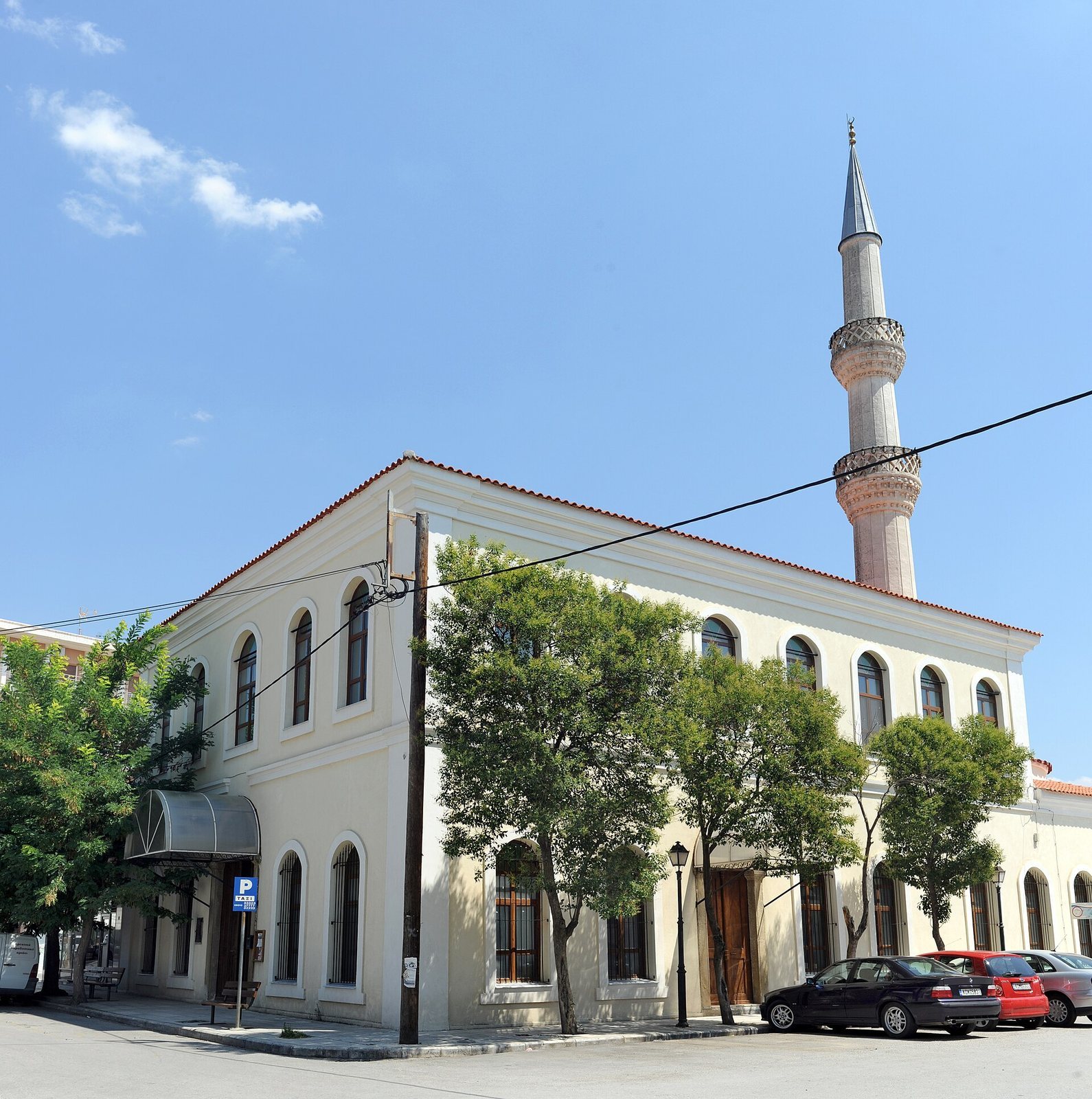
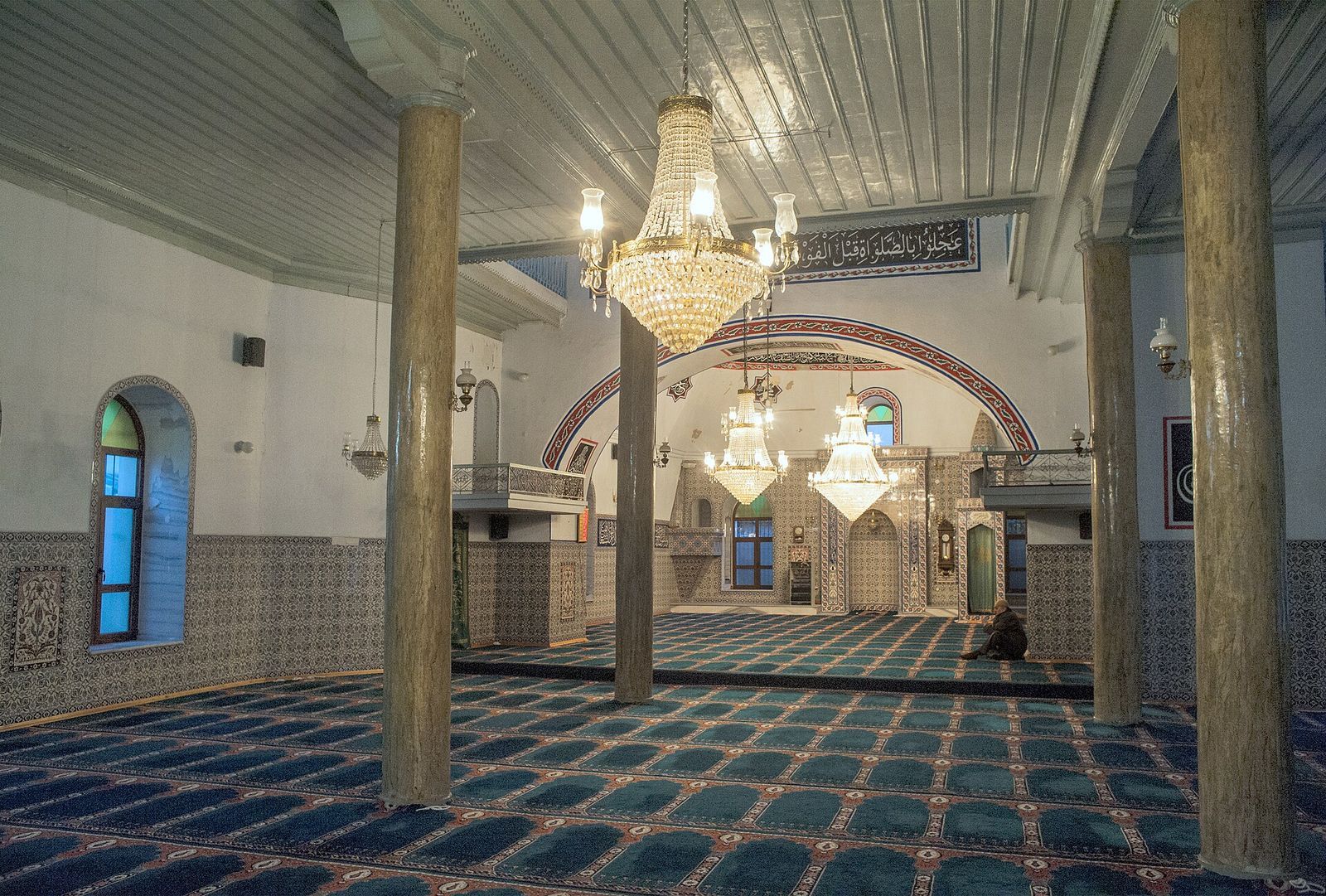
The surviving building is a brick mosque in the Ottoman architectural style. Its seventeenth-century section forms a square measuring 13.08 metres on each side, although the structure was extensively altered during the 1854 renovation. The building stands near the Imaret of Komotini, linking its surviving fabric with the wider religious and charitable complex associated with its early history.
Principal structures
Prayer building
The main structure is defined by its square seventeenth-century plan and brick construction. Its present exterior reflects the substantial remodeling carried out in 1854, followed by the exterior renovation completed in 2011.
Minaret
One minaret belongs to the mosque. Its lower portion survived the conversion of the building into a church in the 1910s, while the damaged upper section and two balconies were reconstructed after the building was returned to the Muslim community around 1919–1920.