Alt St. Alban: A Memorial Church Ruin in Cologne, Germany


Site at a Glance
- Rating
- 4.5
- Popularity
- Low
- Country
- Germany
- Primary era
- Early Modern
- Eras represented
- Medieval, Early Modern, Modern
- Civilizations
- German, Holy Roman Empire
- Site type
- Religious
- Remains
- Church
On this page14 sections
History
Alt St. Alban is a former Roman Catholic parish church in Cologne, Germany, dedicated to Albanus of Mainz, a Christian martyr traditionally associated with Mainz. Belonging to the Archdiocese of Cologne, it is among the city’s oldest churches and was first documented in 1172.
Medieval Church and Early Modern Transformation
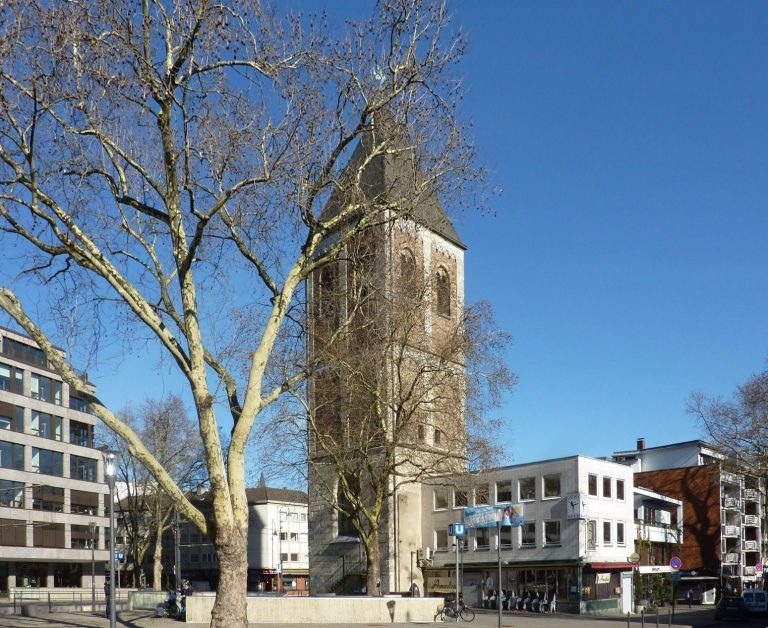
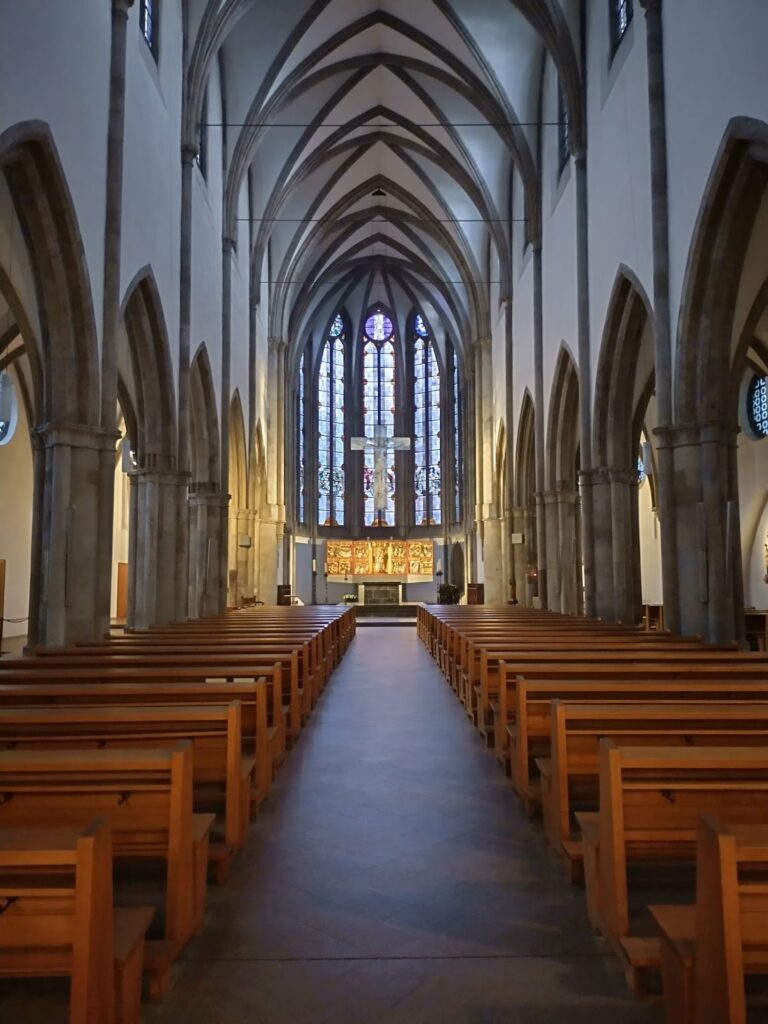
The church was altered repeatedly during the Middle Ages. Its tower dates from 1494, while the building was redesigned as a hall church between 1668 and 1672 by the master builder Arnold Gülich. In a hall church, the nave and side spaces are approximately equal in height, creating a unified interior rather than a strongly elevated central nave. The surviving facade dates from 1896.
Wartime Destruction
Bombing during the Second World War severely damaged Alt St. Alban. After the final heavy bombing of central Cologne on 2 March 1945, the church remained a ruin. Parts of the tower, outer walls, pillars, bays, and apses survived in varying condition. The acting parish priest was killed in the final bombing, and his remains were recovered from the rubble a year later.
Alt St. Alban was excluded from Cologne’s postwar rebuilding plans. Negotiations between the City of Cologne and the archdiocese resulted in an exchange of the former church plot for another property. The city undertook to restore the tower and the chapel within it, make the chapel available to the archdiocese, convert the site into a memorial, and respect its consecrated character.
Deconsecration and Memorial Use
On 23 December 1954, Cardinal Frings authorized the church’s deconsecration. This formally ended its status as a consecrated place of worship and permitted secular use, provided that it was not indecent. The ruins were subsequently converted into a memorial to those killed in the world wars, including victims of National Socialist rule.
The largely depopulated former parish was incorporated into neighboring parishes. A replacement site in Cologne-Neustadt-Nord was provided for Neu St. Alban, a new parish church designed and built by Hans Schilling between 1957 and 1959. Its construction used bricks salvaged from the demolished opera house.
The memorial was inaugurated on 21 May 1959 in the presence of Federal President Theodor Heuss, Cologne mayor Theo Burauen, Hans Kollwitz, Ewald Mataré, the builder Karl Band, and other dignitaries. Alt St. Alban has been legally protected as an immovable monument in North Rhine-Westphalia since 1 July 1980.
Integration into Postwar Cologne
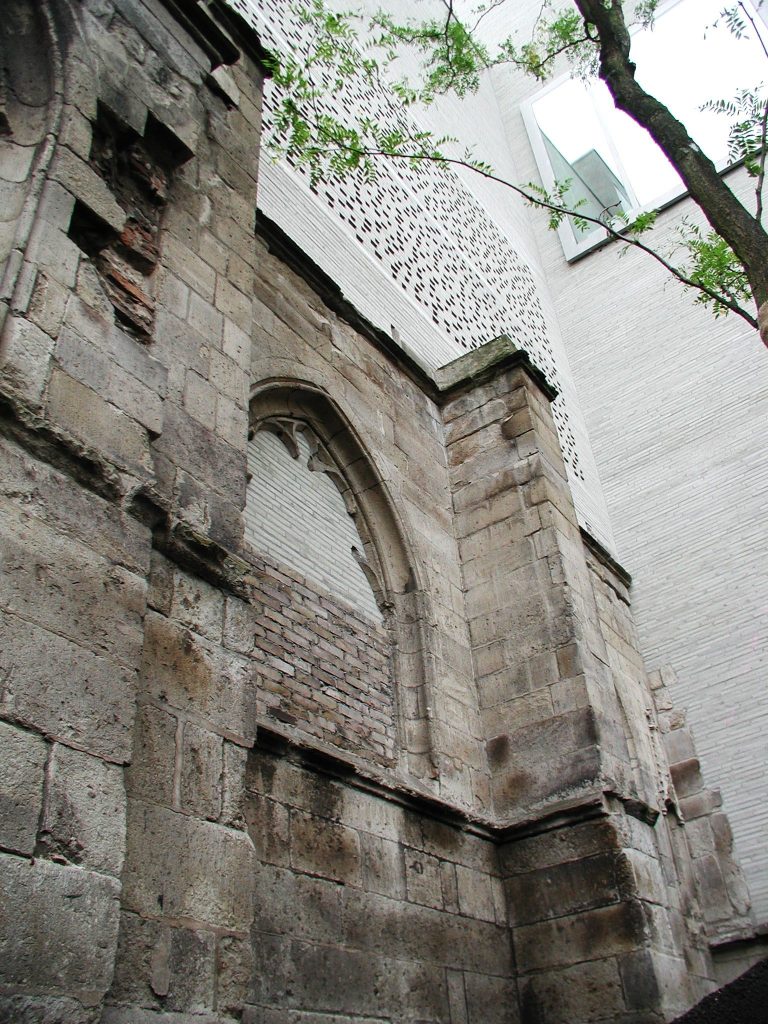
The ruins were incorporated into the postwar rebuilding of the Gürzenich, Cologne’s historic civic festival and events complex. Its stairwell and foyer were built against the church and partly incorporate the former exterior walls. The Wallraf-Richartz-Museum has bordered the site since 2001, and the church can be viewed through the museum’s panoramic window in the Stiftersaal.
The ruin’s condition now prevents its use for events. Parts of the fabric may detach and fall, while the 1950s floor slabs, some laid over voids and medieval crypts, are no longer safely walkable. Extensive rehabilitation is required to secure the structure and its floor.
Remains
Church Ruin and Setting
Alt St. Alban stands at Cologne’s Quatermarkt, with its entrance on the west side facing the street. The southern and eastern sides are joined to the Gürzenich stairwell and foyer, where the interior walls incorporate the church’s former exterior walls. This arrangement preserves the ruin as part of the postwar civic complex.
The surviving hall-church fabric includes outer walls, pillars, bays, and apses with their window openings. The tower also survives in part. The roof structures and glazing are gone, leaving the remaining masonry and openings as the principal evidence of the former church’s form. The building was secured after the war rather than reconstructed as a functioning church.
Tower Chapel and Religious Objects
St. Brother Conrad Chapel
The ground floor of the 1494 tower contains the St. Brother Conrad Chapel, named for Saint Brother Conrad of Parzham, a nineteenth-century German Capuchin friar and Catholic saint. The chapel was completed in October 1960 and consecrated in 1964. Peter Hecker painted its decoration, while Will Thonett made its stained-glass windows.
Crescent-Moon Madonna
A Crescent-Moon Madonna from the first half of the sixteenth century was returned to the chapel in 2007. The image, a Marian representation associated with the crescent moon, had formerly been kept in Cologne Cathedral. Its return followed restoration of the chapel by the City of Cologne, assisted by the Imhoff Foundation and the state of North Rhine-Westphalia.
St. Alban Bell
Only one bell survives from the church’s original four-bell peal. This bronze bell is dedicated to St. Alban and was cast by Johann von Andernach in 1507. After being used in several Cologne churches, it became the Angelus bell at St. Gereon in 2008. The Angelus is a Christian prayer traditionally marked by bell ringing in the morning, at midday, and in the evening.
Memorials within the Ruin
Grieving Parents
The former altar area contains a copy of Grieving Parents, a sculpture group created in 1954. Käthe Kollwitz made the original in memory of her son Peter Kollwitz, who died in the First World War. The original stood at the German military cemetery at Esen-Roggeveld from 1932 and has stood at the German military cemetery at Vladslo in West Flanders, Belgium, since 1956.
Ewald Mataré received the commission for the 1954 copy in 1953 but passed it to his master pupils Joseph Beuys and Erwin Heerich. Heerich made the mother figure, while Beuys made the father figure. The work forms part of the ruin’s memorial ensemble devoted to wartime death and grief.
War-Prisoners’ Memorial
A memorial to war prisoners stands in the front right area of the ruin. Together with the other memorial elements, it can be seen through the gates of Alt St. Alban.