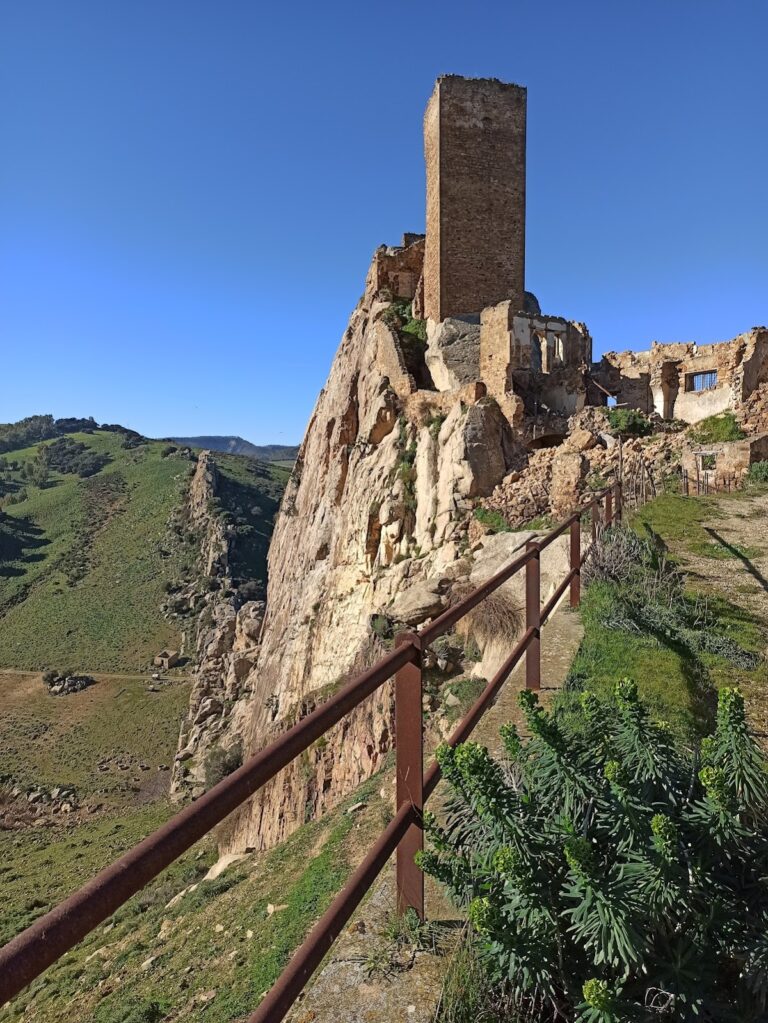
Basilica di San Leone: Mother Church of Assoro
Site at a Glance
- Rating
- 4.8
- Popularity
- Very Low
- Country
- Italy
- Primary era
- Medieval
- Eras represented
- Medieval, Early Modern
- Civilizations
- Crown of Aragon, Kingdom of Sicily, Norman, Spanish
- Site type
- Religious
- Remains
- Basilica
On this page10 sections
History
Basilica di San Leone is the Roman Catholic mother church of Assoro, Italy, founded in 1186 as a Sicilian Gothic royal chapel. Dedicated to Saint Leo the Wonderworker, a bishop of Catania, it follows the Roman rite and belongs to the Diocese of Nicosia. Its foundation was traditionally connected with the marriage of Constance of Hauteville, lady of Assoro and the last dynastic claimant of the Hauteville house, to Henry VI of Swabia, son of Frederick Barbarossa.
Early Christian predecessor
During the Byzantine period, a church dedicated to Saint Peter stood on the foundations of an earlier pagan temple. The church is documented from the fifth century and served as Assoro’s parish church until 1492. It stood on Via Borgo, in the centre of the old town, while the later Basilica di San Leone developed as a separate foundation.
Royal chapel and Aragonese rebuilding
The 1186 building belonged to the tradition of Sicilian Gothic royal or palatine chapels. Under Aragonese rule, the Valguarnera family, lords of the Assoro fief, commissioned extensive work between 1486 and 1490. The church was renovated, enlarged, and rebuilt, acquiring Catalan and Renaissance features alongside further Sicilian Gothic elements.
In 1492, the basilica became the parish church and mother church of Assoro and its nearby parishes. It was consecrated on 21 April 1499 and raised to the rank of a minor basilica, an honorific title granted by the Roman Catholic Church rather than a separate architectural type.
Baroque transformation and religious traditions
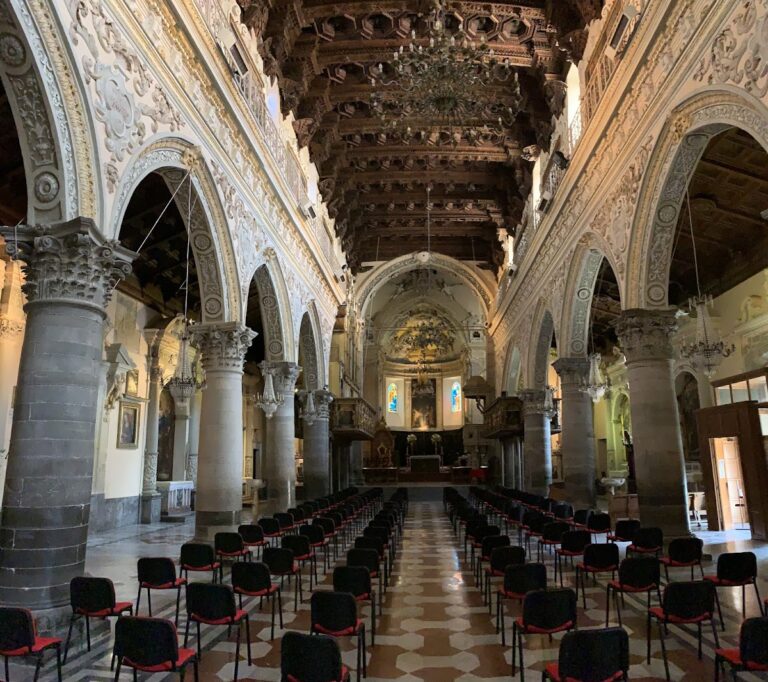
After the 1693 Val di Noto earthquake, restoration gave the building Baroque characteristics and added highly ornamental Serpotta-style stucco, associated with the Sicilian sculptor Giacomo Serpotta. The church was declared a national monument in 1933. Its character consequently reflects successive Norman, Gothic, Catalan, Renaissance, and Baroque influences.
Basilica di San Leone also remains associated with several religious confraternities. The Congregation of the Crucifix traditionally accompanies the crucifix barefoot during Good Friday processions. The church is also connected with the Confraternity of Our Lady of Sorrows and the Confraternity of the Sacred Heart of Jesus.
Remains
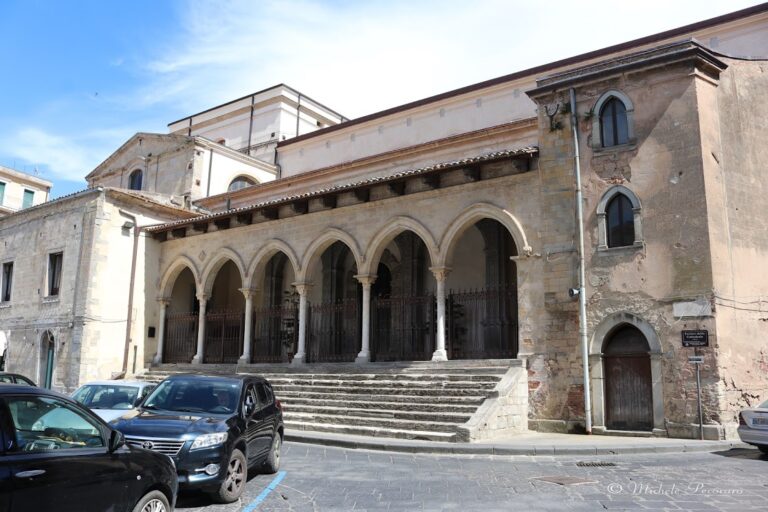
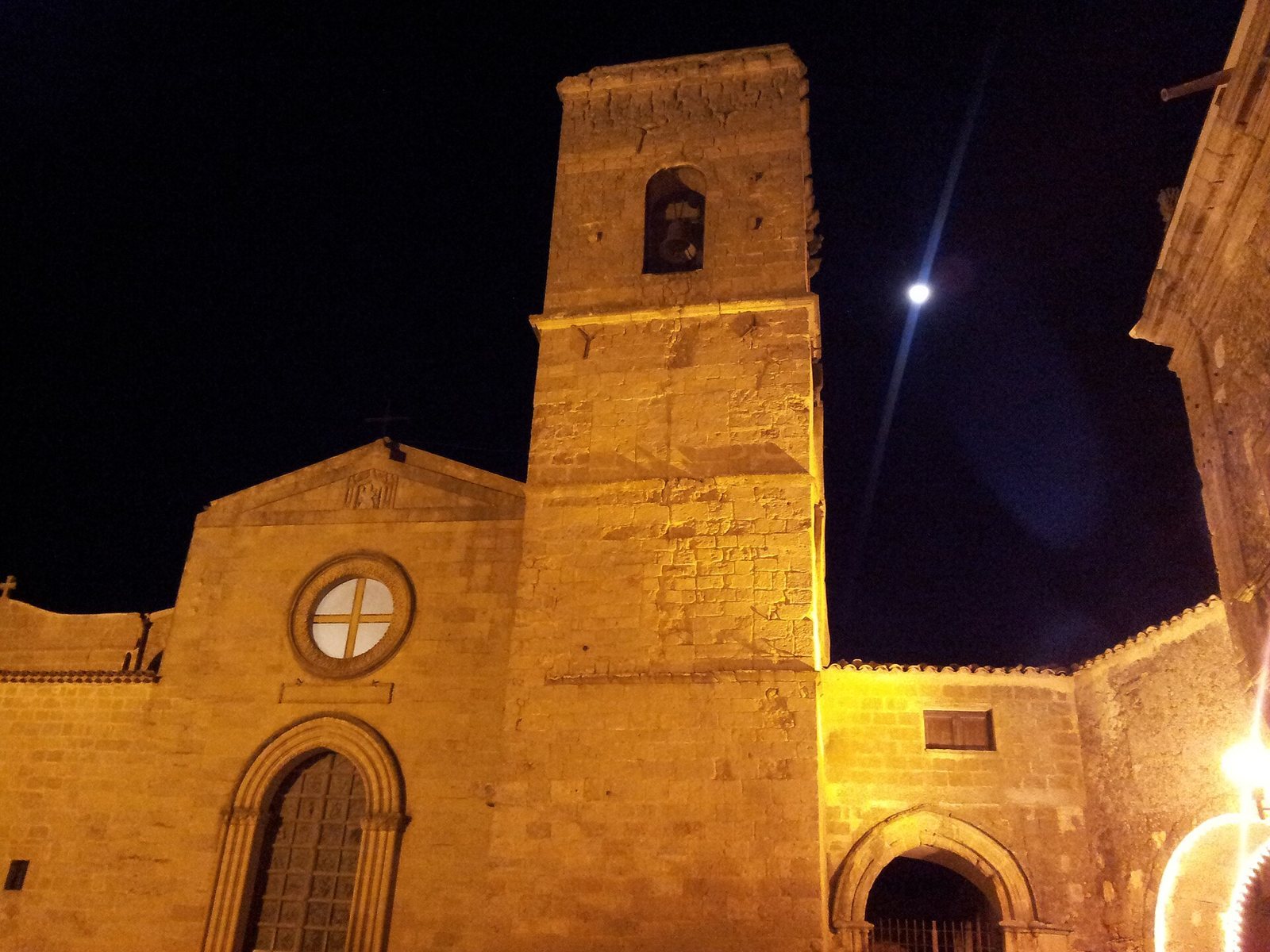
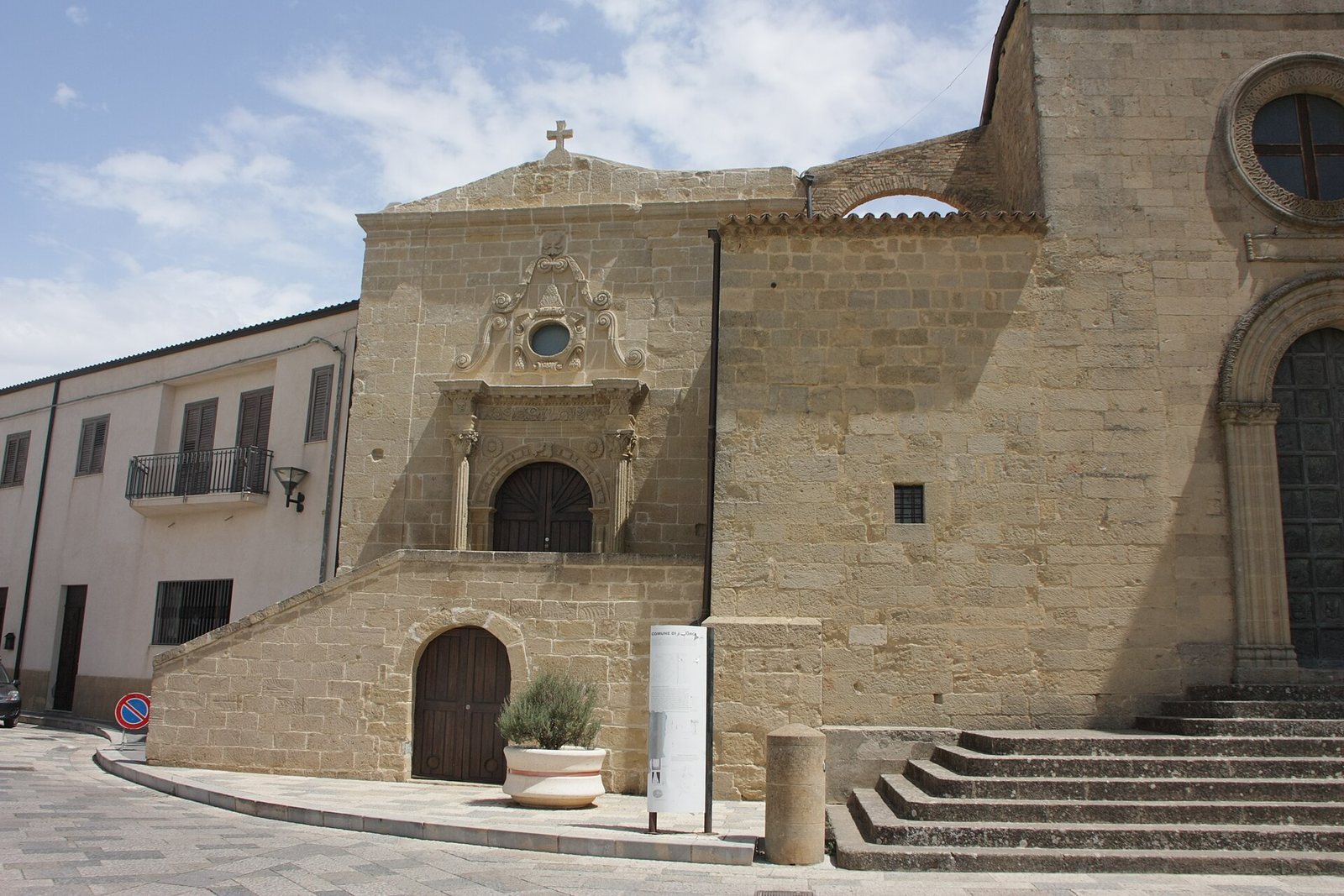
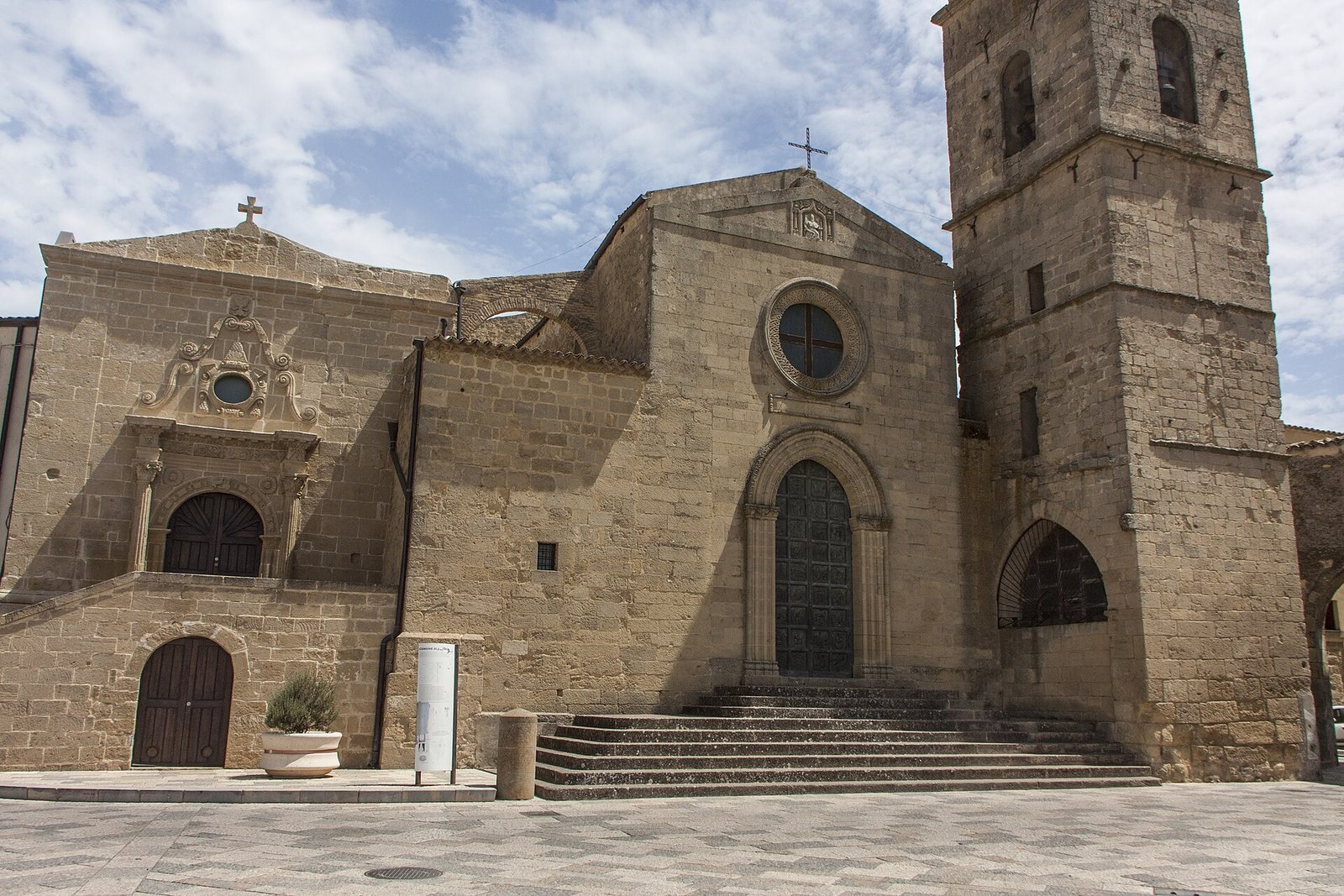
The basilica has a Latin-cross plan, with a long central nave crossed by a raised transept and ending in three apses, the semicircular terminations of the church. Three naves are separated by richly decorated twisted, or Solomonic, columns. The central nave rises above the side aisles, while the transept stands higher and the apses higher still. The building is covered by a wooden roof supported by roof trusses, and the façade combines a circular window with a central portal whose opening is slightly rounded and gently pointed.
Plan, roof, and façade
Gothic forms dominate the exterior, while later Catalan, Renaissance, and Baroque additions contribute to its present appearance. The apse has an umbrella-ribbed vault. An inscription carried by the roof reads, “LULEGATU DI RUGGERU DI ROCCA NI ACCAPTAU – VIVAI ANIMA EIUS – MCCCCLXXXX.” The entrance is completed by an artistically decorated bronze door.
Subterranean and funerary features
A Paleo-Christian crypt, a chamber beneath the church, lies below the basilica. It is associated with the earlier pagan-temple site and was used for the burial of early Christian practitioners. Four medieval marble sarcophagi belonging to the Counts Valguarnera are preserved in the church. Those identified by name are associated with Ponzio, Vitale, and Giacomo Valguarnera.
Marble furnishings
Apse tribune
The principal apse contains a large marble tribune, or cona, a religious altarpiece combining sculpture, relief, and architectural framing. Antonello Gagini made it in 1515, and it is installed in the basin of the apse. Antonello Gagini was a major Renaissance sculptor active in Sicily, particularly known for marble sculpture and ecclesiastical furnishings.
The tribune represents the three realms of the afterlife. Its predella is bounded by Hell on the left and Purgatory on the right. The central compartment bears the old and new coats of arms of Assoro, showing three mountains surmounted by a tree or star. The intermediate panels carry the arms of the bishop and of the representative of the Valguarnera lordship. Vertically grooved members with triple fluting frame the composition, while an inscription on a moulding gives the year 1515 and identifies personalities of the period.
A broad outer frame carries fruit garlands and the symbols of the four Evangelists: the eagle of Saint John, the angel of Saint Matthew, the lion of Saint Mark, and the ox of Saint Luke. Winged putti terminate the frame, and the upper vertical members are pilasters with capitals decorated by raised grotesques. A large central niche divides the tribune into two wings. Each wing has two smaller niches beneath panels, with scallop shells on the canopies symbolizing earthly pilgrimage.
The niches contain full-length statues of Saint Leo the Bishop, Saint Leo II, Saint Benedict of Norcia, and Saint Placidus. Placidus is identified as a martyr and son of the senator Tertullus, who donated his residence at Assoro to the Benedictine order. At the centre stands the Madonna Libera Inferni, a Marian title referring to the Virgin as deliverer from infernal punishment. She holds a pomegranate, described as a symbol of the many graces granted to the living and the dead. Four panels contain seated saints and female saints in high relief.
The tribune’s second level has two outer lunettes, rows of panels, and a large central high relief. Its Gospel scenes include Mary Magdalene with perfumes and sleeping praetorian guards. At the centre, the risen Christ holds an unfurled banner and ascends towards heaven among clouds and winged putti. The present statue is probably a replacement made after the 1693 earthquake. Below it, the tomb is shown with its lid removed, while the praetorian guards react with astonishment.
The third level consists of three lunettes divided by candelabra and framed on the outside by acanthus leaves. Two crowned female saints holding palms of martyrdom appear in half-length at the sides. The central lunette shows the Virgin surrounded by the Apostles, while a stele above the upper lunette represents an allegory of Paradise.
Other sculptural and liturgical furnishings
The church contains a sixteenth-century crucifix in wood and stucco attributed to Antonello Gagini. A sixteenth-century marble holy-water stoup and marble baptismal font are also attributed to him. The baptismal ensemble includes a large sculpted polyptych, an artwork made of several connected panels or sections, likewise attributed to Gagini.
A sixteenth-century silver cross with a blue enamel ground was made by Vincenzo Archifel, a Sicilian artist associated with decorated metalwork and silver ecclesiastical objects. The church’s furnishings therefore include carved marble, painted or modelled devotional sculpture, silverwork, and elaborately decorated architectural elements from several periods.