Sanctuary of San Gerardo Maiella: A Marian Basilica and Redemptorist Shrine in Italy


Site at a Glance
- Rating
- 4.7
- Popularity
- Medium
- Country
- Italy
- Primary era
- Modern
- Eras represented
- Early Modern, Modern
- Civilizations
- Italian, Kingdom of Naples
- Site type
- Religious
- Remains
- Sanctuary
On this page10 sections
History
The Sanctuary of San Gerardo Maiella is a Roman Catholic sanctuary and monastery complex in Materdomini, a hamlet of Caposele in Italy. Its history joins the older Basilica of Santa Maria Mater Domini with the newer shrine dedicated to Saint Gerard Majella, whose death and burial at the monastery transformed an established Marian pilgrimage site into a major center of devotion to the Redemptorist saint.
Origins of the Marian sanctuary
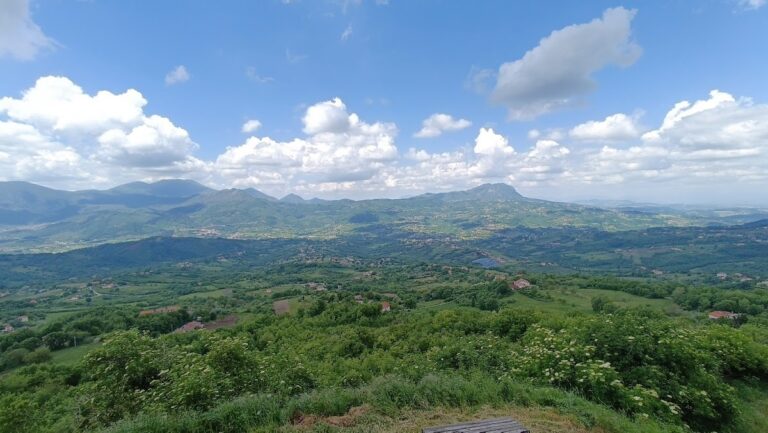
Local tradition places the sanctuary on a hill where the Virgin Mary appeared twice to poor shepherds tending their flock among elder trees. The apparitions were said to have taken place on an elder tree, and a small chapel was built there at Mary’s request. The title Mater Domini, meaning “Mother of the Lord,” reflects the site’s enduring Marian dedication.
The earliest record of a church at the present location dates to 1200, when it was called Sancta Maria de Silere and was administered by the Archdiocese of Conza. By 1527, the church was known as Santa Maria Mater Domini. Pilgrims from the Valle del Sele and surrounding districts were already visiting by the sixteenth century. Pastoral visitations from 1505 onward mention journeys from Irpinia, Lucania, and the Salernitano, while Pope Julius II granted indulgences to the sanctuary as the pilgrimage increased.
Growth under the Redemptorists
The expanding flow of pilgrims encouraged the construction of lodging around the small church. A well serving the church and its visitors was built in 1600 and later incorporated into the newer shrine. In the eighteenth century, Saint Alphonsus Maria de Liguori, founder of the Redemptorists, visited the hill and established a Redemptorist monastery beside the Marian chapel during the 1740s. The monastery was designed by the royal architect Pietro Cimafonte. The Redemptorists, a Catholic congregation devoted especially to missionary preaching and pastoral service, replaced the chapter of clergy from Caposele as custodians of the sanctuary.
Gerard Majella first visited the site with his mother at the age of seven and was deeply affected by the statue of the Virgin Mary. In 1754, after becoming a Redemptorist brother, he was assigned to the monastery. He died there on October 16, 1755. During the famine that year, he became known for assisting poor people who came to the monastery gates. His burial at Materdomini later gave the sanctuary a second devotional focus alongside its Marian tradition.
Expansion and reconstruction
Gerard’s beatification in 1893 and canonization in 1904 brought many more pilgrims to his grave, and devotion to him became closely associated with the older cult of Mater Domini. An enlargement of the older church began on October 16, 1913, to accommodate the growing pilgrimage. The expanded building was consecrated on August 31, 1929, by Alessio Ascalesi, Archbishop of Naples and a cardinal. On February 18, 1930, Pope Pius XI granted it the title of minor basilica, a special papal ecclesiastical status recognizing a church’s religious, historical, or pastoral importance. The statue of the Madonna received a golden diadem in 1931.
A larger neighboring church, the Church of the Redeemer, was begun in the 1970s as pilgrimage continued to grow. The 1980 Irpinia earthquake severely damaged the church and destroyed its interior artworks and decorative furnishings. The basilica reopened on April 30, 2000, during the Great Jubilee, the Catholic jubilee year celebrated that year. Reconstruction generally followed the earlier plan, while incorporating the front portico to make the church slightly longer. Saint Gerard’s tomb was transferred from the altar in the right aisle to the central aisle.
The sanctuary now receives approximately one million pilgrims each year. Votive offerings remain part of the complex’s devotional life, including blue and pink bows placed in the “room of bows,” where mothers give thanks for miracles they believe they have received. The Redemptorists continue to serve as custodians, while the sanctuary belongs to the Archdiocese of Sant’Angelo dei Lombardi-Conza-Nusco-Bisaccia.
Remains
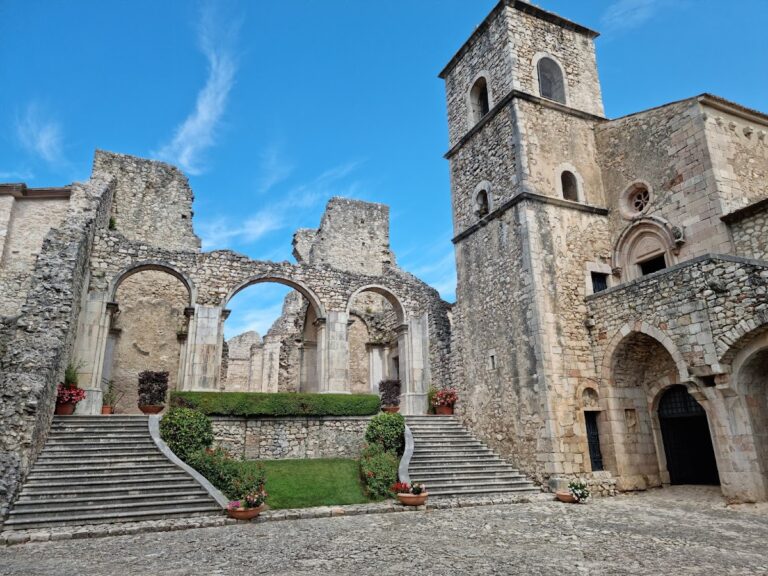
The sanctuary is organized around two churches and the former monastery, combining the older Marian basilica with the newer shrine to Saint Gerard. The newer church is Neoclassical and was built with Pescopagano stone. Its tent-like volume rises more than 46 metres, while its cruciform floor plan forms a Latin cross with a nave divided into three parts.
The churches and principal shrine features
Basilica of Santa Maria Mater Domini
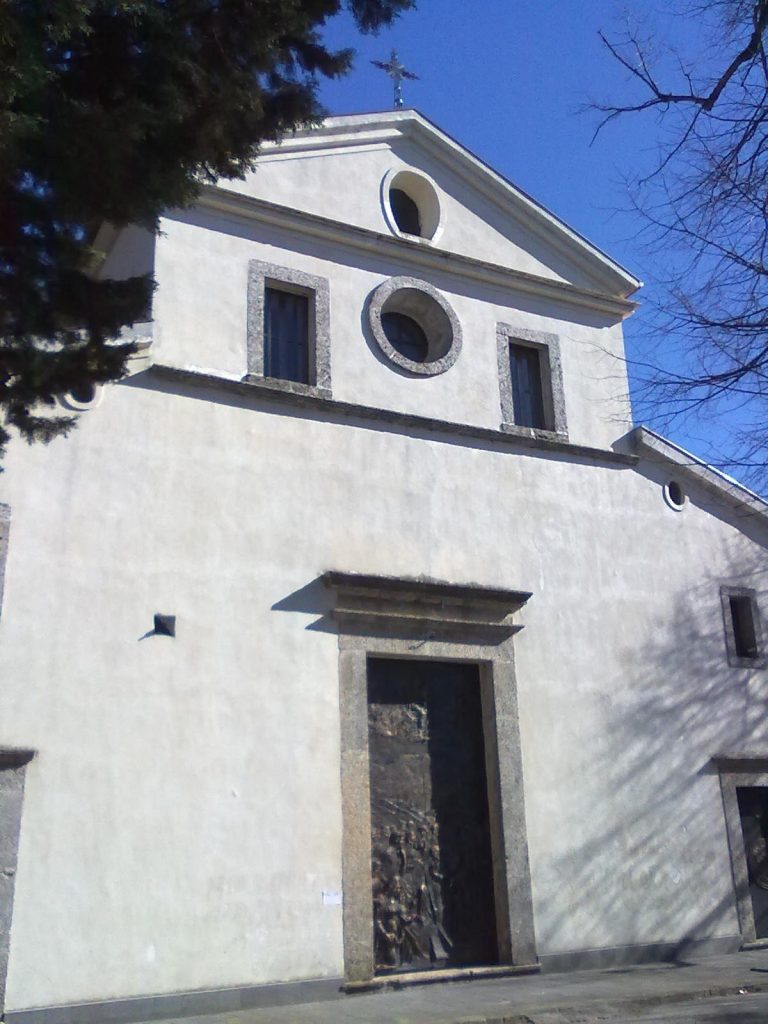
The older church is dedicated to Santa Maria Mater Domini and holds the rank of minor basilica. Its enlargement in the early twentieth century retained the earlier plan while extending the building through the incorporation of the front portico. The Madonna statue associated with the basilica was crowned with a golden diadem in 1931, linking the surviving church interior to the sanctuary’s long Marian tradition.
Church of the Redeemer
The newer church functions as the shrine of Saint Gerard Majella. Its Neoclassical design uses Pescopagano stone and combines a high, tent-shaped exterior with a Latin-cross plan. The nave vault above the double arches once carried stucco highlighted with gold inlays, and stained-glass windows showed episodes from Gerard’s life. The 1980 earthquake destroyed these artworks and furnishings, which were not recovered during the later reconstruction.
Relics and the Well of San Gerardo
The Well of San Gerardo, built in 1600, remains visible beside the sacristy after being incorporated into the newer shrine. In the chancel, the area around the main altar traditionally reserved for clergy and choir, a high-relief marble statue portrays Gerard among the people. Behind it stands the crystal, silver, and mother-of-pearl urn containing his relics.
Monastic and devotional spaces
Outside the basilica is a replica of the small room where Saint Gerard lived at Materdomini. Antique furnishings and a reproduction of the eighteenth-century terracotta floor recreate the character of that room. The wider complex also contains pilgrim accommodation, reception spaces, a confession hall, a theater, and rooms displaying objects that belonged to Gerard together with votive offerings donated over the centuries.