Monastery of Saint Christopher: A Serbian Orthodox Monastery in Mislođin
Site at a Glance
- Rating
- 4.7
- Popularity
- Low
- Country
- Serbia
- Primary era
- Modern
- Eras represented
- Medieval, Modern
- Civilizations
- Serbian, Serbian Despotate
- Site type
- Religious
- Remains
- Monastery
On this page7 sections
History
The Monastery of Saint Christopher is a Serbian Orthodox monastery in Mislođin, Serbia, traditionally founded in 1280 and attributed to King Stefan Dragutin, a medieval Serbian ruler of the late thirteenth century. Dedicated to Saint Christopher, it belongs to the Belgrade-Karlovci Archdiocese of the Serbian Orthodox Church. Tradition also holds that a Christian church stood at the site during the Roman period and that Dragutin reused material from that earlier building.
Medieval origins and later interpretation
The monastery’s estates once included Mislođin, Jasenak, part of Barič, mills on the Kolubara River, fishponds at Jezero and Barič, apiaries at Kovančine, and vineyards at Jasenak. Archaeological research begun in 1966 offered a different interpretation of the site’s early history. The earlier church was associated with the reign of Despot Stefan Lazarević, a fifteenth-century Serbian ruler, and was considered to have been restored in the second half of the sixteenth century. Its plan and building materials do not support a thirteenth-century date, and the church is instead understood as a modest later rural building.
Destruction and reuse
Ottoman forces destroyed the monastery in 1521 while advancing from the direction of Šabac during the campaign to conquer Belgrade. The church nevertheless appeared in sixteenth-century records, including the 1560 register of imperial estates in the Belgrade district, which listed the Christopher monastery near Barič.
The monastery suffered another destruction during the Austro-Turkish conflicts of the eighteenth century. In 1824, material from the ruins and the monastery’s grave monuments was reused in the old church at Palež, now Obrenovac. After a new church was built there, these elements were transferred in 1868 for use in the church at Barič.
Renewal in the twenty-first century
Renewal began after the nun Justina came to Serbia from Canada at the end of 2010. Metropolitan Amfilohije instructed her to restore and re-establish the monastery. The site then contained the remains of the former church and a small bare-walled building without living facilities, while thorn bushes and scrub covered the grounds.
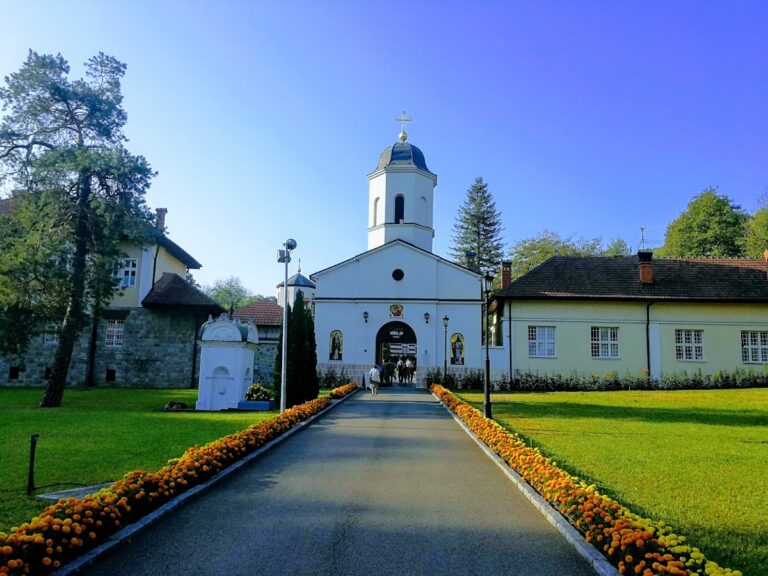
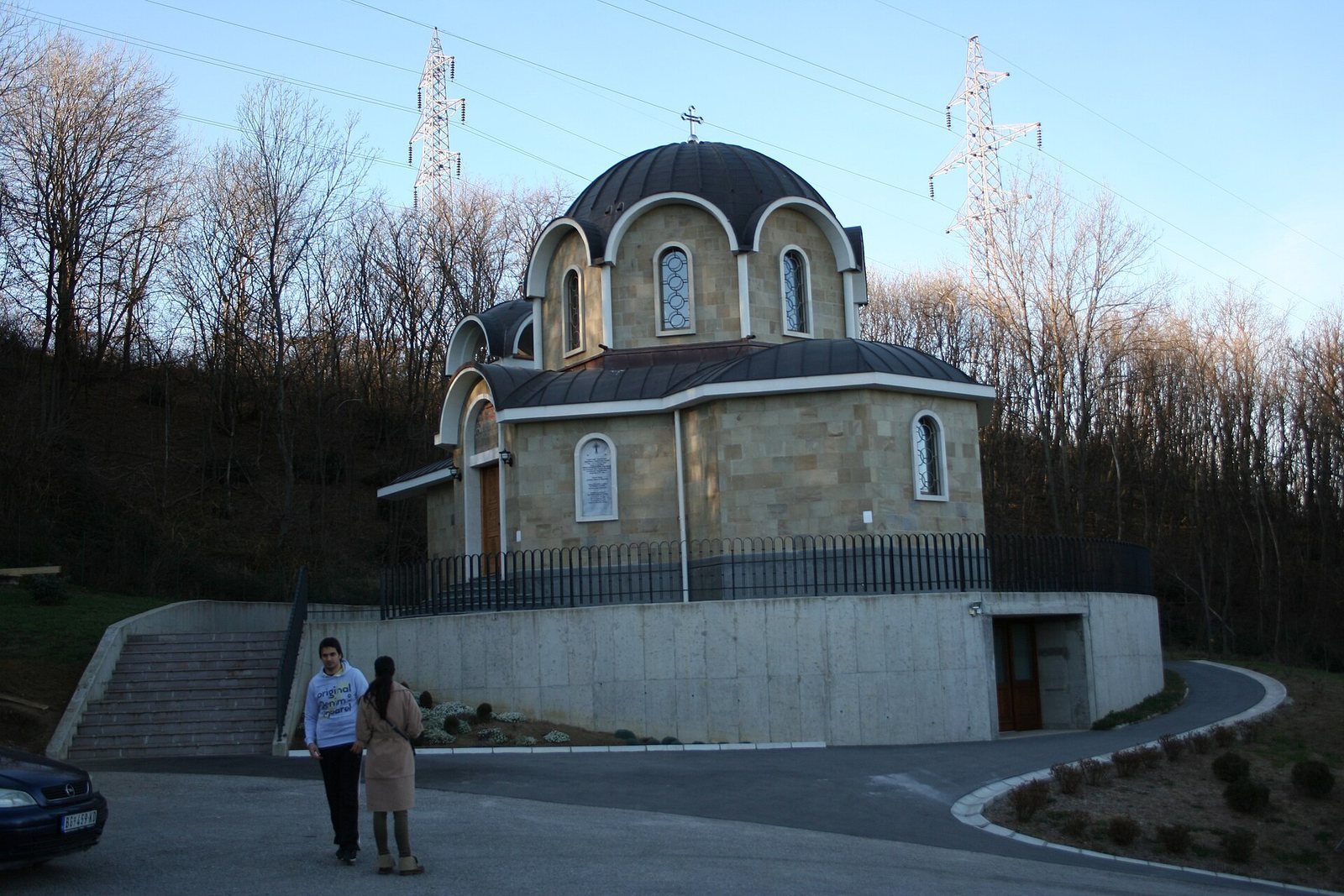
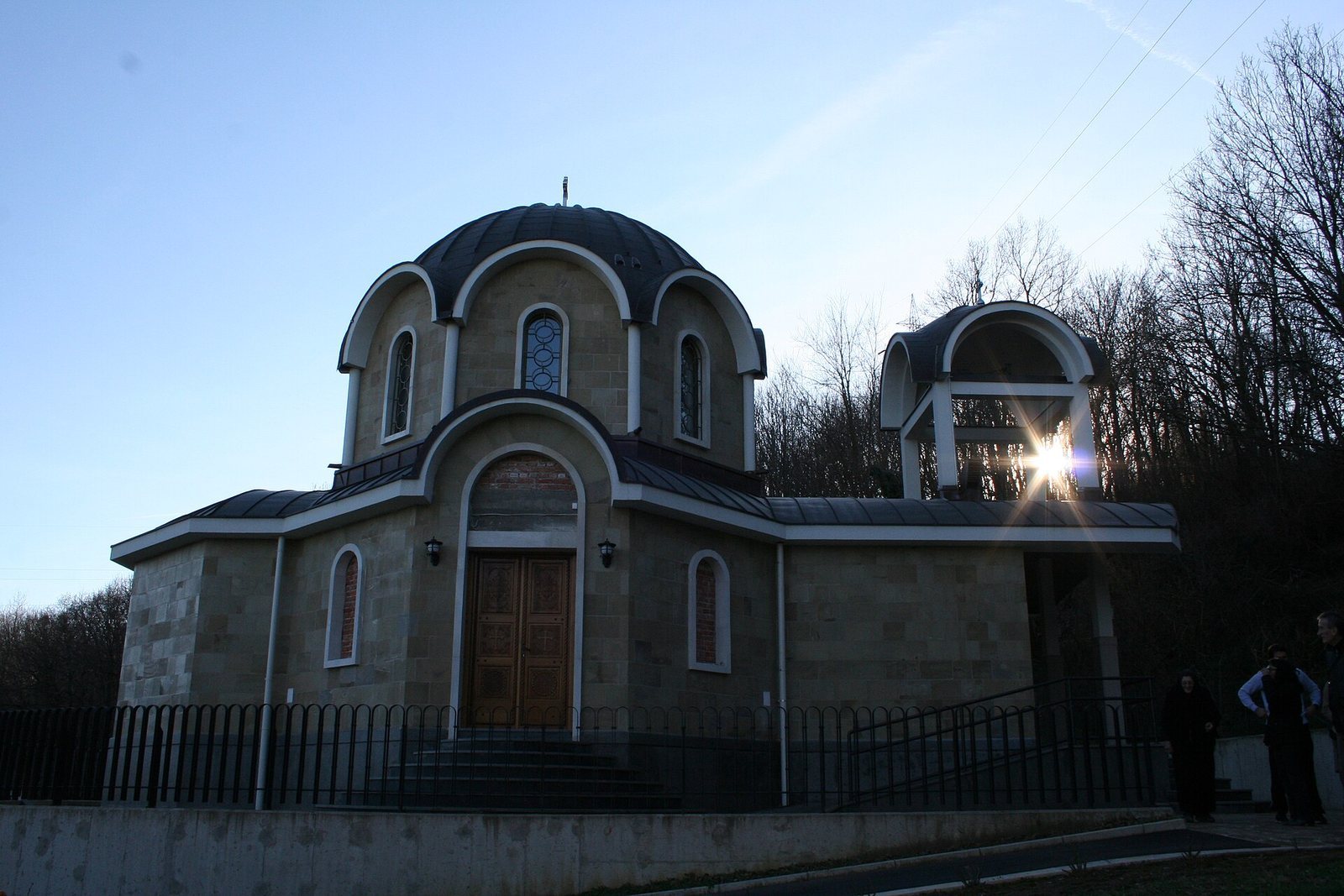
The work involved clearing and arranging the property, building an asphalt road, securing permits and project documentation, and raising funds. Construction of a new monastery church began on 12 November 2014, with Ljubinka Pejica serving as ktitor, the principal founder and patron responsible for establishing or financing a church or monastery. Serbian Patriarch Irinej consecrated the monastery on 4 October 2015.
Remains
The present monastery church stands above the remains of a smaller triconch church, whose foundations are preserved in a crypt beneath the current building. A triconch church has a sanctuary plan with three apsidal or conch-like projections. The earlier structure lies on a slope descending toward the Bačevački stream, and its remains have been archaeologically investigated and conserved.
Earlier church
The earlier church was built of brick laid with thick mortar joints. Parts of the nave walls survive, while the altar apse has been destroyed. Fragmentary fresco painting remains in the left conch and on the western wall of the narthex, the entrance or vestibule area of a church. Its triconch plan connects the building with monuments of the Morava school, a medieval Serbian architectural and artistic tradition known for elaborate spatial planning and decorative treatment.
Present monastery church
The new monastery church incorporates the earlier sacred site by preserving the older foundations in its crypt. Bones of monks who perished were found while the foundations were being excavated, and they are kept in reliquaries in the crypt. A reliquary is a container for sacred relics.