Ename Abbey: A Benedictine Monastery in Belgium


Site at a Glance
- Rating
- 4.1
- Popularity
- Low
- Country
- Belgium
- Primary era
- Medieval
- External website
- Open
- Eras represented
- Medieval
- Civilizations
- County of Flanders, Holy Roman Empire
- Site type
- Religious
- Remains
- Monastery
On this page13 sections
History
Ename Abbey, formally the Sint-Salvator Abbey, was a Benedictine monastery in Belgium, in Ename, now part of Oudenaarde. Adele of France, wife of Baldwin V, Count of Flanders, established it in 1063. The monastery followed the Rule of Saint Benedict, which organized communal worship, disciplined daily life, and work. Its foundation followed the conversion of Ename from a frontier stronghold into a settlement under the control of the counts of Flanders.
From Ottonian fortress to abbey
Before the abbey, Ename was an Ottonian border fortress and palace complex on the western frontier of the Holy Roman Empire. The Ottonian period was associated with the German emperors of the tenth and early eleventh centuries. Built around 974 at the end of a peninsula in a bend of the Scheldt, the fortress is attributed to Godfrey of Verdun and his wife, Mathilde of Saxony. Baldwin V destroyed its keep in 1033 and secured definitive control of Ename by 1062. He then transferred the village and other properties to the new monastery, providing it with sources of income.
The first monastery occupied the former Ottonian palace and was directed by a monk from Saint Vedastus Abbey in Arras. Around 1070, the foundation was established again under the dedication of Saint Salvator, while the former palace became a chapel dedicated to Our Lady. The abbey was directly controlled by the Pope and maintained close relations with the counts of Flanders.
Medieval expansion
The original monastery was replaced and enlarged during the prosperous twelfth and thirteenth centuries. The first Saint Salvator church gave way to a larger Romanesque church in 1139. Romanesque architecture used substantial masonry, rounded arches, and massive forms, and this church drew influence from the Benedictine abbeys of Cluny, Hirschau, and Affligem. Around 1165, the abbey buildings were rebuilt as larger, richly decorated Gothic structures. In the later thirteenth century, the community added a hospital and a separate infirmary for sick monks.
The monks also managed the surrounding woodland, which had been heavily exploited. During the thirteenth century they began planting and harvesting trees in a program described as possibly the oldest recorded reforestation program in Europe. The abbey operated its own brewery and cultivated hops near Oudenaarde, activities that continued until the French Revolution.
Conflict, restoration, and political influence
Religious and civil conflicts damaged the abbey during the sixteenth century. The Iconoclastic Fury of 1566, a wave of Protestant attacks on Catholic images, furnishings, and buildings in the Low Countries, caused minor damage. In 1578, Protestant troops from Ghent occupied Oudenaarde. The monks fled, the buildings were plundered, and the ruins were used as a stone quarry. Rebuilding began in 1596.
After their return, the monks reclaimed their properties in Ename and restored their authority over the village. A cross and a pillory were erected on the rectangular village square. A pillory was a public punishment device intended to expose and humiliate offenders. The abbey underwent a major revival during the seventeenth century and remained prosperous until the late eighteenth century.
In 1657, Abbot Antoon de Loose enlarged the abbot’s quarters and commissioned the bell founder Pieter Hemony to make bells and chimes for a carillon tower at the entrance. A carillon is a set of tuned bells played from a keyboard or mechanical system, and the installation was expanded in 1677. The abbots also took part in the political life of the county as members of the States of Flanders, a representative body in which clergy, nobility, and towns participated in governing and financing the county. Since political discussion was forbidden inside the abbey, the abbots used the large French garden before the complex for meetings. In 1678, Antoon de Loose met Louis XIV of France during the king’s passage through Ename.
Suppression and archaeological study
During the late eighteenth-century French Revolution, the abbey was confiscated, the monks were expelled, and its properties were seized and sold. The complex was dismantled in 1795, leaving ruins and foundations. Archaeological investigation began in 1942, when the architecture student Adelbert Van de Walle exposed the foundations of the Saint Salvator church. From the 1980s, excavations led by Dirk Callebaut examined both the earlier fortress and the wider archaeological site.
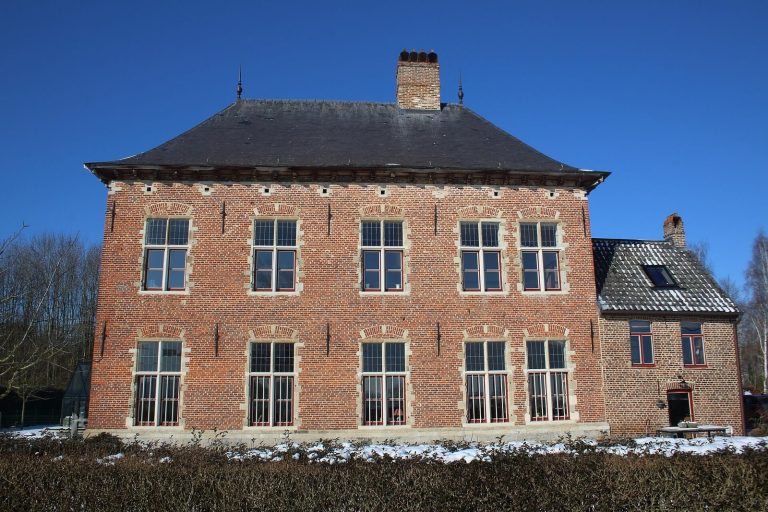
Since 1990, the Ename 974 project has supported excavation and historical research. The site became part of the Provincial Archaeological Park associated with the Provincial Archaeological Museum in 1998, where the surviving ruins are presented as an open-air archaeological site. Archaeological analysis, landscape archaeology, and historical research have contributed to three-dimensional reconstructions of the abbey’s development. The ruins, earlier fortress remains, and archaeological remains of the town have yielded important evidence about Ename’s past. At the historic House Beaucarne, abbey-related material includes the sacristy cabinet, portraits of the two last abbots, and a substantial historical archive.
A later tradition links Ename Abbey with the Battle of the Golden Spurs, claiming that it supplied bread to hungry Flemish fighters on the night after the battle. The association between the battle’s name and the discovery of gilded spurs belongs to the romantic version recorded by Hendrik Conscience.
Remains
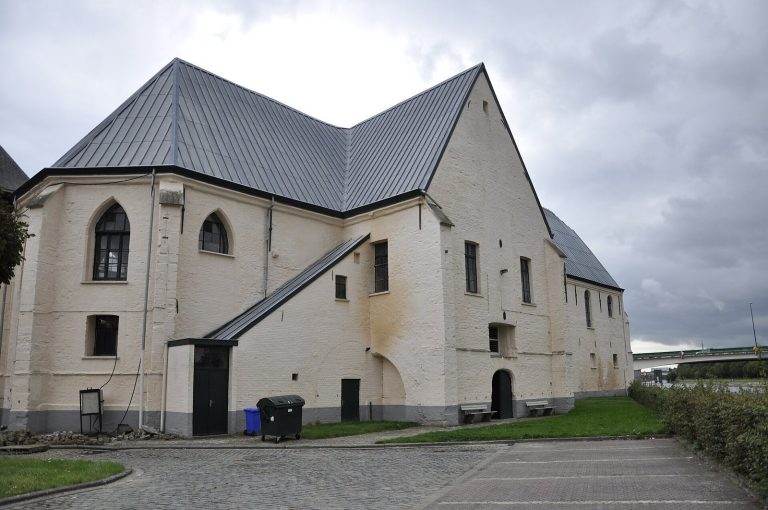
The surviving abbey is represented chiefly by foundations and ruins within the Ename archaeological site. The complex developed around the Saint Salvator church, while the earlier Ottonian palace was incorporated into the first monastery and later served as the Our Lady chapel. Excavations have exposed the church foundations and those of other abbey buildings, allowing the changing plan and appearance of the complex to be reconstructed from archaeological evidence and recovered objects.
Church and monastic complex
Saint Salvator church
The first Saint Salvator church was replaced in 1139 by a larger Romanesque building influenced by Cluny, Hirschau, and Affligem. Around 1165, the surrounding abbey structures were replaced by larger Gothic buildings with richer decoration. The surviving remains are chiefly foundations and ruined masonry, which preserve the church’s place at the center of the monastic layout.
Infirmary and ancillary buildings
The medieval complex included an infirmary with a cloister, a covered walkway arranged around an enclosed court, as well as an area of ancillary buildings. A hospital and a separate infirmary for sick monks were added during the second half of the thirteenth century. Their foundations form part of the archaeological remains used to interpret the organization of the abbey.
Seventeenth-century precinct
Abbot’s quarters and carillon tower
Abbot Antoon de Loose’s enlarged quarters date from 1657. A carillon tower stood at the abbey entrance, where Pieter Hemony’s bells and chimes were installed during the seventeenth century. The carillon was expanded in 1677. These features belonged to the abbey’s period of renewed prosperity before its confiscation and dismantling.
French garden and village square
The French garden in front of the complex contained fountains and pavilions and provided a setting for meetings between the politically active abbots and other officials. The associated rectangular village square contained a cross and a pillory erected after the monks returned in the late sixteenth century. Together, these surviving archaeological associations reflect the abbey’s administrative presence in Ename.
Earlier fortress remains
The wider archaeological site also contains the foundations of the earlier fortress on the right bank of the Scheldt. The stronghold occupied the end of a peninsula within a river meander and formed part of the Ottonian palace complex built around 974. Its foundations were recovered during archaeological investigations in the 1980s, alongside evidence from the abbey and the medieval town.
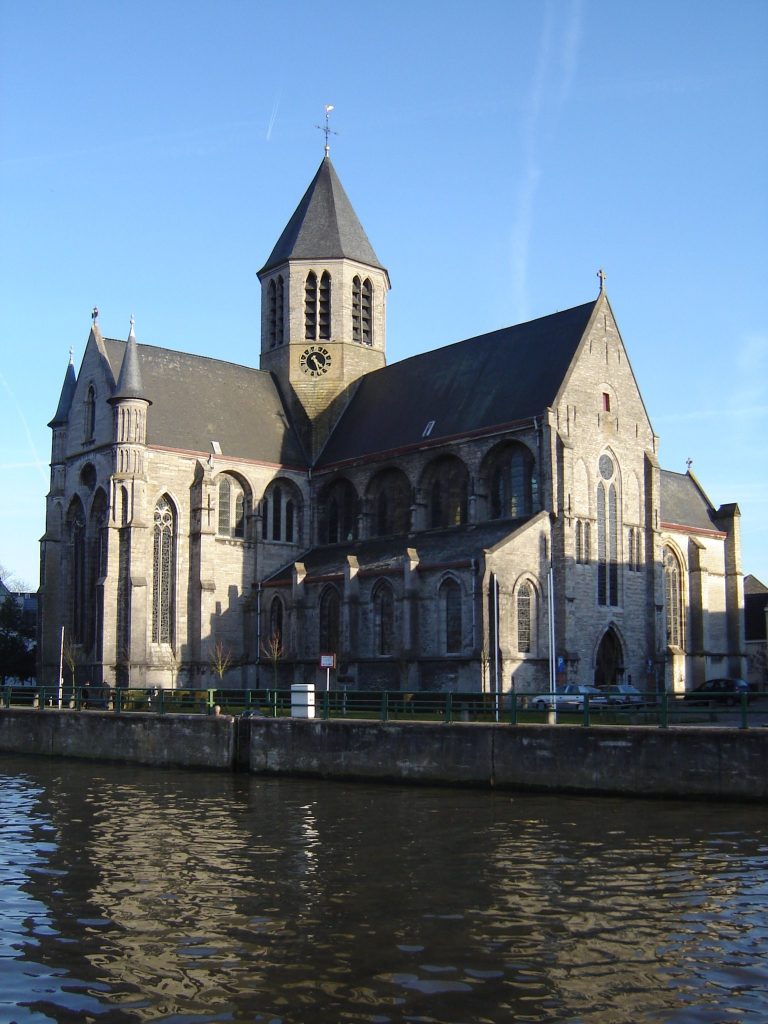
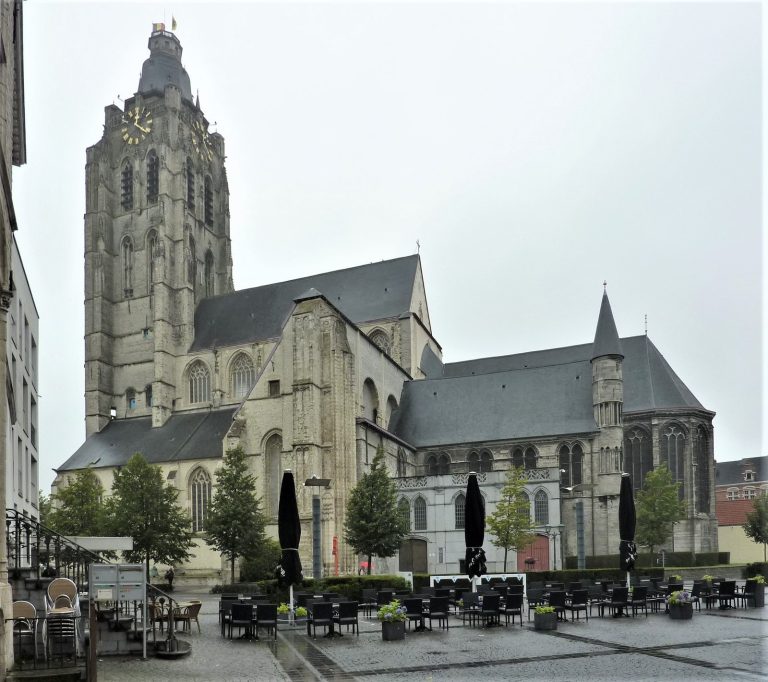
Objects recovered from excavations at the abbey are displayed in the Provincial Archaeological Museum. The nearby Saint Lawrence Church retains several wall paintings, and restoration work around 2000 uncovered a private box from which nobles of the Holy Roman Empire attended Mass. House Beaucarne preserves the abbey sacristy cabinet, portraits of its two last abbots, and an extensive archive connected with the monastery.