St. Pankratius: An Evangelical Lutheran Church in Leipzig
Site at a Glance
- Rating
- 4.9
- Popularity
- Very Low
- Country
- Germany
- Primary era
- Medieval
- External website
- Open
- Eras represented
- Medieval, Modern
- Civilizations
- German, Holy Roman Empire
- Site type
- Religious
- Remains
- Church
On this page7 sections
History
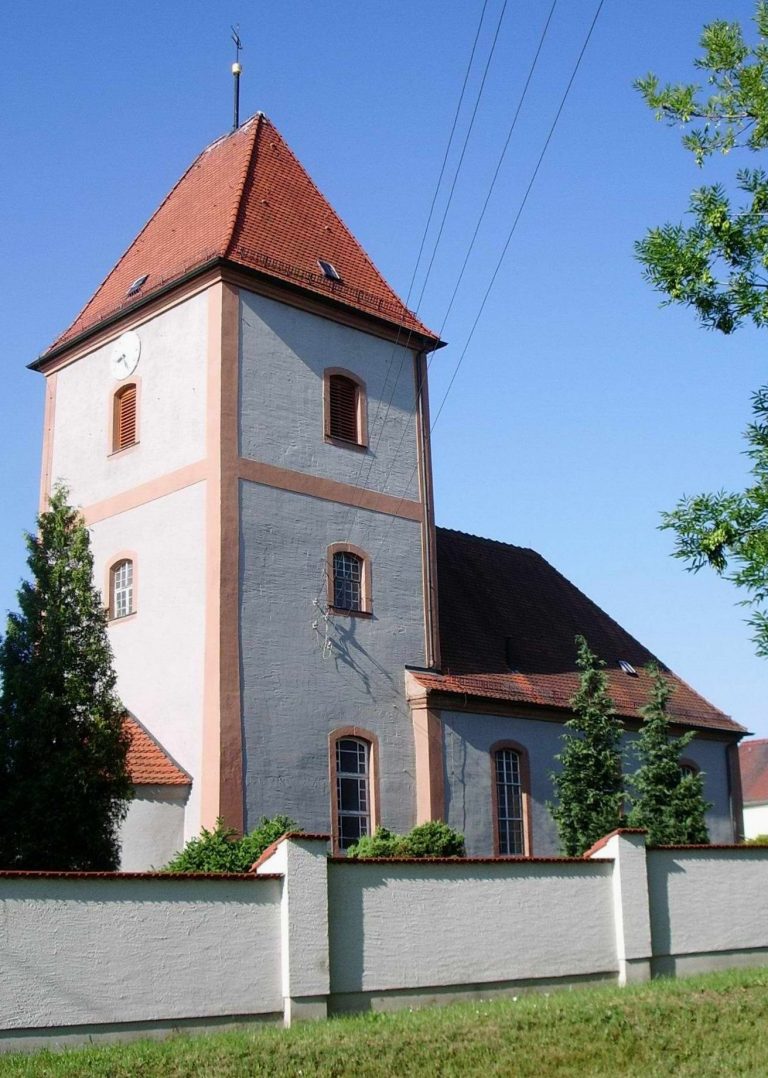
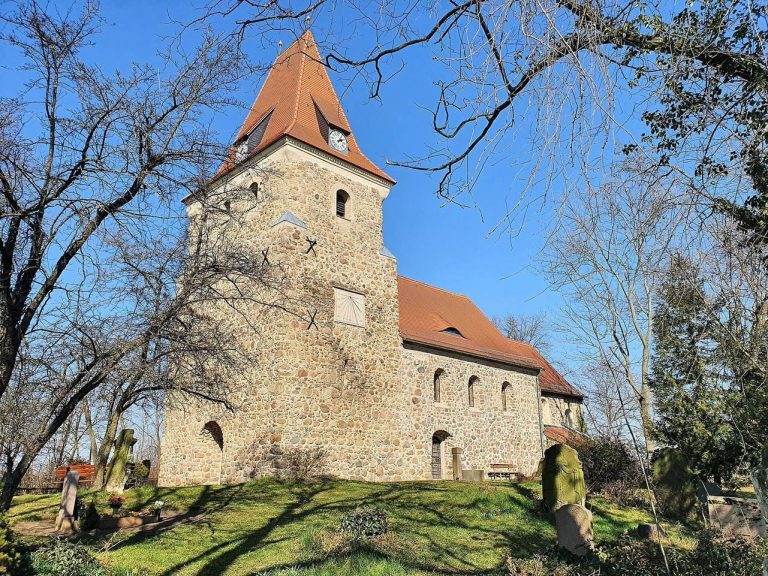
St. Pankratius is an Evangelical Lutheran church in Engelsdorf, now a district of Leipzig, Germany, built around 1170 in the Romanesque period. Its square lower tower levels belong to this early phase, when the church stood on a hill at the edge of the settlement.
Medieval church and name
The church has been known as St. Pankratius since at least 1520. A document in the Leipzig City Archive’s contract book refers to the “St. Pankratius Church at Engelsdorf” and records that Mathias Schulz owed it 61 gulden and 7 groschen, historical currency denominations used in German-speaking lands. The dedication refers to Saint Pancras, an early Christian martyr traditionally associated with Rome.
Classical rebuilding and tower alterations
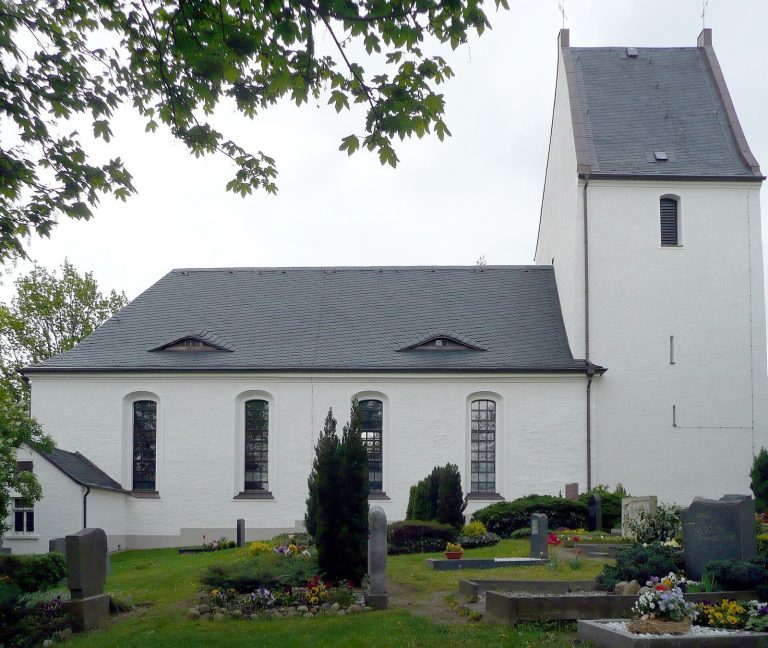
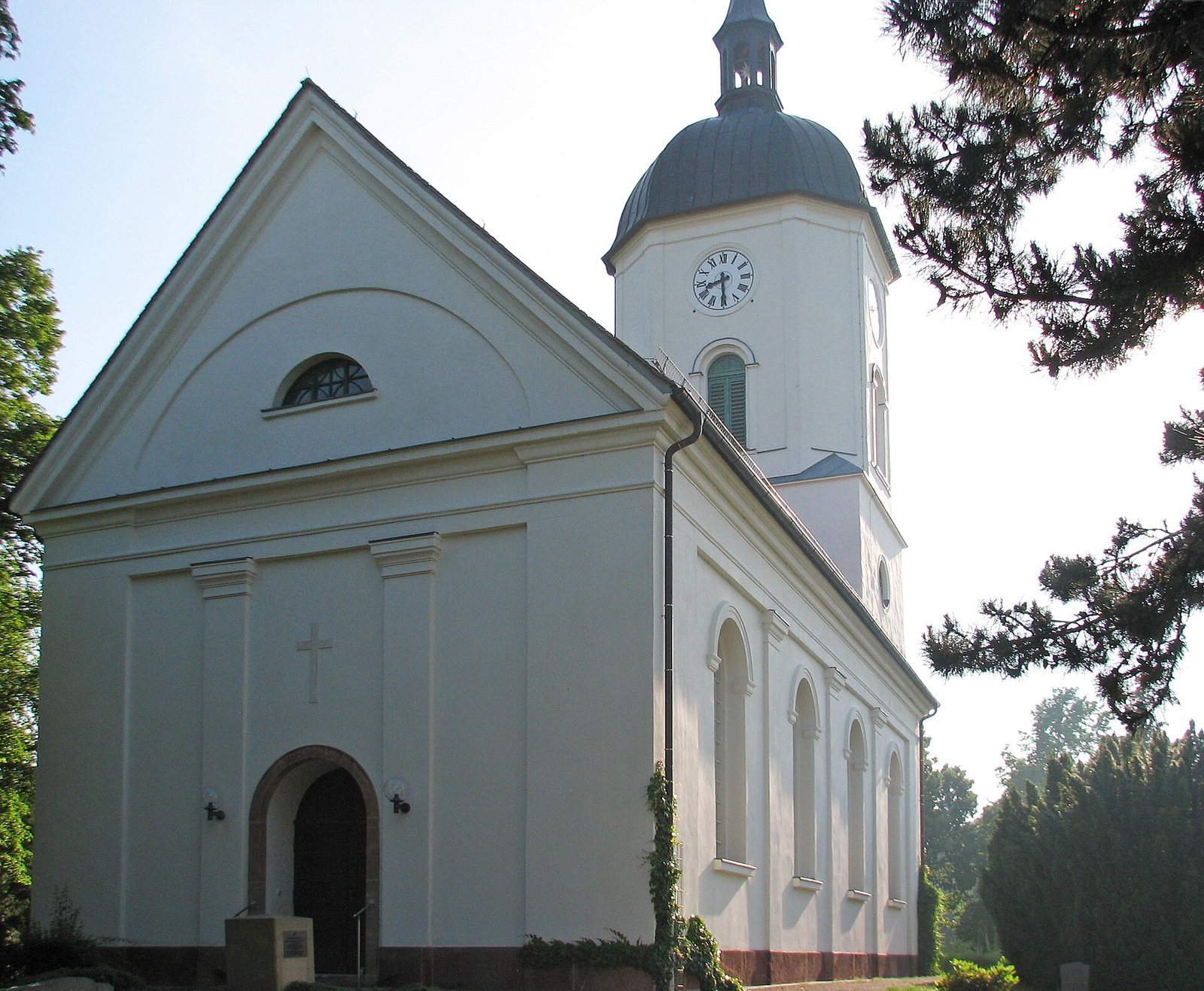
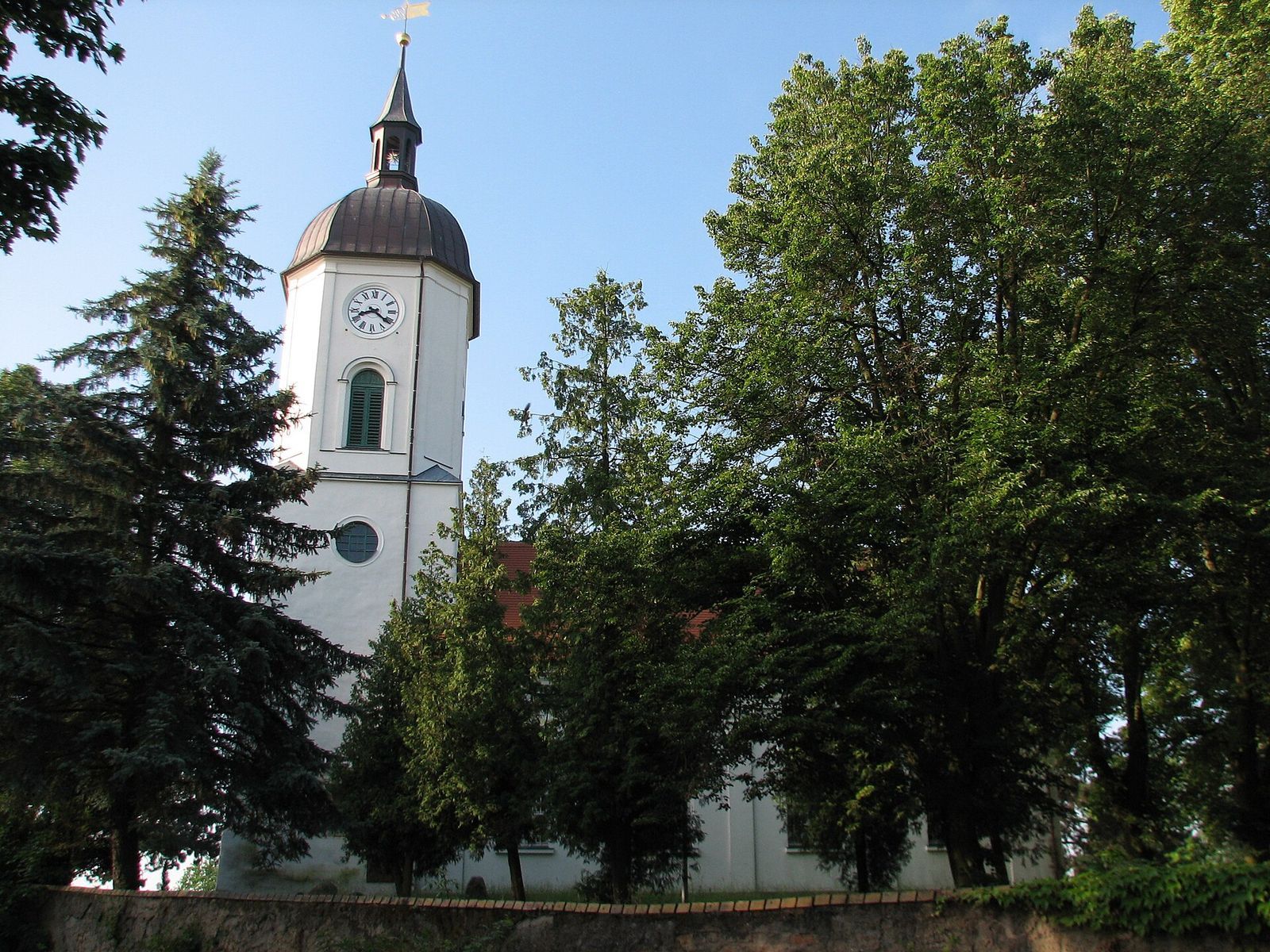
By 1832, the nave had become dilapidated and was demolished. A new nave in the Classical style replaced it, using an architectural language associated with symmetry, restraint, and pilasters. In 1863, an octagonal upper section was added to the older square tower, creating the combination of medieval and later forms visible in the church today.
Concerns about whether the historic masonry could tolerate bell vibrations led to the construction of a free-standing oak bell frame inside the tower. Built upward from ground level, the frame remains structurally separate from the tower walls. The church and its approximately 800-year-old tower later underwent extensive reconstruction, including new stairs and windows, renewed beam ends, floorboards, and repairs that injected cracks in the masonry.
Modern changes and parish history
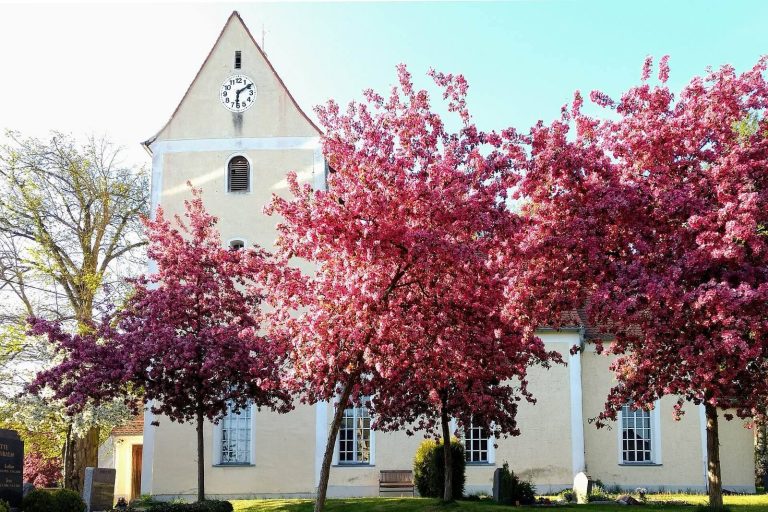
On 10 July 2005, the clock from Leipzig’s demolished St. Mark’s Church began operating in the tower. Its mechanisms strike both the hours and quarter-hours. Two clock faces were also added on the east and west sides, allowing the time to be seen from all four sides of the tower.
St. Pankratius now belongs to the Evangelical Lutheran parish of Engelsdorf-Sommerfeld-Hirschfeld, a local congregation and its associated administrative community within the Evangelical Lutheran Church of Saxony. Hirschfeld Church is a subsidiary church, while Zweinaundorf Church formerly held that role.
Remains
The surviving church combines the compact, heavy masonry of its Romanesque tower with the more restrained Classical design of the 1832 nave. The tower rises from square lower storeys into an octagonal upper section, while the nave extends the building’s later congregational space beside it. Paving laid in 2005 marks the ground plan of an apse that was formerly attached to the tower.
Tower and nave
The medieval chancel tower is the oldest surviving part of St. Pankratius. Its square lower levels date from around 1170, and the upper octagonal section was added in 1863. Inside, the independent oak bell frame runs from the ground upward without being joined to the historic tower masonry. The nave built in 1832 is Classical in design, with exterior pilasters and a gallery extending along three sides.
Organ and bells
The present organ was built in 1924 by Alfred Schmeisser of Rochlitz and fundamentally overhauled and restored by Gerd-Christian Bochmann of Kohren-Sahlis in 2017. It uses pneumatic cone chests, a wind-chest system in which pneumatic controls operate cone valves beneath the pipes. The instrument has 12 stops, two hand-played manuals, and a foot-operated pedal. Its couplers include II/I, I/P, and II/P, together with sub-octave coupling II/I and super-octave coupling I/I and II/I. Fixed combinations marked P, F, and FF and a bellows signal are also listed among its controls.
The bell peal consists of three bronze bells. One was cast in Dresden by Carl Louis Hermann Große in 1878 and has the tone B1 with a deviation of minus three. Peter Grassmayr of Innsbruck cast the other two in 2010; they have the tones E1 with a deviation of minus two and G-sharp1 with a deviation of minus four. The two newer bells were consecrated in Engelsdorf on Whit Monday 2010, lifted into the tower on 1 June, and first sounded during a service on 20 June.