Kirche Panitzsch: A Medieval Evangelical-Lutheran Church in Germany


Site at a Glance
- Rating
- 4.5
- Popularity
- Very Low
- Country
- Germany
- Primary era
- Early Modern
- External website
- Open
- Eras represented
- Medieval, Early Modern
- Civilizations
- Electorate of Saxony, Holy Roman Empire, Margraviate of Meissen
- Site type
- Religious
- Remains
- Church
On this page17 sections
History
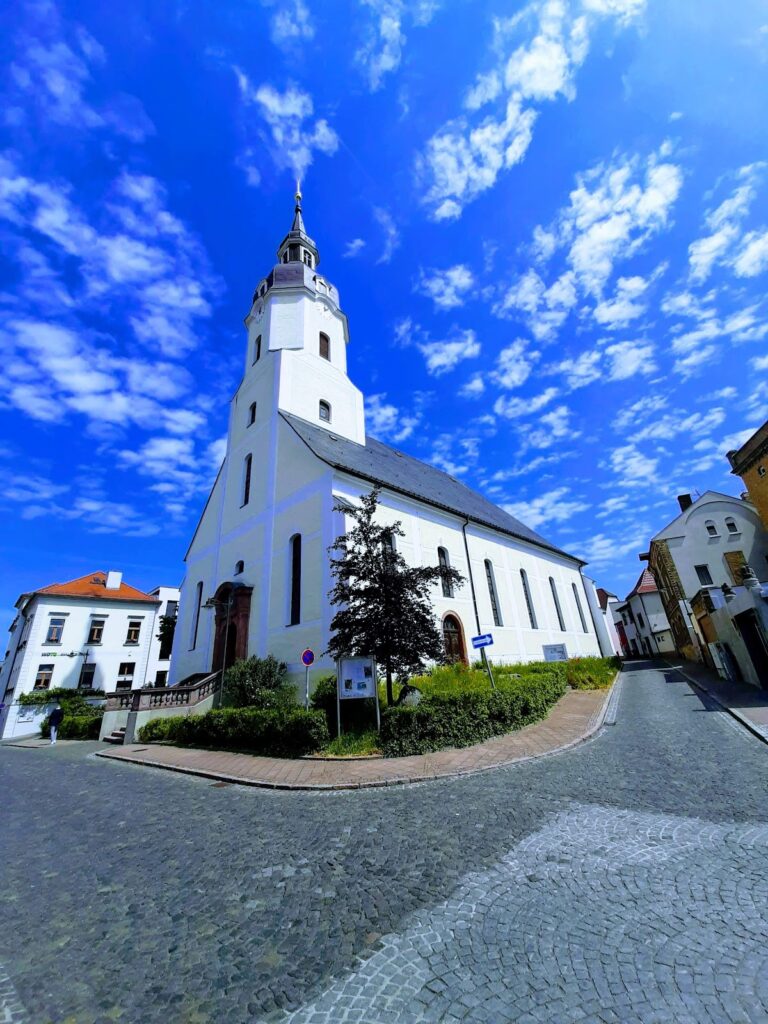
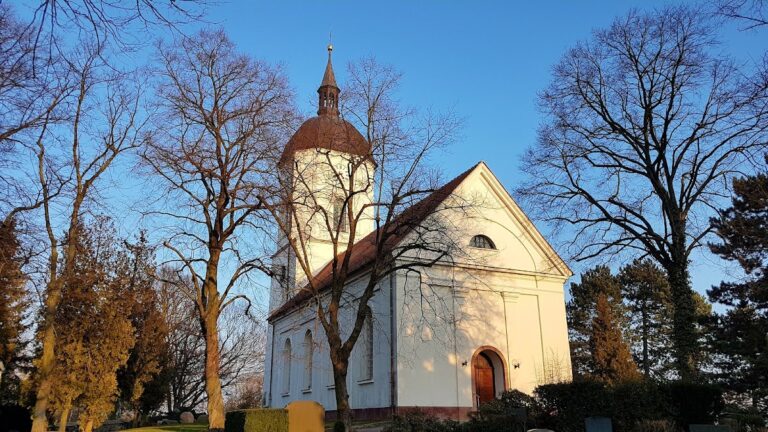
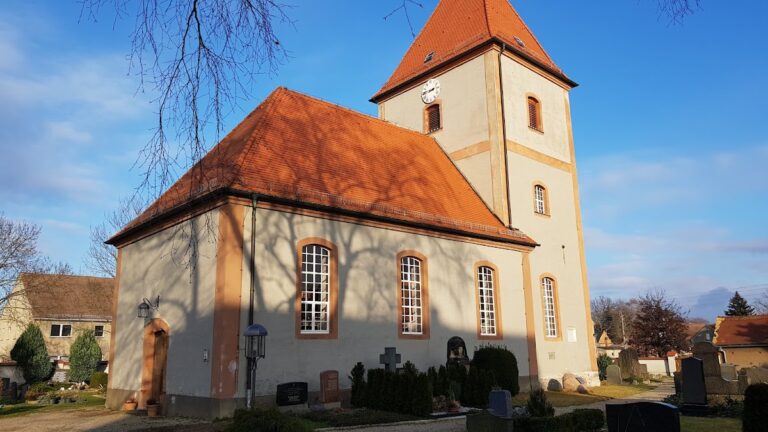
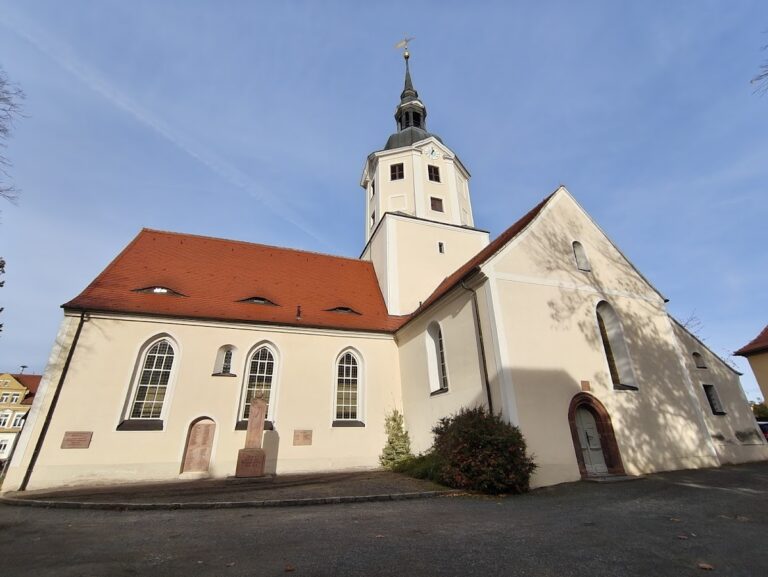
Kirche Panitzsch is a thirteenth-century sacred building in Panitzsch, Germany, now part of Borsdorf in the Leipzig district. Built by the medieval Christian communities of the region, it originated as a Romanesque church around 1200–1220 and was extensively remodeled in the Baroque style in 1705. Standing on the 142-meter-high Kirchberg, it is popularly grouped with the churches of Beucha and Hohen Thekla as the “Three High Priests” of the Leipzig region.
Before the stone church
The hill had a religious role before the present church was built. Before Slavic settlement, which took place approximately between 600 and 900, it was used as a Germanic sanctuary. Slavic communities later continued to use the same location as a cult site. During the colonization and Christianization of the Meissen region under Henry I, also known as Henry the Fowler, and his son Otto I, settlers arrived from Franconia, the Lower Rhine, and Flanders. Henry ruled East Francia in the tenth century, while Otto became German king and was crowned emperor in 962. In this period, the Slavic population was Christianized and assimilated.
A wooden missionary station was erected around 1050–1080. It was followed by a second wooden church around 1100–1150. Historically precise models of both buildings are preserved in the Panitzsch rectory, providing a picture of the site’s early Christian phases.
The Romanesque foundation
The present church developed from a stone Romanesque building constructed around 1200–1220. Romanesque architecture is characterized by heavy masonry, rounded arches, relatively small openings, and substantial walls. The circular enclosure around the churchyard led the art historian Cornelius Gurlitt to suggest that the church and its surrounding walls may once have served as a fortified refuge. In times of danger, the enclosure’s doors could be secured from inside with sliding beams.
The church acquired a new bell in 1459. In 1539, when Albertine Saxony adopted the Reformation, Panitzsch became Protestant. The Reformation was the sixteenth-century movement that divided Western Christianity and led territories such as Albertine Saxony to establish Protestant forms of church organization and worship. A comprehensive renovation took place at the end of the sixteenth century, followed by the installation of a new pulpit in 1623 and a new confessional in 1660.
War, Baroque remodeling, and later additions
The battles of Breitenfeld and Lützen in 1631–1632 caused major devastation in the surrounding area. Later complaints from parishioners and the pastor led to a complete remodeling of the church in 1705. This intervention transformed the medieval building into a Baroque church, a style associated with more elaborate spatial and decorative treatment. The work included a pulpit altar, sacristy, galleries, pews, and a new organ. A pulpit altar combines the preacher’s pulpit with the altar structure, while a sacristy provides storage for vessels, vestments, and other objects used in worship. Galleries are elevated interior platforms or seating areas.
The church received a baptismal angel in 1724 and a third bell in 1756. The organ was renewed by Johann Christian Flemming in 1757 and completed in its surviving form in 1786. No later major alteration is recorded for this period, leaving the 1705 remodeling as the decisive transformation of the church’s interior and external appearance.
Restoration and changing use
Dieter and Gisbert Voigt comprehensively restored and reconstructed the Flemming organ in 1993. It was rededicated on 31 October 1993. From that time, Kirche Panitzsch also served as a cultural venue. Between 1993 and December 2023, Reinhard Freier organized approximately 750 concerts and 100 exhibitions in the church.
Under Pastor Reinhard Freier, the building underwent a heritage-sensitive renovation between 2005 and 2007. The church fabric was restored according to conservation requirements, and the nave roof was newly covered with Thuringian slate. The three historically important bells were restored in a specialist workshop during this period. An electrical fault caused a smoldering fire on 21 October 2012. Firefighters prevented a major catastrophe, and the resulting damage was repaired by Christmas of the same year.
Panitzsch parish moved from the Leipzig church district to the Leipziger Land church district on 1 July 2014. From 1 January 2020, it formed part of the united Evangelical-Lutheran parish of Parthenaue-Borsdorf within a wider sister-parish association. The church is also a station on the Ecumenical Pilgrimage Route, part of the German section of the Way of Saint James, the network of Christian pilgrimage routes associated with the shrine of Saint James at Santiago de Compostela in Spain. Its position near the Parthe and at the meeting point of medieval trade routes, including the north-south Old Salt Road and the route between Leipzig and Frankfurt an der Oder, has been connected with the historical presence and imagery of its bells.
Remains
Kirche Panitzsch occupies the Kirchberg, a 142-meter-high hill above Panitzsch. The churchyard is surrounded by a circular wall, creating a distinct enclosure around the building. The Romanesque structure was built from fieldstone, and its exterior was originally unplastered. The surviving church combines this medieval foundation with the spatial arrangement created by the Baroque rebuilding of 1705.
Early timber churches
Missionary station
The earliest missionary station measured approximately 5 by 7 meters. Built around 1050–1080, it used a post-built timber framework, palisade-like walls, and a thatched roof. A sundial formed part of the building. Timber came from the neighboring forests, while Frankish settlers brought the relevant expertise in timber construction. A historically precise model of the station is preserved in the Panitzsch rectory.
Second wooden church
The second church, built around 1100–1150, used sill-beam construction, in which upright wall posts rested on horizontal foundation beams. Its nave measured approximately 8.8 by 5 meters, while the choir measured 4 by 3.8 meters and the presbytery, the area reserved for officiating clergy, measured 2.5 by 2.6 meters. A circular baptismal pit 1.6 meters in diameter stood at the center and was used for full-body baptism. The church contained a votive altar dedicated to Mauritius, the Christian martyr and traditional patron saint of the Archdiocese of Magdeburg, as well as another altar in the presbytery. Its model is also preserved in the rectory.
Romanesque stone church
Tower, nave, and choir
The stone church constructed around 1200–1220 had a tower measuring approximately 7.8 by 7.6 meters, a nave measuring 11.8 by 8.6 meters, and a choir measuring 4.4 by 7 meters. The choir ended in a semicircular apse, or rounded sanctuary end, approximately 3.8 by 5.2 meters in size. The Romanesque nave had narrow entrances on its north and south sides, several small windows, and visible ceiling beams. The tower contained a medieval vault and had no exterior entrance.
Romanesque furnishings
The medieval interior included a Romanesque baptismal font, an altar measuring 2 by 2 meters in the apse, and a votive altar at the western end of the nave. These furnishings belonged to the earlier arrangement of the stone church, before the Baroque work reshaped its internal spaces.
Baroque interior
The remodeling of 1705 blocked the former doors, opened up the nave, removed the choir and apse, and enlarged the nave with two additional rows of windows. The tower’s sound openings were altered. A Baroque pulpit altar became the visual focus of the Protestant interior, while a sacristy, galleries, and pews were added as part of the same reorganization. The church’s present spatial character therefore reflects the combination of a Romanesque stone shell and an early eighteenth-century interior transformation.
Organ
The organ is a one-manual instrument with a pedal and ten stops. It was made by the Torgau organ builder Johann Christian Friedrich Flemming and completed in 1786. Dieter and Gisbert Voigt restored and reconstructed it in 1993, preserving the instrument as the Flemming organ.
Historic bells
The three-bell ensemble
The bell ensemble consists of three bronze bells. The oldest probably dates from around 1380 and sounds the note A-flat. The second, cast in 1459, sounds F and is the largest. The youngest was cast in 1755 by Martin Heintze of Leipzig and sounds C. The founders of the two medieval bells are unknown. All three bells were removed for specialist restoration in 2006 and returned in September of that year.
After a cross-shaped crack was found in the 1459 bell in 2015, that bell was taken out of service. Restoration of the ensemble was completed in 2018. Each bell received a lighter, certified forged clapper mounted on a turning ring, together with ball-bearing axles and leather suspension. The cracked bell was rotated by 30 degrees and given a new yoke. This moved the striking point below the crack and allowed a gentler strike while preserving its tone.
Incised imagery and inscriptions
The two medieval bells carry unusually extensive incised imagery, meaning pictures cut directly into the cast bronze surface. Both show Bishop Nicholas and the Archangel Michael defeating a dragon, together with a Crucifixion group depicting Mary and John beneath Christ’s outstretched arms. The medium-sized bell also shows Mary holding the infant Jesus. The imagery may point to an earlier dedication to Michael, while the repeated appearance of Nicholas is probably connected with merchants who donated bells under the protection of their patron saint. Nicholas of Myra was widely venerated as the patron saint of merchants and travelers, while Michael was traditionally shown defeating a dragon or other embodiment of evil.
The oldest bell, probably from around 1380, bears the Latin inscription O rex gloria veni cum pace, meaning “O King of Glory, come with peace.” The 1459 bell carries the inscription consolor viva, fleo mortua, pello novica, translated as “I comfort the living, I mourn the dead, I drive away what harms.” The later medieval drawings are associated particularly with the Leipzig sculptor Nikolaus Eisenberg, especially those on the 1459 bell. The older drawings have been attributed, without firm identification of an artist, to a Flemish-Saxon sculptor. Their imagery includes a branch cross, a Christian representation of the Tree of Life.
Nearby sites