Kirche Baalsdorf: A Romanesque Village Church in Leipzig, Germany
Site at a Glance
- Rating
- 4.5
- Popularity
- Very Low
- Country
- Germany
- Primary era
- Medieval
- External website
- Open
- Eras represented
- Medieval, Early Modern
- Civilizations
- Electorate of Saxony, Holy Roman Empire, Margraviate of Meissen
- Site type
- Religious
- Remains
- Church
On this page13 sections
History
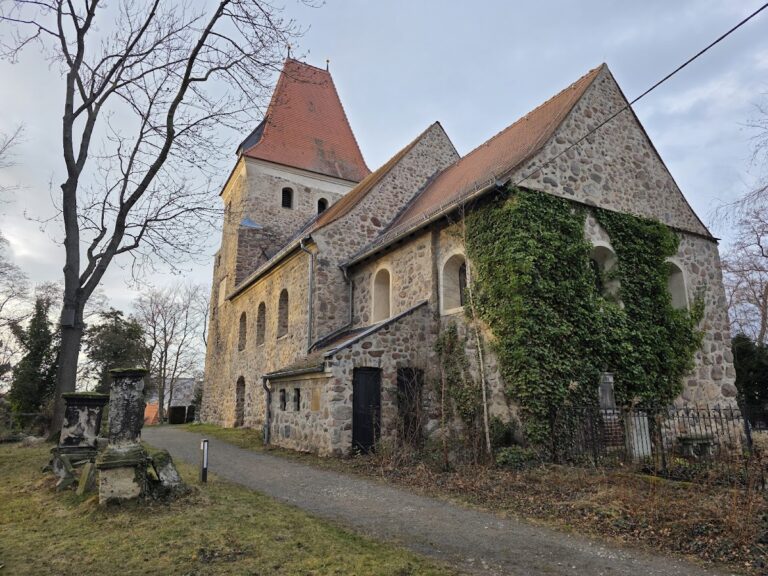
Kirche Baalsdorf is a Romanesque chancel-tower church in Leipzig, Germany, whose stone building was erected around 1220 on the village green of Baalsdorf. It is the oldest building in the locality and preserves early medieval fabric in its tower and nave.
Medieval Origins
Baalsdorf was founded around the middle of the twelfth century. A small chapel of roughly hewn timber, described as a log-built or post-built church, was erected at the centre of the village green. Around 1220, a stone church was built probably around this earlier chapel. Its Romanesque construction used fieldstone, brick, clay, and mortar.
The church type is a chancel-tower church, meaning that the tower rises directly above or is structurally integrated with the chancel, the part of the church adjoining the main worship space. At Baalsdorf, this arrangement incorporated an apse, a usually semicircular or polygonal end to the chancel.
Later Alterations
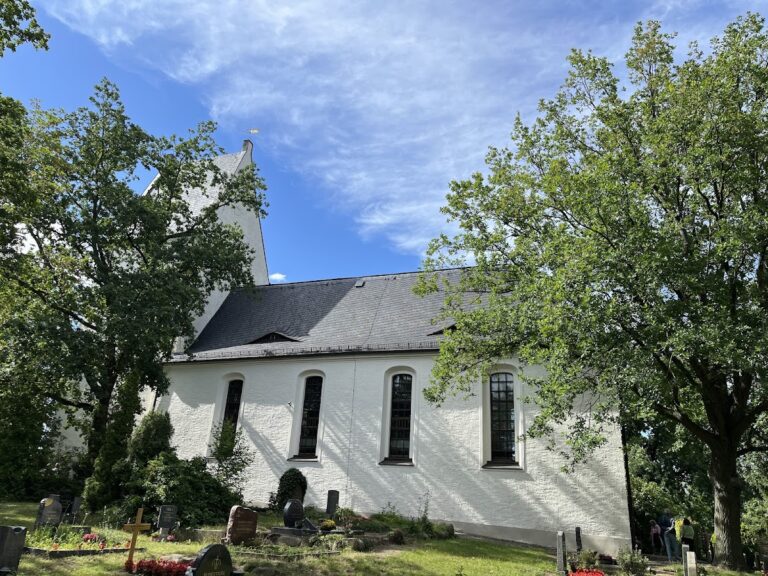
The church was remodeled in 1548. A further refitting in 1748 enlarged the windows and introduced surrounds for the windows and portal made from Rochlitz porphyry, a durable volcanic stone quarried near Rochlitz in Saxony. These alterations changed the building’s appearance while leaving Romanesque fabric in the tower and nave.
The apse painting is attributed to around 1415 and reflects the influence of Bohemian masters. It was discovered and professionally exposed between 1956 and 1958. During the interior renovation of 2013, the repeatedly altered Baroque altarpiece was removed, restoring the view toward the apse.
Bells and Parish History
Until 1917, three historic bronze bells hung in the church. They comprised a large bell cast in 1496, a middle bell known as the Heinrich bell from the thirteenth century, and a small bell from the fifteenth century. On 10 September 1917, during the First World War, all three were surrendered for armaments purposes. Their combined weight was 1,035 kilograms.
Three iron-hardcast bells made by J. F. Weule of Bockenem were consecrated as replacements on 31 October 1917. Iron-hardcast bells are made from iron rather than the bronze traditionally used for church bells. Friedrich Plagens of Berlin-Steglitz fitted them with electric motors in 1940, and the electrical ringing system was replaced in 1980 by a Concordia super system made by Philipp Hörz of Ulm.
Because the replacement bells had reached the end of their approximately 100-year service life, plans for a new bronze peal and renovation of the tower were first considered in 2017. The old bells were rung for the last time during a devotional service at the cemetery on 7 September 2020 and were then retired. Bells cast at Petit & Gebr. Edelbrock in Gescher followed. The first casting of the large bell failed, so it was recast on 18 December 2020. Bell expert Roy Kreß carried out the factory acceptance at the foundry on 17 February 2021. The bells arrived on 16 March, were consecrated on 21 March, lifted into the belfry on 22 March, and rung for the first time on Easter Sunday, 4 April 2021.
The church belongs to the Baalsdorf-Mölkau parish and, since 1 January 2021, has formed part of the Evangelical-Lutheran Alesius parish of Leipzig. The recorded pastors begin with Coriarius Johannes in 1540 and include Joachim Curtius, Sebastian Günther, Erasmus Frohberger, Georg Göldner, Friedrich Franke, Johann Christoph Müller, Johann Christian Mörlin I, Johann Christian Mörlin II, Johann Gottlieb Kühn, Friedrich August Kuhl, Johann Christian Wille, Johann Adolf Wille, Samuel Gottlieb Künzel, Friedrich Wilhelm Georg Lochmann, Karl Joseph Krahmer, Christian Adolf Kreher, Hermann August Louis Barth, Otto Paul Vieweg, Johann Martin Friedrich Seidel, Karl Johannes Rudolf Richter, and Gottfried Müller, whose pastorate began in 1958.
Remains
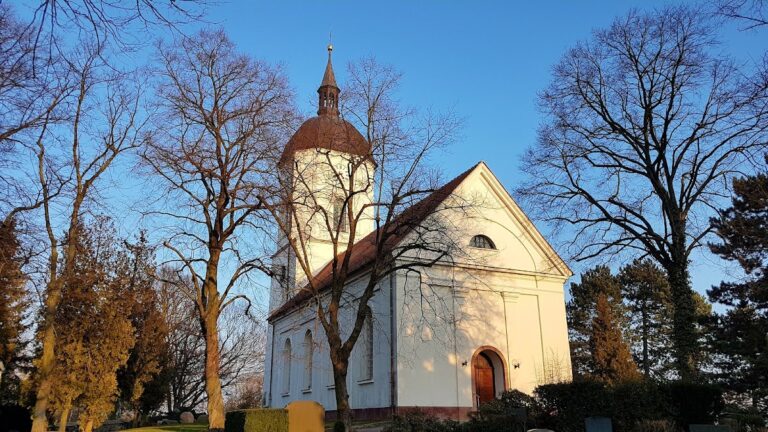
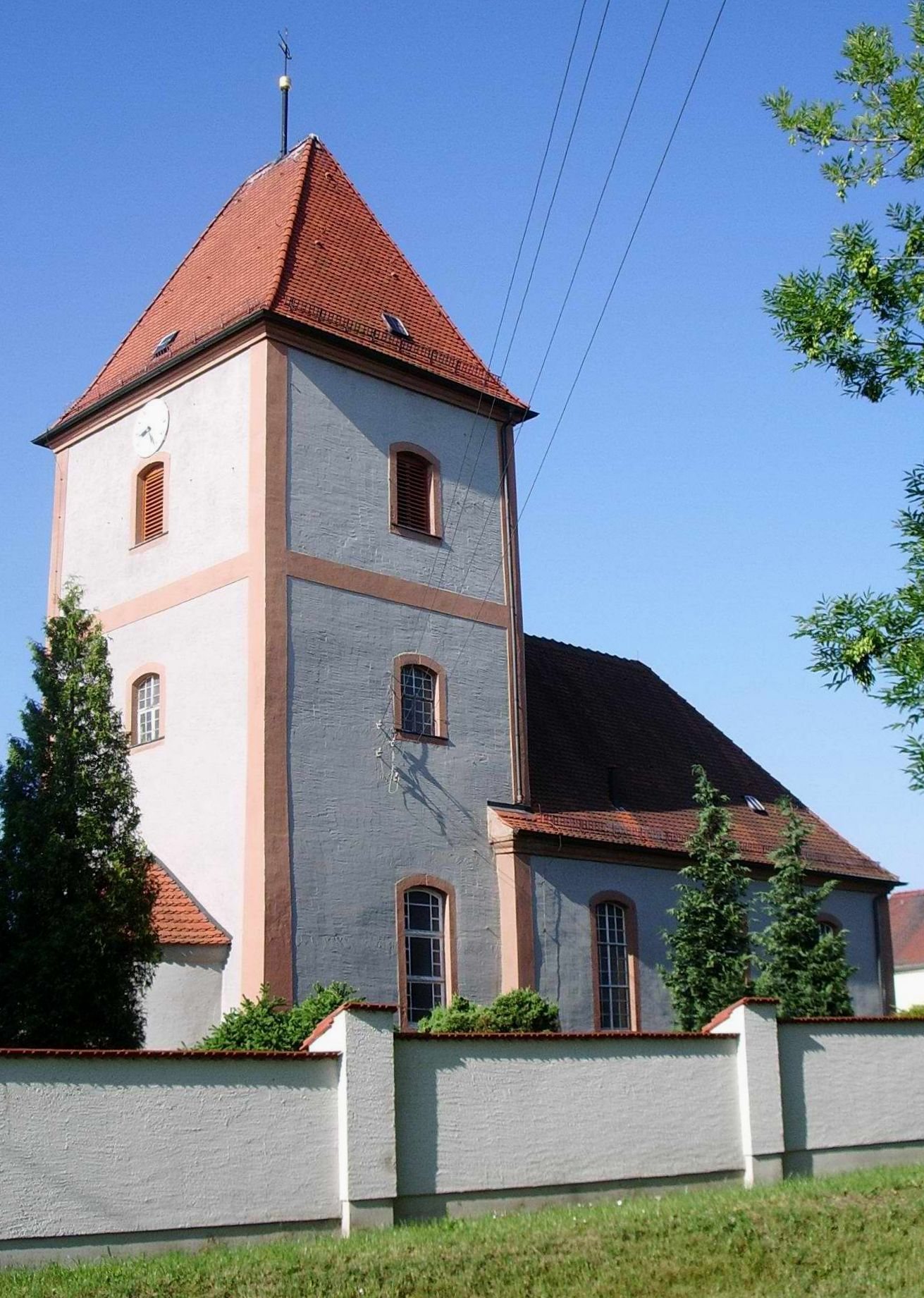
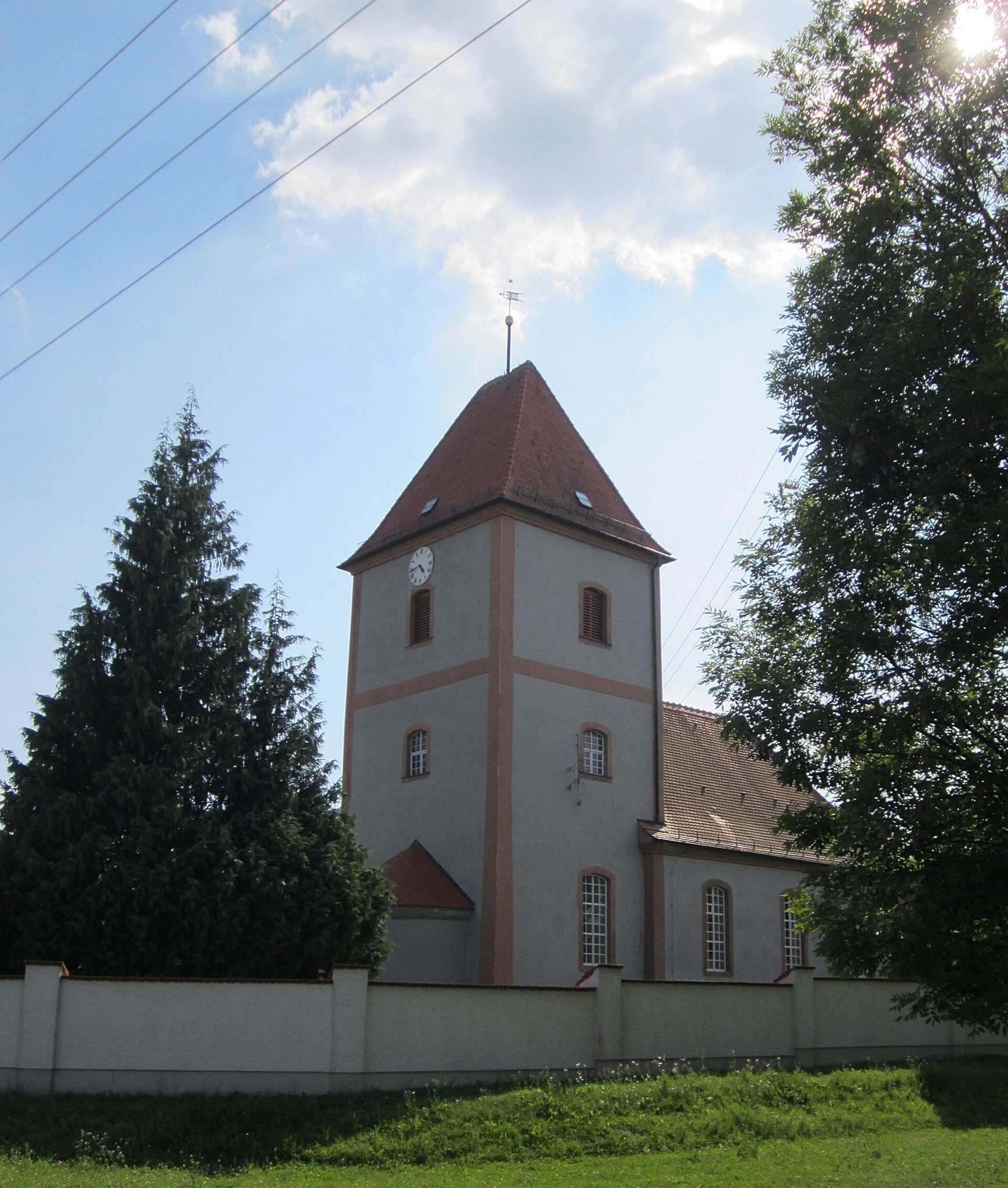
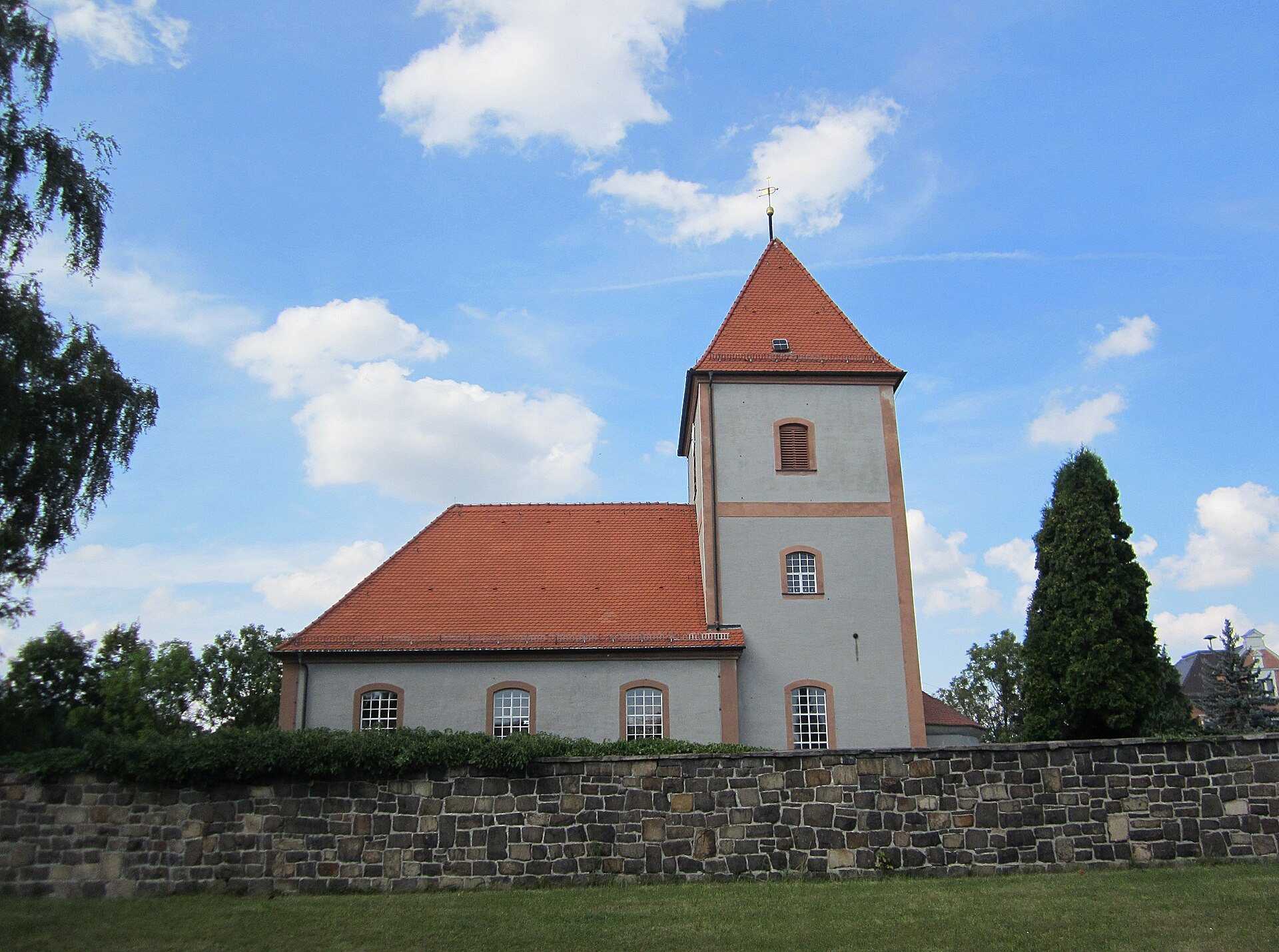
Kirche Baalsdorf stands directly on the village green. Its square tower incorporates the apse and is joined to the nave in a plastered rubble-stone structure. Both tower and nave have hipped roofs, which slope down on all sides rather than ending in vertical gables. The surviving Romanesque fabric is concentrated in these two principal parts of the building.
Interior and Medieval Painting
Apse Painting
The apse contains a wall painting executed in secco technique, in which paint is applied to dry plaster rather than wet plaster. It presents Christ as ruler of the world, surrounded by John the Baptist, Mary, Peter, and Paul. Peter is shown blind, an image interpreted as criticism of the papacy. The painting is attributed to around 1415 and was exposed between 1956 and 1958.
Interior Furnishings
The interior has a flat ceiling and a gallery on three sides. Its furnishings include an altar, a pulpit, and a baptismal font. The Baroque altarpiece had been altered repeatedly before being removed during the 2013 renovation, opening the view toward the apse painting. The enlarged windows and portal retain their 1748 surrounds of Rochlitz porphyry.
Organ and Bells
Organ
Richard Kreutzbach built the church organ in 1883. It has two manuals, keyboards played by the hands, a pedal keyboard played by the feet, and eleven stops, each controlling a set of pipes with a particular tonal quality. Schmeisser serviced the instrument in 1917, 1931, and 1932. An electric blower made by Plagens of Berlin-Friedenau was installed in 1942. Hermann Lahmann cleaned, repaired, and impregnated the organ in 1966, while Siegfried Creutz of Nentmannsdorf cleaned and restored it in 1996.
Earlier Bronze Bells
The large pre-1917 bronze bell measured 1.095 metres in diameter and approximately 83 centimetres in height. Its inscription read, “O King of Glory, Jesus Christ, come with peace.” The middle bell measured 85 centimetres in diameter and approximately 65 centimetres in height, and bore the inscription, “Made by Heinrich, son of Thidericus.” The small bell measured 48 centimetres in diameter and approximately 40 centimetres in height.
1917 Replacement Bells
The three bells consecrated in 1917 had iron-hardcast bodies and hung from cranked steel yokes in a wooden bell frame. The large bell sounded C, measured 105 centimetres across its lower diameter, and weighed 605 kilograms. The middle bell sounded F, measured 85 centimetres, and weighed 330 kilograms. The small bell sounded A-flat, measured 68 centimetres, and weighed 172 kilograms.
2021 Bronze Peal
The 2021 bells were cast as a replacement peal after the iron-hardcast bells were retired. They were installed in the church tower in March 2021 and first rung on Easter Sunday, 4 April 2021.