Church of the Transfiguration of Our Lord: An Orthodox Cathedral Church in Tallinn
Site at a Glance
- Rating
- 4.8
- Popularity
- Very Low
- Country
- Estonia
- Primary era
- Medieval
- Eras represented
- Medieval, Early Modern, Modern
- Civilizations
- Danish, Russian
- Site type
- Religious
- Remains
- Church
On this page8 sections
History
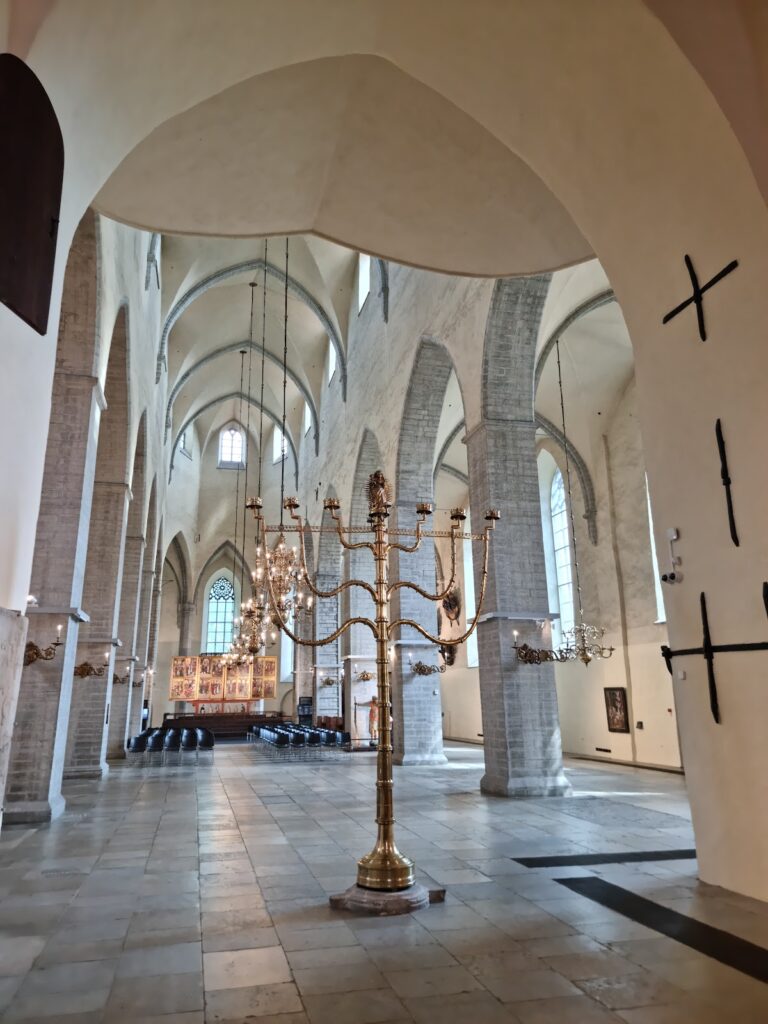
The Church of the Transfiguration of Our Lord is a thirteenth-century Cistercian monastery church in Tallinn, Estonia, built as the principal church of St Michael’s Monastery, a community of Cistercian nuns. The Cistercian Order was a Western Christian monastic tradition that emphasized disciplined communal religious life. The building later became a Lutheran, Swedish military, and Orthodox church, and its present form includes important Baroque features.
Monastery and Reformation
The church served St Michael’s Monastery through the medieval period. During the Reformation, the monastery remained open, and only four members departed voluntarily. In 1543, Abbess Elsebe Soye adopted Lutheranism while continuing to lead the community. After the death of the last abbess, Kate Kudling, in 1629, the monastery was secularized.
From Swedish School to Orthodox Church
In 1631, King Gustavus II Adolphus ordered the former monastery to become a royal secondary school. An agreement dated 16 February 1631 transferred the monastery’s property to Tallinn’s school, now Gustav Adolf Grammar School. The former monastery church was assigned to the Swedish garrison and used by the Swedish St Michael’s Congregation.
During the Great Northern War, an early-eighteenth-century conflict in which Russia defeated Sweden’s dominant position in the eastern Baltic, Tallinn capitulated to the Russian Empire on 29 September 1710. Orthodox services were then held in the former Lutheran St Michael’s Church from 1710 to 1716. In February 1716, Governor-General Alexander Danilovich Menshikov ordered the Tallinn city council to transfer the building to the Russian Orthodox congregation. It was consecrated as the garrison church of Feodor Stratilat, the patron saint of military personnel.
In 1732, the church was re-consecrated as the Church of the Transfiguration of Our Lord and given to Tallinn’s Orthodox citizens. It received another consecration as an Orthodox cathedral in 1734. The interior was renovated between 1827 and 1830 under the direction of architects A. J. Melnikov and J. Bantelmann. This work formed part of the building’s later appearance and included the completion of its present stained-glass windows, main entrance door, and dome.
Cathedral and Estonian Orthodox Parish
The church remained Tallinn’s principal Orthodox cathedral until 1900, when the Cathedral of Alexander Nevsky was completed and consecrated. The former Russian congregation moved there, taking most of the Transfiguration Church’s furnishings. The building was then assigned to an Estonian Orthodox parish that had developed during the nineteenth century and used Estonian as its liturgical language. Before moving here, the parish had worshipped in the nearby Church of St Vladimir.
Since 1920, the church has belonged to the Estonian Apostolic Orthodox Church and remains an active Orthodox parish church. It is associated with the veneration of Bishop Platon, an Orthodox bishop and new martyr associated with Estonia. The church is listed in Estonia’s State Register of Cultural Monuments as both an architectural and a historical monument. An inspection on 5 September 2019 assessed its condition as satisfactory.
Remains
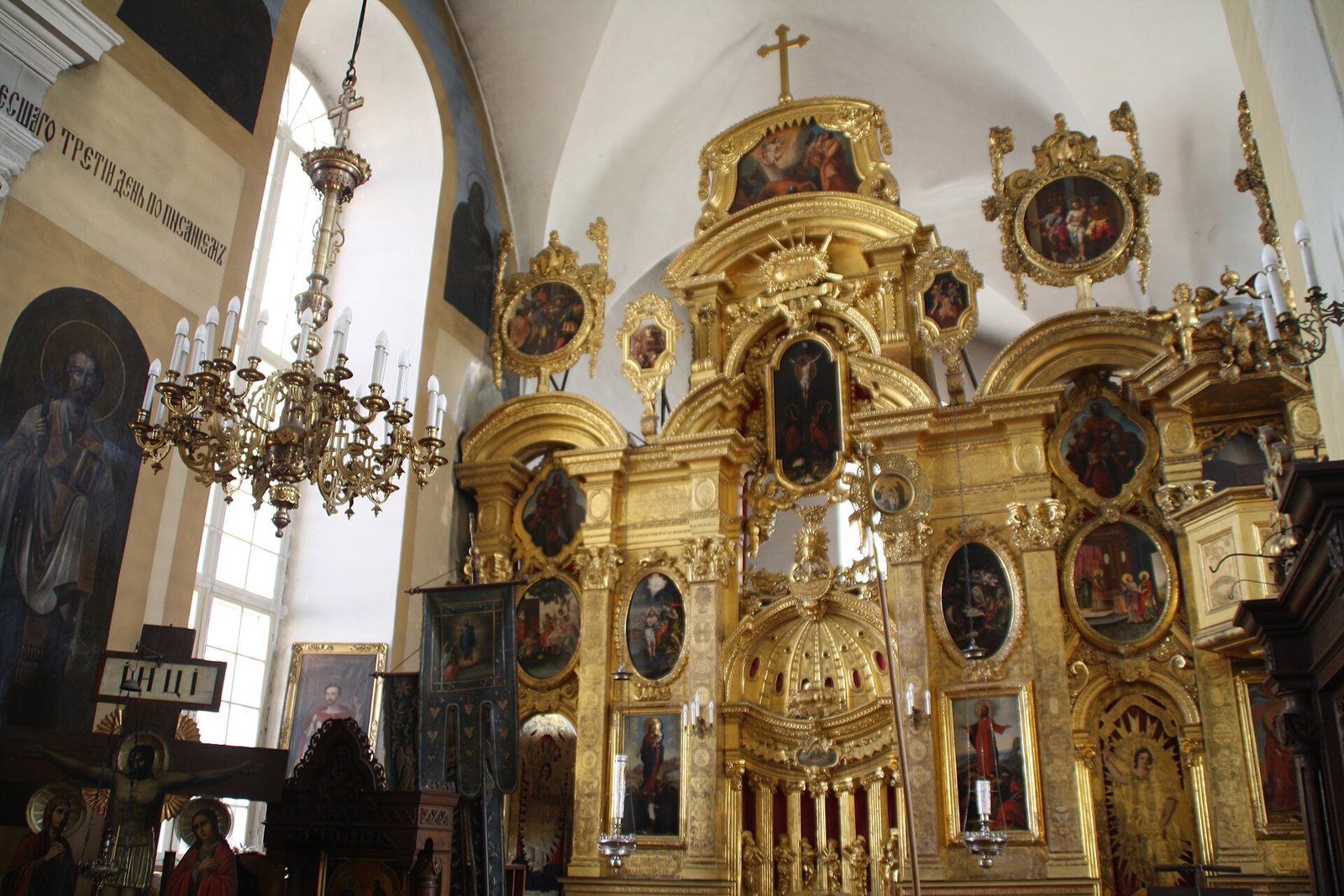
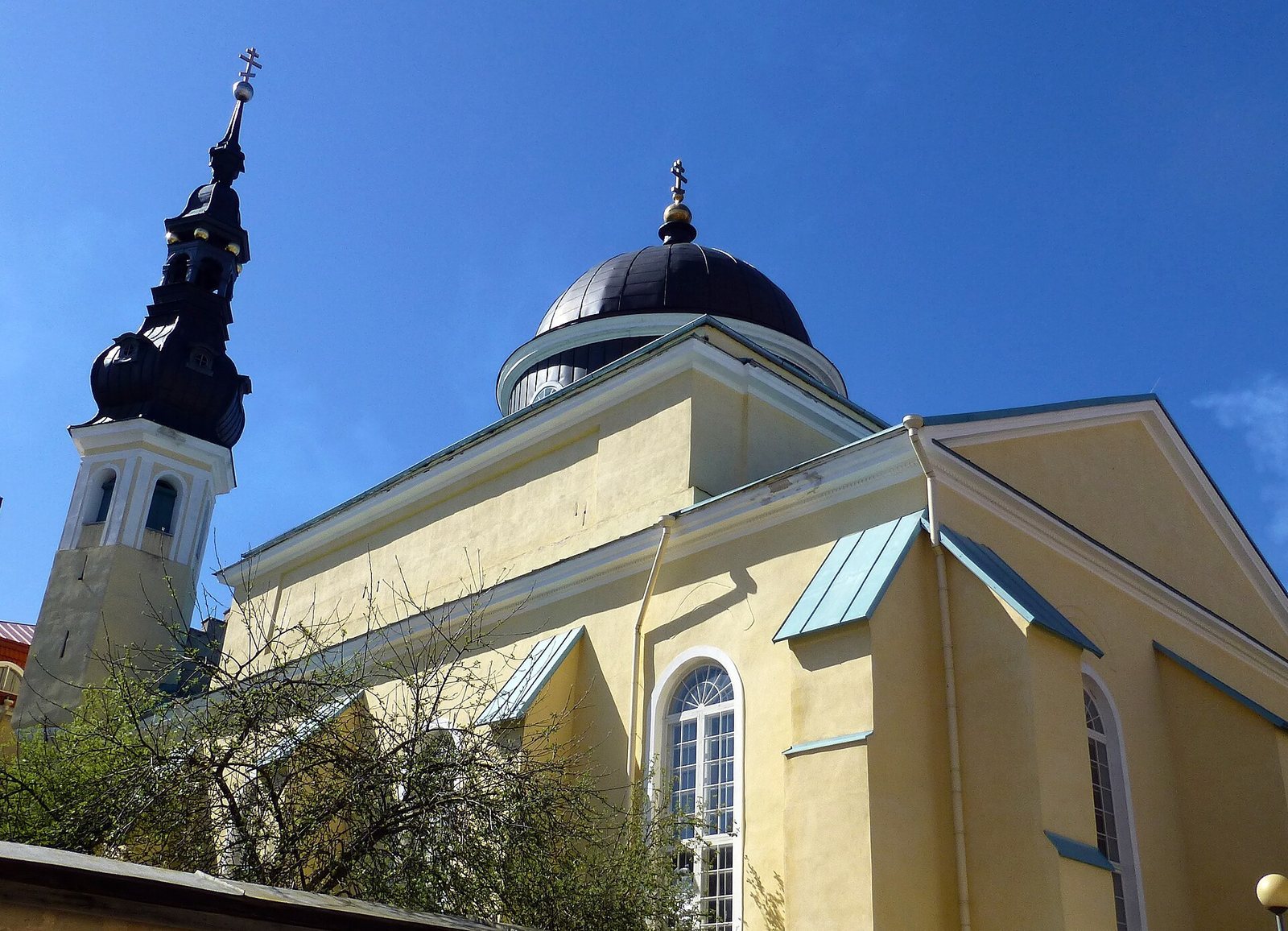
The surviving church is a brick building organized around one tower, one dome, one altar, and one iconostasis. An iconostasis is a screen bearing icons that separates the sanctuary from the main worship space in an Eastern Orthodox church. Baroque character is especially evident in the iconostasis. The bell tower dates from 1776, while the dome, stained-glass windows, and main entrance door belong to the renovation of 1827 to 1830.
Church Building and Bell
The church’s brick structure and single-tower arrangement preserve the building’s successive religious uses. Its bell is Tallinn’s oldest church bell, cast by Matthias Beninck in 1575. The bell therefore predates the church’s transfer to Orthodox worship and remains a physical link with the building’s earlier history.
Baroque Iconostasis
The Baroque iconostasis was created under the direction of Ivan Zarudny, an architect and designer active in the Russian Empire. In 1717, Menshikov sent Zarudny the church’s measurements. Zarudny organized a team of 29 icon painters, 8 painters, 7 sculptors, and 2 carpenters, who completed and gilded the work in about a year and a half. The iconostasis was finished in 1719, or possibly finalized in 1720, the year inscribed on its royal doors.
After its completion, the iconostasis was dismantled and transported by sled from Moscow to Saint Petersburg before being sent by ship to Tallinn. Its installation in the church took several years. The southern section was in place by about 1730, while the northern section was installed in 1734. The completed iconostasis was installed in the church in 1732, reflecting a staged process in which its sections were assembled over time.
Monuments and Burials
A grave monument to Bishop Platon dates from 1930 to 1931 and is associated with the Estonian sculptor Amandus Adamson. Adamson also created a statue or monument to Platon in 1920. In the courtyard before the entrance is the burial of Tallinn Metropolitan Alexander, also known as Paulus. These memorial features connect the church’s physical remains with the religious history of Estonia’s Orthodox community.