Sint-Martinuskerk: A Historic Roman Catholic Church in Eijsden, Netherlands
Site at a Glance
- Rating
- 4.6
- Popularity
- Very Low
- Country
- Netherlands
- Primary era
- Medieval
- Eras represented
- Medieval, Early Modern, Modern
- Civilizations
- Dutch, Habsburg, Holy Roman Empire
- Site type
- Religious
- Remains
- Church
On this page15 sections
History
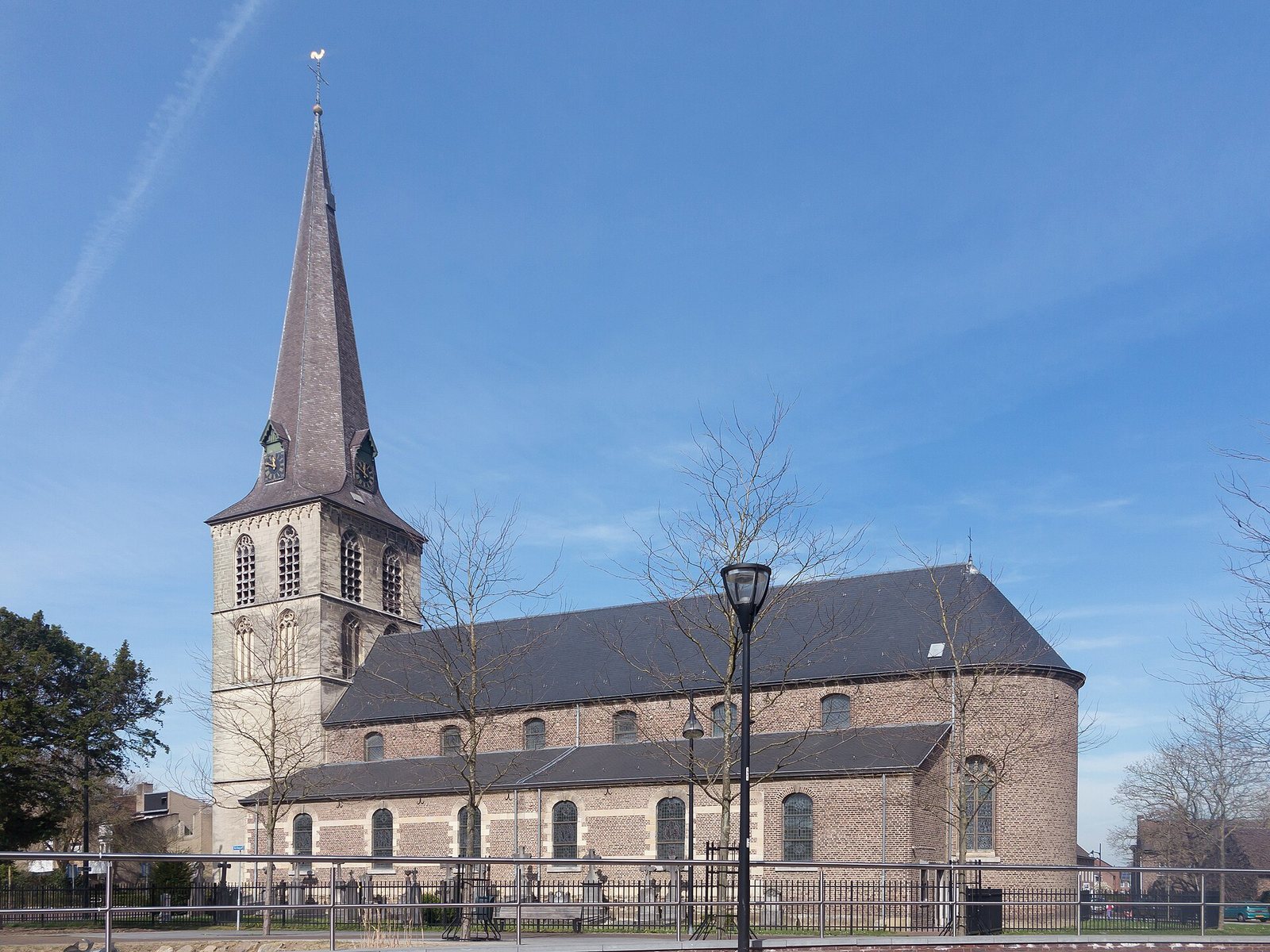
Sint-Martinuskerk is a Roman Catholic church in Eijsden, Netherlands, dedicated to Saint Martin of Tours, the fourth-century bishop and major saint of Western Christianity. Its oldest surviving element dates from around 1200, while the present building reflects successive Romanesque, Gothic, Baroque, and Neo-Gothic phases. The church belongs to the Diocese of Roermond and is protected as a Rijksmonument, the Dutch designation for a national monument, under number 15487.
Medieval origins
In 965, Bishop Heraclius donated the church and estate of Breust to Saint Martin’s Church in Liège. The medieval institution was a chapter, a corporate body of clergy that governed or served a collegiate church. Its administrative authority in the area was later connected with a motte castle east of Sint-Martinuskerk, a fortification built around an elevated earthen mound and an associated enclosure.
The original Romanesque church was destroyed in 1393. It was rebuilt in the Gothic style, whose pointed arches and vertically oriented forms replaced the earlier building. The surviving Gothic fabric includes the round hardstone columns and their Maasland capitals beneath the pointed-arch arcades of the nave. Maasland refers to the Meuse River region, known for distinctive Romanesque stone sculpture and architectural carving.
Changes from the sixteenth to the nineteenth century
A late-Gothic tower of marlstone was erected around 1500, possibly using the foundations or lower structure of an earlier tower. In 1619, Huis Bakvliet replaced the motte castle on the south side of the church. Both fortified or residential centers served as administrative centers for the chapter of Saint Martin’s Church in Liège.
The Gothic nave was replaced by a Baroque nave in 1722. In 1851, the Gothic choir gave way to a larger choir with a sacristy on either side, and the nave was raised with a clerestory, an upper window zone above the aisle roofs. A Neo-Gothic funerary chapel was added against the north side of the choir in 1879.
Restoration and later setting
The tower underwent extensive restoration in 1892. Its low spire was replaced by the present constricted needle spire, while its Late Gothic tracery, sound openings, and friezes were modified and renewed. The church remains surrounded by a cemetery, with a square on its north side. The associated eighteenth-century presbytery or chaplaincy at Sint Martinusstraat 1 was enlarged at the front in 1851, when its dated 1738 façade stone was moved.
In the Middle Ages, the church formed part of a wider ecclesiastical and administrative landscape. Saint Christina Church in the village of Eijsden lies approximately 500 metres southwest of Sint-Martinuskerk.
Remains
The surviving building combines a four-stage Late Gothic tower, a three-aisled nave, and a choir ending in a semicircle. The south aisle is wider than the north aisle. The tower is built largely from Limburg marlstone and stands on a rubble-stone plinth, while the brick aisle walls also rise above rubble-stone bases. Horizontal bands of Limburg marlstone distinguish the eighteenth-century sections, whereas the nineteenth-century extension uses a different exterior treatment. Sundials dated 1722 remain on the south side of the church.
Medieval architectural features
Tower portal lintel
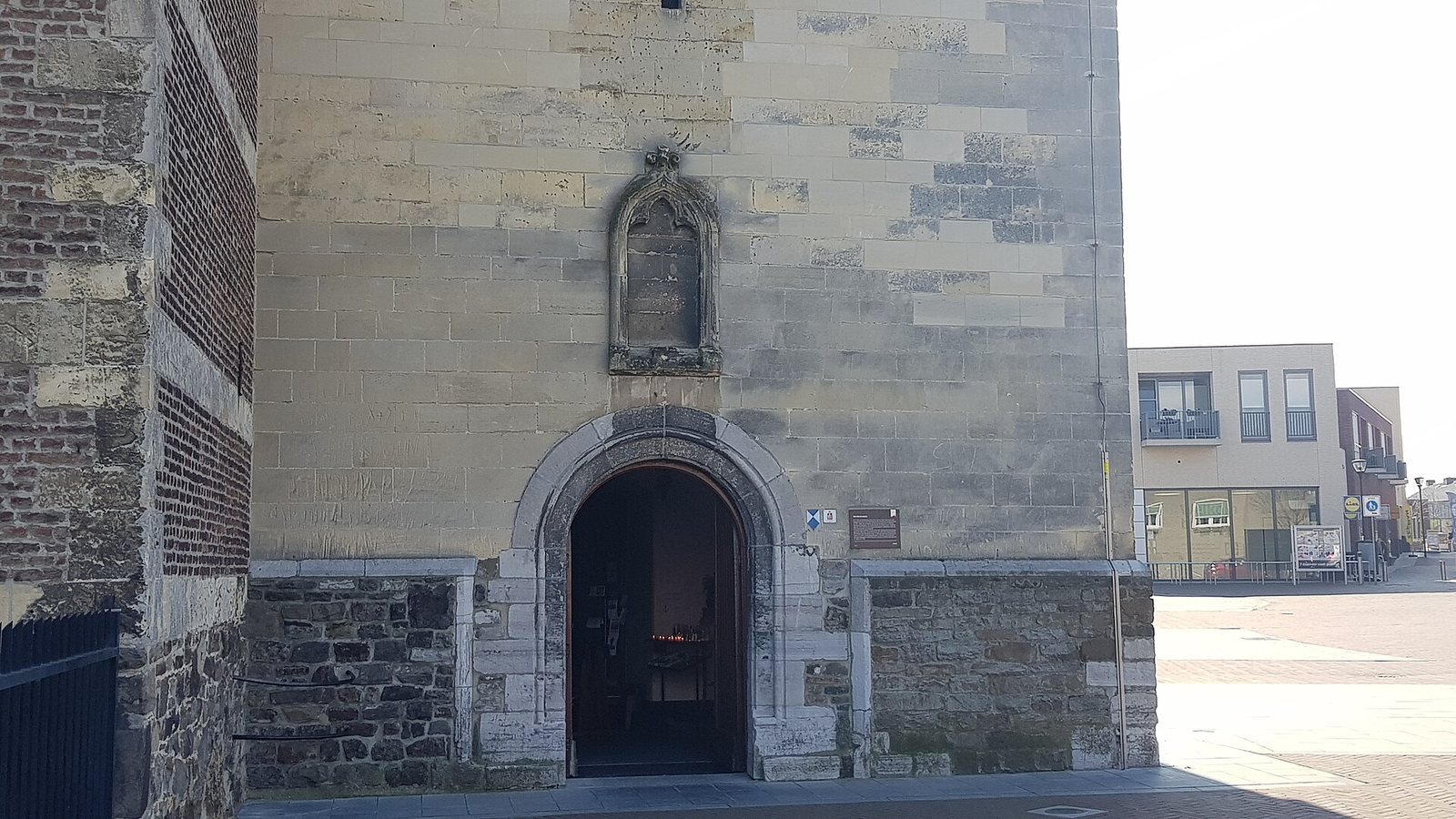
Above the entrance in the tower portal is a twelfth-century Romanesque lintel brought from elsewhere. Its three medallions contain heavily weathered reliefs of people fighting animals, a subject associated with Romanesque sculpture. The lintel was probably made by the same sculptural workshop responsible for capitals in the choir of the Basilica of Our Lady and the westwork, or monumental western entrance structure, of the Basilica of Saint Servatius in Maastricht.
Elizabeth den Hartog has proposed that the animals relate to Psalm 91, particularly the verse mentioning a lion twice, an adder, and a dragon. The central medallion contains the lion, while the medallion on the right shows the dragon. The reptile-like creature on the left does not resemble an adder, possibly because the biblical verse was translated inaccurately.
Columns and baptismal font
The present nave retains round hardstone columns with Maasland capitals beneath its pointed-arch arcades. The church also contains a Romanesque stone baptismal font that may date from the twelfth century.
Choir and church furnishings
Altars and sculpture
The high altar carries a crucifix flanked by statues of Saint Martin and Saint Nicholas. Saint Nicholas was a fourth-century bishop associated with charity and later with the tradition of Santa Claus. Statues of saints also stand on the side altars and above the pillars in the central nave.
A notable bust of Saint Remigius stands on a Baroque pedestal dated 1696. Saint Remigius was a late fifth- and early sixth-century bishop of Reims traditionally associated with the baptism of the Frankish king Clovis I. The polychromed bust may be older than its pedestal and may have served as a reliquary bust, a sculpted bust intended to contain or represent a saint’s relics.
Paintings, stalls, and confessionals
Two paintings from around 1700 depict the apostles Peter and Paul and copy works by Rembrandt. The furnishings also include plain oak choir stalls dated 1663 and 1718, two eighteenth-century side altars, and two eighteenth-century Baroque confessionals with elaborate carved woodwork.
Organ and bells
The one-manual organ was made by Pereboom & Leijser in 1855. The bell tower contains a bell cast by N. Legros in 1766, measuring 86 centimetres in diameter, and another cast by C. Drouot in 1810, measuring 78 centimetres.
Sacristy collections and cemetery
Sacristy furnishings
The sacristy contains a stone altar table that may date from the sixteenth century and two oak cupboards. One is an eighteenth-century credence cupboard. The cupboards came from the former Observant monastery on Saint Peter’s Hill, known as Slavante. A sacristy is used to store liturgical objects and vestments and to prepare religious services.
Vestments and liturgical vessels
Several old liturgical vestments are preserved in the sacristy. Three eighteenth-century chasubles include green moiré embroidered with flowers, purple silk with similar floral embroidery, and red damask bearing a pomegranate design. Other textiles from the former Observant monastery include an eighteenth-century white moiré cope, a pink silk veil with multicoloured flowers and a gold-brocaded IHS monogram dating from around 1700, and part of an eighteenth-century alb with Brussels lace. The IHS monogram is a traditional Christian abbreviation of the name of Jesus.
The liturgical vessels include several eighteenth-century objects and a notable sixteenth-century pyx engraved with the Crucifixion. A pyx is a container for consecrated Eucharistic wafers. The surrounding cemetery contains thirteen seventeenth-century hardstone grave crosses.