Old St Joseph’s in the Citadel: A Roman Catholic Church in Victoria, Malta
Site at a Glance
- Rating
- 3.6
- Popularity
- Very Low
- Country
- Malta
- Primary era
- Early Modern
- Eras represented
- Early Modern
- Civilizations
- Knights Hospitaller
- Site type
- Religious
- Remains
- Church
On this page9 sections
History
Old St Joseph’s in the Citadel is a Roman Catholic church in Victoria, Malta, within the medieval fortified Cittadella of Gozo. Rebuilt in the early seventeenth century and completed in 1625, it was originally dedicated to Saint Nicholas before becoming the first church on Gozo dedicated to Saint Joseph.
Before the seventeenth-century rebuilding
A church stood on the site before the Great Siege of Malta in 1565, and its origins may reach as far back as the eleventh century. During the 1575 visitation of Gozo by Pietro Dusina, a papal apostolic delegate and inquisitor, four churches were recorded within the Citadel. Saint Nicholas was described as the best maintained and best equipped of them. After Dusina deconsecrated the chapel of Saint Lawrence, its congregation began attending Saint Nicholas.
Rebuilding and dedication to Saint Joseph
At the beginning of the seventeenth century, Bishop Baldassare Cagliares ordered Saint Nicholas to be altered and rebuilt. The plans were by Vittorio Cassar, an architect also associated with changes to the Citadel’s fortifications. The work was finished in 1625, when the church received its new dedication to Saint Joseph. A palace was built beside it to serve as Bishop Cagliares’s residence. From 1672 onward, the chapter of Saint Mary’s Collegiate Church held evening prayer, or vespers, at the church each year on Saint Joseph’s Day, 19 March.
Earthquake damage and abandonment
The Sicilian earthquake of 11 January 1693 severely damaged the church, including its roof. Services then stopped, and the building was abandoned. It deteriorated into a ruin over the following centuries.
Twentieth-century restoration
Interest in conserving the church returned in 1930 through Sir Harry Charles Luke, Lieutenant Governor of Malta, who supported the preservation of historically valuable buildings. Restoration began in 1937 but ended after Luke left Malta. The neglected building was later vandalized and used to store waste and rubbish from the cathedral.
Restoration resumed in 1973. On 16 August, seminarians and altar servers from the cathedral, assisted by Father Tony Mercieca, began removing the rubbish and cleaning the building. Other churches later supplied furnishings and support. The artist Toni Camilleri created a new altar based on the earlier one, while Ċensu Cordina painted a new titular image. Father Ġużeppe Saliba opened and blessed the restored church on 19 March 1975, and Bishop Nikol Joseph Cauchi solemnly consecrated it on 15 August 1976. Pope Paul VI sent a special blessing to those involved in the restoration. The church has been included in Malta’s National Inventory of the Cultural Property of the Maltese Islands since 27 August 2012, under registration number 00887.
Remains
Setting and facade
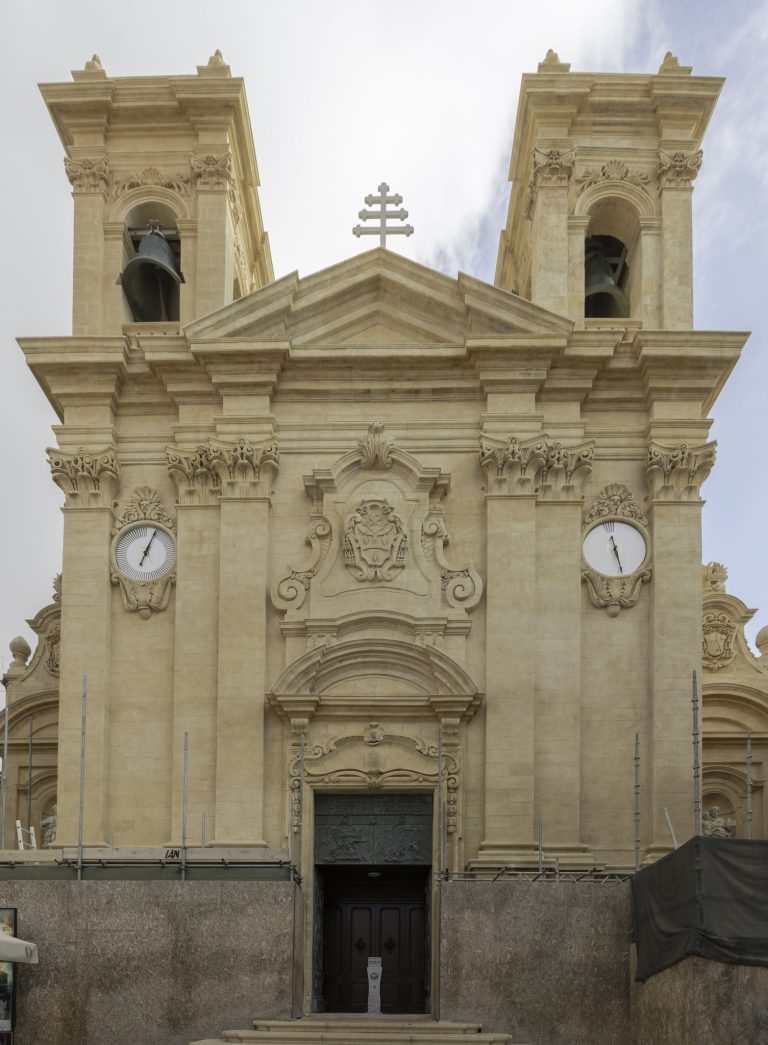
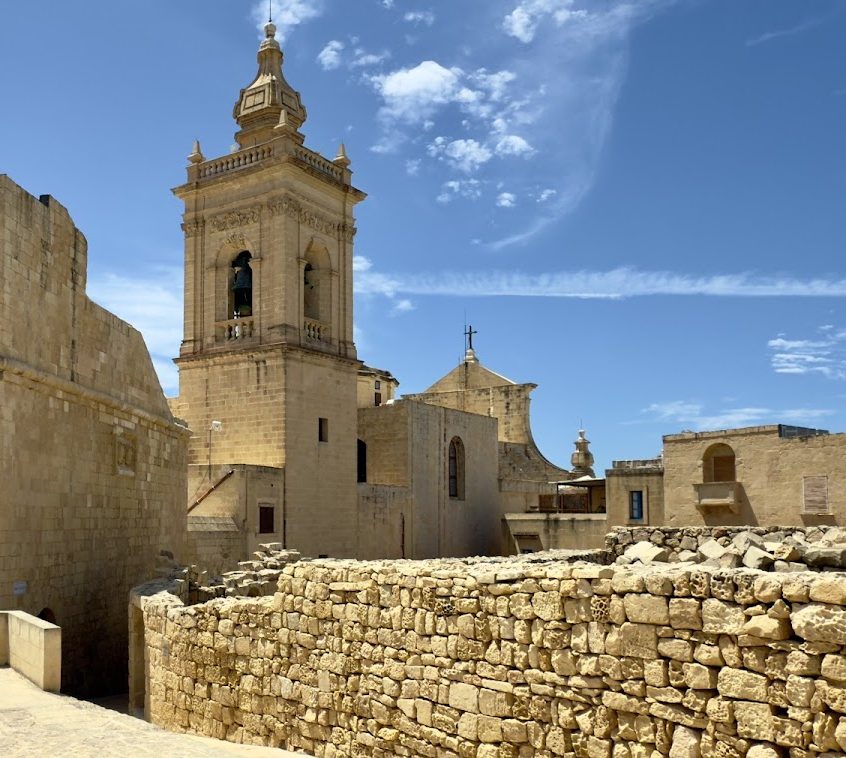
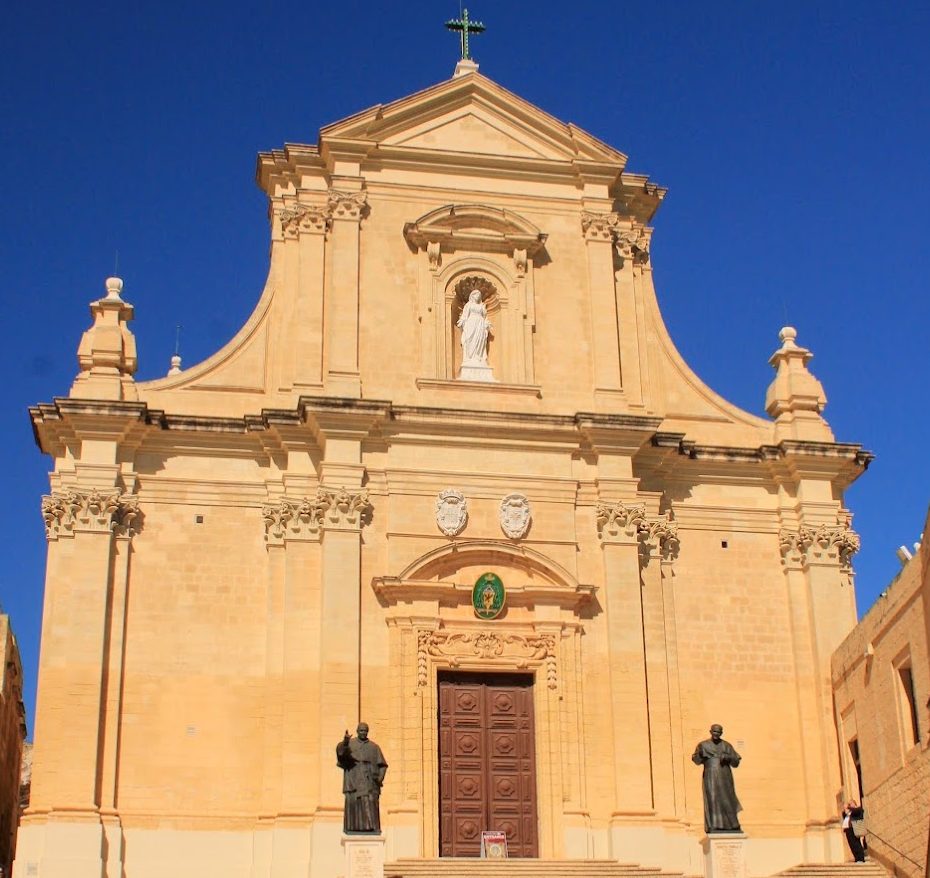
The church stands in the old central part of the Cittadella, at the corner of Triq San Ġużepp and Triq Bernardo DeOpuo. Built from limestone, it has a simple rectangular facade. A large circular window with plain stone framing occupies the upper part, while the rectangular wooden entrance is bordered by Tuscan pilasters. These support a broken triangular pediment. A statue of Saint Joseph with the infant Jesus once stood above the pediment; it was installed in 1937.
Interior and altar
The interior is similarly plain and almost square in plan. A barrel vault covers the space, and limestone slabs pave the floor. The sanctuary is raised one step above the rest of the church and ends in a very shallow apse, almost a niche. Its single altar has a mensa, or altar table, supported in the centre by a pedestal and at the sides by four small columns. An oval image of the Holy Family stands on the altar within an ornamental frame carved from stone.
Images and devotional furnishings
Above the altar is the titular image of the Holy Family’s Flight into Egypt. It shows Mary riding a donkey with the infant Jesus, Saint Joseph leading them, and an angel pointing out their way. The original painting was attributed to the Italian artist Filippo Paladini, although some experts regard it as the work of a northern European painter, partly because of its Scandinavian landscape. Restored in the late 1970s, the original was transferred to the cathedral museum and remains there; the church contains a copy by Ċensu Cordina. A semicircular image above the apse niche shows Saint Joseph and Mary in glory before the Holy Trinity, understood in Christianity as the Father, Son, and Holy Spirit. The church also contains a statue of Saint Joseph and is described as being in good condition.