San Zan Degola: A Venetian-Byzantine Church in Venice


Site at a Glance
- Rating
- 4.5
- Popularity
- Low
- Country
- Italy
- Primary era
- Medieval
- External website
- Open
- Eras represented
- Medieval, Early Modern
- Civilizations
- Venetian
- Site type
- Religious
- Remains
- Church
On this page15 sections
History
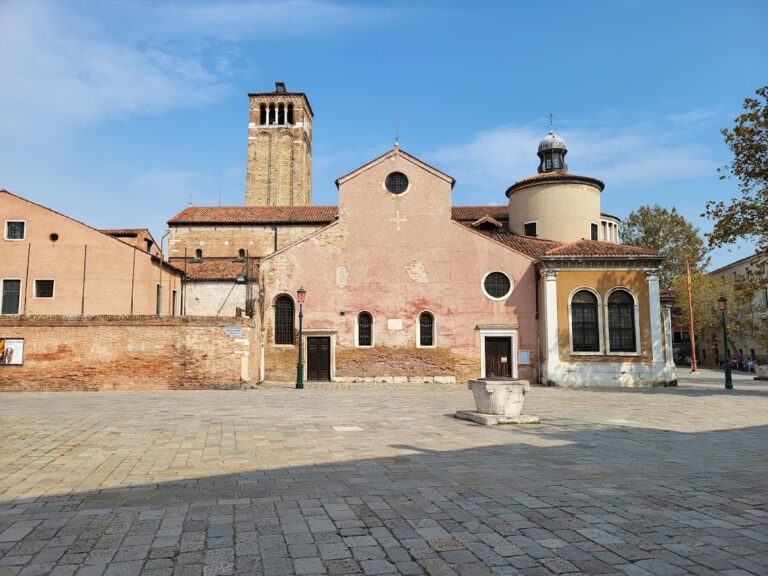
San Zan Degola, formally San Giovanni Battista Decollato, is a Venetian-Byzantine church in Venice, Italy, whose first recorded building dates to 1007 and was established with the patronage of the Venier family. Its origins may reach further back, since traditions describe a wooden oratory here in the seventh or eighth century, while other accounts place the beginnings between the eighth and tenth centuries. The church stands in the Santa Croce district and preserves an important example of Venice’s medieval architectural and ecclesiastical history.
Origins and medieval development
The Venier family, a prominent Venetian patrician house that owned a nearby palace, supported the church’s foundation. A later tradition connected its establishment with a Venetian victory over Genoa at Negroponte, the medieval European name for Euboea and its principal city in present-day Greece. The victory associated with the church took place much later, however, in 1358.
The parish probably took shape during the eleventh century, when Venice’s administrative and ecclesiastical boundaries were being defined. It was affiliated with San Pietro di Castello, the historic cathedral and former seat of Venice’s ecclesiastical authority. San Zan Degola remained a collegiate church until 1807, administered by a chapter made up of a titular priest, a deacon, and a subdeacon.
In 1118 the church was dedicated to the Beheading of Saint John the Baptist. The word “Decollato” means “beheaded,” while the Venetian name San Zan Degola is a shortened form meaning Saint John the Beheaded. In 1334, a Bohemian knight travelling on pilgrimage to the Holy Land donated a finger relic of John the Baptist to the church.
Rebuilding and the 1358 victory
The Pesaro family, another prominent Venetian patrician house, supported rebuilding or major renovation in 1213. On 29 August 1358, the Venetian fleet defeated the Genoese fleet off Negroponte. Because the battle took place on the feast associated with Salome and the beheading of John the Baptist, the victory was attributed to the saint’s intercession.
The doge, the elected head of the Venetian Republic, vowed to visit San Zan Degola annually on that feast. He kept the vow for only a few years, and the celebrations were soon transferred to Saint Mark’s Basilica because the church was too small to accommodate them.
Eighteenth-century alteration and suppression
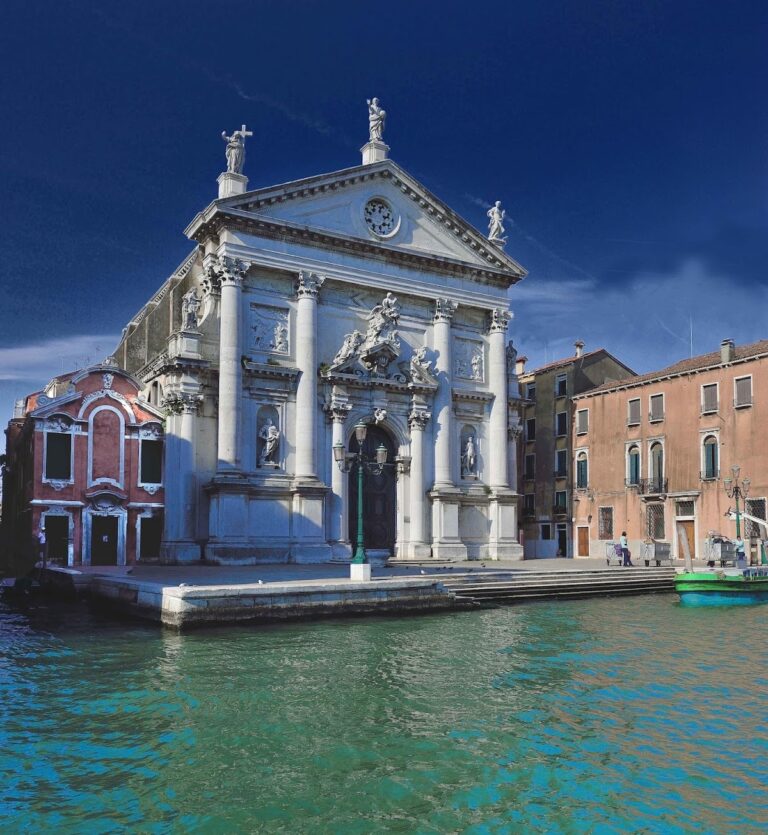
The building was reconstructed during the early eighteenth century, when its present facade was also created. At the beginning of that century, the original freestanding bell tower was demolished. It had stood approximately in the middle of the campo, or square, and possessed a tall spire.
Napoleon’s decrees reorganized Venetian parishes and religious institutions. In 1807 the parish of San Giovanni Battista Decollato was suppressed, and the church was closed and deconsecrated. During the French occupation it served as a warehouse, an alteration of use that damaged the ancient floor and some of the Greek-marble columns.
Restoration and present religious use
After restoration, the church reopened in 1818 as an oratory attached to the parish of San Giacomo dall’Orio. It later continued as that parish’s vicarial or filial church. Extensive conservation began in 1945 to recover the building’s earlier appearance, and the church subsequently remained closed for almost twenty years while further work was carried out.
San Zan Degola reopened in 1994 and was made available for Russian Orthodox worship by the Patriarch of Venice. It was Roman Catholic until 2002 and is now used by Venice’s Russian Orthodox community, which dedicates it to the Holy Myrrh-Bearing Women and holds regular weekly liturgies. The church remains historically connected with the Patriarchate of Venice and the parish of San Giacomo dall’Orio.
Remains
Layout and construction
San Zan Degola is built of brick and follows a three-aisled basilica plan. Its eleventh-century interior arrangement survives relatively intact, with the aisles divided by two rows of four Greek-marble columns. Byzantine capitals crown the columns, which support pointed arches that replaced earlier arches. Wooden braces connect the upper structure, while the nave is covered by a wooden ceiling shaped like an inverted ship’s keel.
Nave and lighting
Small windows beneath the ceiling and additional openings in the central nave illuminate the interior. Two further windows were opened in the lunettes of the side walls to improve the lighting. These elements belong to the surviving structure of a church whose original conception was preserved through repeated alterations.
Presbytery and apse
A transept, the arm crossing the nave, separates the presbytery, the clergy’s area around the main altar, from the nave. The presbytery was formerly covered by a groin vault, a ceiling formed by intersecting barrel vaults. It was later rebuilt with a raised marble floor decorated with geometric patterns. The apse was altered and closed by a flat wall carrying the high altar, which dates from the beginning of the eighteenth century.
Facade and bell tower
The present facade dates from the early eighteenth century and is divided into three sections corresponding to the central and side aisles. The narrower side sections connect to the central section through two simple volutes. Two lesenes, shallow vertical ornamental strips, frame the central section, which is crowned by a triangular pediment with a small rose window beneath it.
The present 20-metre campanile, or bell tower, is wedged between the church and a neighboring house. Its bells are operated manually. This attached tower replaced the earlier freestanding tower with its high spire, whose appearance is preserved in a 1635 engraving.
Chapels, paintings, and frescoes
Right apsidal chapel
The altar of the right apsidal chapel contains a sixteenth-century marble statue of the Savior, attributed to Giulio Del Moro. Other frescoes in the chapel at the right of the presbytery date from the fifteenth century.
Left apsidal chapel
Frescoes in the left apsidal chapel show Saint Helena holding a double cross. Beneath her are the heads of Saints John, Peter, Thomas, and Mark.
Presbytery paintings
Paintings from the school of Paolo Veronese decorate the presbytery walls, including the Annunciation and the Visitation. The phrase “school of Paolo Veronese” refers to works produced within the painter’s artistic circle or tradition, rather than necessarily by Veronese himself.
Medieval fresco fragments
Conservation work revealed fragments of medieval frescoes. Some date to the eleventh century, while others belong to the eleventh through thirteenth centuries. A group discovered in a side chapel in 1945 is dated more cautiously, from the second half of the thirteenth century to the first decades of the fourteenth century. The fragments are badly damaged, although they indicate that the chapel once carried a pictorial program across its entire interior. At the time of discovery, an Annunciation showing the archangel Gabriel announcing to Mary stood above the church portal.
These medieval frescoes are particularly rare in Venice because the city’s humid atmosphere makes their preservation difficult. An iconostasis, a screen of icons separating the sanctuary from the nave, reflects the church’s current Russian Orthodox use.