St Peter and St Paul’s Church, Clare: A Suffolk Parish Church


Site at a Glance
- Rating
- 4.5
- Popularity
- Very Low
- Country
- United Kingdom
- Primary era
- Medieval
- External website
- Open
- Eras represented
- Medieval, Early Modern, Modern
- Civilizations
- English
- Site type
- Religious
- Remains
- Church
On this page13 sections
History
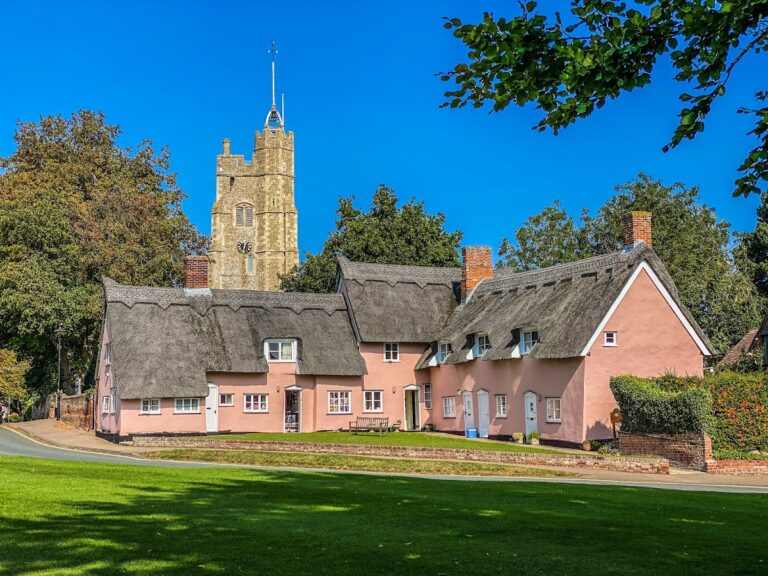
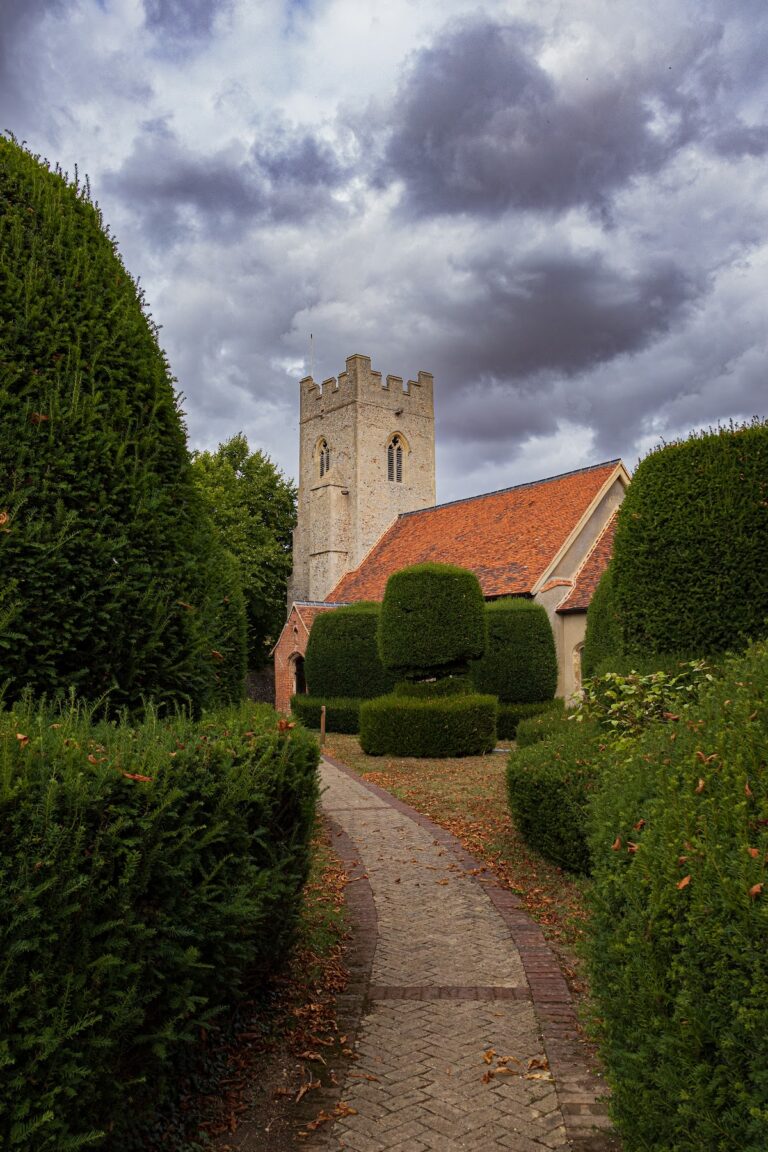
St Peter and St Paul’s Church is a Church of England parish church in Clare, United Kingdom, principally built during the fourteenth and early fifteenth centuries, with a west tower in the Perpendicular style. This late medieval English Gothic style is characterized by strong vertical lines, large windows, and panel-like tracery. Dedicated to Saints Peter and Paul, two of Christianity’s principal apostles, the church remains the parish church of Clare and is one of the largest churches in East Anglia.
Medieval parish church
The recorded line of priests extends back to 1307, reflecting the church’s long-established role in the parish. Its main body was formed chiefly in the fourteenth and early fifteenth centuries, while the west tower belongs to a Perpendicular phase identified as thirteenth-century in design. Work on the nave was undertaken in the 1440s, adding to the successive development of the medieval building.
Alterations and repairs
The chancel was altered in 1617. During the eighteenth century, an organ stood at the west end of the church, before being moved to its present position in 1864. Further repairs took place in 1834–36, when a gallery was added. A later programme followed a plan prepared in 1876 by James Piers St Aubyn and was carried out between 1877 and 1883. The tower was repaired again in 1898 by Detmar Blow.
Puritan destruction of images
In 1643, during the Puritan campaign against church images and ornaments considered superstitious or idolatrous, William Dowsing visited St Peter and St Paul’s. As the parliamentary visitor for the East Anglian counties, Dowsing was charged with directing the removal of such decoration. His journal recorded the destruction of 1,000 pictures, including 200 that he personally broke. Orders were also given for the removal of wooden carvings of the Twelve Apostles and twenty cherubim, together with altars, candlesticks, pictures, images, and the Sun and Moon in the east window.
The campaign left physical traces in the building. Bullet holes in the roof are associated with attempts to destroy religious imagery by shooting, although arrows, stones, poles, and whitewash were also used. The Sun and Moon in the east window nevertheless survive, preserving part of the decoration that was ordered to be removed.
Modern parish and heritage
The church is affiliated with the Diocese of St Edmundsbury and Ipswich, the Suffolk archdeaconry, and the Sudbury deanery. An archdeaconry is an administrative subdivision of a diocese, while a deanery groups parishes within it. The parish of Clare also includes St Mary’s Church at Poslingford, now a chapel of ease, meaning a chapel provided for parishioners living away from the main church. Clare forms part of the Stour Valley Benefice, a shared ecclesiastical arrangement involving the parishes of Cavendish, Stoke-by-Clare, Wixoe, and Hundon.
St Peter and St Paul’s is a Grade I listed building, the highest category of listed-building protection in England, reserved for buildings of exceptional interest. It was included by Simon Jenkins in England’s Thousand Best Churches in 2009, where it received a three-star rating.
Remains
The surviving church combines a principally fourteenth- and early fifteenth-century main body with a Perpendicular west tower, an upper clerestory, medieval and later carved furnishings, and a substantial bell installation. A clerestory is an upper level of windows above the main roofline or adjoining lower roofs, allowing light into the central space of a church.
Built fabric and decoration
West tower and clerestory
The west tower is a prominent surviving element of the church and follows the Perpendicular style, with its emphasis on vertical lines, large windows, and panel-like tracery. The slender, closely spaced clerestory windows reinforce the building’s upright character. Their arrangement is comparable to that at Holy Trinity Church, Long Melford, and St Peter and St Paul’s Church, Lavenham.
South porch
Above the sundial over the south porch is the motto “Go about your business.” It gives a forceful expression to Saint Paul’s admonition against idleness and disorder. Ten carved Green Man faces surround the doorway. Green Man carvings generally show a human face surrounded by, or emerging from, foliage, and are widespread in medieval and later European church decoration.
Interior furnishings
The late-fifteenth-century brass lectern takes the form of an eagle supported by three dogs rather than lions. It may first have served as a collection box, with coins inserted through the beak and released at the tail. The church also contains two fine private pews. One carries the emblems of Henry VIII and Catherine of Aragon, while the other is an elaborate Stuart gallery pew, dating from the period of the Stuart dynasty, with scroll-sided poppyheads. Poppyheads are ornamental carved finials placed along the ends of pews or benches, and this pew closely resembles examples at Little Thurlow.
The chancel contains rare Jacobean carved choir stalls. Jacobean refers to the architectural and decorative style associated with the reign of James I of England from 1603 to 1625. The organ now occupies the position to which the earlier eighteenth-century instrument was moved in 1864. A replacement acquired in 1888 had been built in 1847 by Gray and Davison for St John the Evangelist’s Church in Regent’s Park, London. In 1977, that instrument was replaced by an organ from St Peter’s Church, Ipswich, installed as a memorial to Clare Wayman, who lived from 1892 to 1976.
Bells and ringing objects
The eight-bell ring
The church has eight bells, including a 28-hundredweight tenor described as the heaviest tenor in any ring of eight bells in Suffolk. In bell ringing, the tenor is the largest and heaviest bell in a ring. A British hundredweight equals 112 pounds, or approximately 50.8 kilograms. The seventh bell probably dates from around 1410 and bears the inscription Trintas Sancta Campanum Istam Conserva, translated as “Holy Trinity conserve this bell.”
The sixth bell was cast in 1579 by John Dier. It weighs 15 hundredweight, measures 43 inches in diameter, and is described as the largest surviving example of Dier’s work. The ring grew from six bells to eight in 1781, when William Mears cast two additional bells. The third and fifth bells were made by the Miles Graye family of Colchester. The 28-hundredweight tenor was recast in 1893 by Charles Newman of Norwich, and the fourth bell was recast in London by William Mears.
The gotch
A large beer jug known as the gotch was presented to the bell ringers in 1729 by the vicar Matthew Bell. Nearly 20 inches, or 51 centimetres, high, it holds 32 imperial pints, equivalent to 18 litres. Its inscription contains the pun campana sonant canore, meaning “the bells ring in harmony.” An embossed bell and crown refer to the Crown Hotel, which was owned by the vicar’s family.