Church of St Andrew, Moretonhampstead: A Medieval Parish Church


Site at a Glance
- Rating
- 4.7
- Popularity
- Very Low
- Country
- United Kingdom
- Primary era
- Medieval
- External website
- Open
- Eras represented
- Medieval, Modern
- Civilizations
- British, English
- Site type
- Religious
- Remains
- Church
On this page14 sections
History
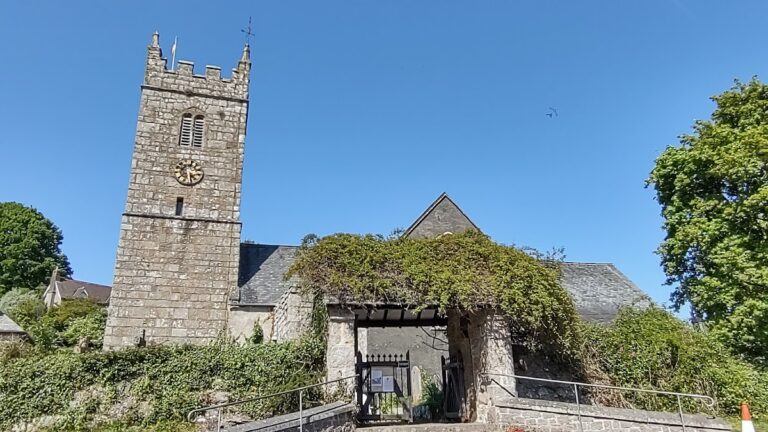
The Church of St Andrew is a Church of England parish church in Moretonhampstead, United Kingdom, dedicated to Saint Andrew. Its medieval building developed in two principal phases, with a tower from the early 15th century and a nave with aisles from the late 15th century. The church belongs to the Diocese of Exeter, an ecclesiastical district governed by a bishop, within the Province of Canterbury, and is administered through the Archdeaconry of Totnes and the Deanery of Moreton in the Parish of Moretonhampstead.
St Andrew’s was designated a Grade I listed building on 23 August 1955. This designation recognizes buildings of exceptional architectural or historical interest and forms part of England’s system for protecting historic structures.
Medieval church
The principal medieval phases established the church’s basic form. An early 15th-century tower was followed later in the century by the construction of the nave, the main body of the church, together with its aisles, which run alongside it.
Victorian alterations
The church was re-pewed in 1856–57. Work began on the north side in October 1856 and was completed on the south side soon afterward. During this work, a medieval chancel screen was removed because it was reportedly in poor condition. The screen had separated the chancel, the eastern part around the altar traditionally reserved for clergy, from the rest of the church.
Edwardian restoration
A major restoration in 1904–05 reshaped the interior and extended the chancel by 9 feet (2.7 metres) to create space for an organ donated by Mr Tilby of Teignmouth in memory of his wife. The restoration replaced the seating with oak pews, laid Minton tiles in the aisles, removed the west gallery, and installed an oak wagon roof, a curved roof form resembling the canopy of a wagon. Plaster was stripped from the walls and central heating was installed. A new chancel screen was erected in a manner resembling the medieval screen that had been removed. A stained-glass window was also installed in the chancel in memory of William Henry Smith. The new altar was consecrated by the Bishop of Exeter on 6 April 1905.
Hele & Co of Plymouth installed the organ in 1905 at a cost of £800. It was given in memory of Pauline Eugenie Tilby and opened on 15 June 1905 by Daniel Joseph Wood, organist of Exeter Cathedral. An electric blower was fitted in 1946. The tower’s peal of eight bells was cast by Gillett & Johnston in 1922 and dedicated by the Bishop of Exeter on 1 December that year.
Remains
The church’s physical form combines an early 15th-century tower with a late 15th-century nave and aisles. Later work altered the chancel and interior while retaining the main medieval arrangement.
Medieval structure
Tower
The early 15th-century tower forms one of the two principal medieval elements of the church. It contains eight bells cast by Gillett & Johnston in 1922, forming the church’s bell ring.
Nave and aisles
The late 15th-century nave is the principal body of the church and is flanked by aisles. Together with the tower, it defines the medieval structure that remains at the core of the building.
Chancel and interior fittings
Chancel
The chancel was lengthened by 9 feet (2.7 metres) during the 1904–05 restoration to accommodate the organ. It contains a stained-glass window commemorating William Henry Smith and a replacement chancel screen designed to resemble the medieval screen removed in 1856–57.
Interior finishes
The restored interior contains oak pews, Minton-tiled aisle floors, an oak wagon roof, walls from which plaster was removed, and central heating. The west gallery was removed during the same restoration.
Organ and bells
Organ
The organ installed in 1905 has three manuals, or hand-operated keyboards, and 34 speaking stops, each controlling a set of pipes that produces a distinct tone. Its electric blower dates from 1946.
Bell ring
The tower’s eight bells were cast by Gillett & Johnston in 1922. They were dedicated by the Bishop of Exeter on 1 December of that year.