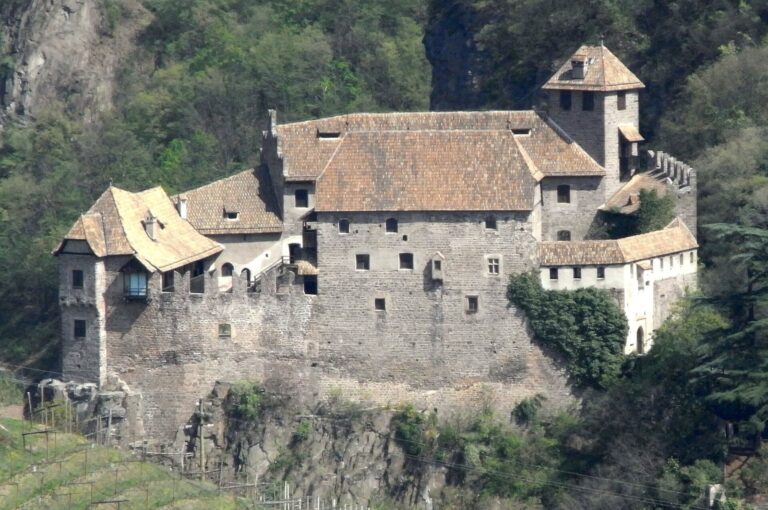
Zwingenstein Castle: A Medieval Fortress on the Brenner Road
Site at a Glance
- Popularity
- Very Low
- Country
- Italy
- Primary era
- Medieval
- Eras represented
- Iron Age, Medieval
- Civilizations
- Holy Roman Empire
- Site type
- Military
- Remains
- Castle
On this page8 sections
History
Zwingenstein Castle is a medieval hilltop fortress near Unterinn in Ritten, South Tyrol, Italy. Built around 1200, it controlled the Brenner Road, also called the Kaiserweg, and became the ancestral seat of the Zwingenstein family.
Earlier settlement
The hill was occupied from the Neolithic period onward. Finds indicate activity in the Bronze and Iron Ages, and excavations identified a Rhaetian dwelling dating to the second century BC. Settlement ended there at the close of the Iron Age.
The castle and its family
The Zwingensteins served the bishops of Trent, church leaders who also held secular authority, as ministerials, members of a service-noble class with military and administrative duties. They held the castle wardenship. The family’s lord, Nicolaus de Twingenstain, appears in a record from 1258. In 1288, Meinhard II’s territorial register named the surrounding district Twingenstein.
The family’s loyalty to the bishop led to conflict with Meinhard II, a thirteenth-century count associated with Tyrol and Gorizia. He besieged and destroyed the castle in 1276. His son Henry later oversaw its rebuilding.
In 1441, castle commander Hans Zwingensteiner settled a judicial dispute involving a nearby manor farm associated with the castle. Cristoff Zwingenstainer served as a regional judge in Gries and Bolzano in 1483–84.
Decline and legacy
The family’s leaders died in 1487 during fighting near Calliano, close to Trent, between Tyrolean troops and the Republic of Venice. Other family members moved away, after which the castle quickly fell into decay. The Zwingenstein family died out in the early sixteenth century. Its ancestral arms now serve as the municipal coat of arms of Ritten. The South Tyrol provincial monument authority placed the ruins under protection on July 3, 1989.
Remains
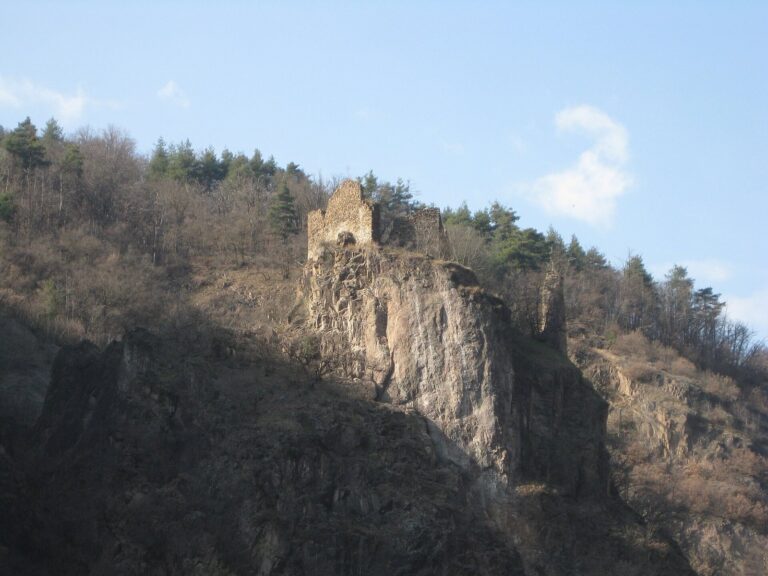
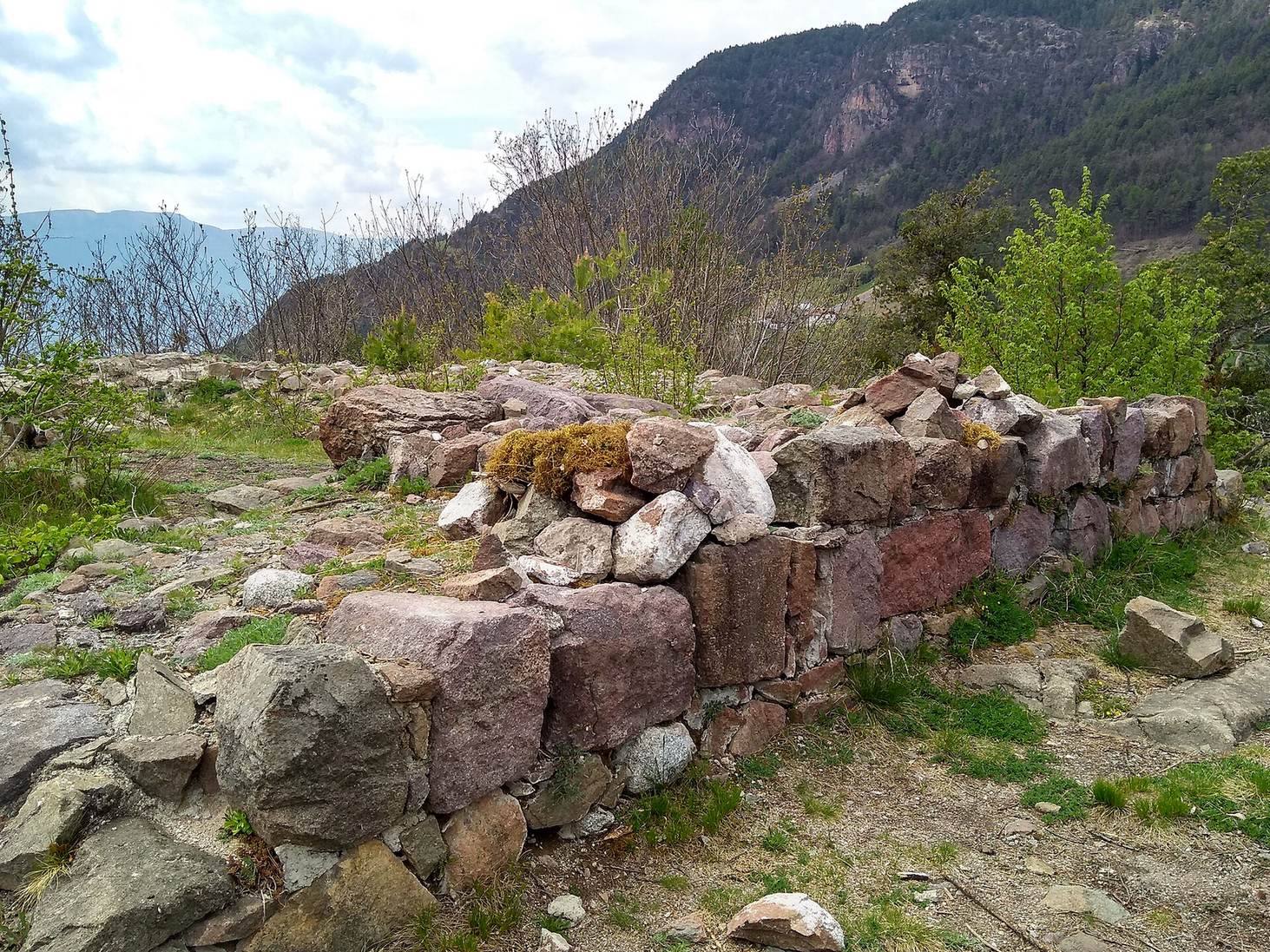
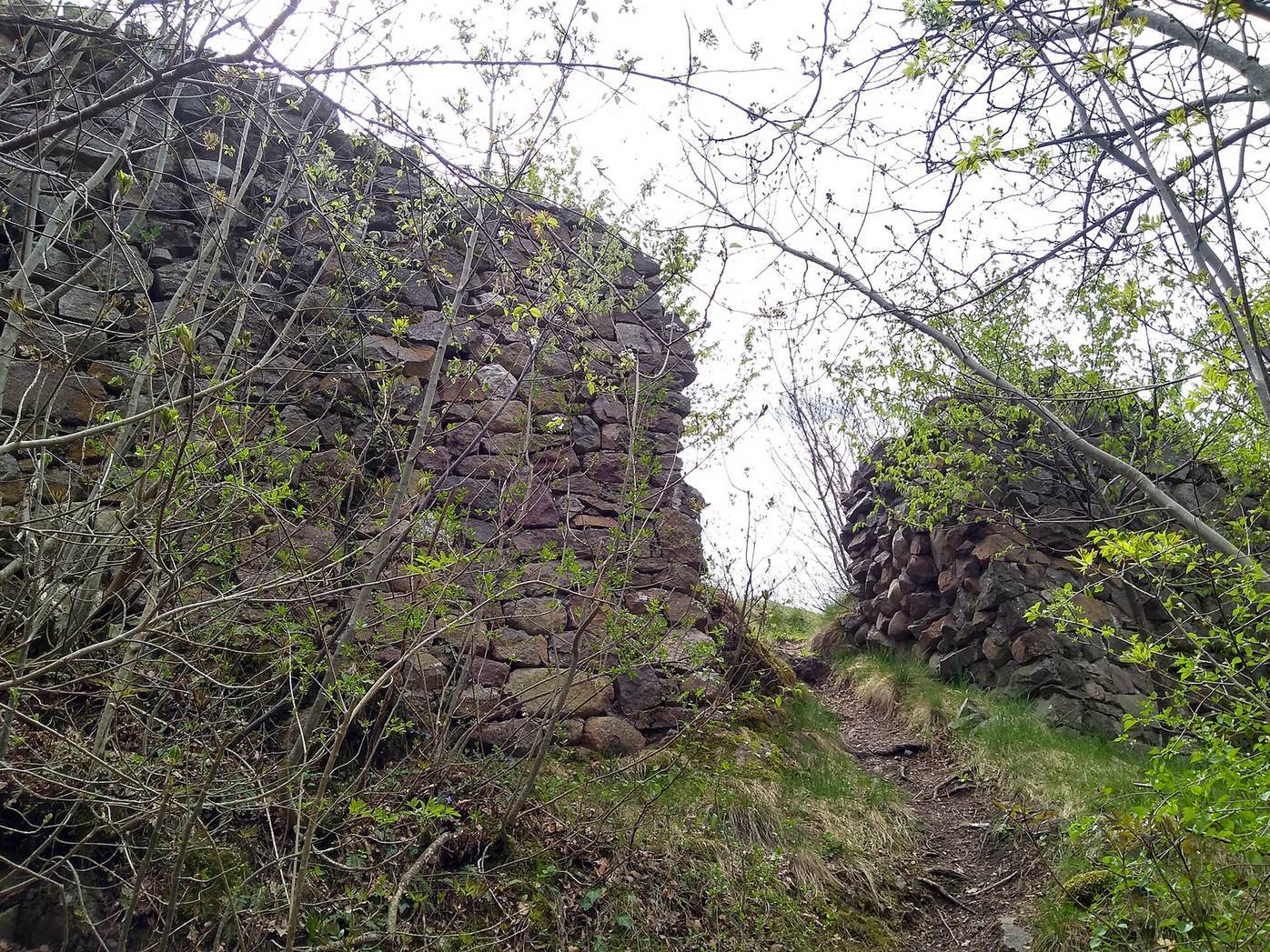
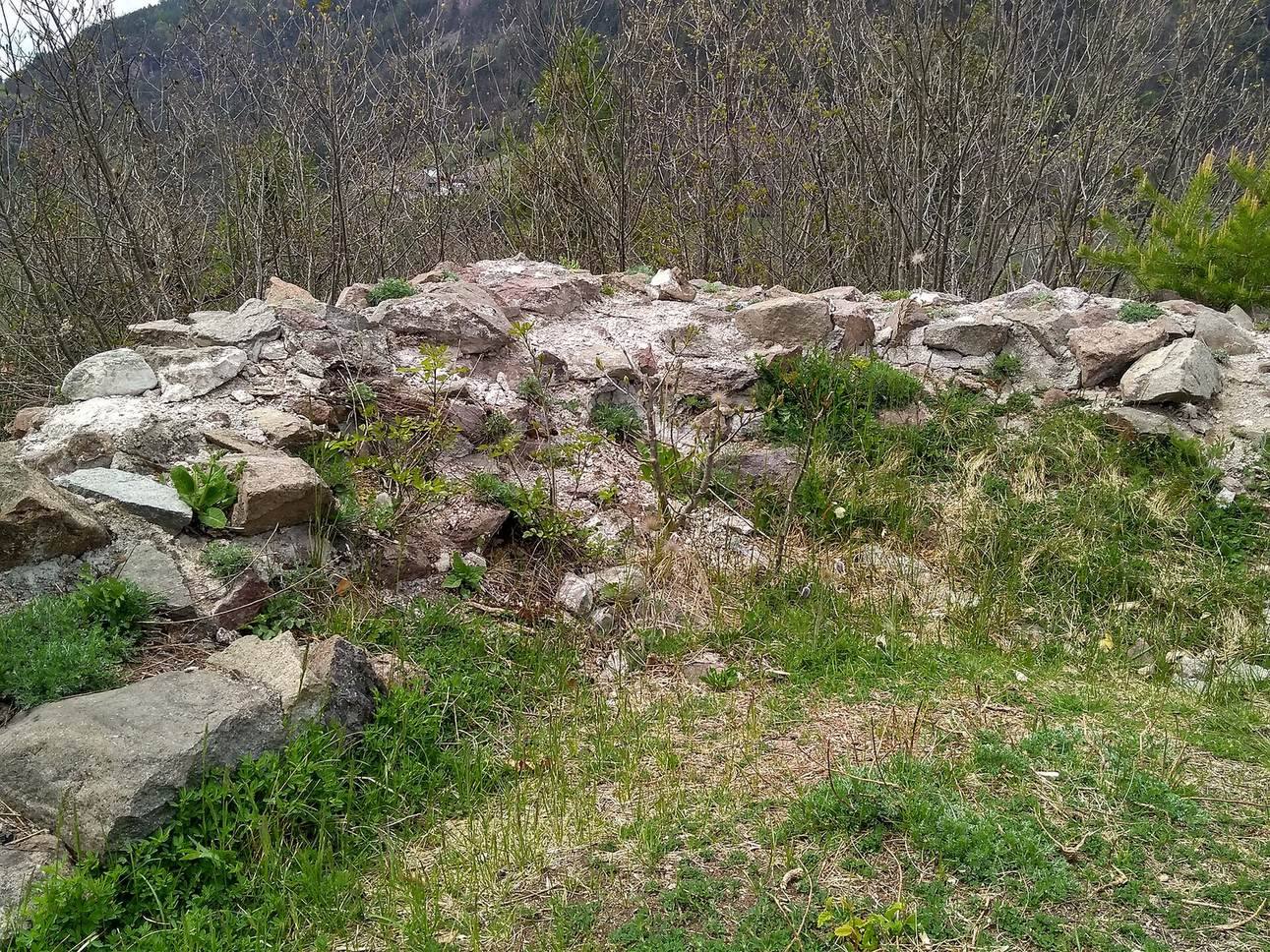
The castle’s few surviving masonry traces occupy the hilltop. Prehistoric defensive works form a larger setting around and below the castle remains, while a Roman-period burial ground lay near the Church of St. Sebastian at Weit.
Hilltop structures and defenses
Castle and prehistoric fortifications
Only a small amount of castle masonry remains at the summit, including a wall fragment near the small Church of St. Sebastian. An inner prehistoric ring wall surrounds the castle remains. More substantial remains of a Rhaetian hillfort lie within the perimeter where the castle was built. Farther down the hill, an outer rampart once fortified the plateau.
Roman burial ground
A burial ground with Roman urn graves was located near the Church of St. Sebastian at Weit.