Donndorf Cistercian Nunnery: A Monastery and Later Latin School
Site at a Glance
- Popularity
- Medium
- Country
- Germany
- Primary era
- Medieval
- Eras represented
- Medieval
- Civilizations
- Holy Roman Empire
- Site type
- Religious
- Remains
- Monastery
On this page7 sections
History
Foundation and medieval community
The Donndorf Cistercian Nunnery was a women’s monastery of the Cistercian order, a Catholic monastic community that followed the Rule of St Benedict. Founded in 1250 at Donndorf, Germany, it belonged to the Diocese of Erfurt, an ecclesiastical district under a bishop. The house stood within the historical County of Wiehe-Rabinswalde, in what is now Thuringia. Before 1272, the nuns of Bachra Abbey very probably moved to Donndorf.
Uprising and dissolution
In 1525, during the German Peasants’ War, a major uprising across German-speaking lands in 1524 and 1525, insurgent peasants stormed the monastery grounds. The Protestant Reformation, a sixteenth-century movement that reshaped Western Christianity, brought further upheaval. The convent closed in 1541, after its last nun, Felicitas Hackin, died. Christoph von Werthern and his brothers then converted the complex into a Latin school, where Latin was taught as a foundation for advanced education. It later became known as Klosterschule Donndorf.
Werthern family and modern changes
From around 1540, the Werthern-Wiehe barons controlled the monastery, and the Werthern-Bachra line held it from 1869. The Werthern family owned the estate, which was already described as a manor well before 1790; its managed holdings included 170 hectares of land and 250 hectares of woodland. Family members served as the school’s lay guardians and held its hereditary administrator’s office. Administrators included Baron Traugott von Werthern, who took office in the early to mid-eighteenth century; his brother Baron Wolff von Werthern (1854–1930); Baron Hans von Werthern, identified as Wolff’s nephew; and Hans’s son, Baron Hans-Thilo von Werthern (1872–1961).
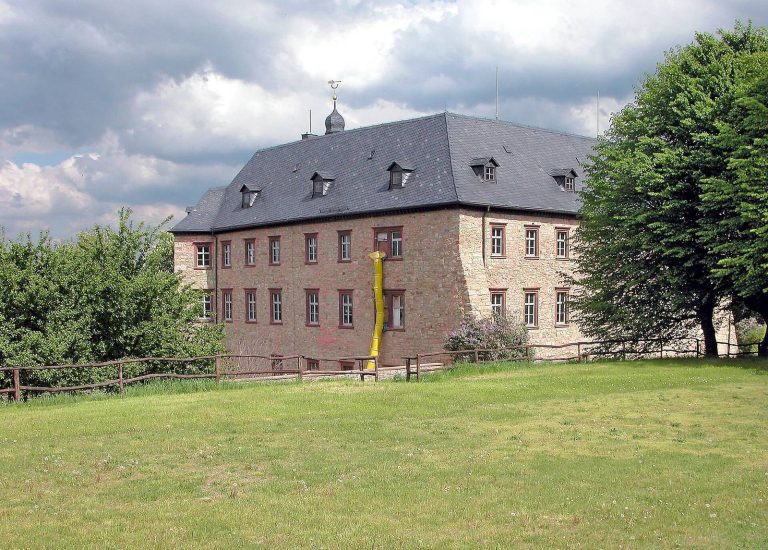
Donndorf incorporated the monastery in 1928. In September 1945, the von Werthern family lost its property without compensation under the land reform. A three-storey school building added on the south side of the monastery buildings in 1887 was demolished in 1947 as a symbol of aristocratic rule. The complex’s principal buildings were renovated between 1994 and 1996, and the Rural Residential Adult Education School moved in during 1996.
Remains
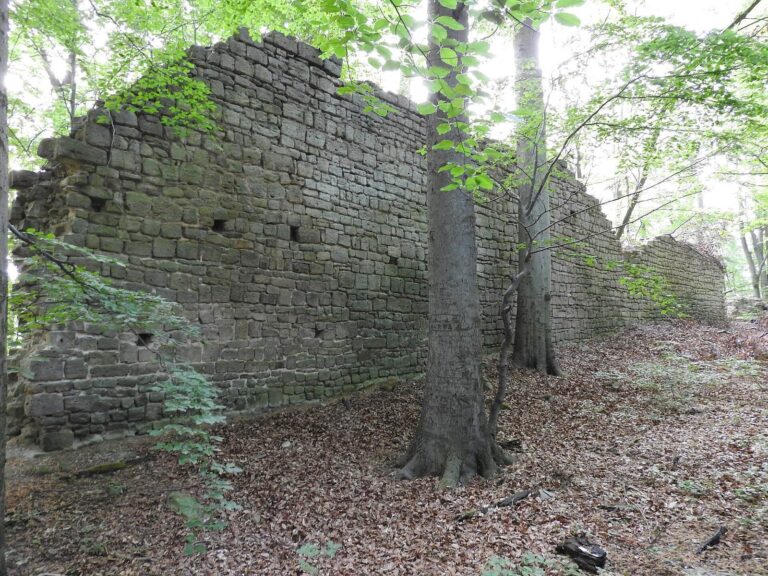
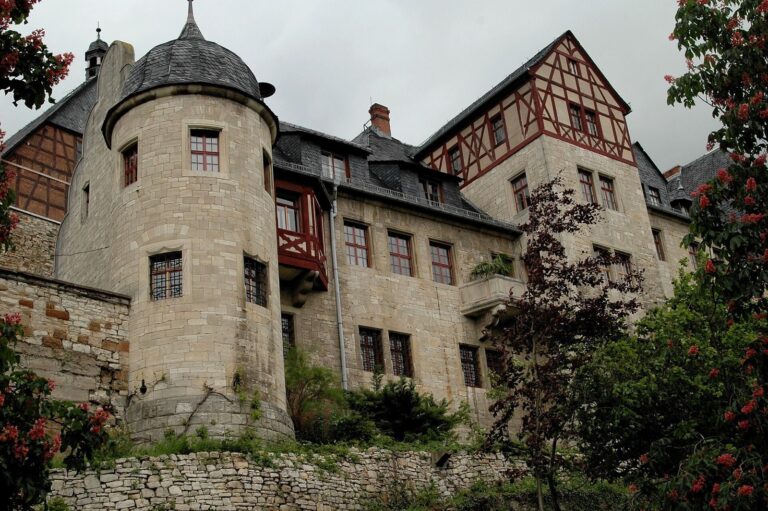
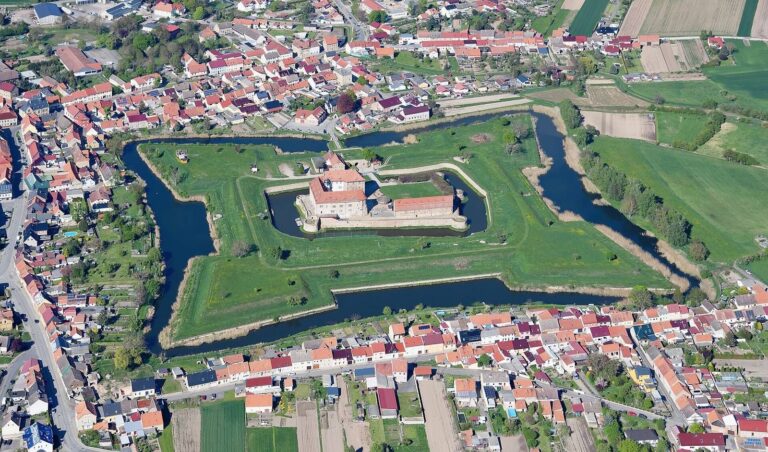
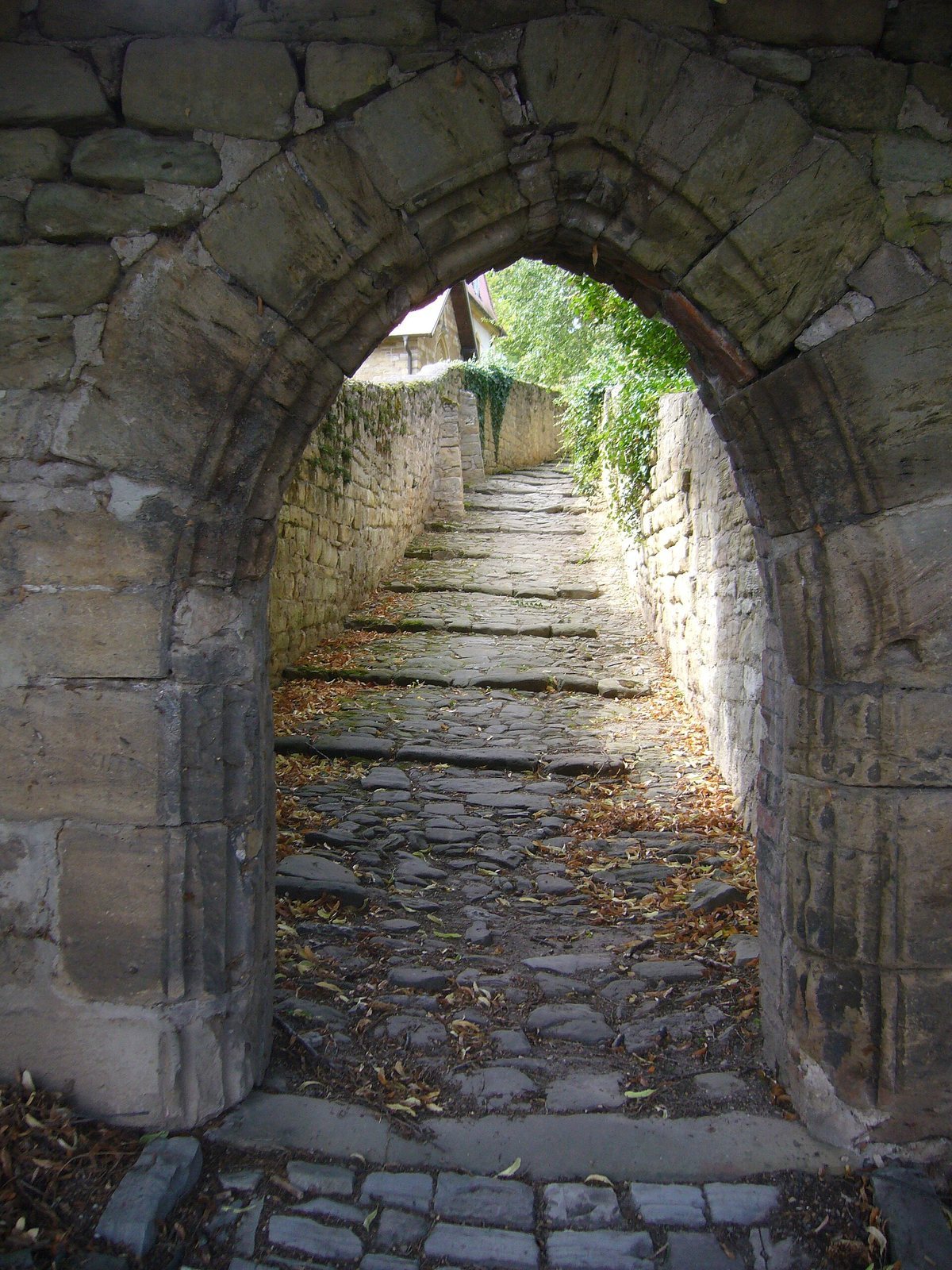
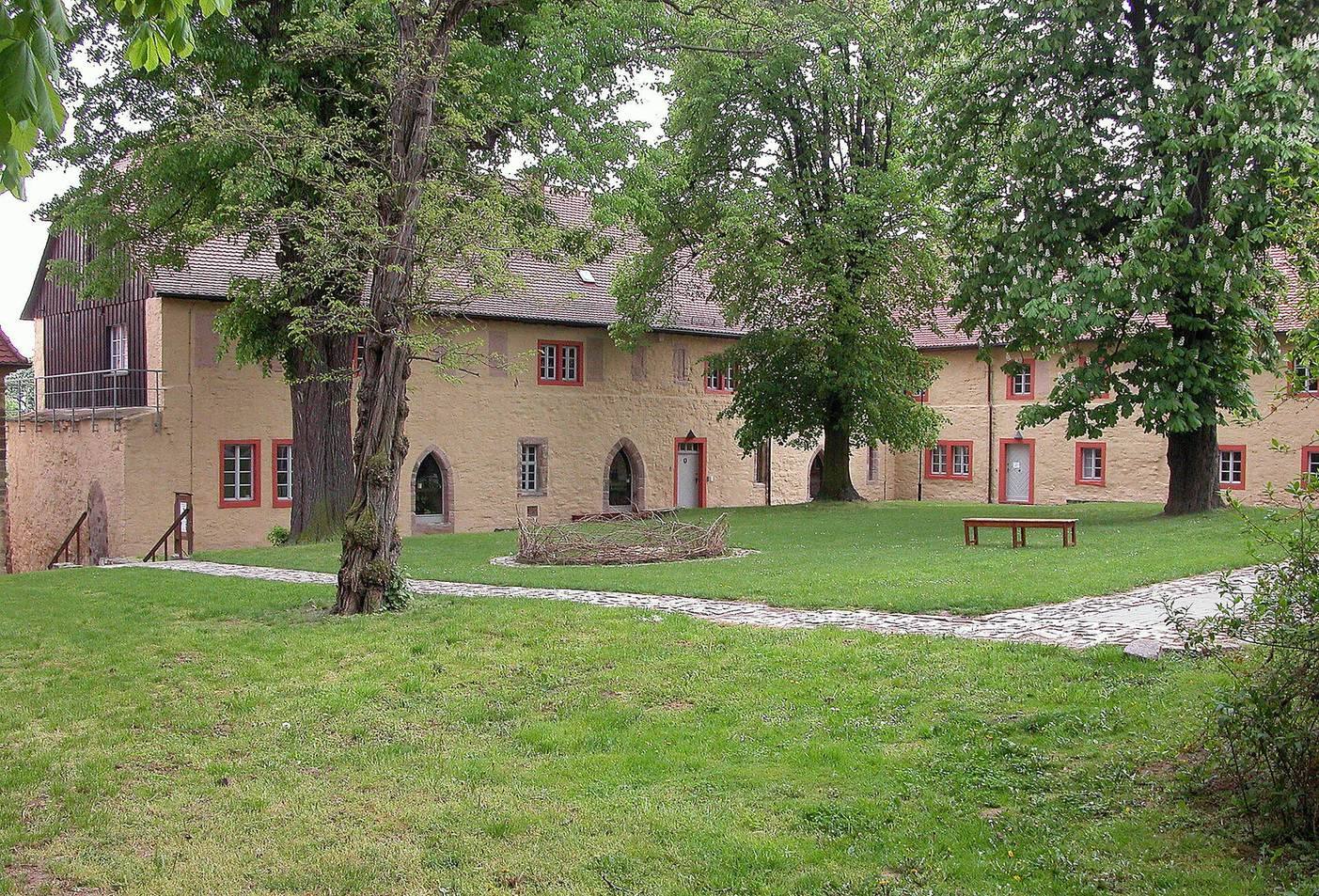
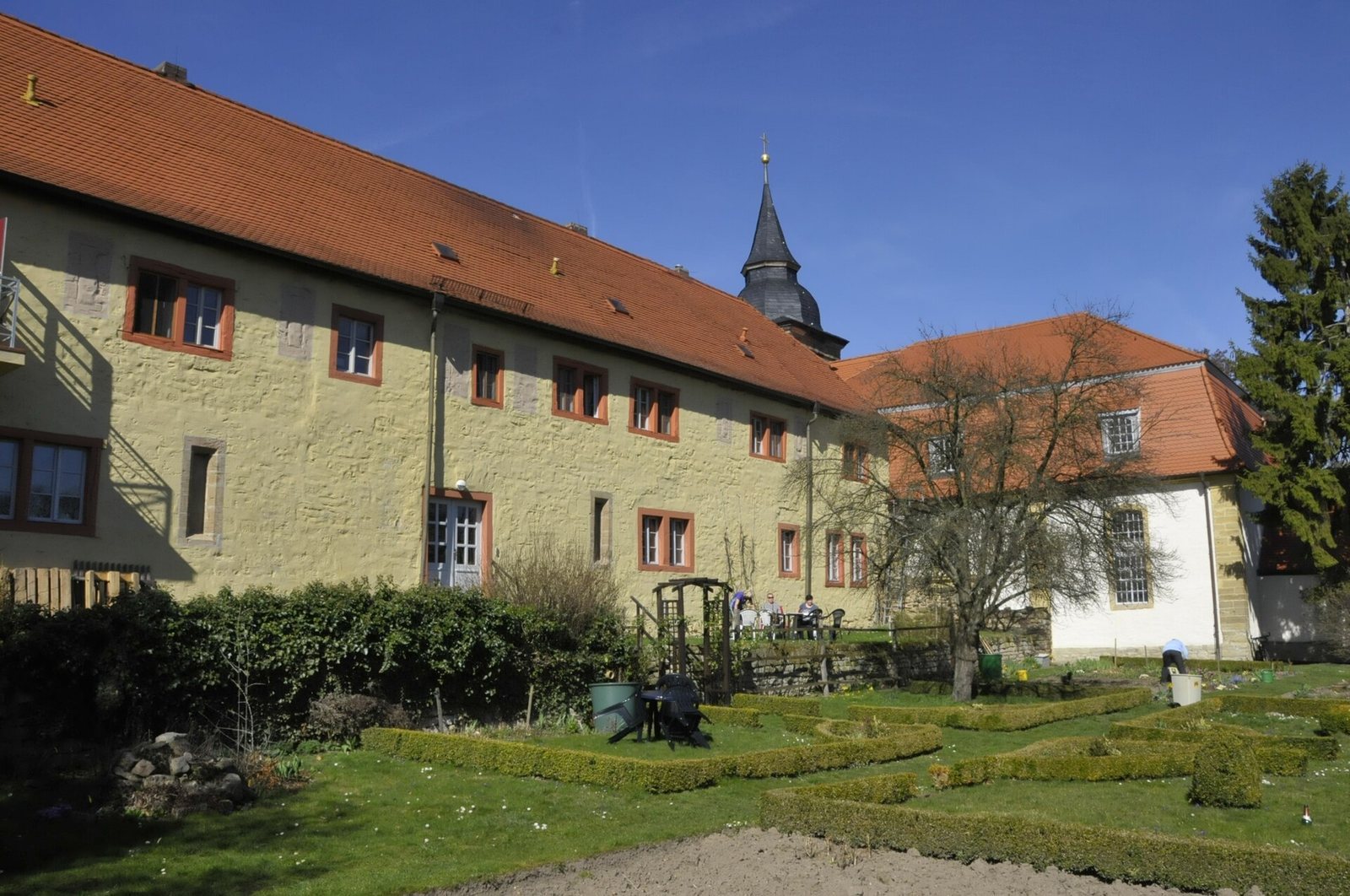
The complex stands west of Donndorf at the edge of the Thuringian Basin. A small woodland lies to its southeast, and a road connects the site with the settlement. The grounds include old buildings, sections of historic street paving, an entrance and steps.
Monastery buildings and grounds
Surviving buildings and paved sections form part of the historic monastery complex. An entrance and steps remain within the grounds, preserving elements of its internal layout.
Former abbey church and crypt
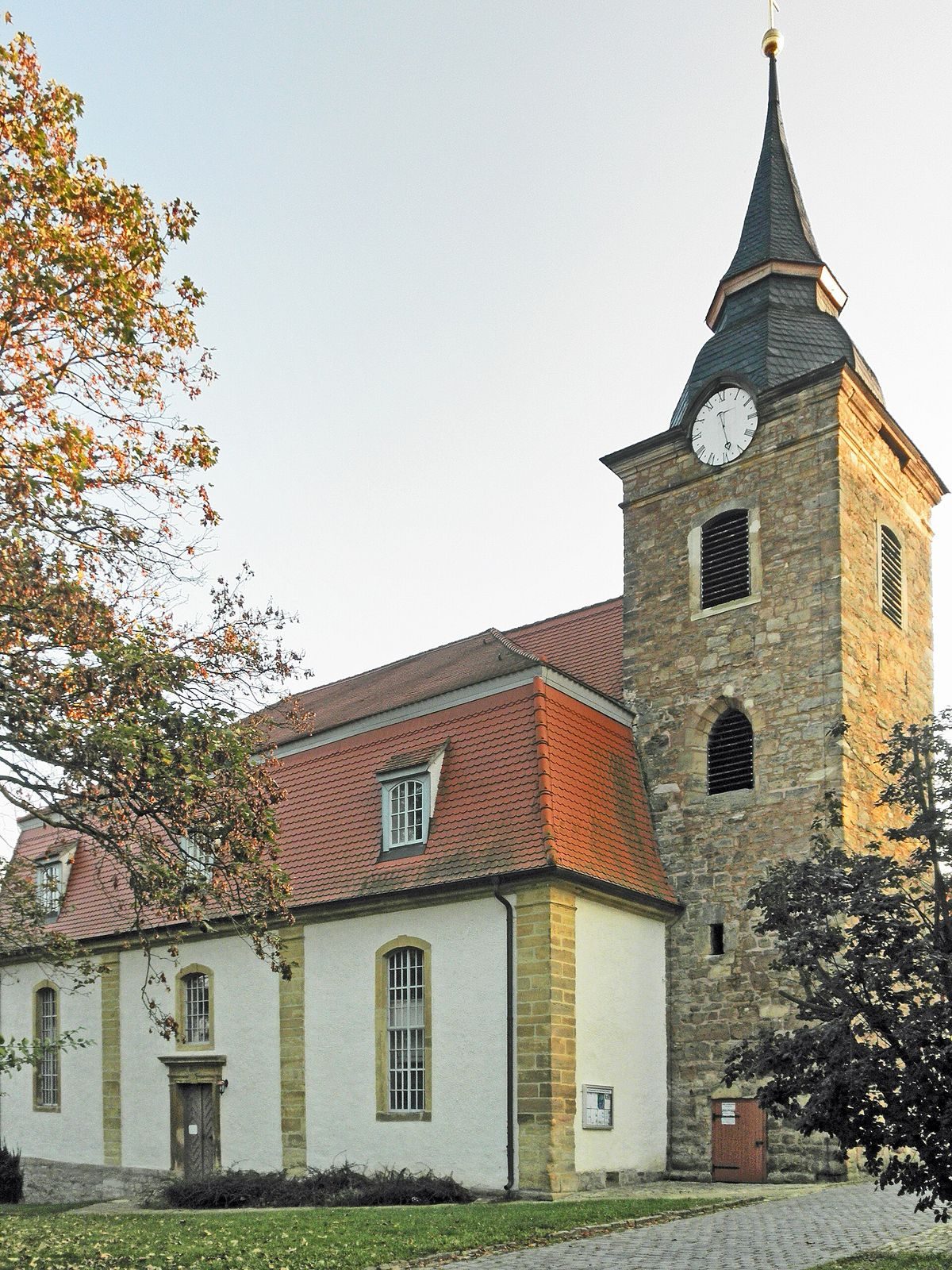
The former abbey church is dedicated to Saint Lawrence, an early Christian martyr venerated as a saint. Its surviving crypt, a burial chamber beneath a church, served as the Werthern family branch’s burial place. A Werthern coat of arms stands above the crypt.