Iulia Constantia Zilil: An Ancient Roman Colonial Settlement in Morocco


Site at a Glance
- Rating
- 4.7
- Popularity
- Very Low
- Country
- Morocco
- Primary era
- Classical
- Eras represented
- Classical
- Civilizations
- Kingdom of Mauretania, Phoenician, Roman
- Site type
- City
On this page13 sections
History
Iulia Constantia Zilil is an ancient settlement in Morocco, at Dchar Jdid in the northern part of the country. Its earliest phases were Phoenician and Mauritanian, while the Roman colony was established between 33 and 25 BC under Augustus, the first Roman emperor, who ruled from 27 BC to AD 14. The settlement developed into an important station on the Antonine Itinerary, a Roman list of routes and stopping points, and remained occupied from the early Christian period until at least the fourth century AD.
Phoenician and Mauritanian settlement
The earliest foundation date is uncertain, but Phoenician and Mauritanian activity existed at the site from as early as the fourth century BC. The earliest excavated buildings date at least to the second century BC. A residential settlement was destroyed around 100 BC, and later buildings dating approximately to 60–40 BC were subsequently demolished.
Roman foundation and development
Iulia Constantia Zilil was established as a colonia, a Roman colonial settlement often created for citizens or military veterans, between 33 and 25 BC. The foundation appears to have served veterans of the battle of Actium. It was also associated with Juba II, the Berber king of Mauretania who ruled as a client king under Rome. Juba II is said to have established one of three colonies in Mauretania during this period.
The Roman city expanded substantially during the first century AD. Its location within Mauretania Tingitana, the Roman province covering much of northern Morocco, supported its role as a station on the imperial route network. A port at Kouass, about 5 km to the west on the right bank of the Gharifa, connected the settlement with maritime and economic activity.
Destruction, evacuation, and rebuilding
The city was evacuated in the middle of the third century for reasons that remain unknown. It appears to have suffered a major destruction between AD 238 and the fourth century, after which rebuilding took place in the mid-fourth century. This renewed phase, dated approximately to AD 355–360, included residential, industrial, and commercial activity.
An early Christian church indicates the Christianization of the region and of Romanized Berber communities. It is described as the only monument of its type in Mauretania Tingitana and the only early Christian church found in Atlantic Morocco. A further destruction is dated around AD 410–430. Later history is uncertain, although occupation may have continued as a small fishing village until the Arab invasion of the early eighth century.
Rediscovery and archaeological study
Excavations are recorded at the site in 1842 and 1880, associated with Drumond Hay and Henri de La Martinière. Later investigations revealed residential, religious, hydraulic, industrial, and commercial remains. The settlement has also been linked with the later name Arzila, although the traditional identification of Arzila with modern Asilah is doubtful.
Remains
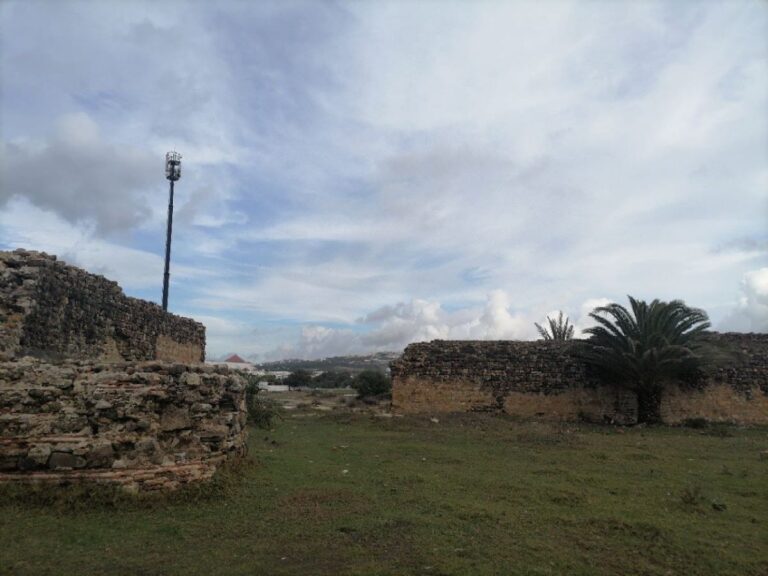
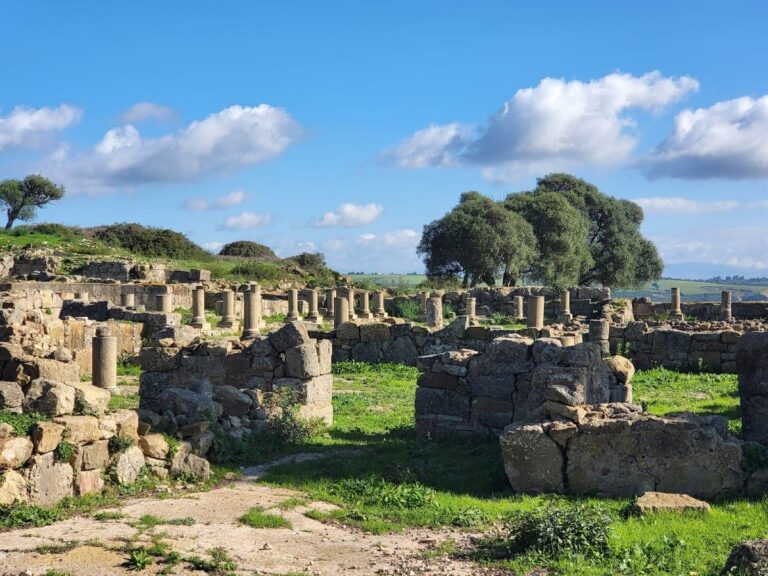
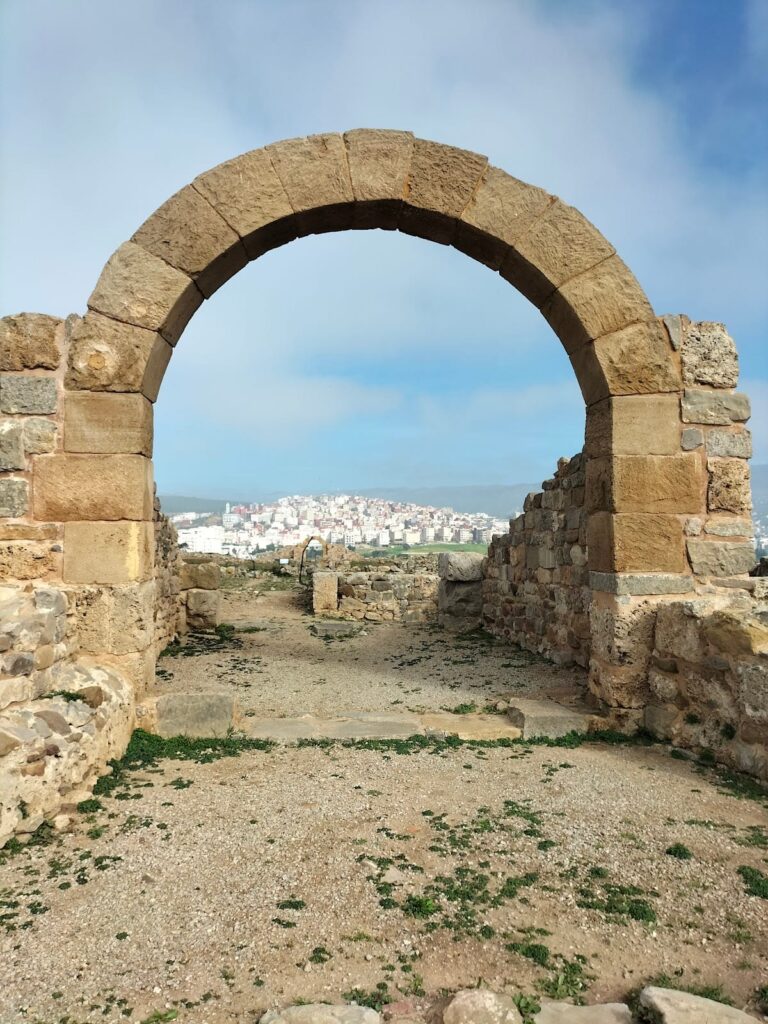
The settlement occupied an extensive walled area at Dchar Jdid. Its surviving remains include residential districts, a large temple, baths, water-storage works, an aqueduct, an early Christian church, industrial and commercial quarters, and a circular structure interpreted as an amphitheater or theater. The physical remains reflect several periods of occupation and rebuilding within the same enclosed settlement.
Residential and civic areas
Houses and temple
Houses were excavated on the northern plateau, while another residential quarter formed part of the fourth-century reoccupation. A large temple belongs to the principal group of remains within the walled settlement, alongside the houses and other civic structures.
Baths and commercial quarters
Baths lay in the southeastern part of the settlement, near a water channel. Industrial and commercial areas formed part of the archaeological remains, particularly in the rebuilt city of the fourth century, when residential activity was accompanied by renewed production and trade.
Water management
The city possessed a cistern divided into four compartments. An aqueduct supplied the reservoir, and part of the water channel ran underground. The aqueduct was constructed after the reign of Emperor Hadrian, who ruled from AD 117 to 138. Together, the channel, cistern, and baths reveal the infrastructure used to supply and manage water within the settlement.
Early Christian church
The early Christian church stood near the western gate of the enclosure. It had three aisles, a baptistery used for Christian baptism, and several attached structures. Its position beside the gate and its combination of worship space, baptismal installation, and associated buildings distinguish it within the surviving remains of the city.
Circular structure outside the western gate
On a gentle slope opposite the western gate stands a circular building oriented north to south. It may date to the second century AD and is interpreted as an amphitheater, a generally oval or circular venue for public spectacles, although that identification remains uncertain. The surviving structure forms a circle nearly 40 m in diameter, with an opening about 25 m wide between the ends of two visible wall sections that probably served as retaining walls. Several large stones on the northern slope may have formed seating set against the hillside.
Kouass port
The associated port at Kouass preserves remains from both pre-Roman and Roman occupation. Its features include potters’ kilns used from the fifth to the first century BC, a pre-Roman fortified enclosure wall about 48 m long that may date from the third to the first century BC, fish-salting installations, and a Roman aqueduct. These remains place the port within the wider economic and maritime system connected with Iulia Constantia Zilil.