Zhongshan Park: Beijing’s Imperial Altar Grounds and Public Park
Site at a Glance
- Popularity
- Medium
- Country
- China
- Primary era
- Medieval
- Eras represented
- Medieval, Early Modern, Modern
- Civilizations
- Chinese, Japanese, Ming, Qing
- Site type
- Civic
- Remains
- Park
On this page24 sections
History
Imperial ritual grounds
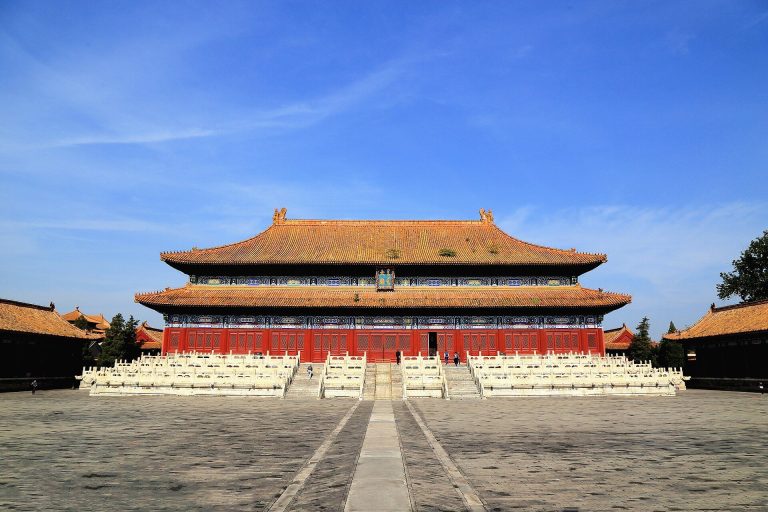
Zhongshan Park is a 23-hectare public park in central Beijing, China, immediately west of Tiananmen and southwest of the Forbidden City. Its central complex is the Altar of Land and Grain, built in 1421 under the Ming Yongle Emperor, who reigned from 1402 to 1424. During the Ming dynasty (1368–1644) and the Qing dynasty (1644–1912), emperors made offerings there to the gods of land and grain, whose worship was linked to the state and agricultural welfare.
The altar belonged to Beijing’s traditional grouping known as the Nine Altars and Eight Temples. Together with the Imperial Ancestral Temple, it followed the arrangement called “left ancestor, right altar,” placing the ancestral temple and state altar in relation to one another. The site’s original purpose as an imperial place of worship remained central to its identity even after the surrounding grounds became a public garden.
From altar grounds to public park
After the Qing emperor abdicated, the grounds fell into neglect. Caretakers kept pigs and sheep there, and some areas were planted with alfalfa for fodder. In 1913, the Republic of China government took control of the site and began raising funds to turn it into a park. After extensive repairs, Central Park opened to the public on October 10, 1914, among the earliest of Beijing’s former imperial gardens to do so.
From 1915 onward, ponds, rockeries, pavilions, and gardens altered the grounds. The park also acquired buildings and objects from elsewhere in Beijing and beyond. The Ritual Practice Pavilion, built in 1420 within the Court of State Ceremonial, had served officials and foreign envoys rehearsing court ceremonies before meeting the emperor. The Eight-Nation Alliance, a military coalition that intervened in the Boxer Rebellion, an anti-foreign uprising around 1899–1901, destroyed the Court’s offices in 1900, but the pavilion survived. It was moved to the Ministry of Rites compound on Hubu Street. After the compound passed to the Salt Bureau, a government agency responsible for salt administration, the Bureau donated the pavilion to Central Park in 1915.
Another transferred structure came from Qichun Garden at Yuanmingyuan, an imperial garden complex near Beijing. Built early in the reign of the Qing Yongzheng Emperor (1722–1735), the pavilion was modeled on Lanting, a historic site in Shaoxing associated with the calligrapher Wang Xizhi. It was rebuilt in an eight-sided form with large stone columns in 1779. Anglo-French forces burned it in 1860, but its eight columns survived and were moved to the park in 1917. A new pavilion was built around them in 1971.
The Defending Peace Archway also had an earlier identity. The Qing government erected it as a memorial to Baron von Ketteler, a German diplomat killed in Beijing during the Boxer Rebellion in 1900. After the First World War, the archway was dismantled, moved to the park, and rebuilt as the Arch of Justice Triumphant. It received its present name in 1952.
The park in the twentieth century
Sun Yat-sen, a revolutionary leader associated with the founding of the Republic of China, lay in the park’s worship hall after his death in 1925. In 1928, Central Park was renamed Zhongshan Park in his memory. During Japan’s occupation of Beiping in 1937, the park was first renamed Beiping Park and then, in October, Central Park. The name Zhongshan Park returned after Japan’s defeat in 1945.
The tea house became a meeting place for educational and cultural activity. In 1919, educators Yan Xiu and Zhang Boling met there repeatedly with Cao Rulin, Fan Yuanlian, Liang Shiyi, Zhou Ziyi, and others to discuss expanding Nankai School and establishing Nankai University in Tianjin. The Literary Research Association, an influential early modern Chinese literary group, was founded there in January 1921. The Young China Association, a youth organization, also used the building, and writer Lu Xun visited frequently. The tea house is also identified as one of the former sites of early Communist Party activity in Beijing.
Under Japanese occupation, an open-air stage and brick audience seating were built in 1942 under pressure from the occupying authorities. After the establishment of the People’s Republic of China, the brick seating was replaced by wooden benches. From 1980 onward, the open-air venue was converted into an indoor theatre and developed into a concert hall. A bronze statue of Sun Yat-sen was erected on November 12, 1986, the 120th anniversary of his birth. In 1988, Zhongshan Park was designated a National Key Cultural Relics Protection Unit.
Remains
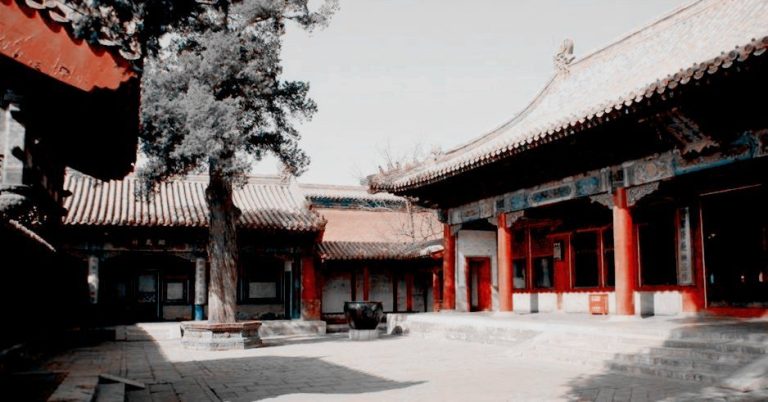
The park’s layout centers on the Altar of Land and Grain and its ceremonial buildings, with garden areas and pavilions extending around them. The grounds lie beside the Forbidden City, separated from it by a wall. The main entrance faces Chang’an Avenue, while an opening in the eastern altar wall forms a circular garden gateway. The park also contains a waterside pavilion, a flower corridor, the Four-Appropriate Studio, the Welcoming Radiance Pavilion, Evergreen Garden, a children’s recreation area, and halls and pavilions built for members of the imperial family.
The altar and ceremonial buildings
Altar of Land and Grain
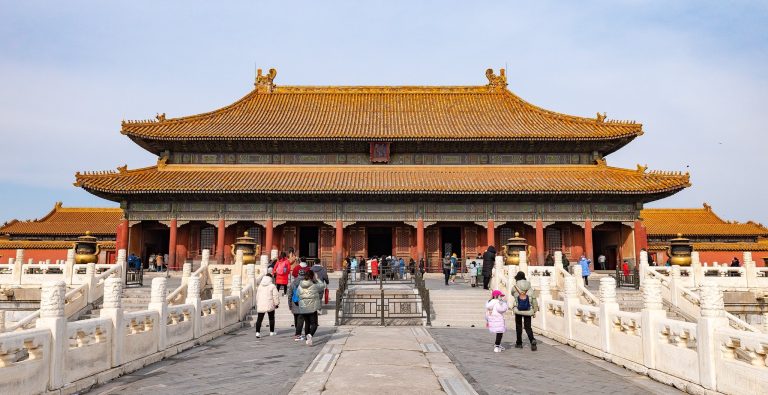
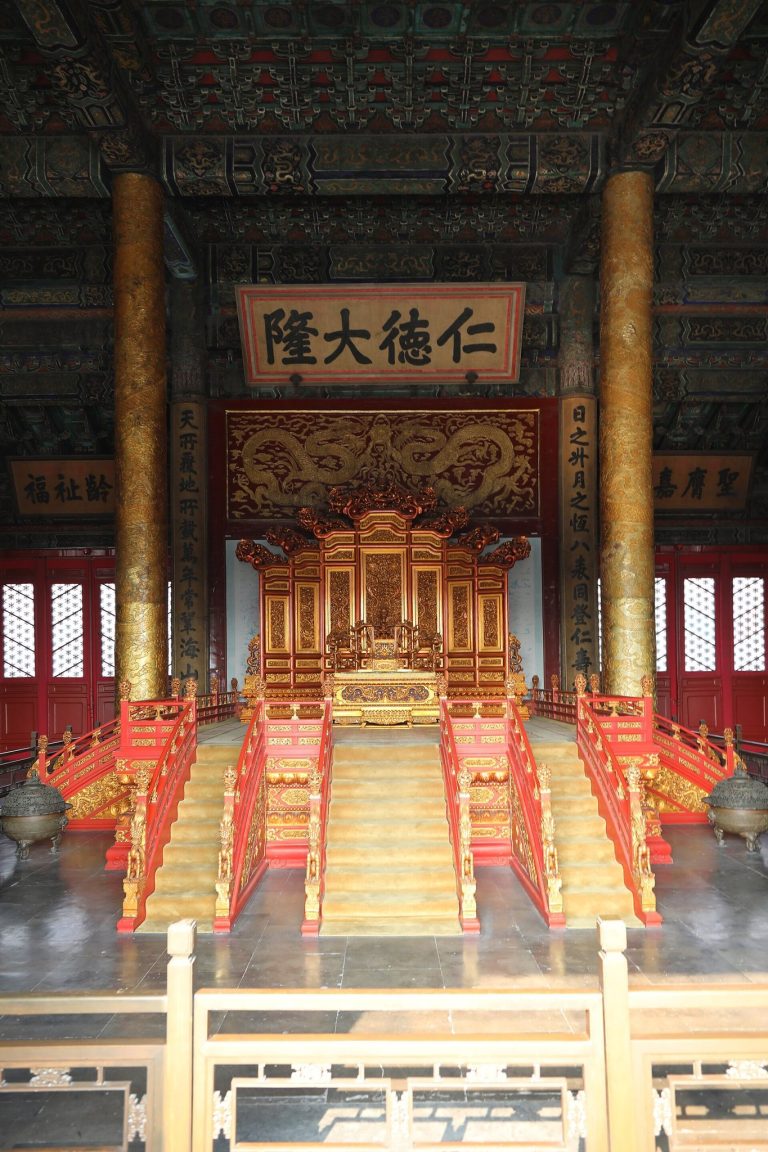
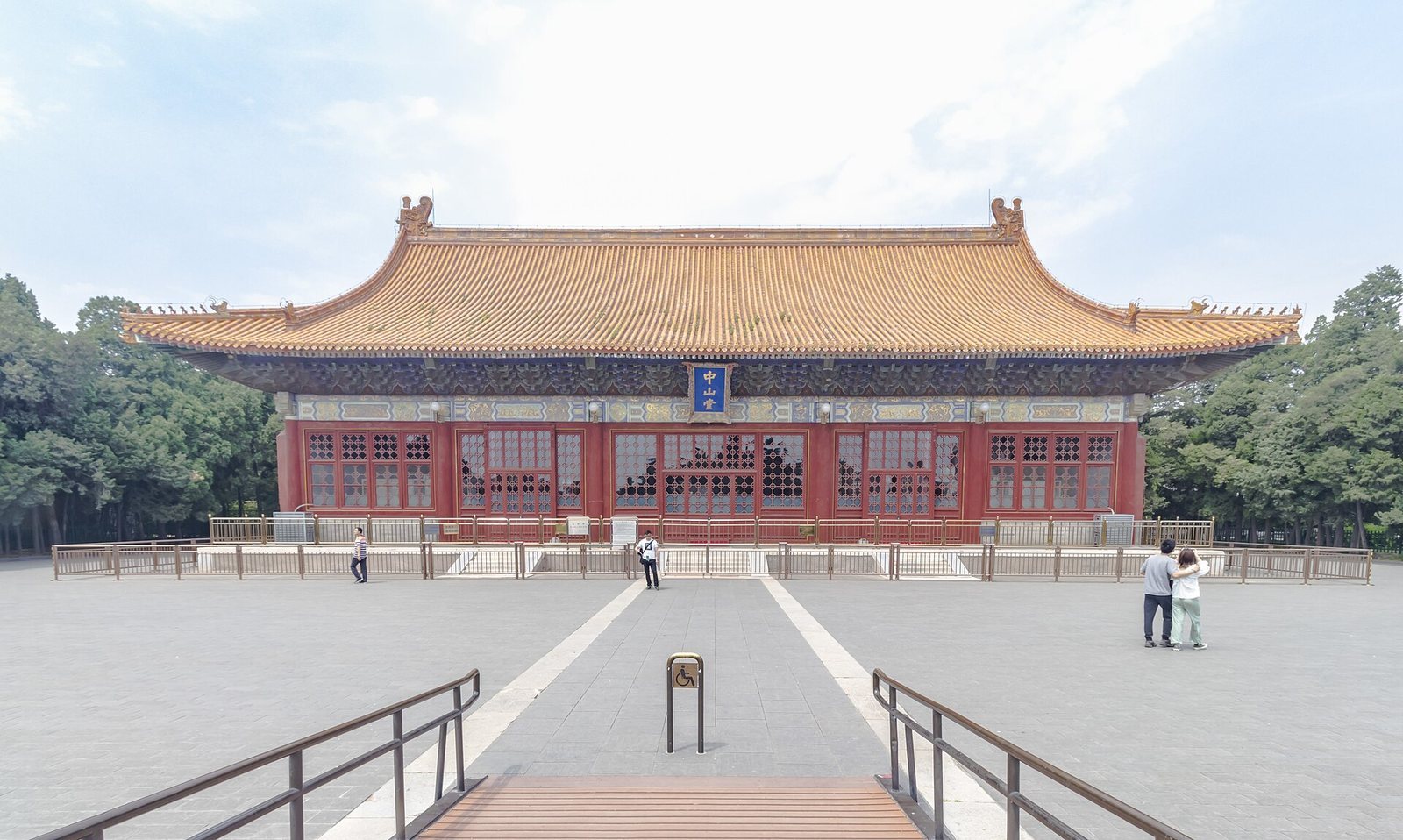
The altar occupies the park’s main axis. At its center is a square terrace made of earth in five colors, the feature behind the name “Five-Color Earth.” The altar, worship hall (now Zhongshan Hall), Halberd Gate, sacrificial storehouse, sacrificial kitchen, and animal-slaughter pavilion form a group of principal and subsidiary structures. The Halberd Gate, a ceremonial entrance associated with the display of halberds, was converted into a hall as the park developed. The altar is the only surviving altar-temple structure used for worship of the land and grain deities.
Ritual Practice Pavilion
The pavilion is six-sided and stands among the structures transferred into the park. Its earlier ceremonial role is reflected in its original design and use before officials and foreign envoys appeared at court.
Southern entrance and memorials
Defending Peace Archway
Inside the southern entrance, the stone archway has four columns arranged to form three openings beneath three roof tiers. Its inscription, “Defending Peace,” was written by Guo Moruo, a Chinese writer and cultural figure.
Sun Yat-sen statue
A bronze standing statue of Sun Yat-sen stands on the plaza north of the archway. It is 3.4 metres tall and rests on a black granite pedestal. Deng Xiaoping’s inscription on the pedestal commemorates Sun as a great pioneer of the revolution. Sun wears a Zhongshan suit, with one hand at his side and the other resting at his waist.
Stone lions
A pair of Song-dynasty stone lions stands outside the altar’s southern gate. A traditional account says that striking one produces an iron-like sound and the other a copper-like sound, a difference attributed to the stones from which they were carved.
Pavilions and glasshouse
Lanting Stele Pavilion
The Lanting Stele Pavilion, named for its inscribed stone monument, stands in the park’s southwest, west of the Flower Greenhouse. It is an eight-sided stone pavilion with a two-tiered blue-tile roof. One face of its carved monument depicts the Lanting gathering and a scene of cups moving along a winding stream; the other bears the Lanting Preface in the hand of the Qianlong Emperor, who ruled from 1735 to 1796. Eight stone pillars carry calligraphic versions of the text. The first five are associated respectively with Yu Shinan, Chu Suiliang, Feng Chengsu, Liu Zongyuan, and Liu Gongquan; the sixth with Yu Minzhong, the seventh with Dong Qichang, and the eighth with Qianlong. The inscriptions have weathered, and the Palace Museum holds original rubbings.
Flower Greenhouse
In the southwest of the park, east of the Lanting Stele Pavilion, the Flower Greenhouse has a plan shaped like a swallow’s wings. Its central section forms an eight-sided pavilion with a two-tiered roof. The timber construction was replaced with reinforced concrete in 1936, when the central section was also altered. Flowers are displayed throughout the year; the collection includes 39 tulip varieties presented by a princess of the Netherlands in 1977.
Maxims Pavilion
The stone Maxims Pavilion, north of the altar’s north gate, has eight columns. It was built in 1915 on the site now occupied by the Defending Peace Archway and moved to its present location in 1918. Its inscribed maxims were destroyed during the Cultural Revolution, a political campaign in China from 1966 to 1976.
Pine-and-Cypress Pavilion
Outside the altar’s eastern gate, among pine and cypress trees, this six-sided pavilion has a two-tiered pyramidal roof. It was built with a tiled roof in 1915; green glazed tiles replaced the original tiles in 1930, when it also received its present name.
Pitch-Pot Pavilion
South of the Pine-and-Cypress Pavilion and outside the altar’s eastern wall, the Pitch-Pot Pavilion is an open structure laid out in a cross shape. Pitch-pot is a traditional game in which players throw arrows toward a vessel. The pavilion was first built in 1915 and rebuilt in 1926; it contains six ancient bronze vessels used for the game.
Gardens, cultural buildings, and landscape
Pleasure Garden
East of the altar, the Pleasure Garden covers 6,200 square metres. Its features include an eight-sided pavilion, a hanging-flower gate, a fishpond, and covered corridors. An inscription in one corridor records the garden’s construction. The garden was created in 1983.
Orchid Fragrance Garden
West of the altar, the Orchid Fragrance Garden covers more than 6,000 square metres. Once an enclosed orchard, it was completed in September 1990. Its principal building is a traditional-style residential compound with a plaque reading “Orchid Chamber,” written by Zhu De in the 1960s. Orchids are displayed throughout the year.
Tea house
The tea house in the park’s eastern part has a total floor area of 549.4 square metres. It was built in 1915 as a meeting room for Central Park’s board of directors.
Music hall
The music hall lies southeast of the altar’s Lingxing Gate and now serves as an indoor concert hall. Its form reflects the venue’s development from an outdoor performance space into an enclosed building.
Trees and ornamental stones
The park contains many old trees, including pines, cypresses, and winding vines. Its oldest is a cypress planted at Xingguo Temple during the Liao period (907–1125), while many others date from the Ming and Qing periods. A locust and cypress growing together is a noted feature, and a landscape area outside the eastern altar gate is called the “Sea of Fragrant Snow.” Several celebrated ornamental stones from the ruins of Yuanmingyuan were also brought into the park.