Yielden Castle: A Medieval Motte-and-Bailey Castle in England
Site at a Glance
- Rating
- 4.5
- Popularity
- Very Low
- Country
- United Kingdom
- Primary era
- Medieval
- External website
- Open
- Eras represented
- Medieval
- Civilizations
- English
- Site type
- Military
- Remains
- Castle
On this page7 sections
History
Yielden Castle was a twelfth-century medieval castle in the United Kingdom, located at Yelden in Bedfordshire, England. It was a motte-and-bailey stronghold associated with the Trailly family, a medieval aristocratic lineage, and was first mentioned in historical records in 1173.
The Trailly stronghold
The castle served as the Trailly family’s stronghold until the thirteenth century. Historical records also refer to it as Yeldon Castle, Yelden Castle, Giuelden Castle, and Yielding Castle, reflecting the different forms used for its name over time.
Decline and archaeological investigation
By 1360, Yielden Castle was in decay. Excavations were carried out in 1881 and 1882, adding to knowledge of the site’s medieval structures. The castle is a Scheduled Monument, a nationally protected archaeological or historic site in England.
Remains
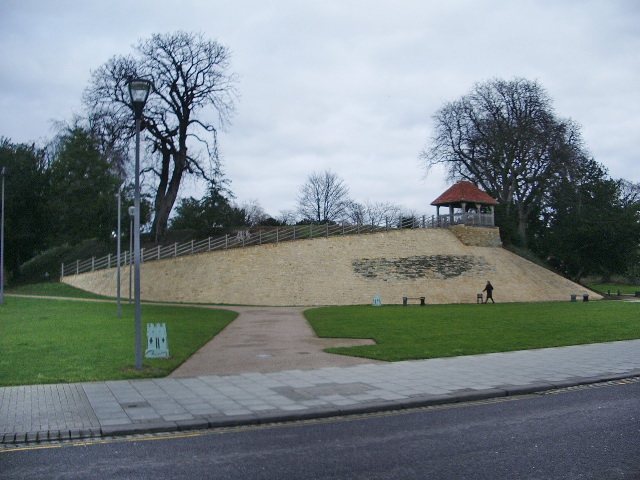
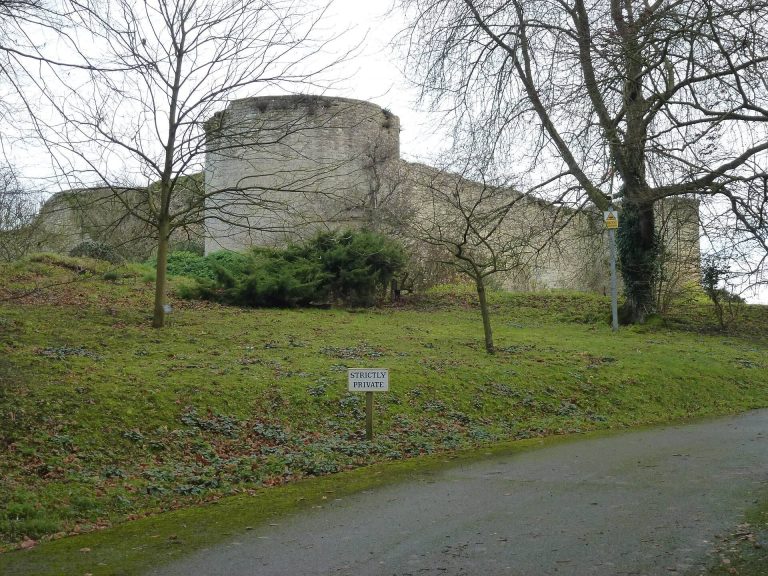
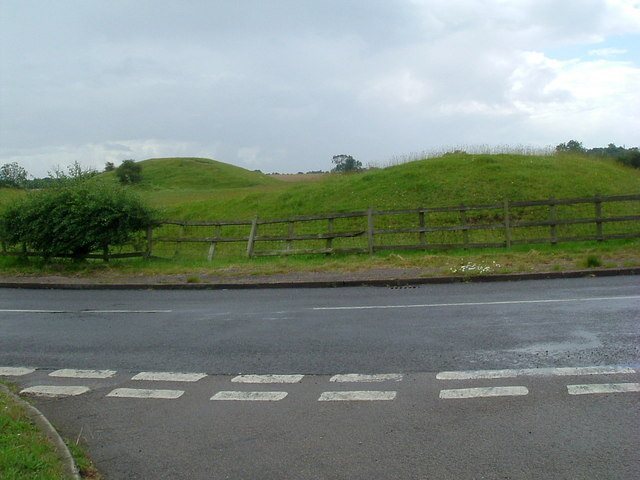
Yielden Castle lies within the village of Yelden in a generally flat, predominantly agricultural landscape. The site stands at approximately 67 metres above sea level, while the highest nearby ground reaches about 90 metres and lies 1 kilometre to the south. Its surviving remains are mainly a grass-covered earthwork mound, accompanied by visible fragments and earthworks.
Earthworks and defensive structures
Motte and baileys
The castle was arranged as a motte-and-bailey complex. Its motte was a fortified mound, while two baileys formed enclosed defensive areas beside it. The earthwork mound remains the principal surviving element of this layout, with additional earthworks marking parts of the castle complex.
Stone curtain wall
Excavations uncovered a thirteenth-century stone curtain wall. A curtain wall is a fortified enclosure wall surrounding a castle or other defended complex. Fragments of the castle’s masonry remain alongside the earthworks, providing physical evidence of the later stone defenses.