West Kennet Long Barrow: A Neolithic Chambered Tomb in Wiltshire
Site at a Glance
- Popularity
- Very High
- Country
- United Kingdom
- Primary era
- Stone Age
- Eras represented
- Stone Age, Bronze Age
- Civilizations
- Unclassified
- Site type
- Burial
- Remains
- Burial Mound
On this page12 sections
History
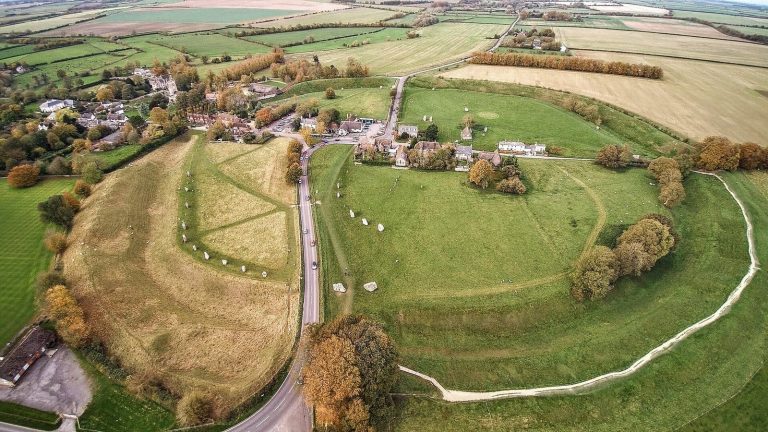
West Kennet Long Barrow is an Early Neolithic chambered long barrow, an elongated earthen burial monument with chambers for collective burials, near West Kennett in Wiltshire, England, in the United Kingdom. Pastoral farming communities built it after agriculture reached Britain from continental Europe. It belongs to the Cotswold-Severn group, a regional tradition of chambered long barrows in western Britain, and to a cluster of about 30 monuments centred on Avebury. Construction probably took place in the 37th century BC, often dated to around 3650 BC, though the exact date is uncertain. Plain bowl pottery beneath the mound points to earlier human activity at the site.
Early burial phases
Radiocarbon dates place the deaths of the oldest people represented in the chambers at 3670–3635 calibrated BC, although an alternative estimate is 3575–3545 calibrated BC. The final burials in this initial phase are dated to about 3640–3610 calibrated BC, with an alternative range of 3550–3520 calibrated BC. This phase may have lasted only 10 to 30 years, though a broader estimate extends from 1 to 55 years. The mound may have been built before those buried there died, or their bones may have been kept elsewhere before being placed in the chambers.
Later burials and closure
Burial resumed after a pause probably lasting more than a century. This later phase began sometime between 3620 and 3240 calibrated BC and continued for centuries, possibly until about 2500 BC. During the third millennium BC, boulders of sarsen, a hard sandstone used in prehistoric monuments, and earth partly blocked the open forecourt in front of the entrance. By the end of that millennium, three large sarsens had been placed across the forecourt, closing access to the chamber. This may have happened during, or shortly after, major stone-building phases at Avebury, a prehistoric henge and stone-circle complex, and The Sanctuary, a ceremonial monument.
The barrow may also have served as a shrine where people honoured the dead and sought their help. Other interpretations propose that monuments of this kind marked territory, ownership or herding routes, or were built at places already considered sacred. Its particular purpose remains uncertain.
Roman-era activity and antiquarian accounts
Six bronze Roman coins were buried in the topsoil near the stone façade during the Romano-British period, when Roman rule and cultural influence were present in Britain. They were recovered in the 1955–56 excavation. Antiquaries began describing the barrow in the 17th century. In the late 17th century, Dr R. Toope of Marlborough dug into it in search of human remains for making medicines. John Aubrey recorded and illustrated the monument, and William Stukeley called it South Long Barrow in the following century. Richard Hoare described it around 1814.
Excavation and archaeological reassessment
In 1859, John Thurnam excavated the western chamber and interpreted its contents as six crouched burials. He employed patients from an asylum as labourers in what was intended as occupational therapy. Later assessment found his excavation records disordered and some interpretations questionable, while judging his recording of skeletal material comparatively thorough.
Stuart Piggott and Richard Atkinson directed excavations in 1955–56, and the entrance was reconstructed afterward. Piggott estimated that the earliest burial deposits represented 43 people; a later reassessment considered 36 more likely. Four bones recovered in the 1950s were radiocarbon dated at Oxford in the early 1980s. In the early 2000s, osteoarchaeologists obtained dates from 25 human skeletons and one goat skeleton. Their review identified problems in earlier interpretations, including inconsistent distinction between the first and later burial deposits.
Resistivity work in the 1960s identified a bend in the side ditches, suggesting that construction may have proceeded in stages. A geophysical survey in 1992 also indicated at least two building phases. The monument may have started on a smaller scale and later been enlarged.
Later meanings and protection
Some modern Pagans regard the barrow as a temple or ancestral place and hold rituals there, particularly around the winter solstice. Some associate it with the womb of the Great Goddess, a female divine figure in certain modern Pagan traditions, while others regard the monument as a living presence. Offerings have included tea lights, incense, flowers, fruit and coins.
The monument was designated in 1882 and is now a scheduled monument under the guardianship of English Heritage. It also forms part of the Stonehenge, Avebury and Associated Sites UNESCO World Heritage Site, inscribed in 1986.
Remains
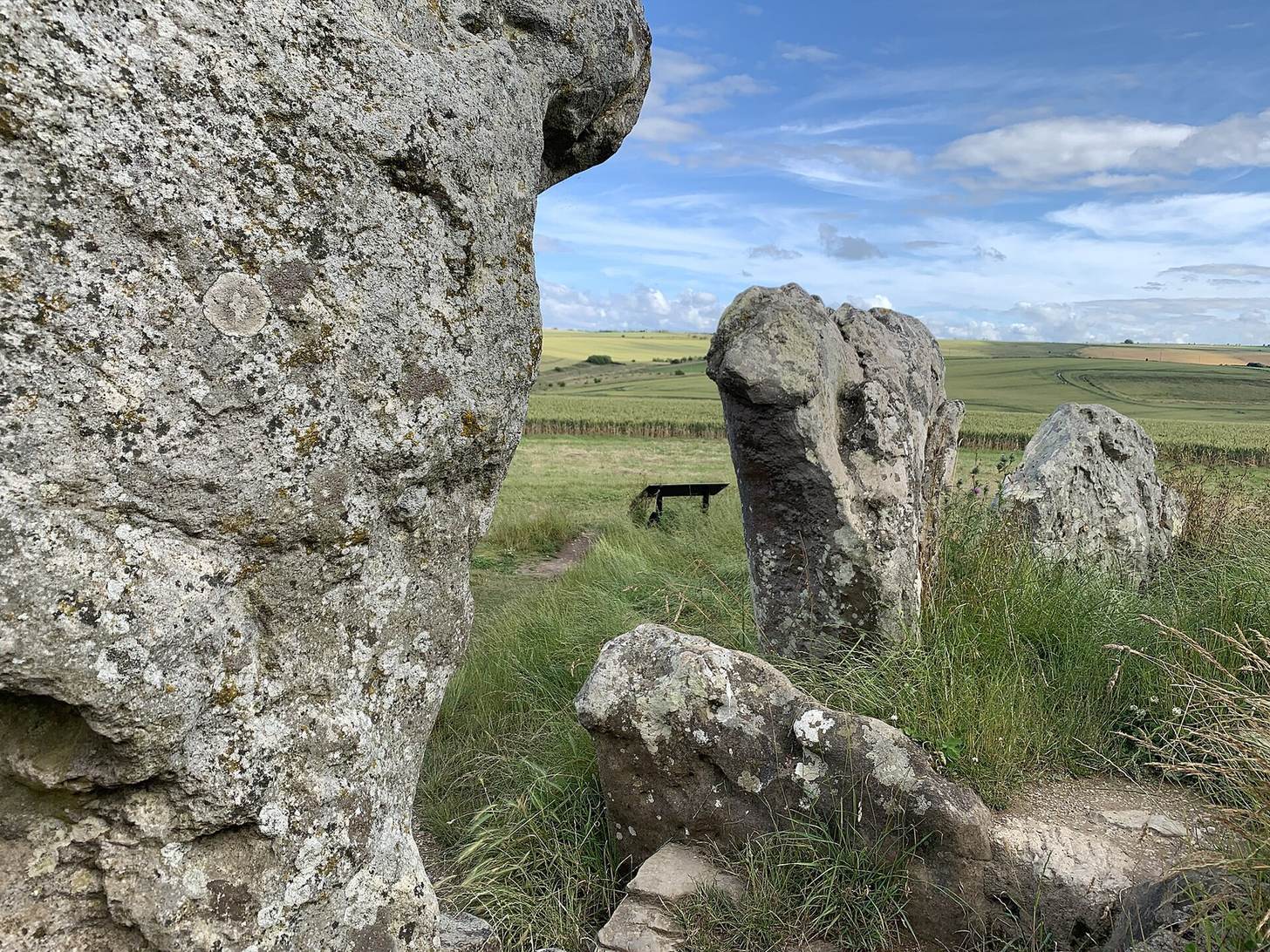
The barrow stands on a chalk ridge near Avebury, about two kilometres south of West Kennett and close to Silbury Hill. It occupies the crest above the upper Kennet valley, with views north toward Avebury and south toward St Anne’s Hill and Wansdyke, a linear earthwork. The long mound is roughly trapezoidal, about 100 metres long and 20 metres wide, and is among the longest in Britain. Stones marking its edge enclose the mound, while a ditch runs along each side. The mound earth came from the shallow surrounding ditches, which have since filled with soil. Construction has been estimated to have required about 15,700 hours of labour.
Chambers and forecourt
Passage and burial chambers
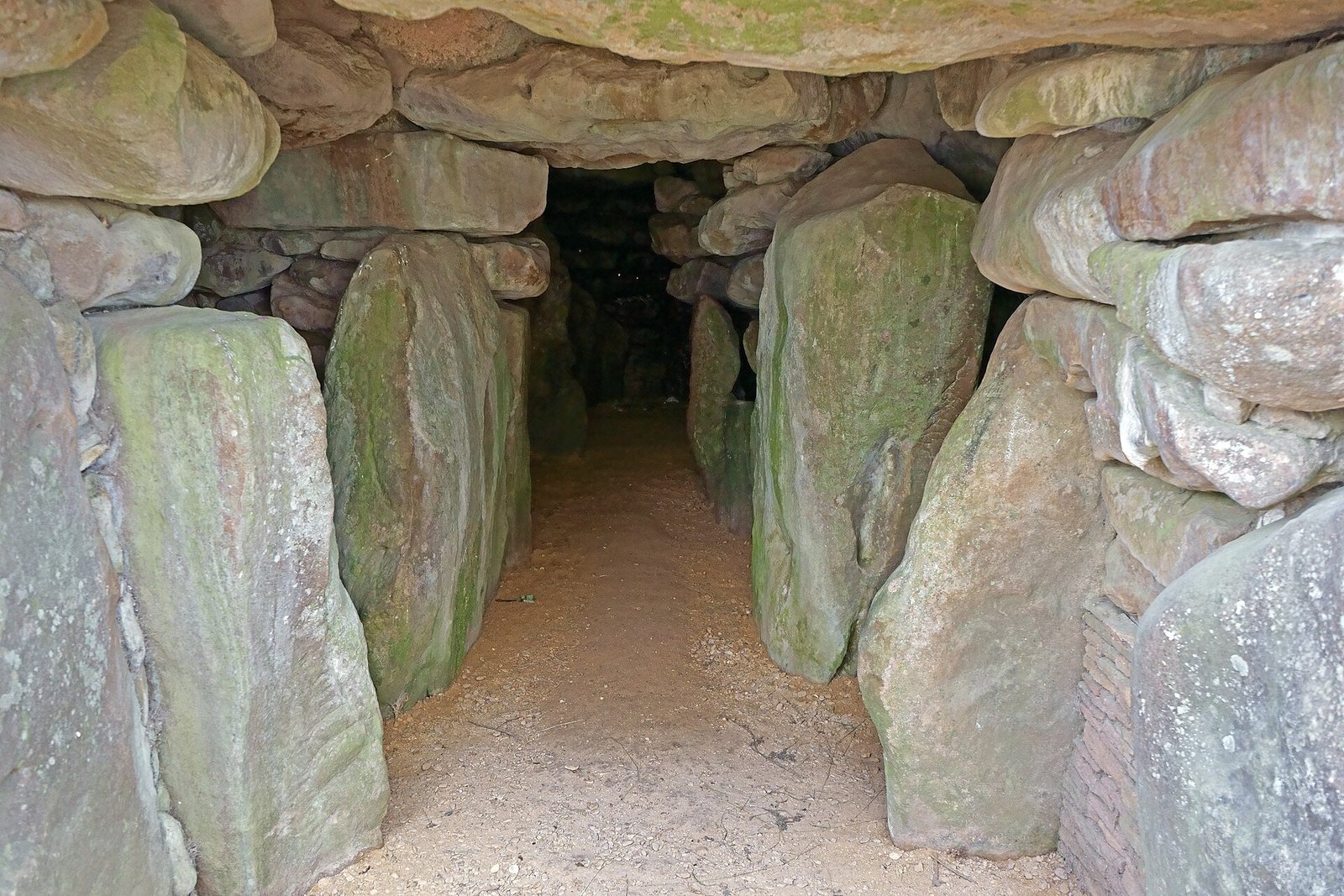
A stone passage at the eastern end leads to two pairs of opposing side chambers and a terminal chamber. The complex extends about 12 metres into the mound. Its sarsen roof rises about 1.7 to 2.2 metres above the floor, allowing an adult to stand upright. The chamber walls, built without mortar, also contain oolitic limestone, a stone formed from small rounded grains and brought from around Frome or Bath, outside northern Wiltshire.
Forecourt and façade
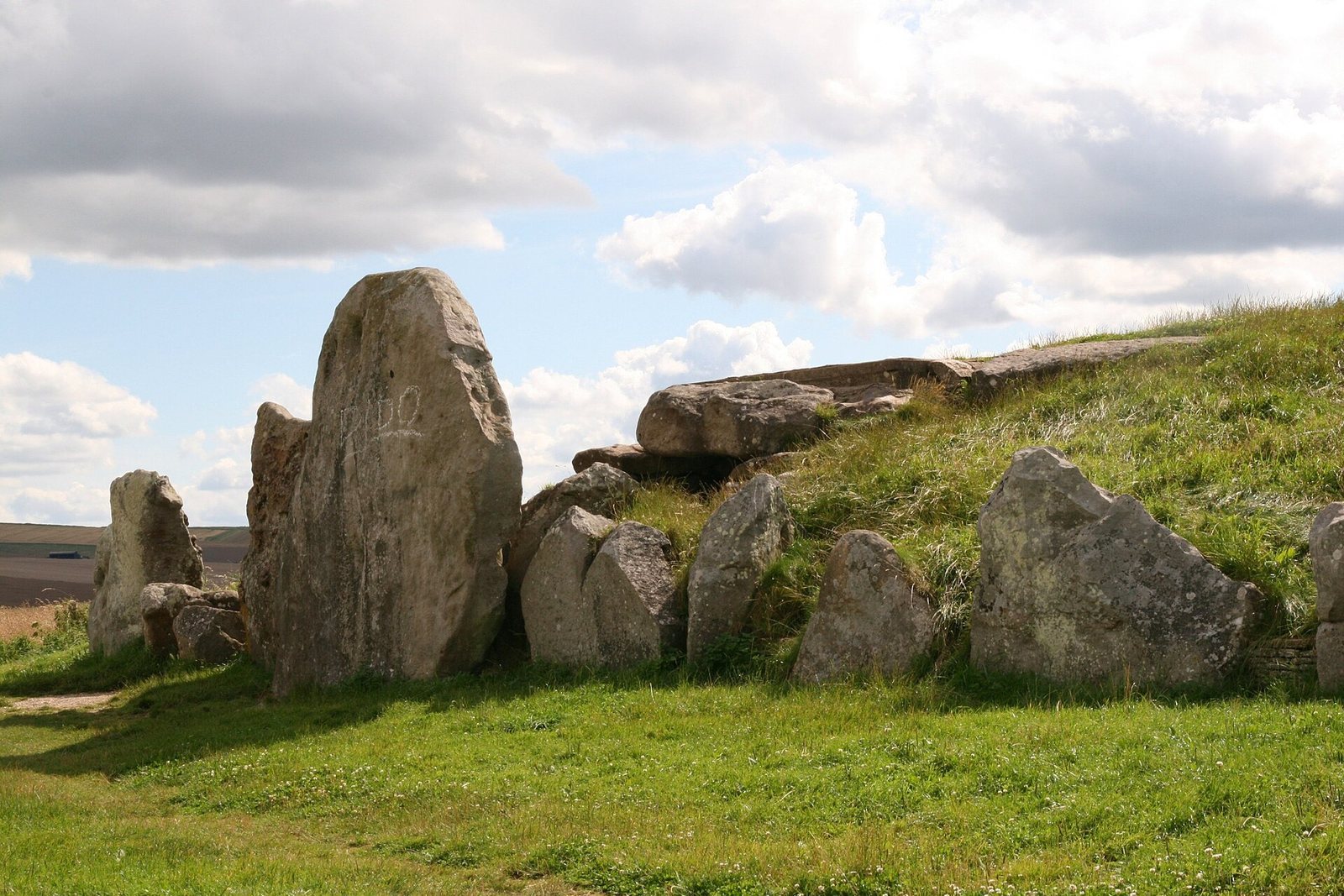
A semicircular forecourt lies before the entrance. Large sarsen stones form a façade across this open area and block the chamber entrance.
Burial remains and finds
The burial deposits include people of both sexes and a range of ages, with an estimated balance of males and females. Four of the five chambers held remains of adults and young people; the south-eastern chamber contained at least five infants. At least five people were probably deposited with their bones still connected, wholly or partly, and a small cremation deposit was also found. An adult male had an arrowhead near his throat, possibly lodged there when he died. A goat skeleton was recovered as well.
Later deposits included flint and bone tools, stones used for sharpening, charcoal and beads. Pottery from at least 250 vessels represents Grooved Ware, Beaker Ware and the three styles of Peterborough Ware known as Ebbsfleet, Mortlake and Fengate. Some finds, including notable Beaker vessels, are displayed at Wiltshire Museum in Devizes.
Repairs and condition
The barrow survives in a partly reconstructed state. In 2016, repairs replaced three roof skylights, added a membrane to the interior floor to improve drainage and reshaped the eastern end where erosion had removed material. Fires lit inside the monument have left soot and damaged stonework; one heat-damaged sarsen had to be reattached.