Wätjens Schloss: A Tudor Gothic Villa in Bremen
Site at a Glance
- Rating
- 4.5
- Popularity
- Medium
- Country
- Germany
- Primary era
- Modern
- Eras represented
- Modern
- Civilizations
- Kingdom of Hanover
- Site type
- Domestic
- Remains
- Castle
On this page6 sections
History
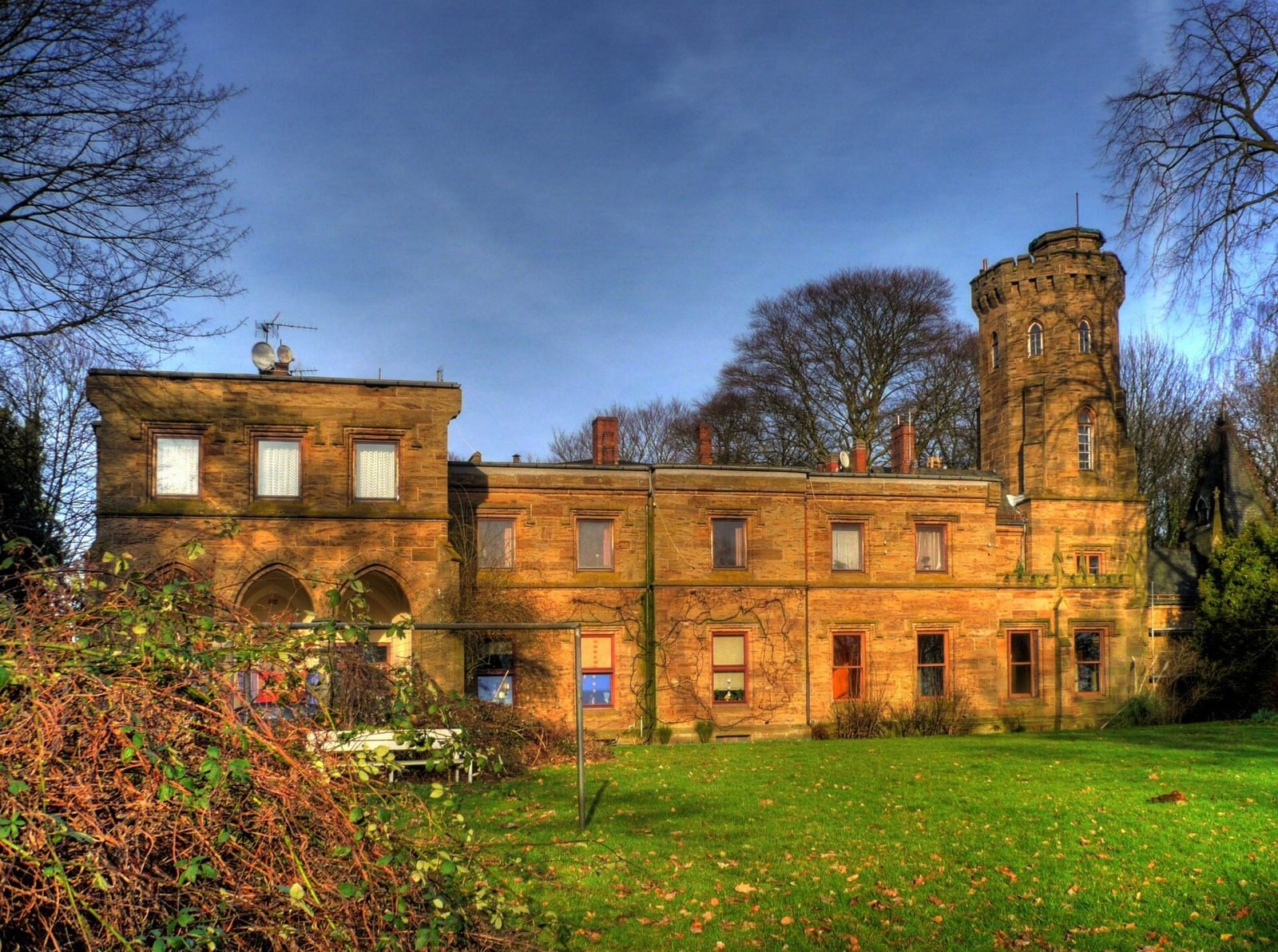
Wätjens Schloss is a villa in Blumenthal, Bremen, Germany, built between 1858 and 1864 in the English Tudor Gothic style, a revival drawing on architecture associated with England’s Tudor period.
Estate creation and expansion
In 1830, Bremen merchant and shipowner Diedrich Heinrich Wätjen acquired land on the Geest ridge, a raised area of sandy terrain, between Vegesack and Blumenthal for a summer residence. He had a country house built and, from the same year, commissioned landscape gardener Isaak Altmann to plan the surrounding park.
Wätjen’s son, Christian Heinrich, expanded the estate and replaced the original residence with the present villa, designed by Bremen architect Heinrich Müller.
Military use and later ownership
At the beginning of the First World War, the estate became a military hospital. The Wätjen family sold it in 1916, and the park was divided between Bremer Vulkan, a shipbuilding firm, and Bremer Wollkämmerei, a wool-combing company. The castle fell within the portion assigned to Bremer Vulkan.
Following Bremer Vulkan’s bankruptcy in 1997, a private buyer acquired its portion of the park at auction. The city of Bremen later bought parkland from that owner and from Bremer Wollkämmerei, while the castle and other residential buildings, together with their plots, remained privately owned. A proposed restaurant in the castle did not proceed; the building is used for apartments and an artist’s studio. Wätjens Schloss has been protected as a monument since 1973.
Remains
The estate lies on the Geest ridge between Vegesack and Blumenthal. Its main elements are the villa and an extensive park laid out around the residence.
The villa
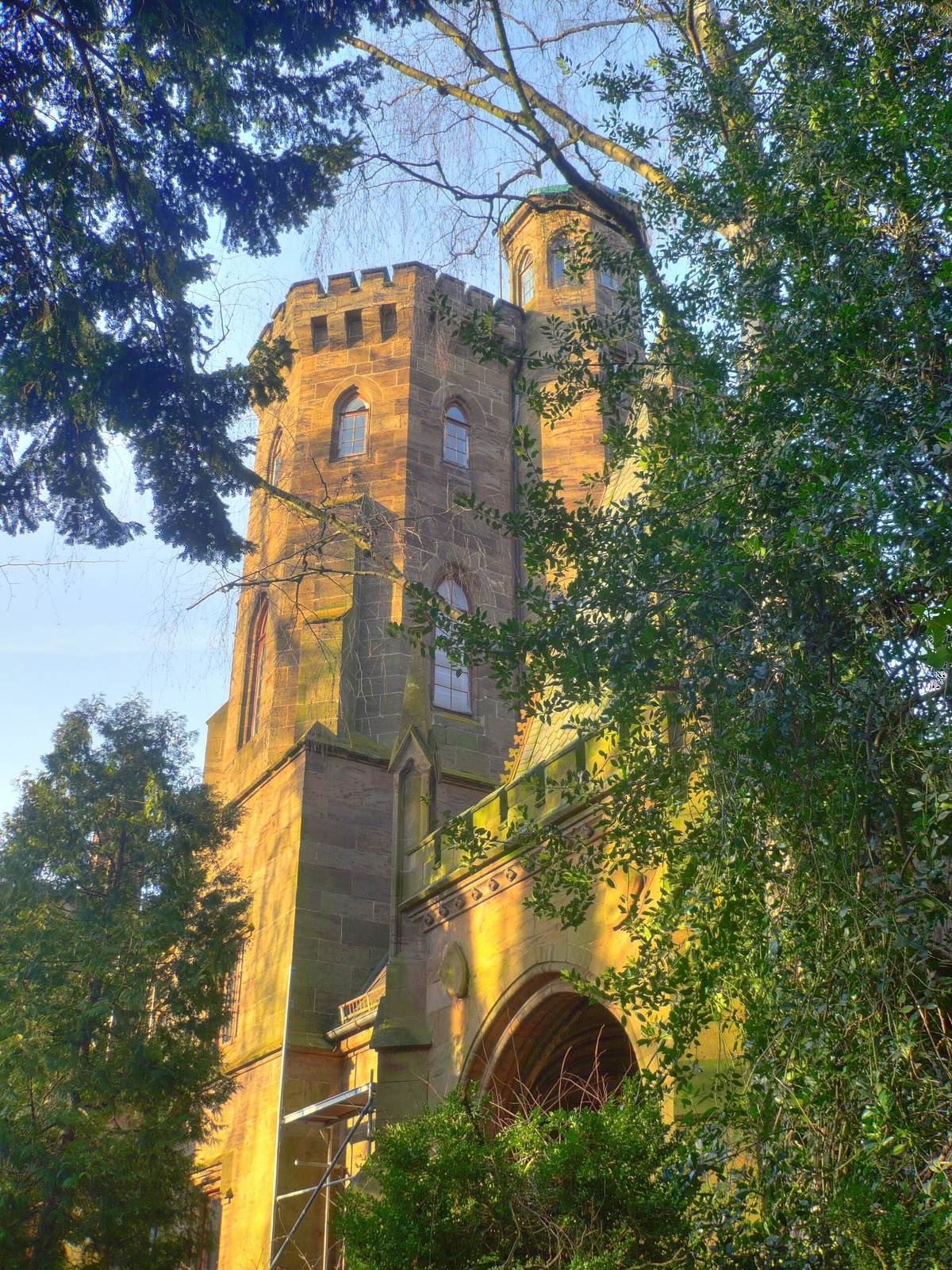
The castle-like building has a taller tower whose steeply pitched roof was removed during the Second World War. A fire after the war destroyed the roof and some gables. The roof was restored at a much flatter pitch, but only provisionally.
The park
The grounds are arranged as an English landscape garden, designed to evoke natural scenery rather than a rigid, formal layout. The park is now known as Wätjens Park.