Vronta Monastery: An Eastern Orthodox Monastery on Samos
Site at a Glance
- Rating
- 4.5
- Popularity
- Very Low
- Country
- Greece
- Primary era
- Early Modern
- Eras represented
- Early Modern
- Civilizations
- Ottoman
- Site type
- Religious
- Remains
- Monastery
On this page8 sections
History
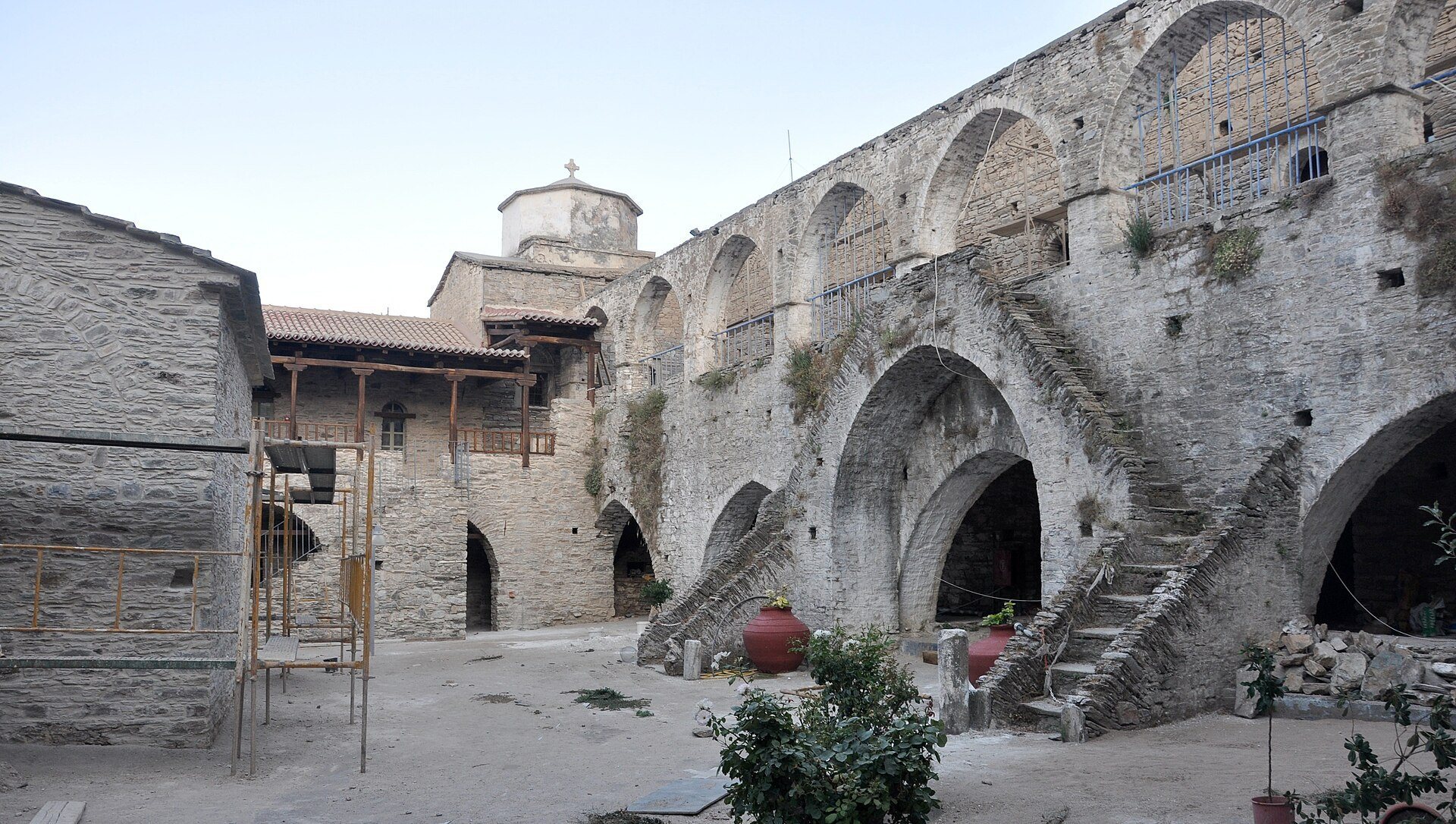
Vronta Monastery, also known as Panagia Vrontiani and Panagia Kokkarianni, is an Eastern Orthodox monastery on Samos, Greece, founded in 1566 and dedicated to the Nativity of the Virgin Mary. It is described as the oldest monastery on Samos and belongs to the Metropolis of Samos, Icaria, and Korseon, an Orthodox ecclesiastical jurisdiction headed by a metropolitan.
Foundation and early accounts
The monk-brothers Iakovos and Makarios established the monastery near earlier ruins associated with a church dedicated to the Virgin Mary. Its foundation is connected with patriarchal documents, the oldest of which dates to 1566. The monastery later appeared in Joseph Georgirinis’s description of Samos, Icaria, and Mount Athos. In February 1702, the French botanist and scientific traveller Joseph Pitton de Tournefort stayed there for three days, from 19 to 21 February, when persistent bad weather prevented him from continuing his journey.
During the nineteenth century, the monastery became involved in the political tensions of Samos. In 1821, its abbot Neilos was murdered at Kedros while returning from Vathy. Political motives were alleged because he supported the Kalikantzaroi faction, identified as pro-Turkish notables. In April 1835, residents of Vourliotes accused the monks of provoking unrest under the administration of the Principality of Samos.
Nineteenth-century property and conflict
In September 1850, eight criminals entered the monastery, abducted its abbot Daniel, and killed him. They claimed that Daniel supported Stefanos Vogoridis, the prince whom they accused of tyrannical rule. Later in the century, the historian and writer Epaminondas Stamatiadis gave an extensive description of the monastery and reproduced patriarchal documents concerning its foundation and the enlargement of its property.
Around 1890, eleven monks lived at Vronta. The monastery controlled 104 holdings covering 876 stremmata, a traditional Greek unit of land area, including 752 stremmata of vineyards. Its attached religious establishments included churches and chapels at Vourliotes, Kokkari, Vathy toward Kotsikas, Ano Agios Konstantinos, and Vlamari.
Fire, restoration, and continuing religious use
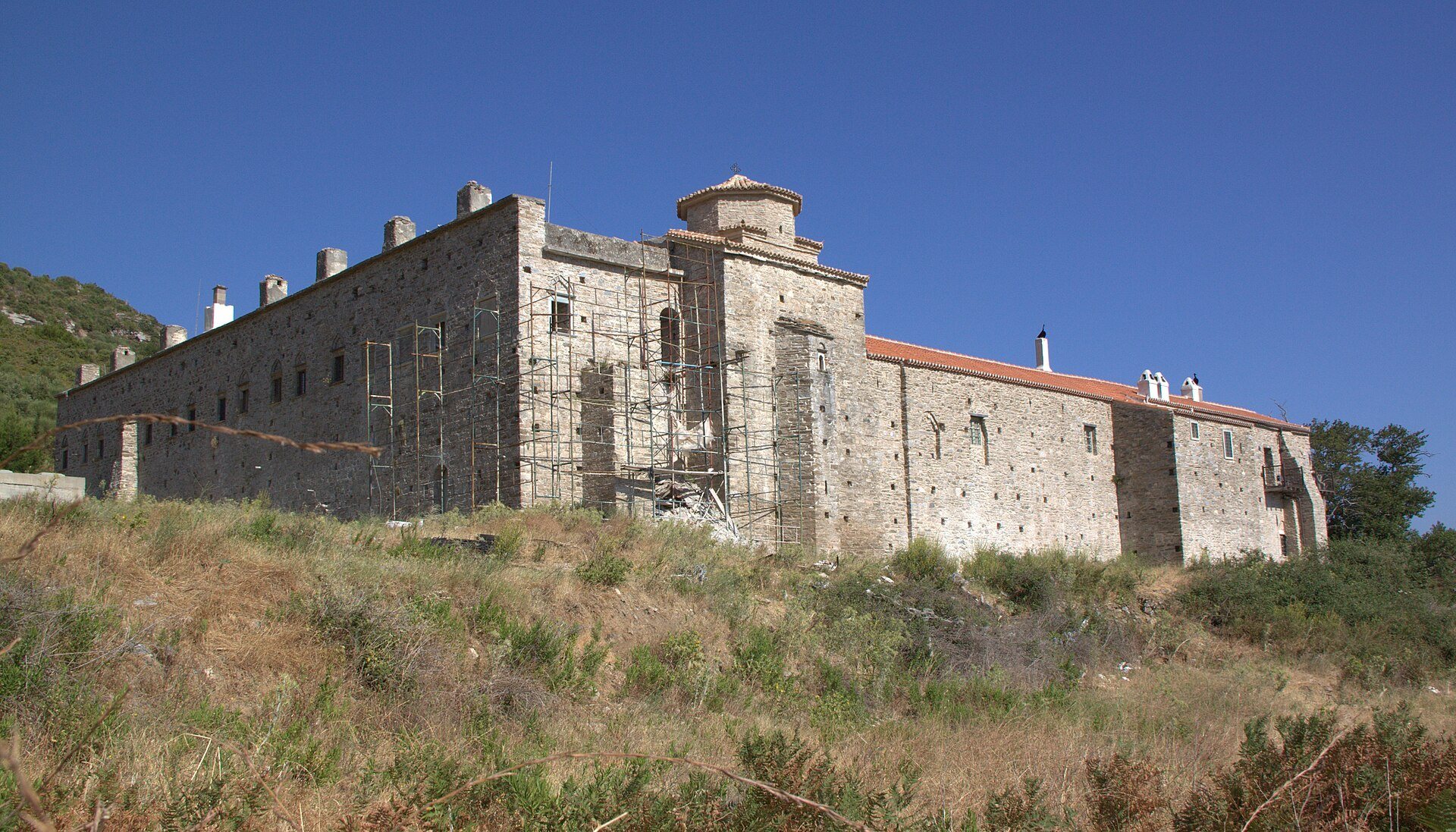
A major fire in August 2000 extensively damaged the monastery, including part of its monastic building. Renovation took place between 2010 and 2013. Vronta remains associated with the Greek Orthodox Church, and sixteen residents were recorded there in 2011. It is protected as a historical and architectural monument, classified as an archaeological site, and preserved as a building. Its annual feast is held on 8 September.
Remains
Setting and monastic enclosure
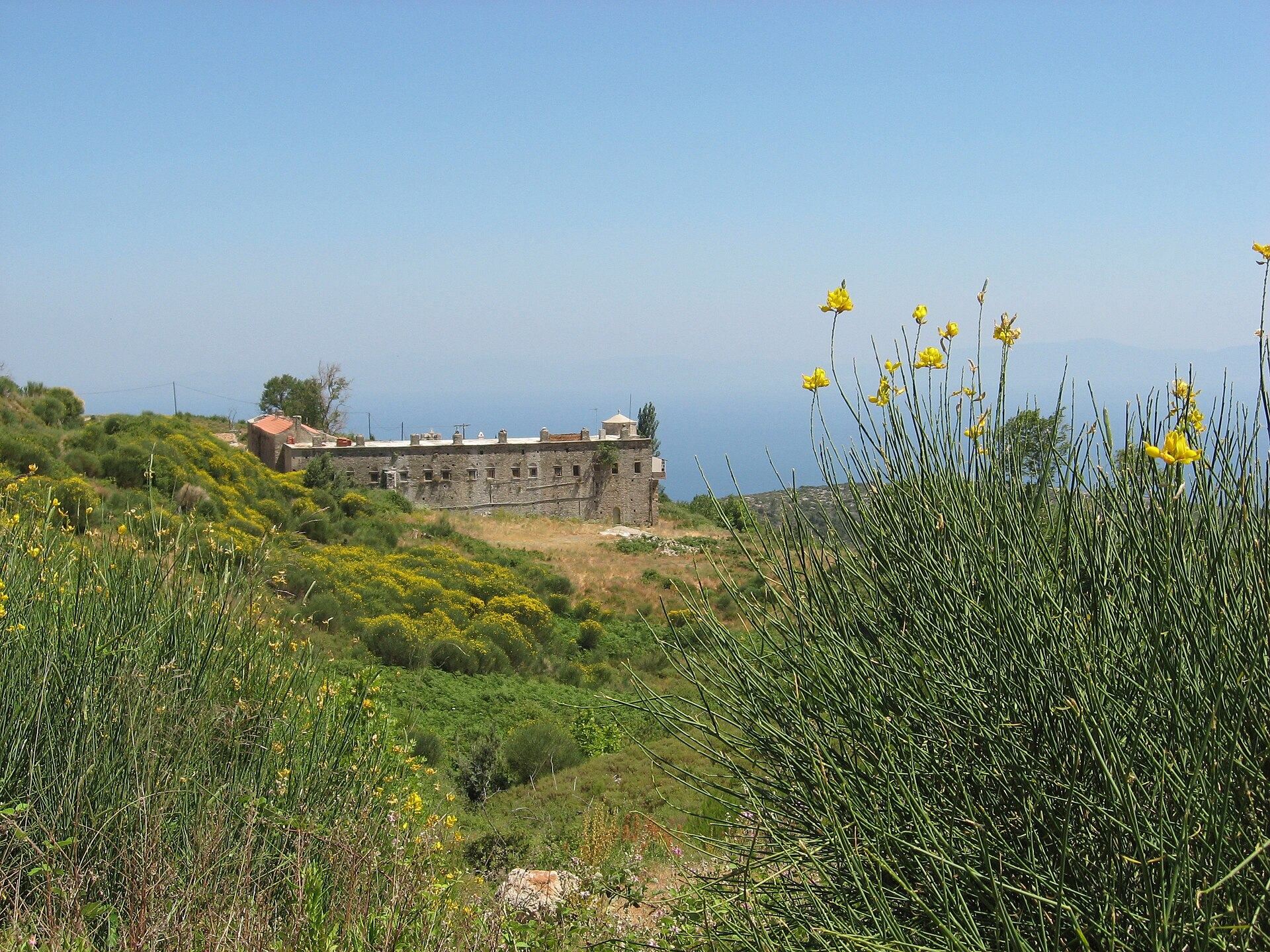
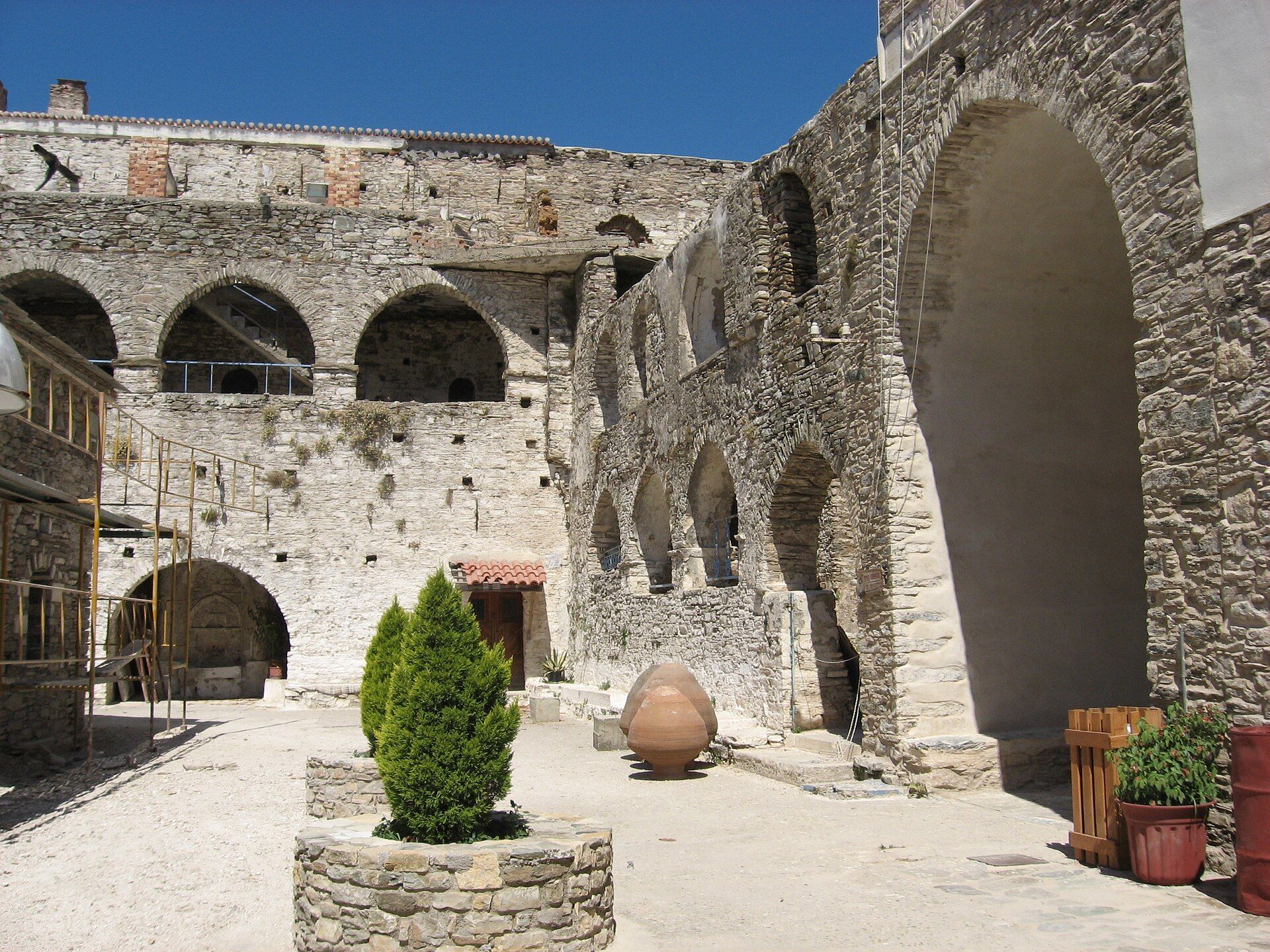
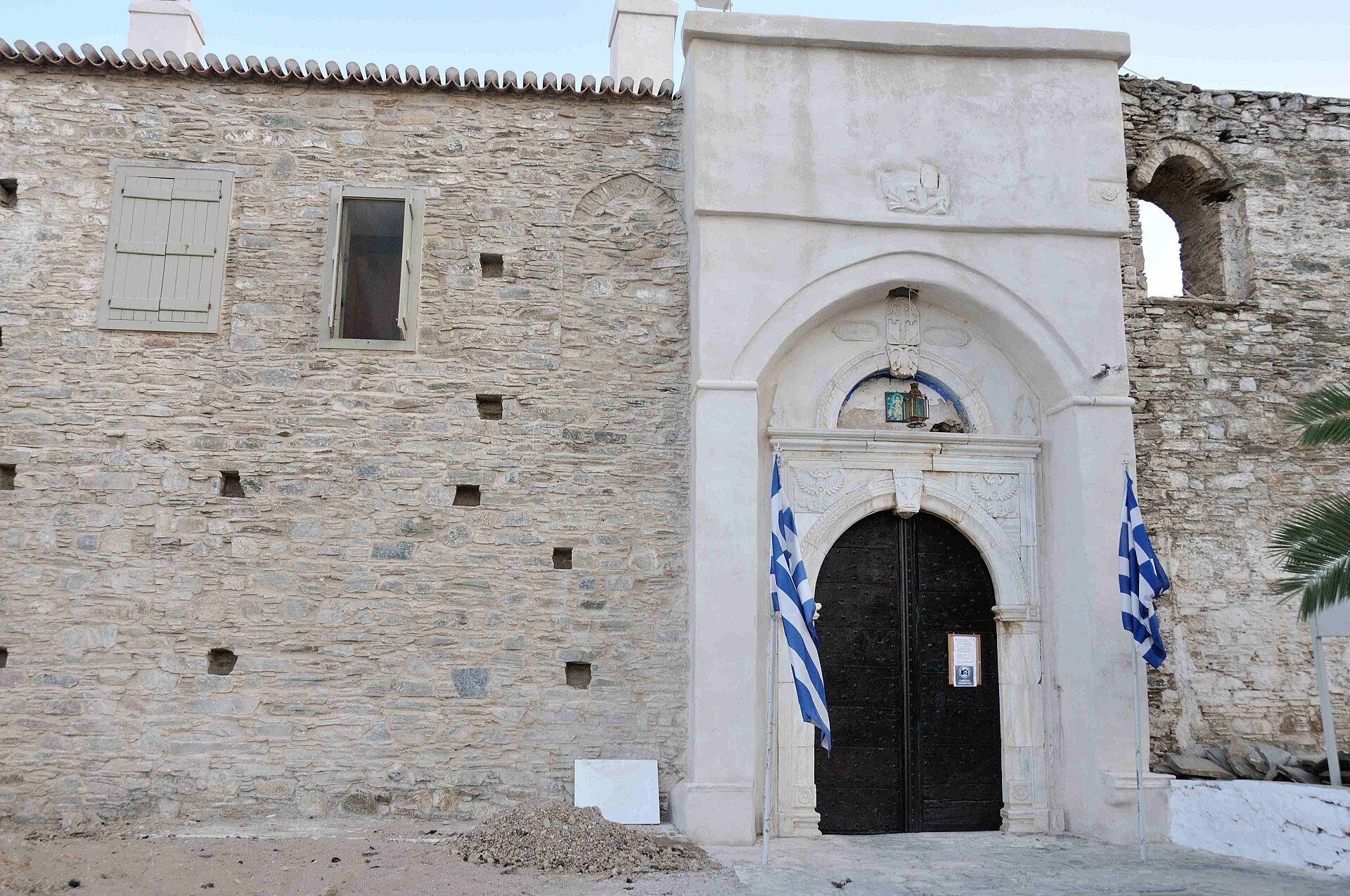
Vronta Monastery stands on the eastern slope of Mount Karvouni, a mountain on Samos, near Vourliotes in northern Samos and close to Kokkari. The complex lies at approximately 458 metres above sea level. Its principal buildings form a square monastic enclosure rising two to three storeys around the central church. Part of the enclosure was destroyed in the forest fires of 2000 and later restored.
The principal church
The monastery’s katholikon, the principal church of an Orthodox monastery, is a domed, multi-aisled building dedicated to the Nativity of the Virgin Mary. It occupies the centre of the square enclosure and forms the main religious focus of the complex.
Attached churches and religious objects
The monastery’s dependencies, or subsidiary religious establishments administered by a monastery, include the church of Saint John the Theologian at Vourliotes, the Church of the Dormition of the Virgin Mary at Kokkari, the Life-Giving Spring dependency at Vathy toward Kotsikas, the chapel of Saint Constantine at Ano Agios Konstantinos, and the Church of the Holy Trinity at Vlamari. Parts of the relics of Saint Irene, venerated in Eastern Christianity as a great martyr, are kept at Vronta.