Volčji Potok Arboretum: A Botanical Garden for Woody Plants in Slovenia
Site at a Glance
- Rating
- 4.8
- Popularity
- Very High
- Country
- Slovenia
- Primary era
- Modern
- Eras represented
- Medieval, Early Modern, Modern
- Civilizations
- Austria-Hungary, Habsburg, Holy Roman Empire
- Site type
- Civic
- Remains
- Park
On this page14 sections
History
Volčji Potok Arboretum is an arboretum, a botanical garden devoted especially to trees and other woody plants, in Slovenia. It opened to the public as an arboretum and study centre in 1952, and is Slovenia’s central arboretum and the country’s only botanical garden focused primarily on woody plants.
Estate and landscaped park
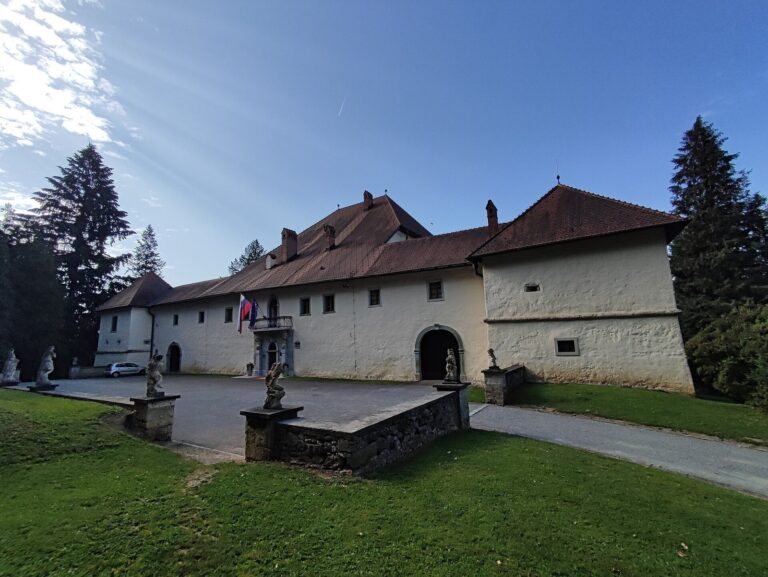
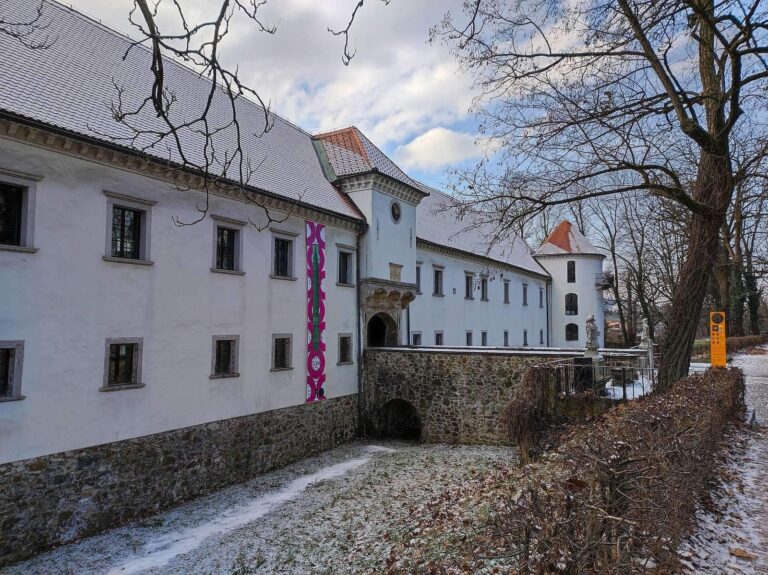
The Volčji Potok estate was associated with the Bonhomo family by the late sixteenth century. Ownership later passed through the Burger and Gozani families, until Ferdinand Souvan bought the property from Ferdinand Gozani’s widow in 1882. In the seventeenth century, the historian Janez Vajkard Valvasor described the estate and illustrated its older hilltop castle in ruins, alongside a newer Baroque mansion built by the Bonhomo family at the hill’s foot.
Ferdinand Souvan remodelled the mansion in 1885 and laid out a park on the fields and meadows in front of it, enclosing the grounds with walls. His son Leon expanded the park to about 12 hectares, adding ponds and exotic trees. He removed the walls and planted a beech hedge along the southern and southwestern sides. Around the turn of the twentieth century, the park became a gathering place for Slovene Impressionists, including Matija Jama.
War and public ownership
During the Second World War, Leon Souvan fled to Ljubljana to escape German forces. In April 1944, Yugoslav Partisans, communist-led resistance fighters opposing Axis occupation, occupied the estate, looted it, and burned the mansion, which had stood for at least 300 years. Leon, the last private owner, died in 1949, and the authorities then nationalized the estate.
Arboretum and institutional development
In 1952, the Faculty of Agriculture and Forestry at the University of Ljubljana took over management and opened the grounds as an arboretum and study centre. The university’s collaboration with the arboretum ended in 1965. From then until 1999, the institution operated independently and shifted toward manufacturing and services.
In 1999, management passed to Slovenia’s Ministry of Culture, and the site was designated an immovable monument of national importance and entered in the Cultural Heritage Register. The Volčji Potok Arboretum Institute, established in 2003, manages the grounds and develops their collections. Its work also includes promoting park and garden culture in Slovenia, overseeing other state-owned monuments of cultivated nature, and cooperating with similar institutions abroad. In 2003–04, it established an interactive online herbarium, a digital catalogue of selected native and non-native woody plants. The arboretum also grows plants in its own nurseries and undertakes landscaping work around Slovenia.
Remains
The 88-hectare grounds combine geometrically planned areas with English-style landscape planting. The landscaped park includes five artificial lakes and 30 hectares of forest, while a wooded hill with an archaeological site forms its northern background.
Landscape and plant collections
Park layout
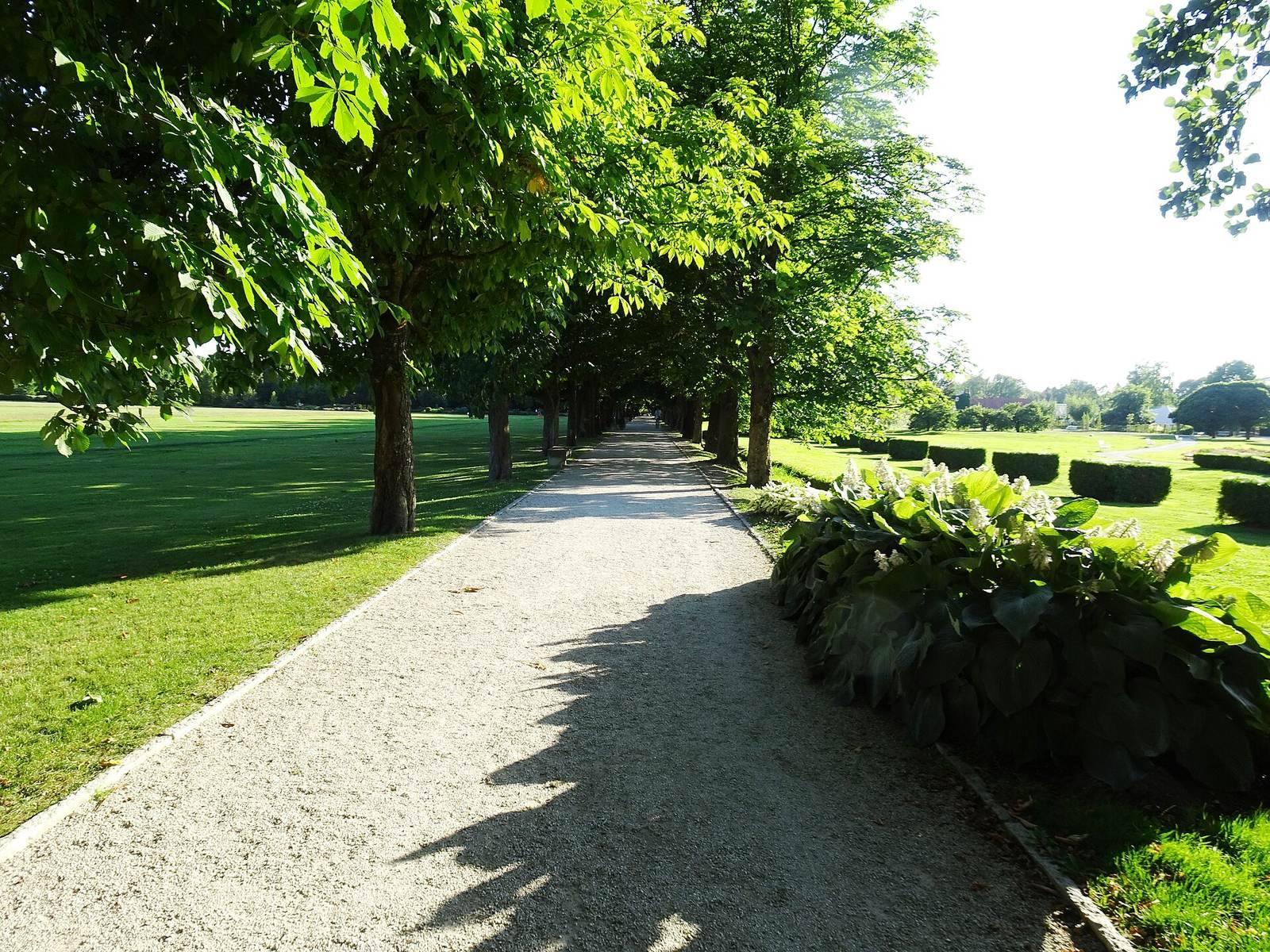
A nineteenth-century entrance avenue with a geometric French-style design connects to the central park. Other areas follow an English style. In 1918, Leo Souvan designed a geometrical park in front of the mansion, leading toward the older park near it.
Older park features
In the older park, two stone tables are surrounded by two horse-chestnut trees and two plane trees, all dating from the nineteenth century.
Water and woodland
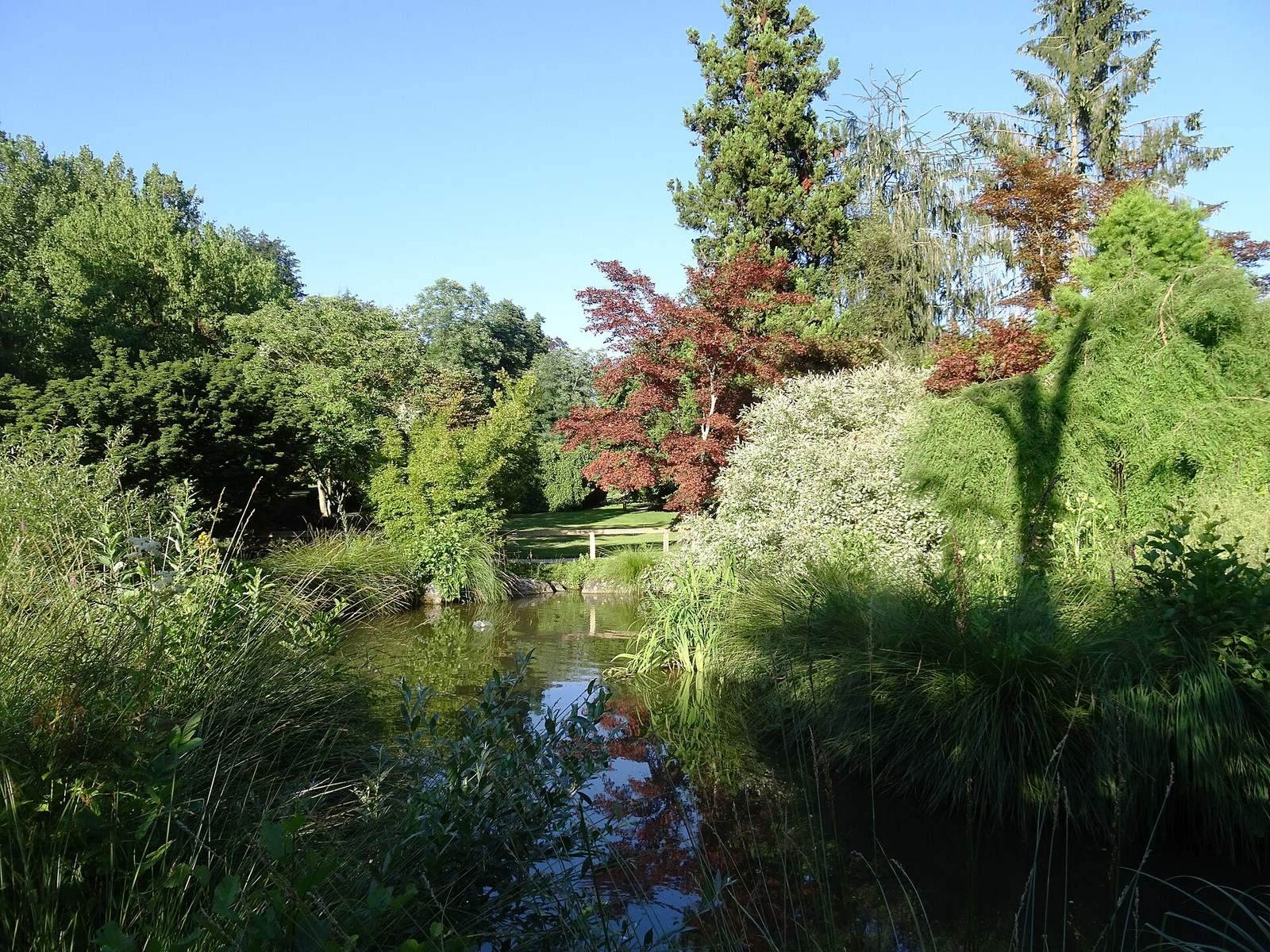
The five artificial lakes and the forest are features of the wider landscaped grounds. The forest contains an association of fir and Bazzania trilobata, a leafy liverwort, a non-vascular plant distinct from true mosses. This plant association is rare in Slovenia.
Plant collections
The woody-plant collections include about 2,500 species and cultivars, plant varieties selected and maintained through cultivation, of conifers and deciduous trees and shrubs. Across the broader collections, totals exceed 4,500 native and non-native trees, shrubs, and other plants; about 300 native herbaceous plants are also represented. Numbers of perennial and annual plants vary from year to year.
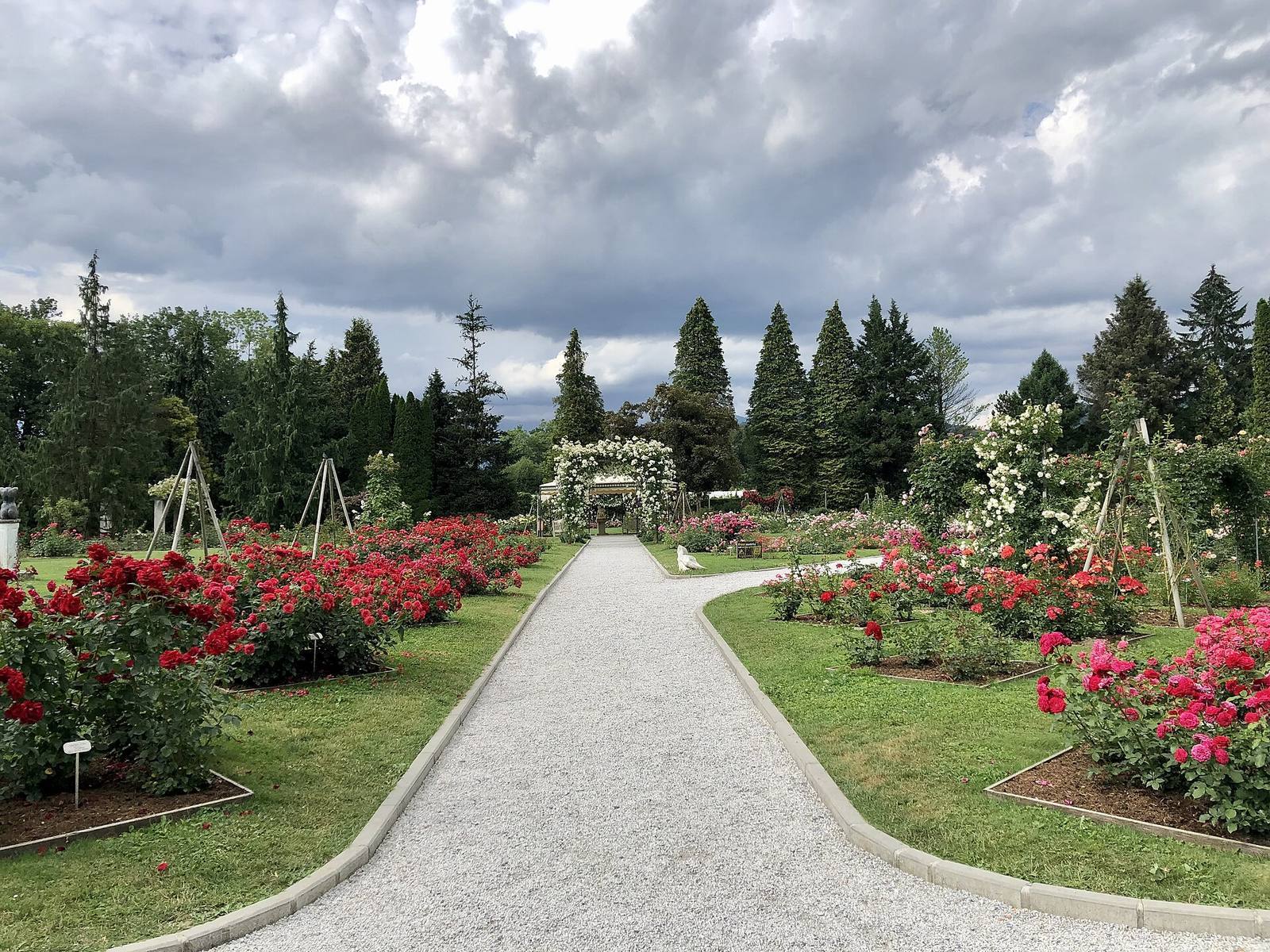
Collections include maples, lindens, birches, beeches, oaks, Japanese cherries, magnolias, pines, firs, cypresses, spruces, yews, arborvitae, and rhododendrons. Particular groups include Japanese maple cultivars (Acer palmatum), scale-leaved conifers, especially around the rose garden, roses, and evergreen broad-leaved trees. The grounds also contain about two million tulips and nearly as many daffodils.
Structures and archaeological remains
Castle hill
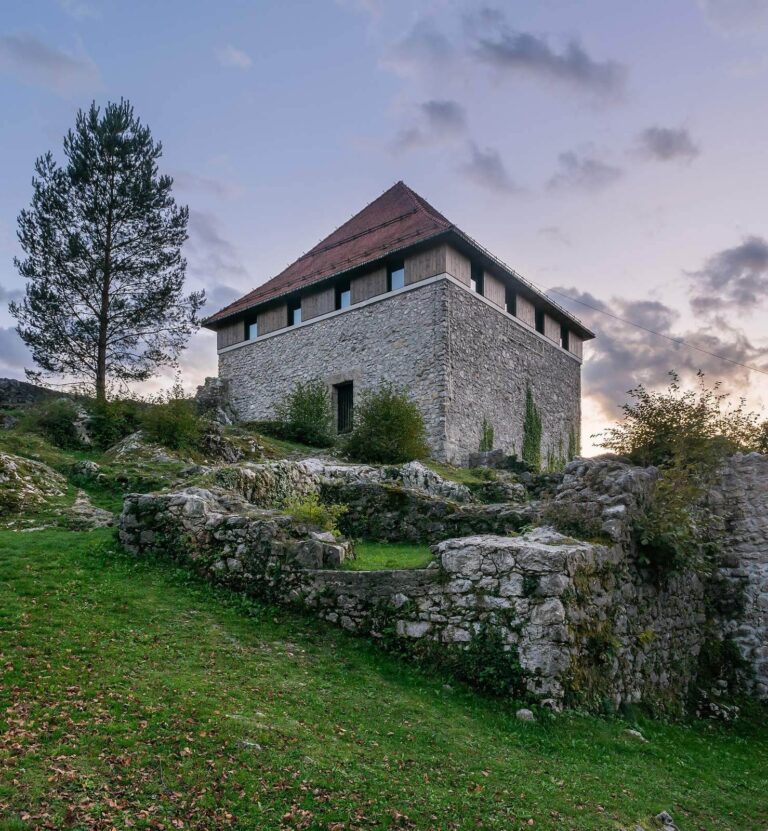
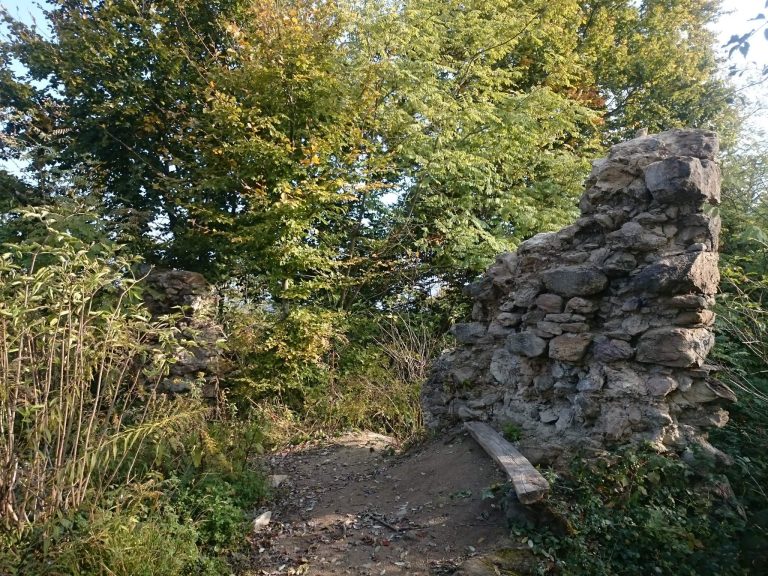
At the summit of the wooded hill are the ruins of a pentagonal residential tower dating to the thirteenth century and built in the Romanesque style, a medieval European architectural style. A walled castle courtyard has a sixteenth-century Renaissance bastion at its entrance. The Renaissance was a European artistic and architectural movement that developed from the late medieval period onward; a bastion is a projecting fortification built into a defensive wall.
Park gallery
The park gallery was renovated in 1991. It exhibits animal sculptures by Slovenian sculptor Janez Boljka, and its ground floor contains a hall used for receptions and wedding ceremonies.
Viewing tower
A viewing tower on a hill within the park opened in 2023.