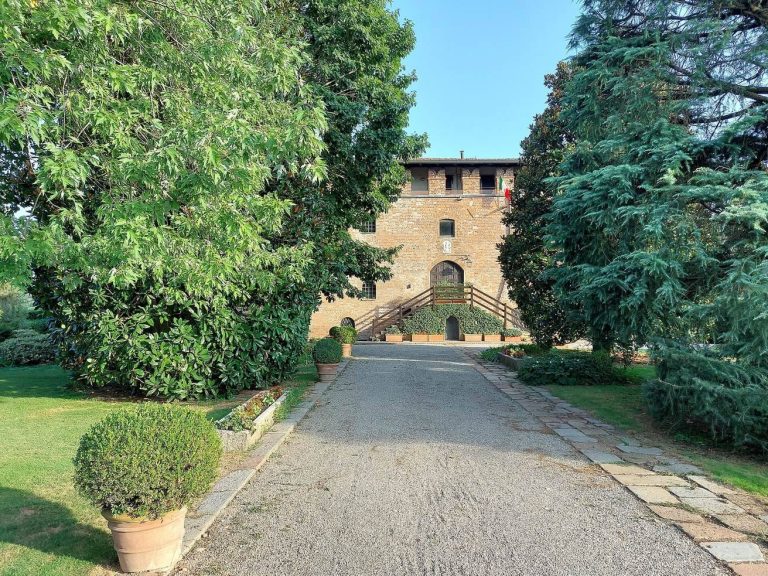
Visconti Castle in Binasco: A Medieval Fortress and Civic Building
Site at a Glance
- Popularity
- Medium
- Country
- Italy
- Primary era
- Early Modern
- Eras represented
- Medieval, Early Modern
- Civilizations
- Duchy of Milan, Habsburg, Habsburg Austria, Habsburg Spain, Holy Roman Empire, Spanish
- Site type
- Military
- Remains
- Castle
On this page4 sections
History
Visconti rule and political use
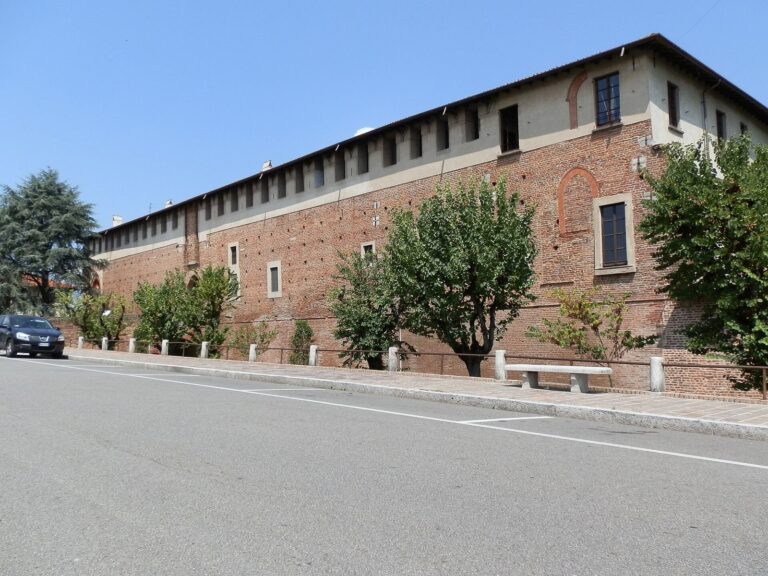
Visconti Castle in Binasco is a medieval fortification in Italy, attributed to Luchino Visconti, Lord of Milan, and probably built around the time of the nearby church of Saint Stephen. A fortification at Binasco is mentioned in a 1129 decree by Bishop Bernardo. The settlement and castle gained importance from their position on the route between Milan and Pavia.
The castle was enlarged under the Visconti, Milan’s ruling dynasty, and later refashioned by the Visconti di Modrone, a branch of the family. In 1329, Azzone Visconti and his uncle Giovanni used it to imprison political opponents. Filippo Maria Visconti received the castle and settlement from Gian Galeazzo Visconti as his personal fief and often withdrew there.
On the night of 13-14 September 1418, Filippo Maria ordered the execution of his wife, Beatrice di Tenda. He had falsely accused her of adultery so that he could marry his mistress, Agnese del Maino. Beatrice’s attendant Michele Orombello was executed with her after being accused of being her lover. The episode later inspired the opera Beatrice di Tenda, with music by Vincenzo Bellini and a libretto by Felice Romani.
Military decline and civic use
The castle later served Milan’s archbishop and then the Duchy of Milan, a state ruled by a duke. Its defensive role included protecting Binasco, but its strategic military function ended in the 17th century, when alterations and restoration work were also carried out.
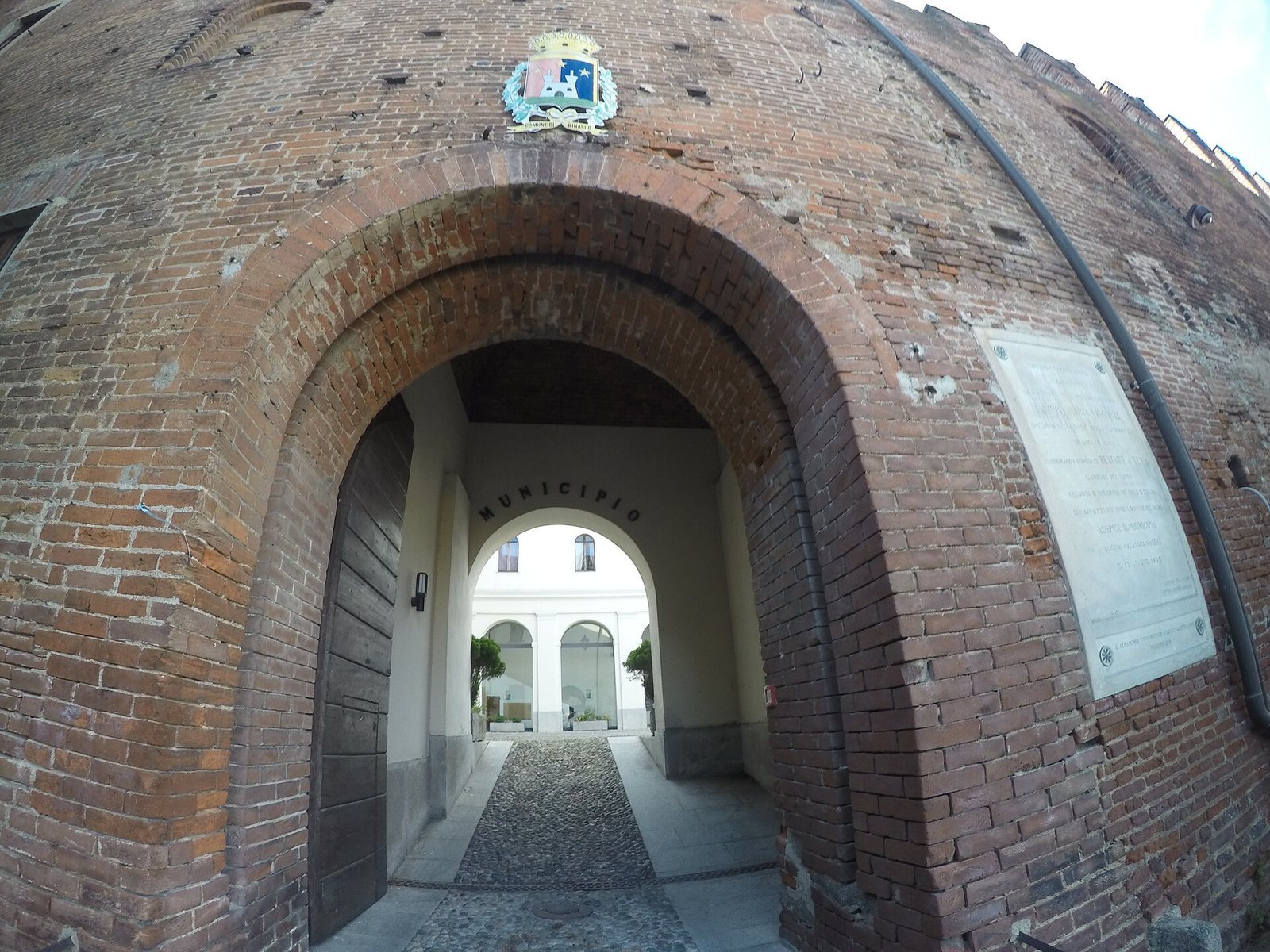
French troops occupied the castle in 1796. A fire that swept through the town on 24-25 May severely damaged it, destroying parts of its medieval structures and its archives. The castle subsequently lost its military role and was partly abandoned. Another devastating fire struck in 1869. Later restoration work preserved the appearance of the original castle. The Municipality of Binasco now owns the building, which houses municipal offices, the public library, and a Carabinieri station, part of Italy’s military police force with civilian law-enforcement duties.
Remains
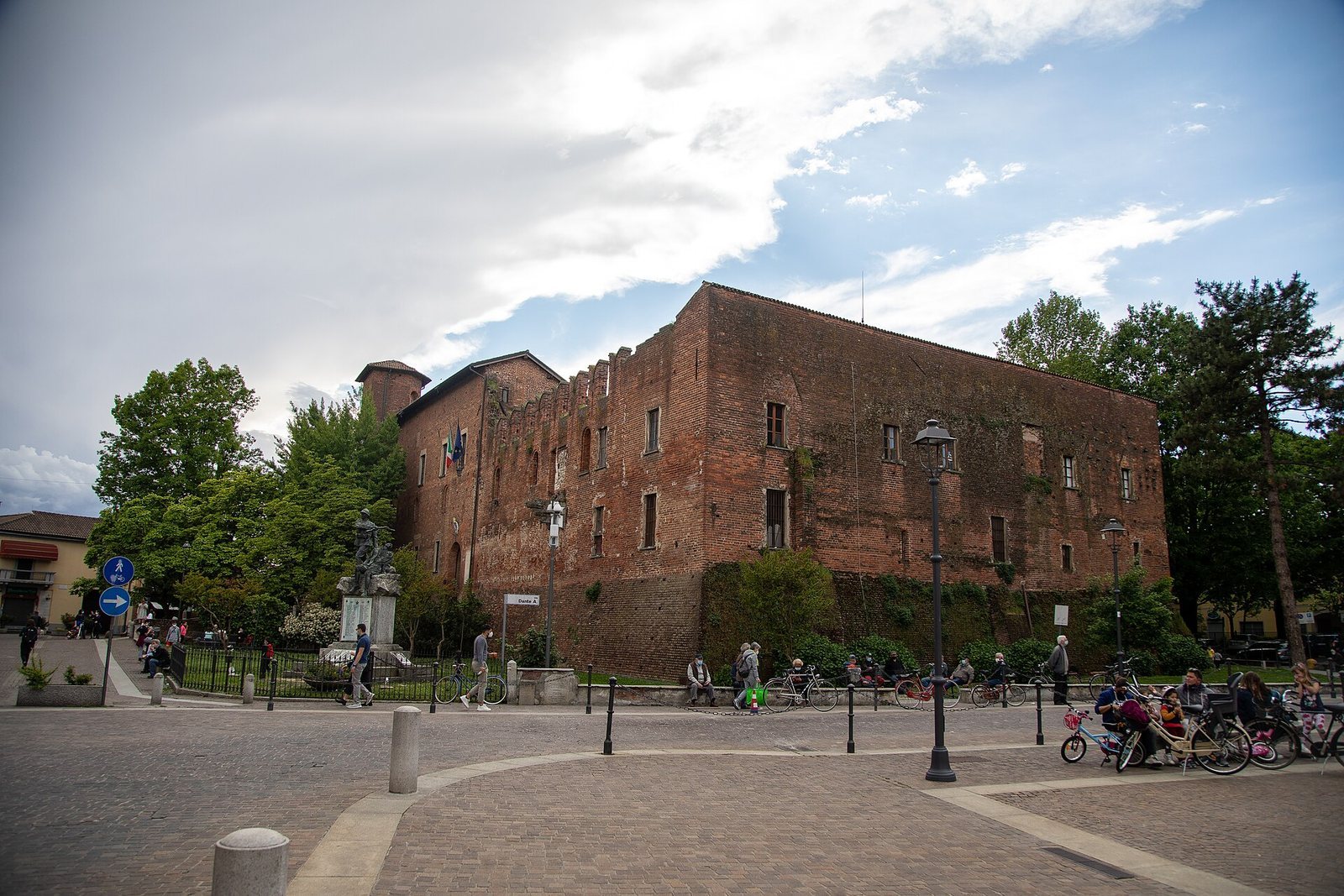
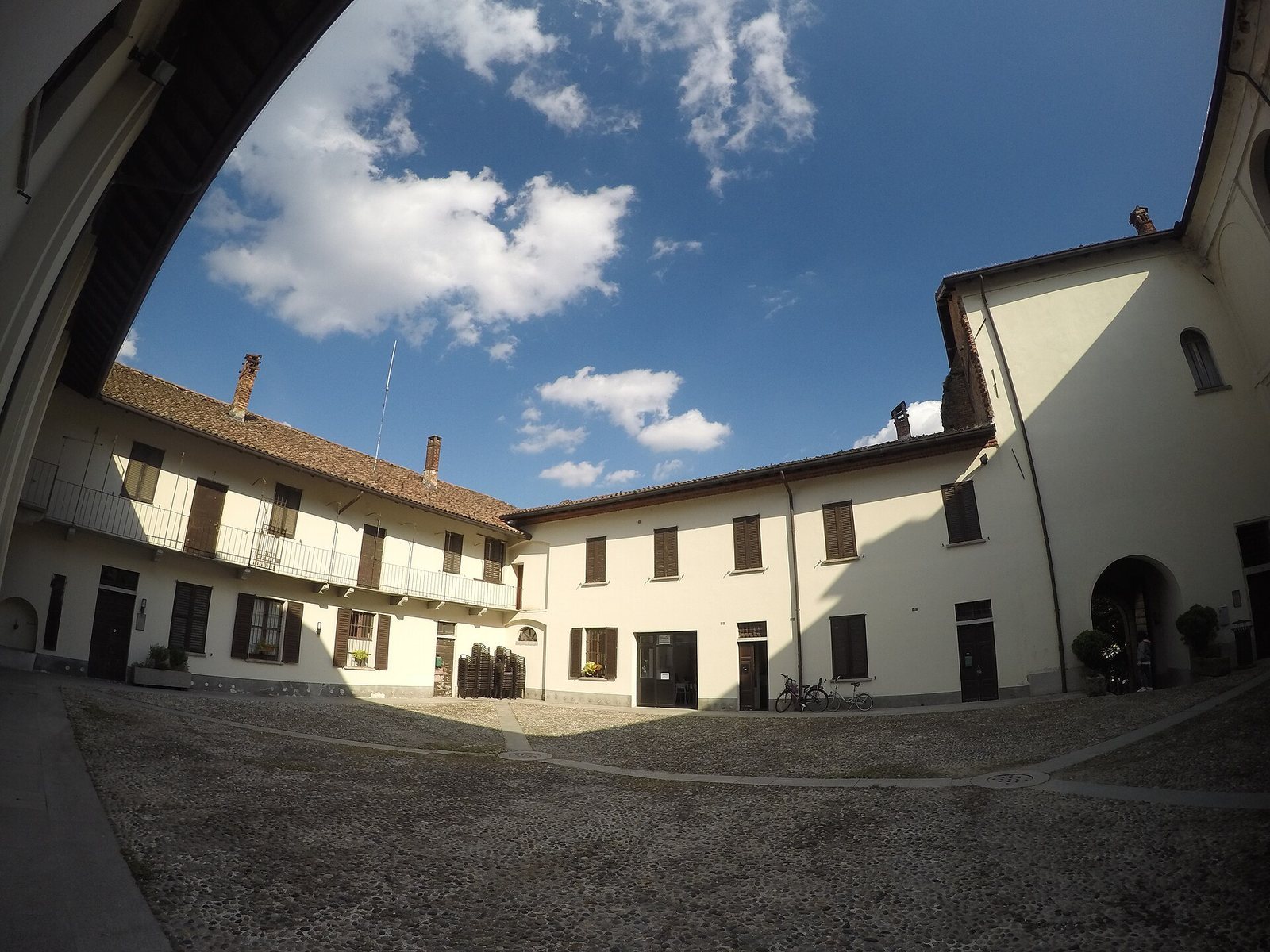
The castle has a rectangular plan with a central courtyard, corner towers, and a surrounding moat, following a Visconti castle arrangement associated with the Lombard plain. Its visible structures date from the late 16th to the late 18th century. The walls are exposed brick, and brick, stone, and wood were used in its construction. Two towers remain visible along the south front.