Sabucina: A Prehistoric and Greek Settlement in Sicily
Site at a Glance
- Popularity
- Medium
- Country
- Italy
- Primary era
- Classical
- Eras represented
- Bronze Age, Iron Age, Classical
- Civilizations
- Ancient Greek
- Site type
- City
On this page13 sections
History
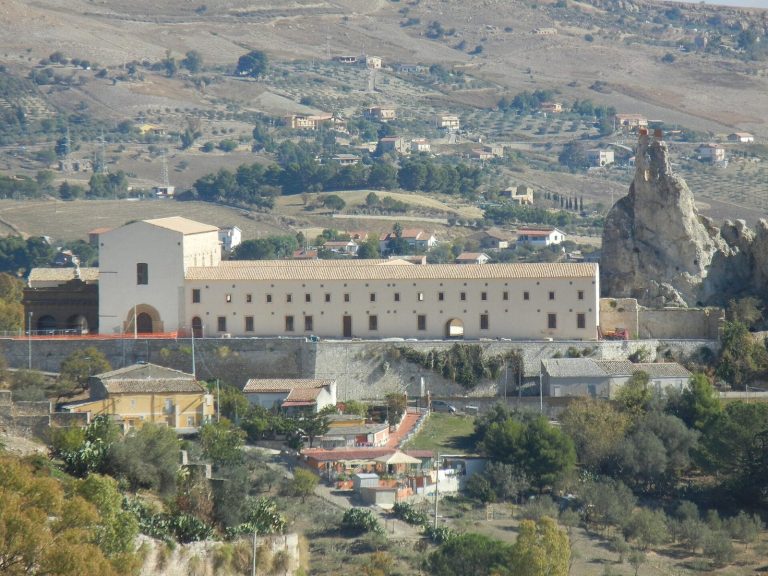
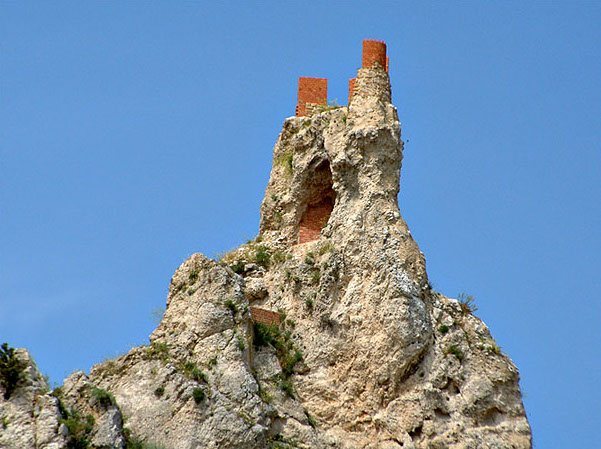
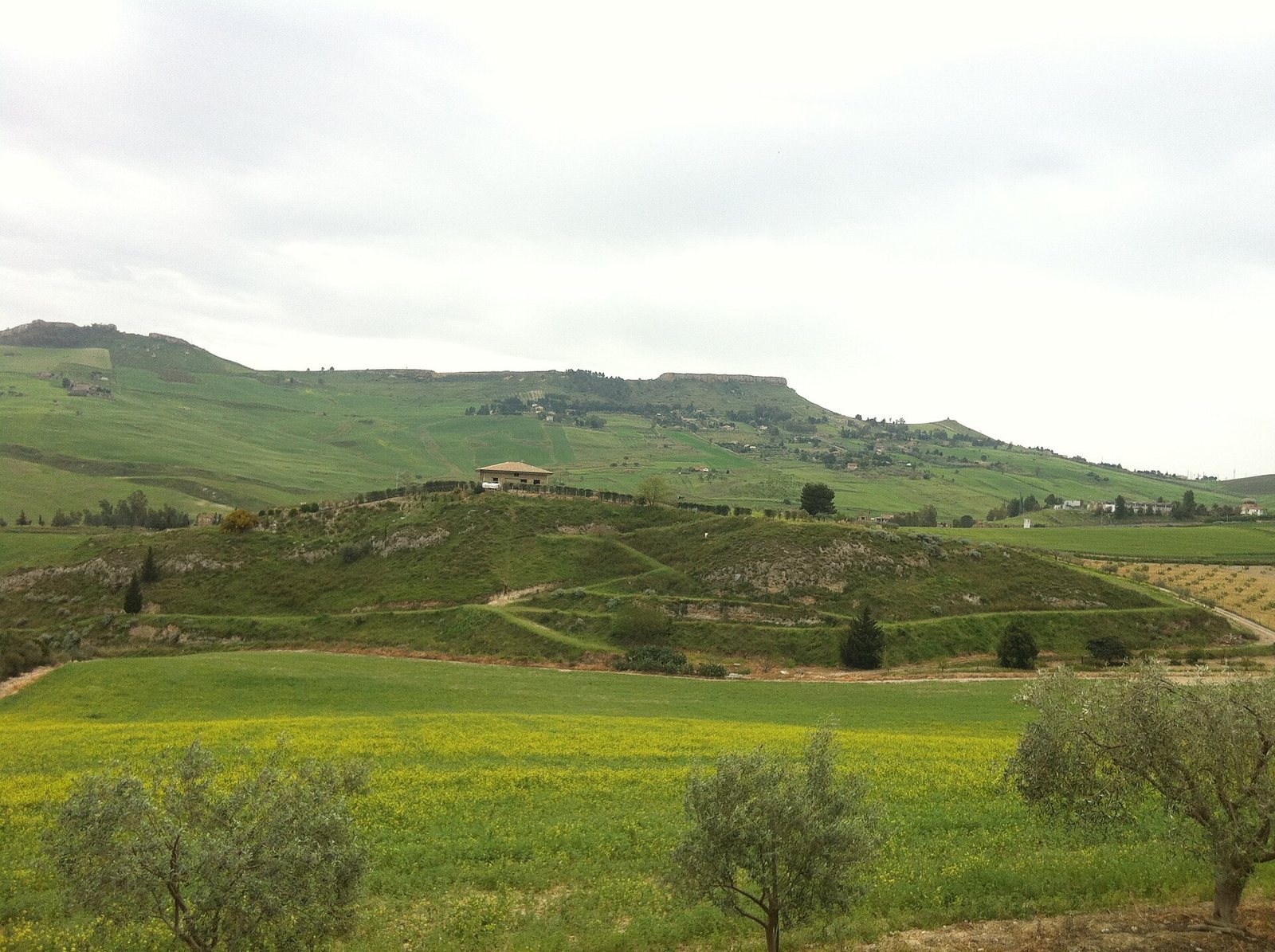
Sabucina is an archaeological settlement on a mountain above the Salso valley near Caltanissetta, Italy. The Sicani built its earliest villages, using the mountain’s commanding position. Communities occupied the site through prehistoric and Greek periods, while farms and villas were later established on the nearby plain.
Prehistoric settlement
The settlement sequence begins with villages of the Castelluccio culture, a prehistoric Sicilian archaeological phase, dating from the 23rd to the 15th centuries BC. A community associated with the North Pantalica culture, another prehistoric phase in Sicily, followed between the 13th and 10th centuries BC. Habitation contracted during the 10th and 9th centuries BC, perhaps after a violent destruction, and was associated with the Cassibile culture. A new settlement developed in the 8th and 7th centuries BC, with rectangular houses and an organized religious area.
Greek settlement and destruction
The first Greek settlement phase dates to the 7th century BC. Greek colonists from Gela, an ancient Greek colony in Sicily, were associated with Sabucina from the 6th to the 4th centuries BC. In the 6th century BC, settlers linked with Rhodes and Crete brought Greek cultural forms to the settlement, and a fortification wall was built.
During the 5th century BC, Ducetius, a Sicel leader who resisted Greek power in Sicily, probably destroyed the settlement during the Sicel revolt against the Greeks. Sabucina was rebuilt in the second half of the century with streets and houses on a different alignment, and a new wall with rectangular towers. The Carthaginians destroyed the settlement late in the 5th century BC during their war against the Greeks.
The city was rebuilt in the 4th century BC. Timoleon, a Greek military and political leader active in Sicily, strengthened its defenses with square towers, while the center took on a different orientation. Around the middle of the 4th century BC, the walls were renewed following the Carthaginian destruction, making it possible to establish new residential quarters. Sabucina was abandoned in 310 BC, probably after Agathocles, the ruler of Syracuse, destroyed it. Its population dispersed and moved away.
Roman-period land use
In the Roman period, farms and villas were established on the plain near Piano della Clesia and by the burial ground in the Lannari district. The land probably formed part of a large agricultural estate, or latifundium, owned by Philippianus from about AD 350. Tile stamps from the villa at Piano della Clesia support this interpretation. The estate also included the nearby Villa of Geraci.
Excavation and protection
Excavations began in the 1960s under archaeologist Piero Orlandini, with campaigns in 1962 and 1991. Orlandini’s work brought a Late Bronze Age village to light, the first village of this type identified in Sicily. A regional decree dated 11 July 2001 established Sabucina as a regional archaeological park. Sabbucina is also given as the site’s official name form.
Remains
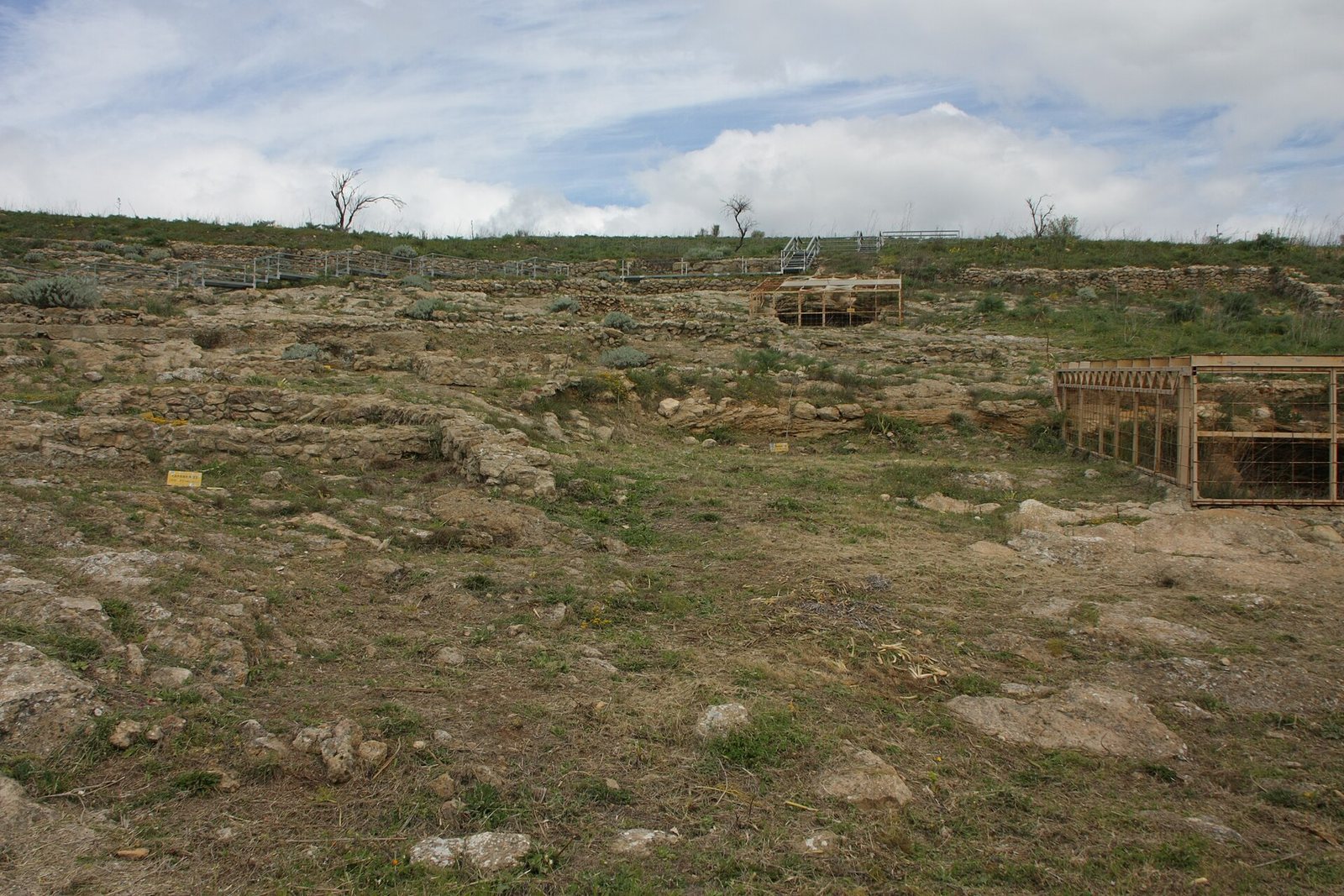
The archaeological area covers about 15,000 square metres on a mountain 720 metres above sea level, approximately eight kilometres northeast of Caltanissetta. The mountain overlooks the Salso valley. The remains include settlements on the slopes and summit, a fortified upper area, sacred spaces, and evidence of later rural activity on the nearby plain.
Huts and houses
North Pantalica settlement remains include circular huts dating to the 13th and 12th centuries BC. They measure 3.5 to 7 metres across, and some were partly cut into the rock with a step. In a later phase, huts were generally enclosed by dry-stone walls and measured 4.9 to 7.9 metres across. Posts set into the ground supported wooden upper structures; the postholes form circular patterns, and hearths occupied the centers of the huts. Some dwellings connected with underground chambers. During the 11th and 10th centuries BC, domestic buildings became rectangular and were often divided into two rooms by stone walls. Later houses were also rectangular, with comparisons drawn to domestic buildings at Thapsos, a prehistoric settlement and culture in Sicily, and to Aegean models.
Rock-cut tombs
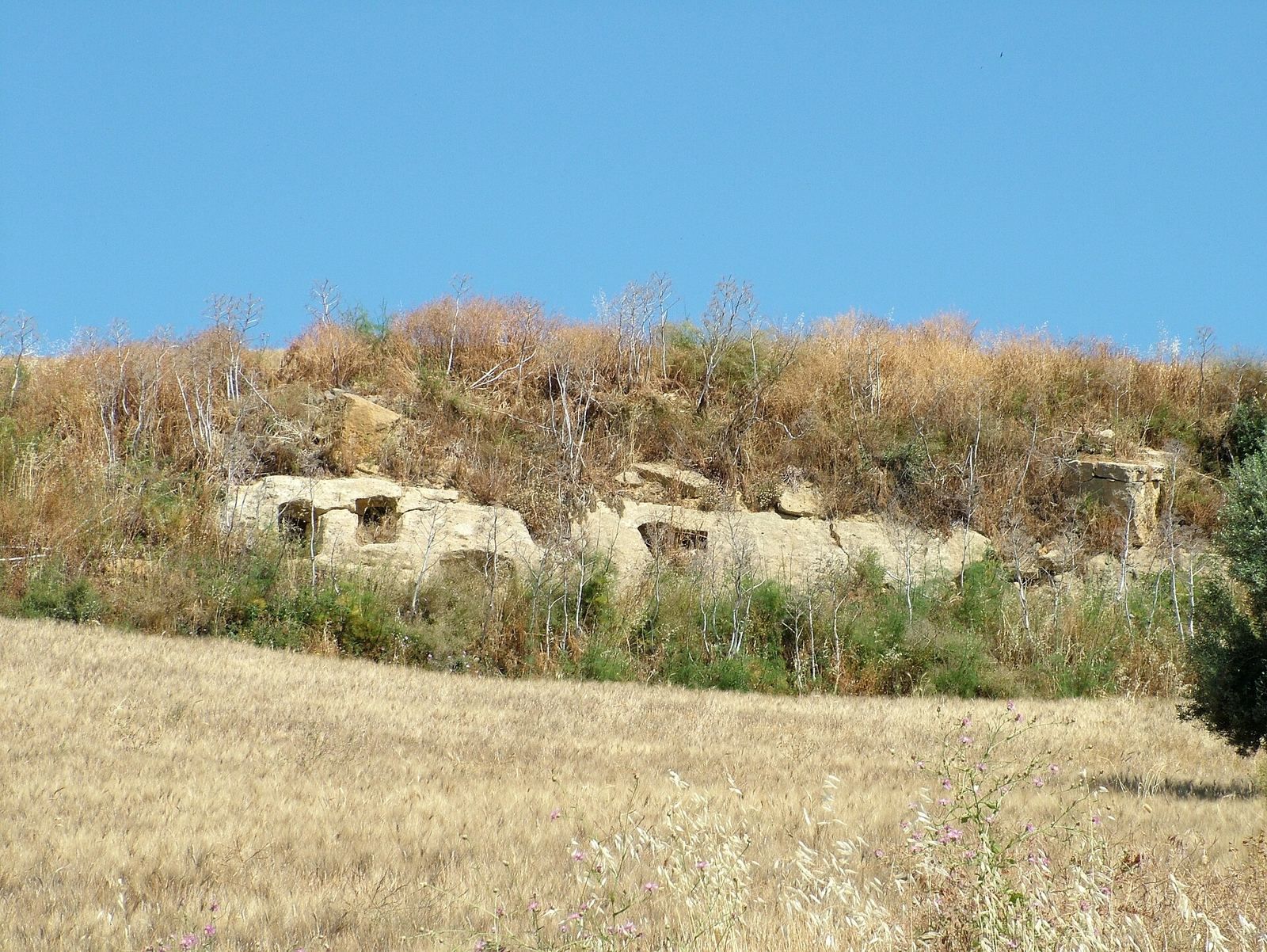
At the foot of the mountain are villages associated with the Castelluccio culture and small chamber tombs cut into the rock. These tombs are known as grotticella tombs.
Defenses and settlement layout
The fortification enclosed the mountain’s upper part. Its 6th-century BC circuit included a circular tower, while square towers belonged to later phases of strengthening and rebuilding. During the 5th-century reconstruction, streets and housing plots were laid out on a different alignment. The Greek-period houses were rectangular, with greater spacing between them toward the summit.
Sacred and craft areas
An organized religious area occupied the hilltop in the 8th and 7th centuries BC. A later sacred zone, developed between the 8th and 5th centuries BC, lay south of and outside the fortification wall. It contained rectangular and circular spaces probably used for the worship of deities associated with the earth or underworld, as well as a hut used as a shrine. An artisan quarter was later established in the same area, including a furnace for smelting weapons.
Metalworking and evidence of destruction
One hut was used as a furnace, and stone moulds for making metal weapons were found there. Other objects of Aegean origin may indicate contact with, or migration from, the Aegean. Finds associated with the 9th-century BC destruction include objects of the Cassibile culture and vessels in the Sant’Angelo Muxaro pottery style, another prehistoric Sicilian tradition. Traces of burning provide physical evidence of the destruction.
Roman rural remains
Roman-period farms and villas were established on the plain near Piano della Clesia and close to the burial ground in Lannari. A bust of the Roman emperor Geta, dated to AD 204–205, was found at Sabucina. It was probably made in Rome and brought to Sicily by aristocratic owners of a villa.
Terracotta model and other finds
The Sacello of Sabucina is a terracotta model of a small temple from the 6th century BC, found near the burial ground. Its porch has projecting side walls with columns between them, and its pitched roof is crowned by two horsemen. Two masks depicting the mythological Gorgon decorate the lower triangular panel. The model is now held at the Regional Archaeological Museum of Caltanissetta, along with other finds from Sabucina, including an Attic red-figure pouring jug and two forms of vessel used to mix wine and water, a column krater and a calyx krater. The collection also includes a statue of a young woman with a garland.