Valdemarsmuren: A Medieval Danish Defensive Wall in Germany
Site at a Glance
- Popularity
- Medium
- Country
- Germany
- Primary era
- Medieval
- Eras represented
- Medieval, Modern
- Civilizations
- Danish, German, Holy Roman Empire
- Site type
- Military
- Remains
- Wall
On this page8 sections
History
The Danevirke and Valdemar’s wall
Valdemarsmuren is a medieval Danish defensive wall in Germany and the last major medieval reinforcement of the Danevirke’s Main Rampart. The Danevirke was a major defensive earthwork system, and its Main Rampart, the system’s first rampart, was about 5.5 kilometres long and existed by the end of the seventh century. It was strengthened repeatedly over the centuries.
An older fieldstone wall stood in front of Valdemarsmuren. It is thought to date to the early ninth century and is associated with King Godfred, an early medieval Danish ruler. King Valdemar I, also known as Valdemar the Great, ordered the later wall around 1163, and construction continued until the end of the twelfth century.
Valdemar’s early reign, which began in 1157, faced internal opposition. He also campaigned against the Abodrites, a West Slavic people, and from 1162 repeatedly had to accept German overlordship. The wall was intended to guard Denmark’s southern land border against Slavic and Saxon attacks, while also asserting the king’s political and military authority. Two inscriptions on Valdemar’s tomb point to the wall’s political importance. The Danish chroniclers Sven Aggesen and Saxo Grammaticus also wrote about it.
Decline and later remembrance
The Danevirke ceased to serve as an important Danish border defence during the thirteenth century. Over the following centuries, people took bricks from Valdemarsmuren to build or strengthen other structures, and the wall fell into ruin. A tradition at older Danish folk high schools, adult education institutions, was to use a stone from the wall when laying a foundation stone.
Rediscovery and heritage status
Workers exposed part of the wall’s front face during fortification work on the Danevirke in 1861, ahead of the German-Danish War of 1864. In 2010, archaeologists located and excavated the wall’s eastern end, about 10 metres short of a gate through the Main Rampart. The excavation also uncovered the gate for Hærvejen, a historic route through Jutland. In 2018, Valdemarsmuren became part of the UNESCO World Heritage listing for the Archaeological Border Complex of Hedeby and the Danevirke.
Remains
The brick wall
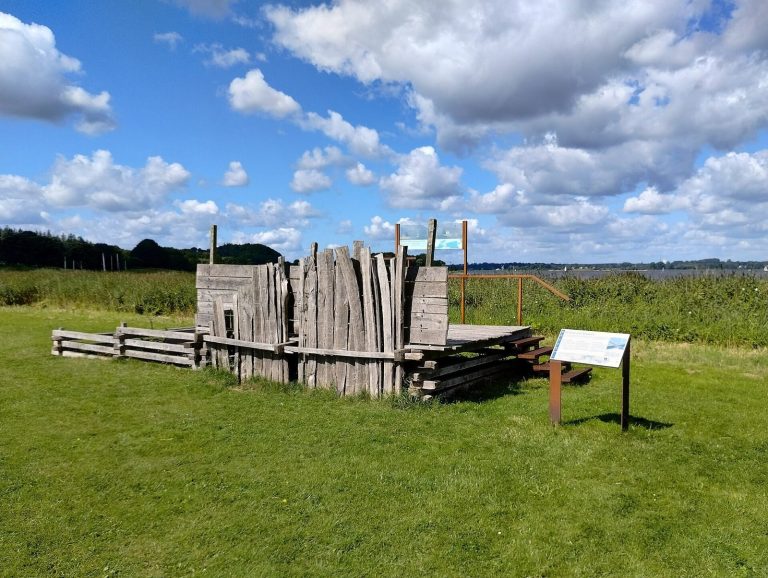
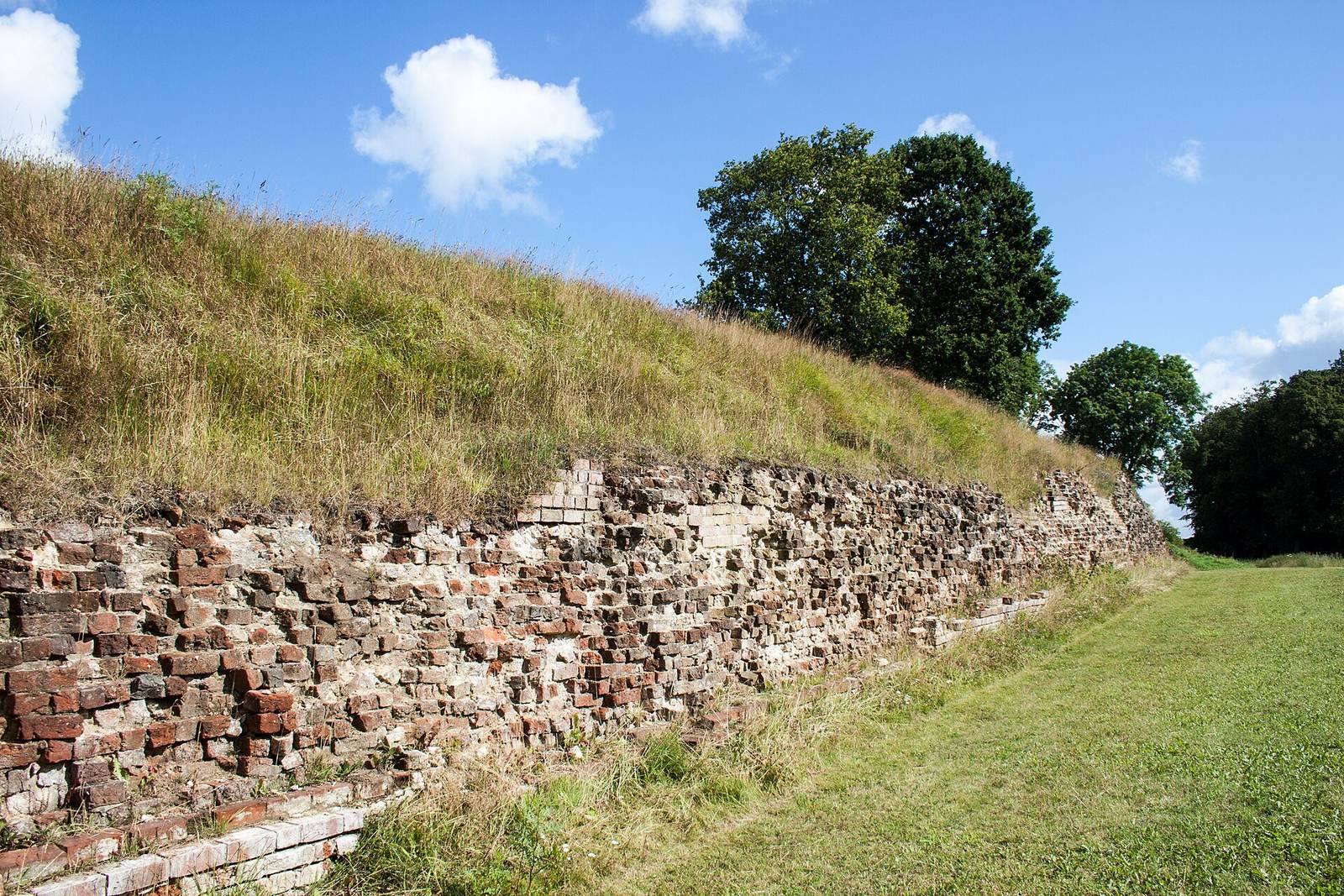
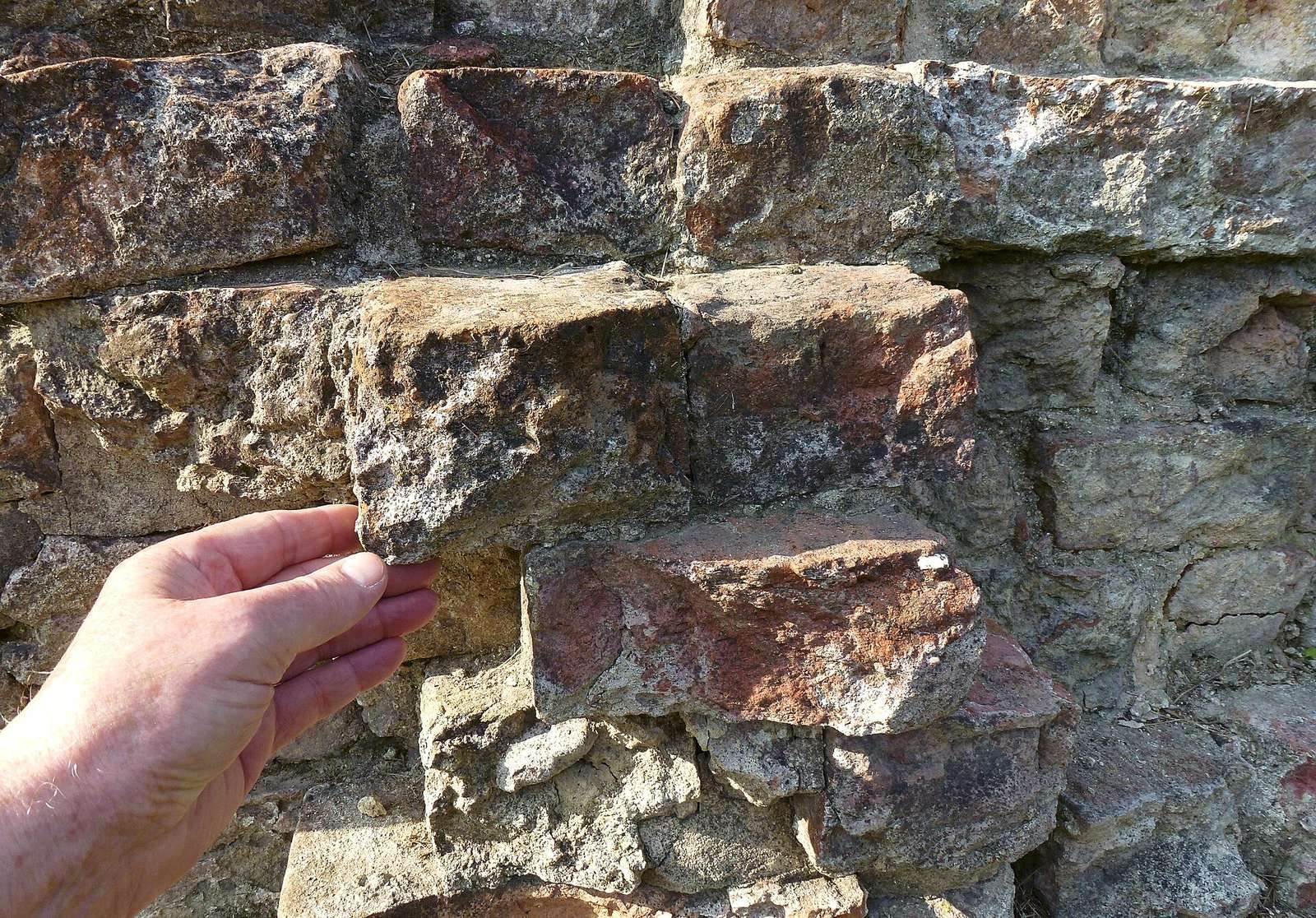
The brick wall extended westward along the Main Rampart for at least 3.7 kilometres, or roughly 4 kilometres, and is estimated to have been about 2 metres thick. A foundation about 1.5 metres high, built of fieldstones, supported the brickwork. Its outer faces were neatly laid, while the interior was irregular, and buttresses strengthened the wall. The masonry itself probably stood 4 to 5 metres high; a defensive walkway and roof, if present, could have brought the total height to an estimated 5 to 7 metres. The wall may also have carried a projecting wooden fighting gallery, possibly with a roof. Nearby oven remains indicate local production of bricks and mortar. About 6.5 million bricks were fired for the project. Brick was then a new building material in northern Europe, where earlier Danish brick buildings had been churches and monasteries. Valdemarsmuren is the oldest and largest secular brick building in northern Europe.
The wider defensive structure
The wall and the earth rampart immediately behind it formed one defensive structure. The rampart was 18 metres wide and 4 metres high. In front of the wall, a broad berm, a strip of ground between a wall and a ditch, separated it from a ditch about 2 metres deep and roughly 20 metres wide. An outer rampart completed the defences, which together occupied a width of about 100 metres.
Exposed section and conservation
About 80 metres of the wall can be seen in the archaeological park at the Danevirke Museum in Dannewerk. The visible brickwork has no facing layer and reaches up to 2.70 metres high; most of the wall remains covered by the earth rampart. Bricks vary in hardness, affecting the wall’s stability. Rain, frost, and people climbing on the masonry have loosened bricks and mortar, and some bricks have broken.
About 75 metres of the wall were excavated and restored in 2006–07, as part of a conservation project that continued through 2008. Workers installed drainage in front of and behind the wall, reset the outer brickwork in mortar, and used some replacement bricks in a format associated with the medieval Valdemar period. In 2008, they applied a waterproof clay mixture over the wall to limit water entering from the adjoining earth. The mortar began to crumble in the winter of 2008–09 after the protective shelter was removed before it had hardened sufficiently. By 2013, the damage had led to consideration of covering the wall with earth. Further work on the front face and top of the wall took place from July 2019 to December 2021, when the drainage system was also inspected.