Hedeby: A Viking Age Trading Settlement in Germany
Site at a Glance
- Popularity
- Very High
- Country
- Germany
- Primary era
- Medieval
- Eras represented
- Medieval
- Civilizations
- Danish
- Site type
- City
On this page20 sections
History
Hedeby was a Viking Age trading settlement at Busdorf in Schleswig-Holstein, Germany, founded around 770, probably by Frisian merchants. The Viking Age, a period of Scandinavian expansion, trade, raiding, and settlement from the late eighth to the eleventh century, saw Hedeby grow into a major marketplace in the western Baltic. Its position connected routes between Scandinavia and the Frankish Empire, and between the Baltic and the North Sea.
Foundation and growth
Hedeby began as a trading post without developed urban infrastructure. Its growth accelerated after the Danish king Godfred destroyed Reric, a Slavic trading settlement, in 808 and forcibly relocated its merchants and craftspeople to Hedeby. Godfred made the town a center of his Jutland realm. Frankish annals mention a place called Sliesthorp in 804, but it is unclear whether that name referred to Hedeby or Schleswig. Archaeological evidence places the settlement’s earliest construction in 811.
Swedish Vikings held power in the region around 800 before Godfred subdued them. Swedish rulers regained control around 900, and a dynasty later associated with a Swedish ruler named Olof may have remained in power into the early tenth century. Hedeby’s trade expanded across the region: Scandinavian routes supplied mainly raw materials, while goods from more distant places, including Ireland, Constantinople, Baghdad, and the Frankish realm, included luxury items. The settlement also took part in the slave trade, and its residents made and exchanged pottery, glass, and tools.
Hedeby began minting its own coins around 825. Its location near the narrow land crossing between the Schlei and the North Sea route, and close to the north–south Ox Road through Jutland, helped it serve as a regional marketplace. Cargo moving between the Schlei and the North Sea travelled overland to Hollingstedt on the Treene, then continued by way of the Eider. In the tenth century, Hedeby had more than 1,000 inhabitants, and its population may have reached about 1,500.
Christianity and political rule
Christianity was taking hold in the settlement by 826. Around 850, the missionary Ansgar established a church there with permission from the Danish king Horik I. Around 890, Wulfstan of Hedeby travelled to Truso, a trading settlement on the southern Baltic coast, on a mission for Alfred the Great.
In 934, the East Frankish king Henry I defeated the Danish king Cnut I near Hedeby and took the town. The territory between the Eider and the Schlei then came temporarily under East Frankish rule. The Danish king Gorm recovered the trading center in 945. In 948, a bishopric, a church district led by a bishop, was established with Hedeby as its principal seat. Hored, its first bishop, may never have visited the town.
Also in 948, the Danish king Harald Bluetooth accepted the overlordship of Otto I, converted to Christianity, and paid tribute. Harald tried to recover the territory from Otto II in 974, but Otto retook it and built a German fortress near the Danevirke, a system of defensive earthworks across southern Jutland. A revolt against German rule in 983 led to the fortress’s destruction and Hedeby’s return to Danish control. Around 965, the traveler Ibrahim ibn Yaqub visited and wrote about the settlement.
Around 1000, Hedeby lay within the sphere of Otto III, although his influence there was limited. Following a military campaign by the Danish king Sven Forkbeard, the frontier under Conrad II was probably moved from the Schlei back to the Eider.
Destruction and abandonment
Building continued at Hedeby into the eleventh century, with the latest archaeologically recorded construction dated to 1020. In 1050, the Norwegian king Harald Hardrada probably sacked and burned the town during his conflict with the Danish king Sweyn II. Harald may have started the fire by sending burning ships into the harbor.
West Slavic forces attacked and burned Hedeby again in 1066. The settlement was abandoned, and its inhabitants moved about two kilometers north across the Schlei to a settlement that probably already existed and developed into Schleswig. The Danish monarchy transferred Hedeby’s tolls and levies to Schleswig, where the earliest building activity dates to 1071. Hedeby’s destruction and abandonment formed part of the end of the Viking Age.
Rediscovery and archaeological study
During the 1848 war between Denmark and Prussia, a military camp occupied the area inside Hedeby’s semicircular rampart, which was repaired for possible military use. The Danish archaeologist Sophus Müller identified the settlement within the rampart in 1897. Johanna Mestorf organized excavations beginning in 1900, confirming the identification. Fieldwork continued annually through 1915 and resumed in 1921.
Excavations from 1930 to 1939 were first directed by Gustav Schwantes and later by Herbert Jankuhn. From 1934 they took place under Heinrich Himmler’s patronage. The SS research organization Ahnenerbe initially financed the work and took over the project in 1938. The Nazi regime gave the excavations ideological purpose, using them to pursue claims about a supposed Germanic identity. Archaeological work resumed after the Second World War under Kurt Schietzel.
In 1949, dives by Schleswig lawyer Otto von Wahl revealed harbor structures and material from shipwrecks, prompting archaeologists to renew underwater investigations. Karl Kersten and Hans Hingst directed extensive harbor research from 1953; later excavations covered the southern and much of the central settlement. A wider survey begun in 2002 helped map the site. Metal-detector work and excavations from 2005 to 2010 tested its results and examined the transition from Hedeby to Schleswig. A cemetery was investigated again in 2017.
Hedeby and the Danevirke were inscribed together in 2018 as the Archaeological Border Complex of Hedeby and the Danevirke, a UNESCO World Heritage property.
Remains
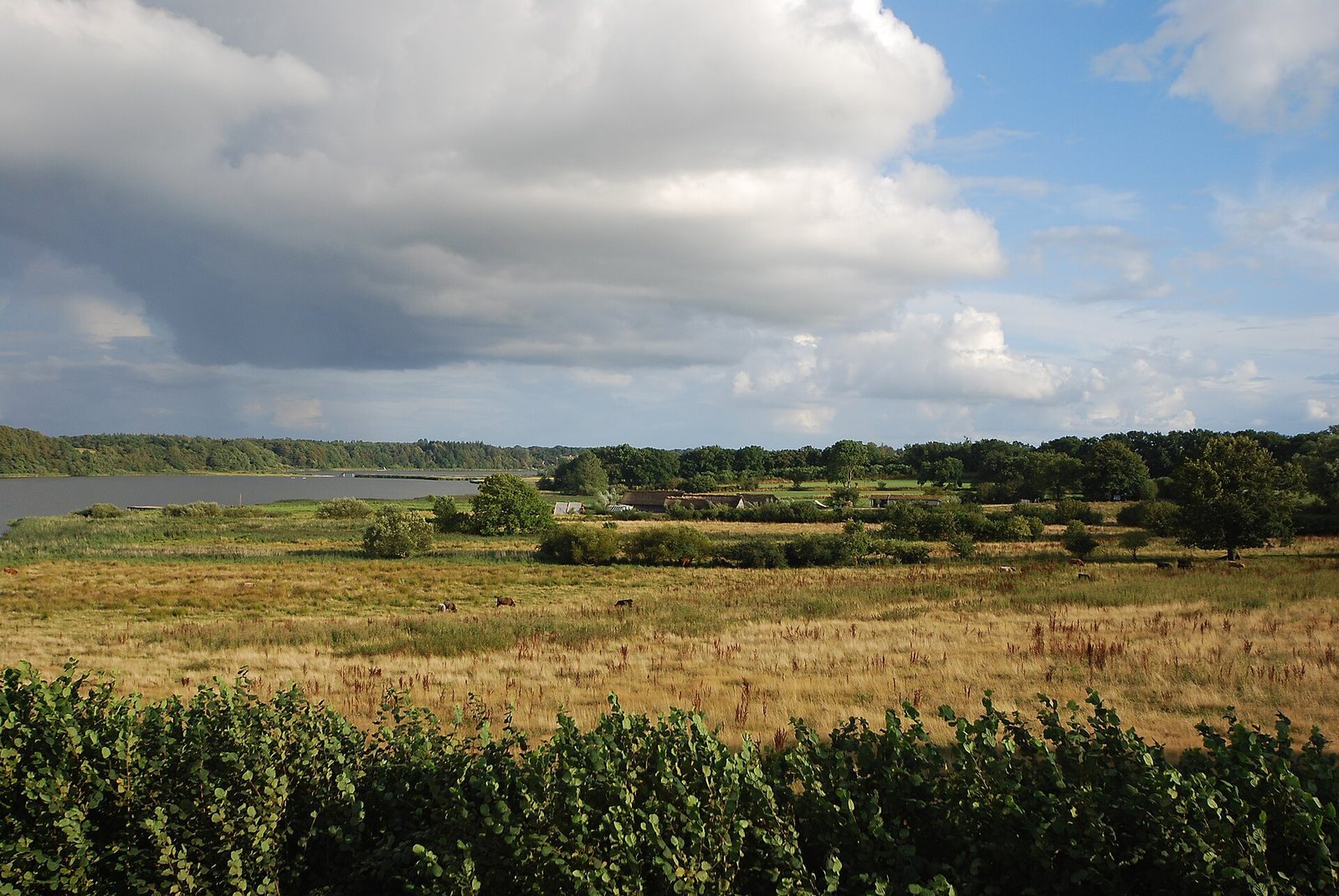
The archaeological complex occupies the western shore of Haddebyer Noor, at the inland end of the Schlei, an inlet of the Baltic Sea. Its surviving landscape includes a defended central settlement, areas beyond the rampart, a harbor, burial grounds, and evidence of workshops and domestic buildings. Timber streets and structures, together with earthen defenses and waterfront works, reveal how the settlement was organized.
Settlement plan and defenses
Ramparts
A semicircular earthwork rampart, a raised defensive bank, enclosed about 24 to 26 hectares and reached roughly nine meters in height. Built after about 930, it protected the landward approaches, while the eastern side of the settlement bordered the inlet and bay. Around 968, a connecting rampart about 3.5 kilometers long linked Hedeby’s defenses to the Danevirke.
Streamside streets and buildings
The original settlement core stood on both banks of a shallow stream running west to east. Reinforced stream banks, carefully laid wooden streets and walkways, and a regular layout point to planned construction. East–west streets descended toward the harbor jetties. The central settlement beside the stream remained in use after northern and southern settlement areas were abandoned toward the end of the ninth century; another area lay between them along Hedeby Stream, while the southern settlement stood outside the rampart.
Long hall houses, buildings organized around a central hall, had walls of timber or woven branches and probably roofs of thatch or straw. Their ground plans ranged from about 3.5 by 17 meters to 7 by 17.5 meters. On damp ground, buildings had short lifespans and were rebuilt over earlier structures. Ninth-century timber survives better than material from the tenth century. A well excavated in 1963 was dated to 1020 through tree-ring analysis.
Harbor and waterfront
Harbor works
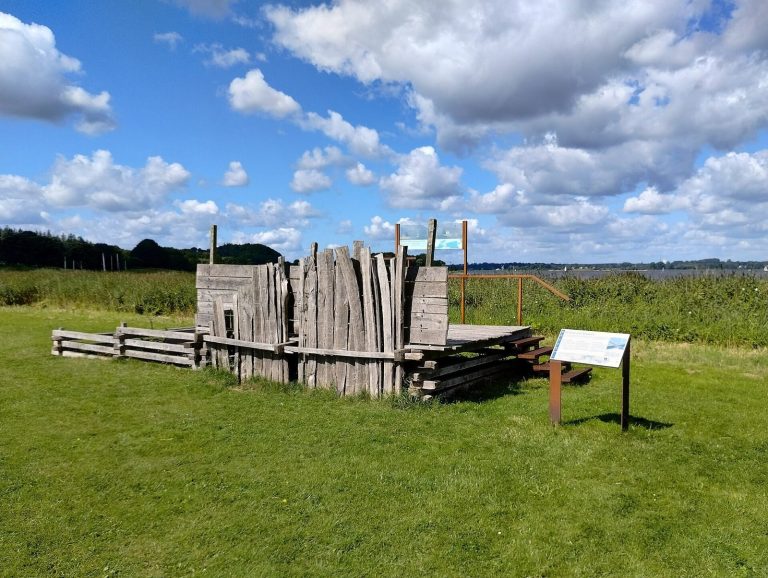
The harbor basin covered about 11 hectares and included a wooden palisade, a fence of upright timbers. Landing stages and other built features served the waterfront, while storehouses, workshops, wells, and fortifications formed part of the settlement’s wider archaeological remains. Waterlogged deposits in the harbor preserved timber and other perishable material. A bell dating to the early tenth century was recovered from the former harbor in 1978.
Shipwrecks and Hedeby 1
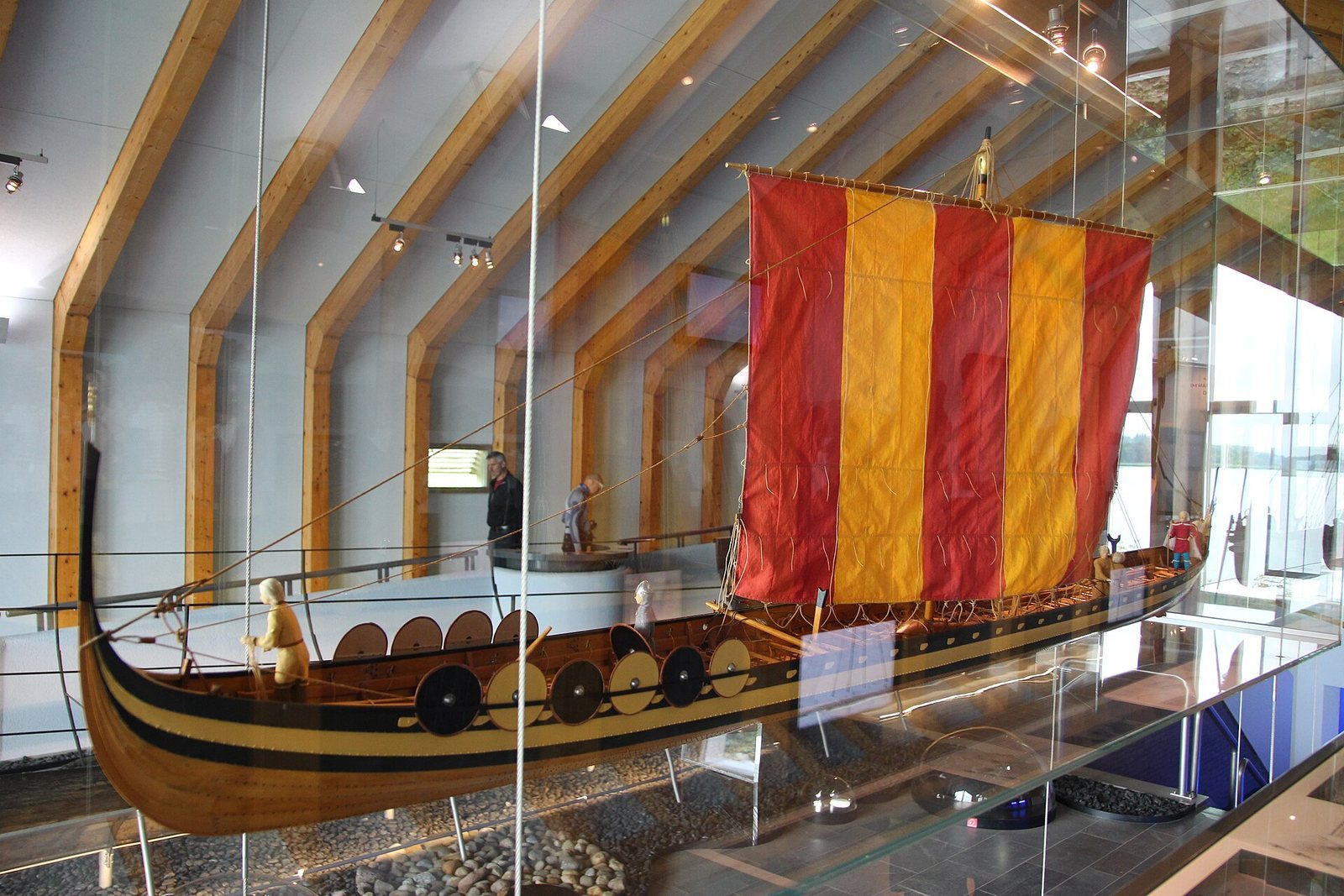
Several shipwrecks have been found in the harbor. Two hulls were raised and conserved in 1979–80, and a sonar survey located a third wreck in 1981. The Viking ship Hedeby 1 was found during harbor investigations in the 1950s and raised in 1979 after a temporary enclosure was built around it. It was regarded as the longest ship found in Denmark until the discovery of Roskilde 6 in 1997. The remains of Hedeby 1 are displayed at the nearby Hedeby Viking Museum.
Burials and runestones
Burial grounds
A large cemetery of ground burials lies south of the settlement. Chamber graves, burials in built underground rooms, and other ground burials occur in the southwest. Graves also lie in a northern area sometimes called the upper stronghold, though its character as a fortified place is uncertain. Excavated burial practices include Danish cremation pits, Swedish chamber graves, Saxon and Slavic urn burials, and Christian burials of bodies laid in the ground. The renewed cemetery investigation in 2017 recovered human bones and jewelry set with gold and gemstones.
Ship burial
Discovered in 1908 beneath a mound slightly south of Hedeby, a ship burial dated to about 850 contained a poorly preserved vessel above an underground chamber. The ship was probably built between 825 and 850. The distribution of its nails suggests a hull about 17 to 20 meters long and 2.7 to 3.5 meters wide. The plank-built chamber measured about 3.7 by 2.4 meters, had a wooden floor about 1.9 meters below ground, and was divided into two parts. It held the remains of three men from the first half of the ninth century, whose identities are unknown.
The chamber’s western part contained a bronze bowl, a glass cup, arrows, decorated shield fragments, a decorated sword, spurs, and jewelry. In the eastern part were an iron-bound wooden bucket, two swords, and a horse bit. A pit to the east held the remains of three horses. Frankish objects among the grave goods may indicate close ties with the Frankish Empire. Some may have been gifts connected with the baptism of the Danish king Harald Klak in 826, when the Frankish emperor Louis the Pious gave gifts to him and his companions.
Runestones
Four runestones, stones bearing inscriptions in runic characters, are associated with Hedeby. They include the Great and Small stones of Sigtrygg and the tenth-century Stone of Eric, found in 1796, whose inscription names Hedeby. Hedeby is the only place in present-day Germany where runestones were erected.
Craft production and archaeological finds
Textiles and workshops
Finds connected with textile production include standardized spindle whorls, spindle rods, loom weights, and bone needles. The settlement has also yielded more than 340,000 objects associated with comb-making, along with leatherworking tools, traces of ironworking and goldsmithing, and mercury used in fire gilding, a method that applies gold with a mercury mixture and heats it to drive off the mercury.
Glassmaking and beads
A glass furnace operated at Hedeby between about 850 and 900. Around 7,700 decorative beads have been recovered from the harbor, burials, and across the settlement. Their materials include carnelian, rock crystal, amber, jet, silver, brass, bronze, and mosaic glass. Styles changed at intervals of roughly 10 to 35 years. A domed oven built over the remains of a burned pit house may also have been used to make glass beads.
Reconstructed houses and collections
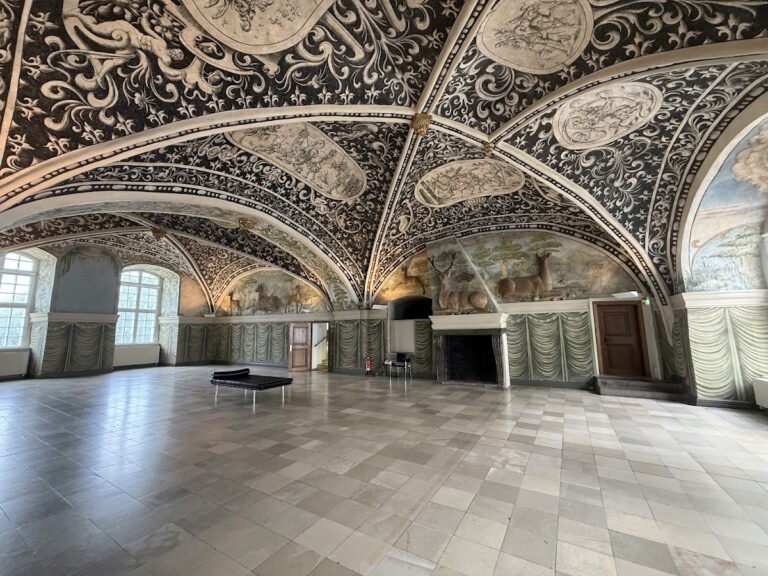
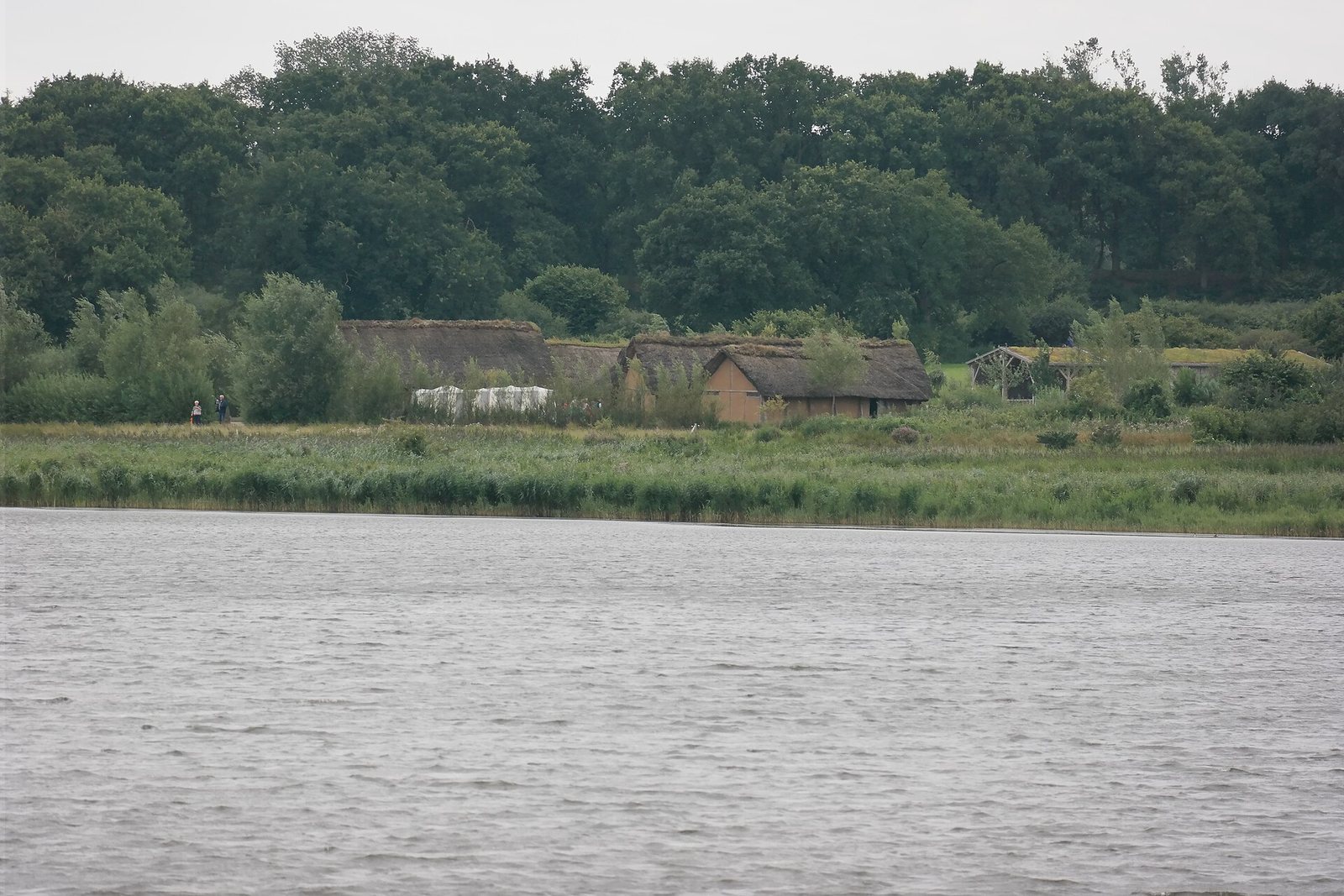
Seven houses reconstructed from archaeological evidence were built on the settlement grounds between 2005 and 2008 as an open-air museum. The Hedeby Viking Museum, which opened near the site in 1985, displays the remains of Hedeby 1. Major archaeological collections from Hedeby are held at Gottorf Castle.