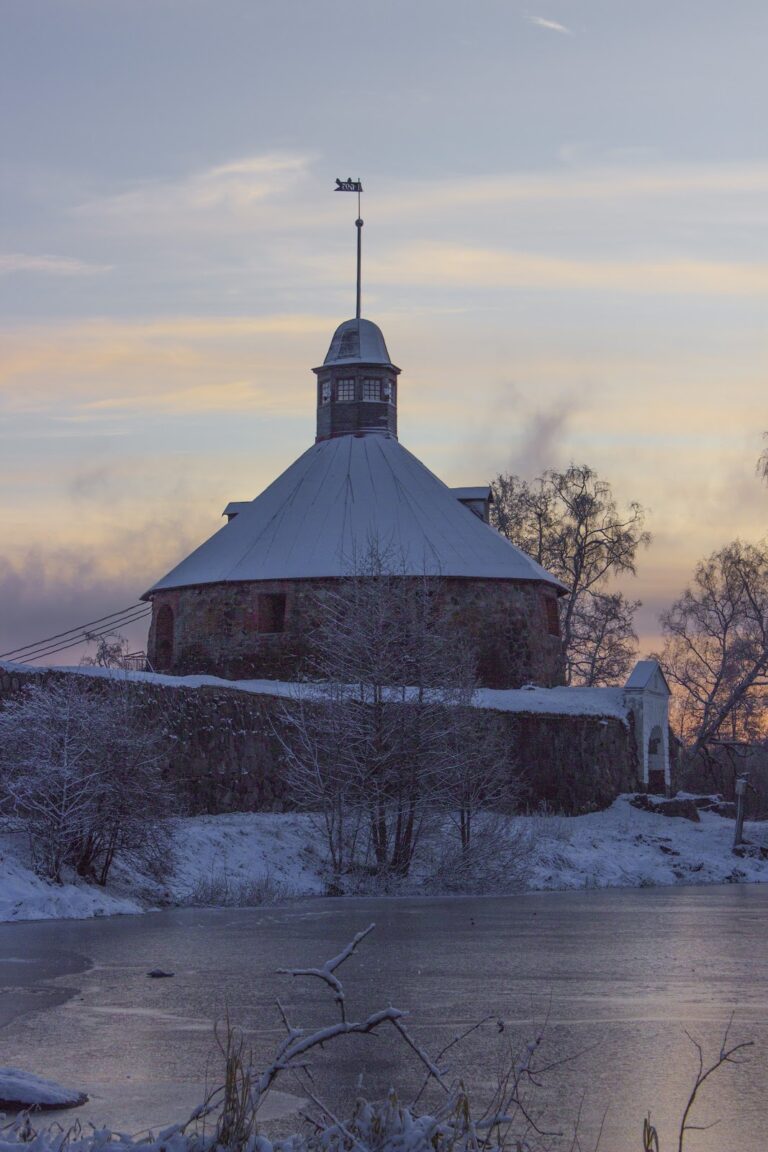
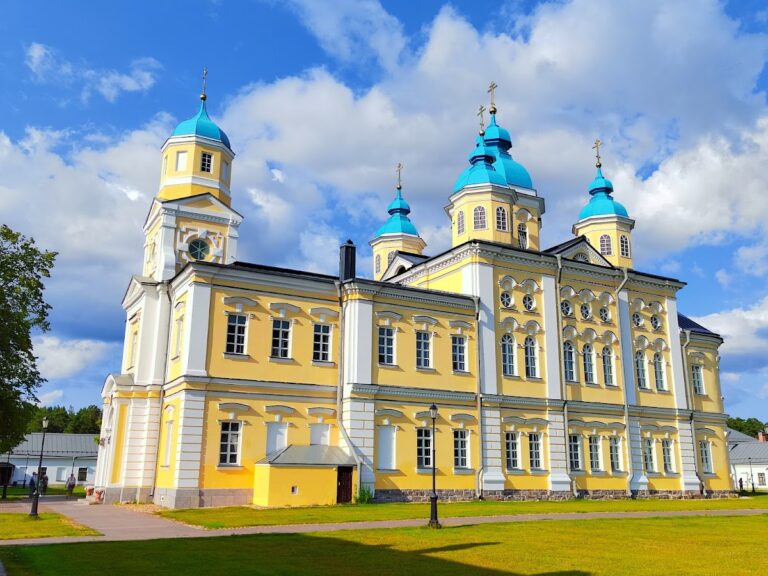
Valaam Monastery: A Russian Orthodox Monastic Complex on Lake Ladoga


Site at a Glance
- Rating
- 4.8
- Popularity
- Medium
- Country
- Russia
- Primary era
- Modern
- External website
- Open
- Eras represented
- Early Modern, Modern
- Civilizations
- Grand Duchy of Finland, Russian
- Site type
- Religious
- Remains
- Monastery
On this page25 sections
History
Valaam Monastery is a Russian Orthodox monastery on Valaam Island in Russia’s Lake Ladoga, whose origins are generally dated to the late fourteenth century, possibly between 1389 and 1393. Its foundation date remains uncertain: traditions place it in the tenth or eleventh century, another interpretation in the twelfth century, and the sixteenth-century Tale of the Valaam Monastery gives 1407. Today it is a stauropegic monastery, meaning that it is placed directly under the canonical authority of the Patriarch of Moscow rather than the ordinary jurisdiction of a local bishop.
Foundations and medieval tradition
Christian traditions connect Valaam with the Apostle Andrew, one of the Twelve Apostles, who is said to have erected a stone cross on the islands. Another tradition names Sergius and Herman of Valaam as the founders of the monastic brotherhood. They were supposedly from eastern lands, perhaps Greece, although the written lives that once described them have been lost. Chronicle references state that their relics were transferred from Valaam to Novgorod in 1163. The monastery’s more dependable documentary history begins in the fourteenth century.
By the beginning of the sixteenth century, about 600 monks lived across the archipelago. Repeated Swedish attacks then brought destruction and disorder. An attack in 1578 reportedly killed many monks and novices, while a later assault led to the monastery’s abandonment from 1611 until 1715. By the time the community returned, the buildings had been burned.
Imperial rebuilding
In 1715, during the Great Northern War, Peter I ordered the restoration of Valaam Monastery after the archimandrite of Kirillo-Belozersky Monastery requested it. The rebuilding was authorized on territory recently conquered from Sweden, before the peace treaty formally ended the territorial dispute. A wooden Church of the Transfiguration was consecrated in 1719, followed by monastic cells and other buildings by 1720.
After the war, the archipelago became part of the Vyborg Province of the Russian Empire, within Saint Petersburg Governorate. Sweden formally recognized the annexation in the 1721 Treaty of Nystad. By 1730 the monastery had an Assumption church and a wooden enclosure, but a fire in 1754 destroyed these early structures. Empress Elizabeth Petrovna supported the restoration, although only eleven monks remained in 1765. The Church of the Transfiguration was consecrated in 1774, and residential buildings and churches were subsequently arranged around it.
Nineteenth-century expansion
Abbot Nazarius, who took leadership in 1781, began a major programme of stone construction. The monastery expanded most extensively during the nineteenth century. Father Damascene became abbot in 1839 and governed for forty-two years. He required qualified architects to supervise construction, beginning with the Saint Petersburg academician Aleksey Gornostayev. His successor, Jonathan II, completed the new Transfiguration Cathedral, designed to hold more than 3,000 people.
Damascene also imposed a strict regime of spiritual supervision, compulsory attendance at services, and long periods of assigned monastic labour. The community sought to make Valaam a “New Jerusalem,” giving several island locations biblical names such as Kidron, Gethsemane, and Mount Olivet.
In 1811 the Valaam Archipelago became part of the Grand Duchy of Finland within the Russian Empire. Emperor Alexander I visited the monastery in 1819. Its ecclesiastical administration remained with the metropolitans of Saint Petersburg until 1892, when Valaam entered the newly established Vyborg and Finnish Diocese. By the beginning of the First World War, approximately 1,000 people lived on the island.
Finnish rule and wartime evacuation
After the October Revolution and Finnish independence, Valaam became part of Finland and served as the principal monastery of the Finnish Orthodox Church. In 1923 that church came under the jurisdiction of the Ecumenical Patriarchate of Constantinople. From 1925 services were conducted in Finnish, and the Julian liturgical calendar was replaced by the new style. These changes caused prolonged disputes within the community. Monks who rejected the reforms left for Yugoslavia, Greece, Germany, the United States, and other countries.
During the Winter War of 1939 and 1940, a conflict between Finland and the Soviet Union, Valaam lay in a combat zone. Soviet air raids began in November 1939. The monastery was evacuated in December and again in February 1940, with the monks taking the principal valuables, relics, sacred objects, and bells. The brotherhood numbered 173 at the time of evacuation, while earlier groups included 136 people housed in school buildings north of Jyväskylä. No monk is recorded as having died during the evacuation.
Soviet aircraft repeatedly bombed the buildings between January and February 1940. On 18 March, twelve strikes of the large Transfiguration bell announced the end of monastic life on the island. The evacuated Finnish community settled at Papinniemi near Heinävesi and founded New Valamo Monastery, which continues to preserve its tradition.
Occupation, postwar use, and revival
From 1940 to 1941 a school for boatswains and cabin boys occupied the monastery buildings. Historian Sergey Milyaev selected 1,191 books from the monastic library for transfer to the Soviet Union, although the removal was incomplete before the Great Patriotic War began. Finland occupied the archipelago on 20 September 1941. The monastery buildings largely survived, but property was damaged, including the 16-ton Saint Andrew bell, which lost its clapper and one-third of its metal. The buildings were restored and the monastery operated from 1942 to 1944, when a small number of monks returned. Finnish troops and monks left on 19 September 1944.
After the war, the former monastery was used for secular purposes. Its buildings served a subsidiary farm of the Pitkäranta pulp mill, forestry administration, and a meteorological station. In 1950 the former cells and sketes became a Home for War and Labour Invalids, including people forcibly brought from the mainland. The institution moved to the mainland in 1984.
The Valaam Historical, Architectural, and Natural Museum-Reserve was established in 1979, and restoration began soon afterward. In 1989 buildings belonging to the former monastery were transferred for use by the Russian Orthodox Church. Six monks arrived on 13 December 1989, reviving monastic life, and services resumed in the Church of Sergius and Herman of Valaam with the Valaam form of monastic chant.
In 1993 Patriarch Alexy II appointed Archimandrite Pancratius Zherdev as superior. Pancratius became Bishop of Troitsk in 2005 and remains the community’s superior. The monastery’s associated chapel on the Sinop Embankment in Saint Petersburg was returned and reconsecrated in 1994. The revival also produced disputes with lay residents, as the monastery sought control of island buildings and the relocation of residents through court proceedings. In the mid-2000s Valaam ceased to be a separate territorial unit and became a municipal district of Sortavala.
The brotherhood issued a strongly anti-ecumenical declaration in 1998, opposing cooperation with the World Council of Churches and joint services with non-Orthodox communities, including the modern-style Finnish Orthodox Church. Signed by 150 monks, the statement contrasted with the broader ecumenical policy of the Russian Orthodox Church. The community’s institutional renewal continued with the restoration of the Smolensk Skete church, consecrated in 2007, and the Holy Vladimir Skete complex, consecrated in 2008. A museum dedicated to Patriarch Alexy II opened there in 2009. The repaired Saint Andrew bell was installed in the monastery bell tower and sounded again on 13 December 2005.
On 1 May 2016 the historic Winter Hotel burned. It had served nineteenth-century pilgrims, housed the island’s last school, and provided social-rent housing for the last local residents. A new hotel and spiritual-educational centre were later built with federal funds. In 2011 the monastery and its sketes and farmsteads had 217 residents, including hieromonks, hierodeacons, monks, cassock-bearing novices, and novices, as well as approximately 30 to 40 workers. The monastery also provides spiritual care for personnel of a Ministry of Defence air-defence radar unit on southern Valaam Island.
The monastery is governed by a strict rule modelled on the monasteries of Mount Athos. Its wider institutional network includes sketes and urban farmsteads in Russia. The original Valaam Icon of the Mother of God, painted by the hieromonk Alypius, secularly Alexei Konstantinov, was evacuated to Finland in 1940 with the monastery’s other valuables. Its return remains the subject of prolonged negotiations between the Russian and Finnish Orthodox Churches.
Remains
The central estate on Valaam Island is arranged around the Transfiguration Cathedral and two quadrangles, or enclosed courtyards, known as the inner and outer kare. The complex includes residential, service, medical, ecclesiastical, and entrance buildings. Around this centre, the archipelago contains numerous sketes, smaller monastic settlements associated with the main monastery and used for more secluded or specialized religious life.
Central monastery
Transfiguration Cathedral
The Transfiguration Cathedral forms the centre of the main estate. It contains an upper Church of the Transfiguration and a lower Church of Sergius and Herman of Valaam. The relics of the monastery’s traditional founding saints are kept beneath a covering in the lower church. That church operates throughout the year, while services in the upper church take place during the warmer season.
Inner and outer quadrangles
The outer quadrangle has the Church of Saints Peter and Paul above the Holy Gates on its southern side. On the northern side stands the Church of the Life-Giving Spring, originally a hospital church and consecrated on 30 June 1814. The Holy Trinity Church stands above it. First consecrated in 1837, it was restored and reconsecrated in 2004. The inner quadrangle contains the Assumption Church north of the cathedral and the Church of the Valaam Icon of the Mother of God to the south, formerly known as the Church of Saint Nicholas.
Bell tower and associated churches
The monastery bell tower rises 72 metres above the island. Its principal large bell is the Saint Andrew bell, weighing 1,000 poods, approximately 16 tons. Damage during the Second World War removed its clapper and one-third of its metal. Other worship spaces in the central complex include the house church of Saints Cyril and Methodius on the second floor of the Slavyanskaya Hotel, the Church of All Saints in the Igumen Cemetery, and a military church dedicated to Saint George the Victorious.
Historic sketes
All Saints Skete
All Saints Skete, also called the White or Great Skete, occupies Skitsky Island. Abbot Nazarius founded it in the late eighteenth century, and a stone church with six residential buildings was added between 1789 and 1796. Aleksey Gornostayev redesigned the complex in 1840 to 1844. Its lower heated church was consecrated to All Saints in 1849, while the upper church was dedicated to the Bodiless Heavenly Powers in 1850.
Near the skete, the abbot’s building contains a house church dedicated to the Seraphim-Diveyevo Icon of the Mother of God, consecrated in 2014, as well as a house church dedicated to the New Martyrs and Confessors of Russia. A grave beside the skete commemorates the elder schema-monk Antipas, who requested burial outside the skete so that women could visit his grave. Women’s access to the skete remains restricted, although special permission allows some pilgrims to attend services in the separate house church.
Saint Nicholas Skete
Saint Nicholas Skete stands on Krestovy, or Nikolsky, Island, at the entrance to Monastery Bay. Its Church of Saint Nicholas was built in 1853, followed by the house church of Saint John of Damascus in 1856 and a two-storey stone residential building in 1858. Aleksey Gornostayev and G. I. Karpov were the architects. A lighthouse and monastic customs station operated there in the nineteenth century. Before the church was built, a stone chapel served as a lighthouse by displaying a lamp at night.
John the Baptist Skete
John the Baptist Skete on Predtechensky, or Monastic, Island began with a wooden chapel in 1855. In 1858 Aleksey Gornostayev designed a two-storey wooden church on the site. The upper church is dedicated to John the Baptist, and the lower cave church to the Three Holy Hierarchs, Basil the Great, Gregory the Theologian, and John Chrysostom. The lower church is cut into rock and is no longer active. The skete also contains a house church dedicated to Sergius of Radonezh, two ancient crosses recorded there in 1909, and the grave of the schema-monk Jonah.
Konevsky and Abraham sketes
Konevsky Skete lies in woodland on the shore of the Igumen Lakes. Consecrated in 1870, it was dismantled in the 1950s, restored in 2004, and reconsecrated to the Konevsky Icon of the Mother of God. A cell occupied by Abbot Damascene for seven years stood near the church.
Abraham Skete on Emelyanovsky, or Abraham, Island had a wooden church dedicated to Abraham of Rostov and a square bell tower, built in 1873. The skete was destroyed during the Soviet period, and restoration began in 2014. A new Church of the All-Merciful Saviour was consecrated in 2022, and an icon of Savva of Storozhi with scenes from his life was given to the church.
Biblical-named sketes
Resurrection Skete
Resurrection Skete, also called New Jerusalem or the Red Skete, stands on Mount Zion in southwestern Valaam. A two-storey church building was erected in 1906 on the site of an 1846 chapel dedicated to the Apostle Andrew. Its upper church is dedicated to the Resurrection of Christ. The lower Church of Saint Andrew contains a marble domed chapel representing the Holy Sepulchre. The buildings are made of red brick, and a fruit garden was laid out beside the skete.
Gethsemane Skete
Gethsemane Skete stands below Mount Olivet and was consecrated in 1911. It includes the Church of the Dormition of the Mother of God, the Chapel of the Ascension on Mount Olivet, a brethren’s house, and the Chapel of the Agony in the Garden. The church follows the Russian architectural style and is built of timber covered with boards.
Later and restored foundations
Smolensk, Holy Vladimir, and Alexander Nevsky sketes
Smolensk Skete was established at the southern end of Skitsky Island in 1917 according to a design by Grand Duke Peter Nikolaevich. Its church, dedicated to the Smolensk Icon of the Mother of God, commemorates Russian soldiers who died for their country. The church was restored in 2005, and the skete church was consecrated again in 2007.
Holy Vladimir Skete, founded in 2002, contains the Church of Saint Vladimir, consecrated in 2008, a patriarchal residence with a house church dedicated to Saint Ludmila, residential buildings, an icon-painting workshop, a small Church of All Saints, and a baptistery. Designed by Andrey Anisimov, the complex also houses the Alexy II Valaam Museum. Alexander Nevsky Skete was founded nearby in 2014 and contains a church dedicated to Alexander Nevsky and a residential building.
Alexander of Svir Skete
Alexander of Svir Skete, also called Holy Island Skete, stands on Holy Island. Alexander of Svir is traditionally said to have lived in a cave there for about seven years from 1474. A wooden church designed by Aleksey Gornostayev and funded by the merchant Nikitin was built in 1855 and dedicated to Alexander of Svir. The skete was restored in 2001 after a fire in 1999.
Elijah and newer island sketes
Elijah Skete on Lembos Island had a wooden Church of the Prophet Elijah with a bell tower and cells, designed by G. I. Karpov and built in 1868. The buildings were destroyed in the 1970s and reconstructed in 2006. Andrew the First-Called Skete on Sukhoi, or Defence, Island was founded in 2014, and its church was consecrated in 2023.
Herman of Alaska Skete, also called the Patriarchal Hermitage, was founded on Bayonny Island in 2010, and its church was consecrated in 2013. Kazan Skete on the eastern shore of Valaam Island was founded in 2015, with its church consecrated in 2021. Seraphim Skete on Porfiryev Island was built between 2015 and 2018. It contains a wooden church dedicated to Seraphim of Sarov and a chapel dedicated to Prince Alexander Nevsky, both consecrated in 2019.
Surviving older sketes
Herman Skete on Syuskyuyansaari, or Saint Herman’s Island, contains a Church of Alexander Nevsky built in 1904. The skete is partly ruined, restoration began in 2018, and its church is not active. Sergius Skete on Putsaari Island contains a church dedicated to Sergius and Herman of Valaam, built in 1899.
Tikhvin Skete on Vossinansaari Island was founded under Abbot Gabriel and had a church dedicated to the Tikhvin Icon of the Mother of God, built in 1897. Its buildings were dismantled in the 1960s, and the skete no longer exists.
Music and associated foundations
Valaam’s liturgical singing tradition is known as Valaam chant. It combines features of Byzantine chant with the older Russian Znamenny tradition. Its two-part singing uses a melody and an ison, a sustained accompanying tone, while its scale structure is diatonic and its ornamentation comparatively simple.
The monastery’s wider network includes the Kazan Icon farmstead in Saint Petersburg; a Moscow farmstead with churches dedicated to Sergius and Herman of Valaam and Alexander Nevsky; the Priozersk farmstead with churches dedicated to All Saints and the Nativity of Christ; the Nikolsky farmstead near Sortavala; the Sergius farmstead in Ozerki; the Holy Trinity farmstead and skete in the Sochi area; and the Valaam Icon farmstead in Bortnikovo. The monastery also includes churches and chapels dedicated to the Dormition, the Resurrection, Saint Andrew, Saint Nicholas, Saint John of Damascus, John the Baptist, the Three Holy Hierarchs, Alexander of Svir, Herman of Alaska, Elijah, Alexander Nevsky, Sergius, Seraphim, Abraham, Kazan, the Smolensk Icon, and Saint Vladimir.