Utti Fortress: A Russian Frontier Fortification in Finland
Site at a Glance
- Rating
- 3.8
- Popularity
- Medium
- Country
- Finland
- Primary era
- Early Modern
- Eras represented
- Early Modern
- Civilizations
- Russian
- Site type
- Military
- Remains
- Fort
On this page4 sections
History
Utti Fortress is an 18th-century Russian frontier fortification at Utti in Kouvola, Finland. Russian authorities built it between 1791 and 1792 as part of a defense system intended to protect the empire’s capital.
Frontier conflict and construction
Utti passed from Sweden to Russia under the Treaty of Åbo, the 1743 peace settlement between the two states. During the Russo-Swedish War of 1788–1790, a conflict between Sweden and Russia, Swedish troops crossed the border toward Lappeenranta in June 1789. The Battle of Utti was fought in the area that year.
After the war, Russian authorities planned a fort to guard the frontier and its access roads, and to deter attacks on Hamina and approaches farther toward Saint Petersburg. Construction began in 1791 and was completed in 1792, with about 1,100 soldiers and people from the surrounding countryside taking part. The fortress belonged to the South-Eastern Finland fortification system. A proposed expansion that would have enclosed the older fort was never built.
Loss of strategic importance and restoration
The Finnish War of 1808–1809, which transferred Finland from Swedish to Russian rule, changed the frontier. After the border moved to the Gulf of Bothnia, the fortification system lost its strategic importance. Utti Fortress was closed in 1809, when the Treaty of Fredrikshamn concluded the war and Finland became part of Russia.
The Finnish Heritage Agency restored the fortress during the 1980s and 1990s. It is registered as an archaeological site and classified by the agency as a nationally significant built cultural environment.
Remains
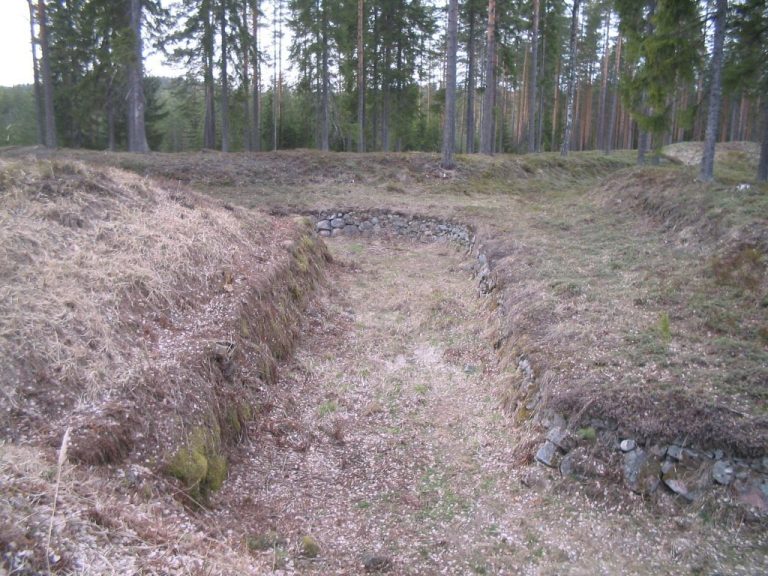
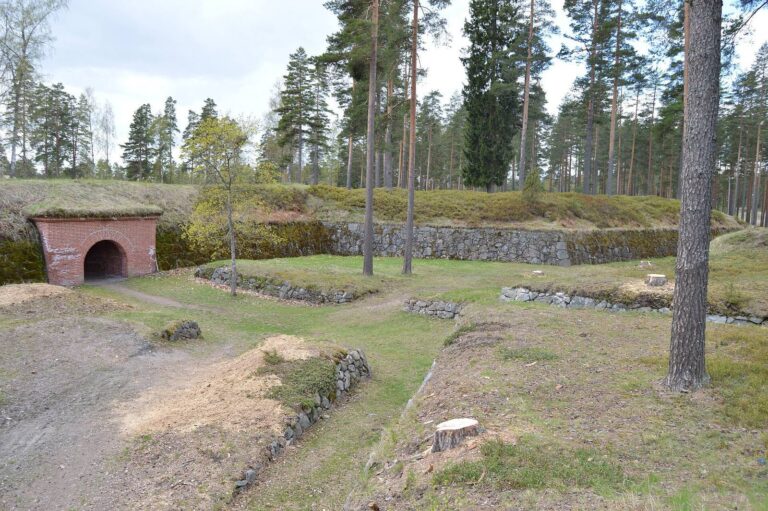
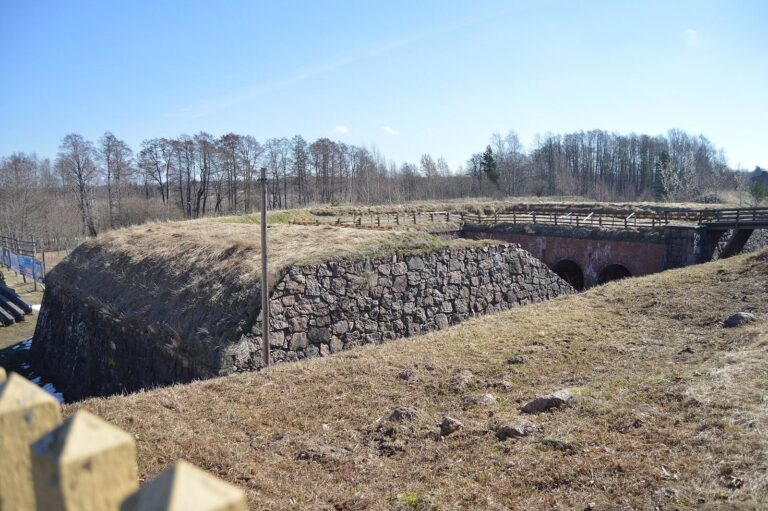
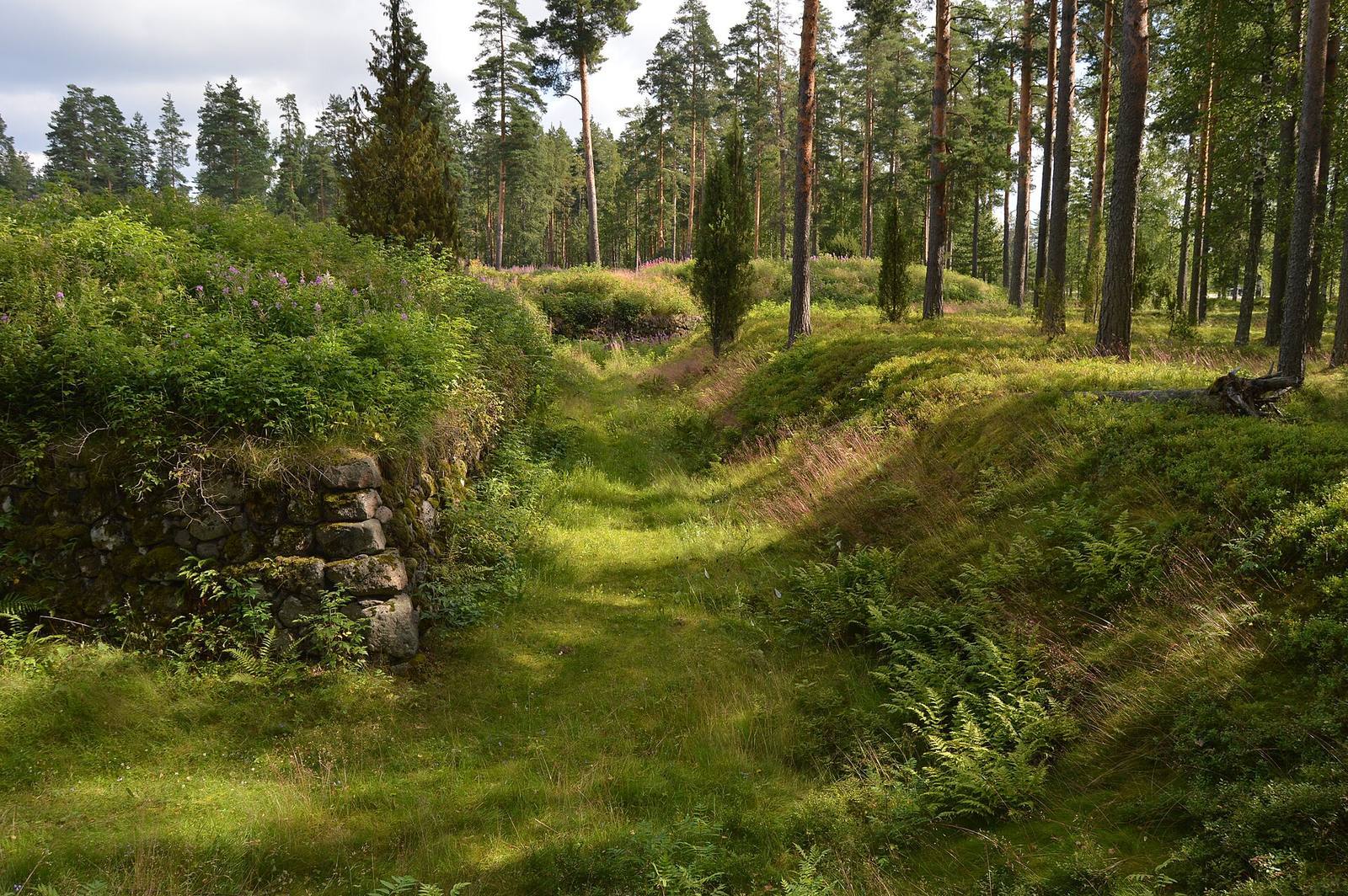
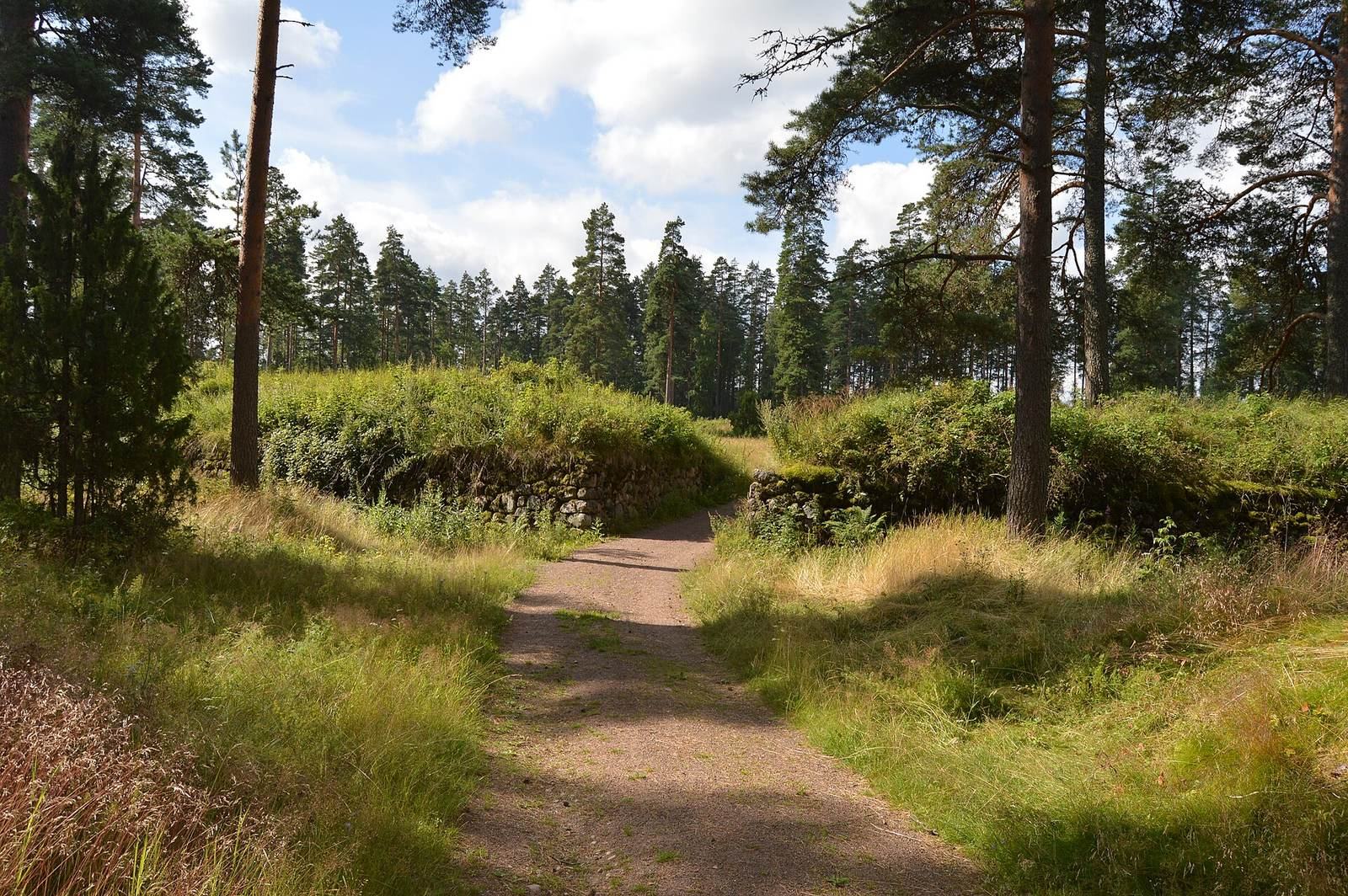
The fortress occupies a narrow passage between Lake Haukkajärvi and Haukkasuo bog, a position considered difficult to bypass. Its defenses include six bastions, projecting parts of a fortification designed to direct defensive fire along its walls, and a ravelin, a detached defensive work placed in front of a fortification.
About a dozen buildings stood within the fortress, including barracks, officers’ quarters, stables, a guardhouse, and a gunpowder magazine. The site could accommodate up to 400 soldiers. Its initial armament consisted of 14 cannons and two howitzers, artillery pieces designed to fire shells along a curved path; the number of cannons later reached 24.