Umbilicus urbis Romae: Rome’s Symbolic Center in the Forum
Site at a Glance
- Popularity
- High
- Country
- Italy
- Primary era
- Classical
- Eras represented
- Classical
- Civilizations
- Roman
- Site type
- Civic
- Remains
- Monument
On this page7 sections
History
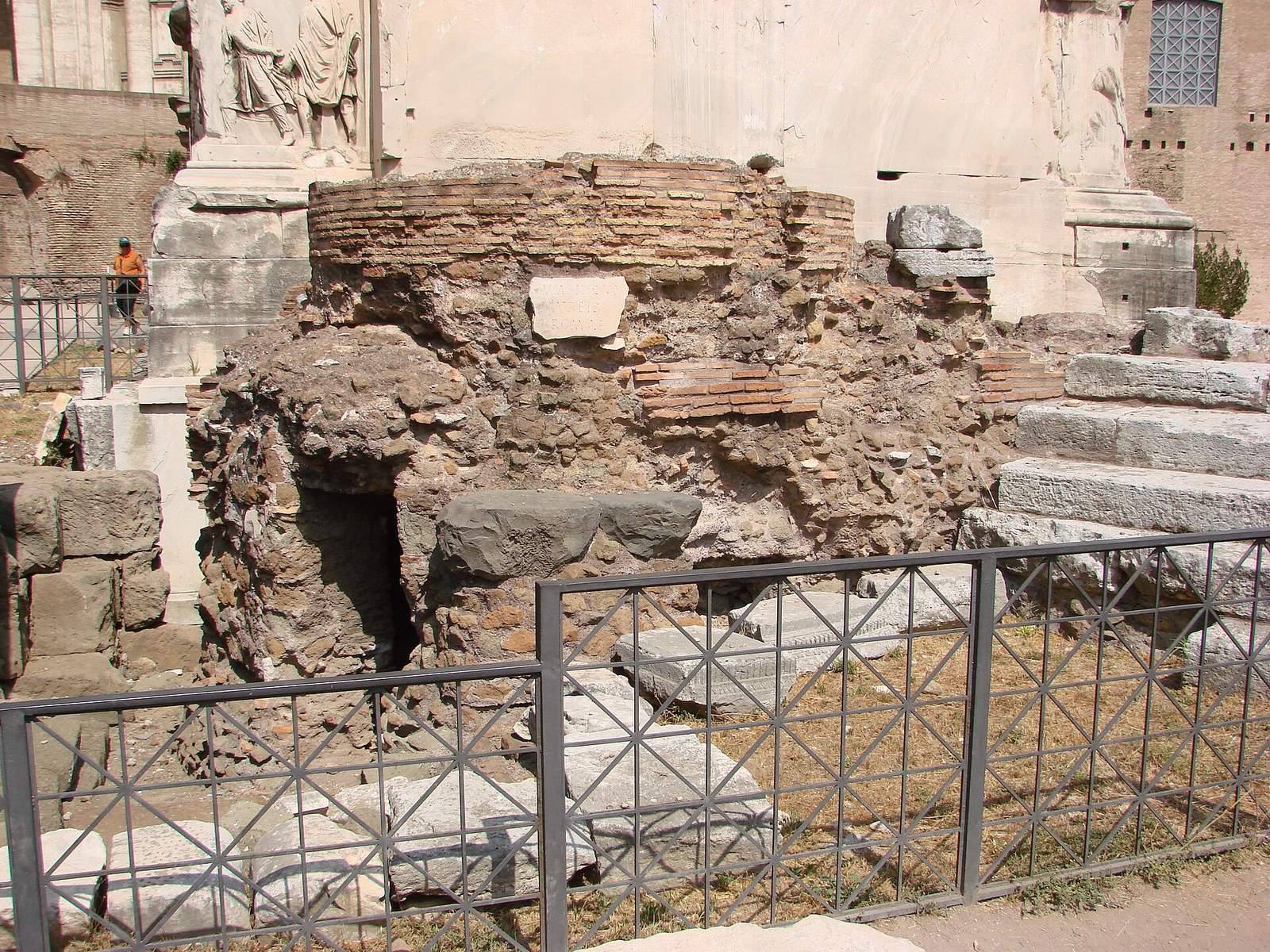
The Umbilicus urbis Romae was a Roman monument in the Roman Forum in Rome, Italy, associated with the city’s symbolic center. It also served as a point of reference for measuring distances, including along Roman military roads. Its original masonry probably dates to the second century BC, while the surviving structure belongs to a later reconstruction.
Foundation traditions and civic role
Roman tradition linked a circular pit in the Forum with the founding of the city by Romulus, Rome’s legendary founder. In this account, people offered the year’s first fruits at the pit, while new citizens added a handful of earth from their former homes. Another tradition credited Romulus with building the monument with help from the Etruscans, an ancient people of central Italy. Ancient writers also connected the site with ceremonies, and sacrifices to underworld deities were offered there.
Disputed identity and underworld rites
The monument’s identity is uncertain. One proposal equates it with the nearby Milliarium Aureum, a milestone associated with measuring distances from Rome, on the reasoning that the city and its empire would not have had separate symbolic centers. Another interpretation treats the Umbilicus as a structure distinct from the milestone. Archaeologist Filippo Coarelli instead identified it with the Mundus, a Roman ritual feature associated with the underworld. He connected it with an altar dedicated to Dis Pater and Proserpina, Roman deities of the underworld. A further view regards the Mundus and the Umbilicus as related parts of one monument.
If the site was the Mundus, it was associated with a ritual opening to the underworld. Tradition held that it opened three times a year on dies nefasti, days when religious rules prohibited certain official activities. People believed that spirits from the underworld could then emerge.
Severan rebuilding and later restoration
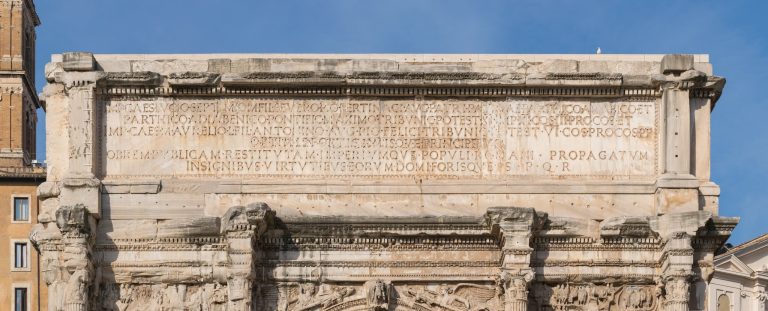
The surviving structure dates to the reign of Septimius Severus, a Roman emperor whose rule began in AD 193. When his triumphal arch was built in AD 203, it encroached on the earlier monument. The monument was rebuilt to accommodate the arch, with fragments of the earlier structure reused in the work.
A further restoration took place after AD 303. Late-antique writers called the reconstructed monument the Umbilicus, a name that may reflect its resemblance to a Greek omphalos, or navel stone symbolizing a central point.
Remains
Position and surviving structure
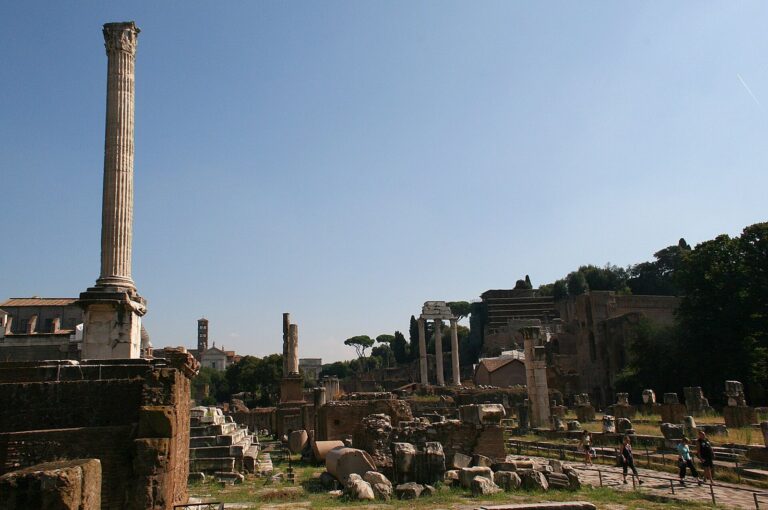
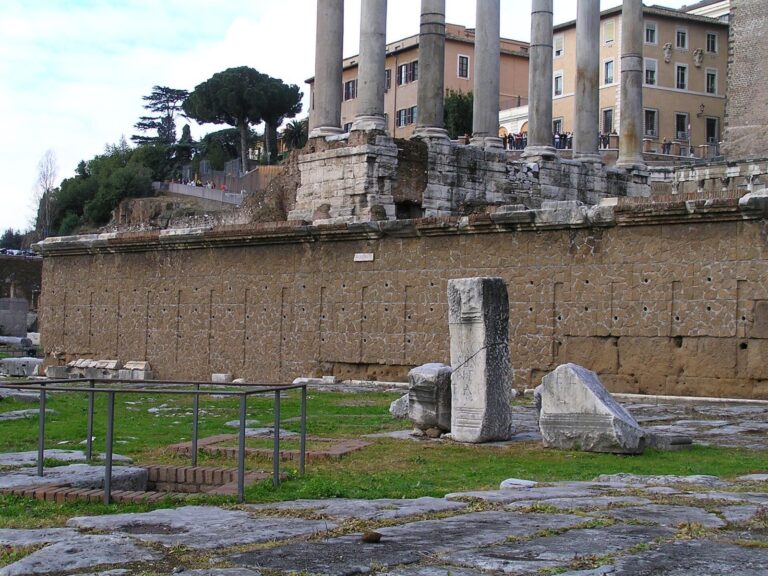
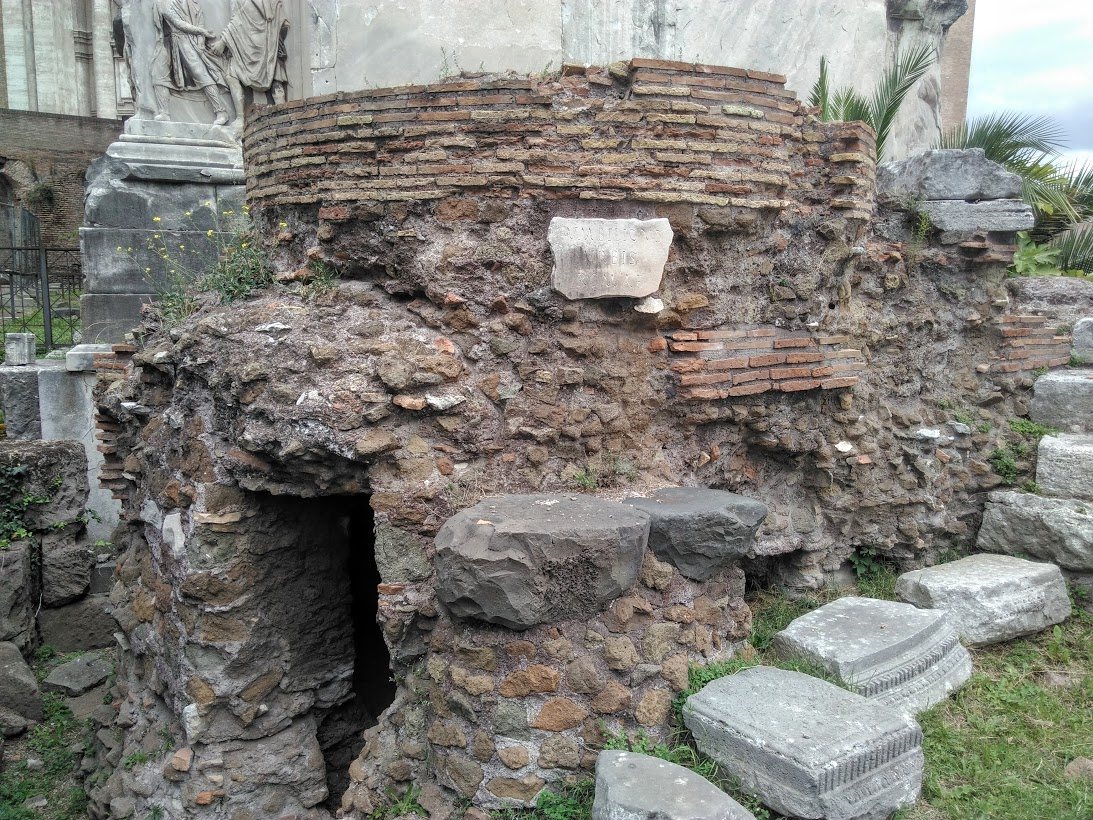
The remains stand in the Roman Forum beside the Arch of Septimius Severus and the Vulcanal, a sanctuary of Vulcan, the Roman god of fire. They are behind the Rostra, the Forum’s public speaking platform. The monument’s surviving core is circular brickwork, about 2 metres high. Its base measures 4.45 metres across, and the structure narrows through three levels to a top about 3 metres in diameter. It was originally faced with marble.
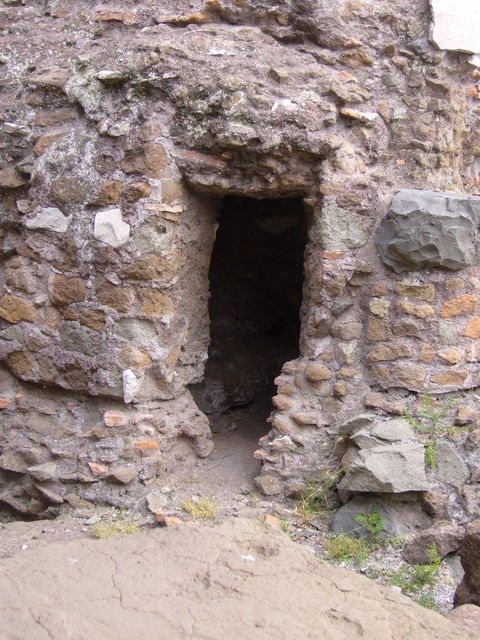
A narrow entrance leads into the interior and was probably used only rarely. The reconstruction reused elements that included a travertine base, made from limestone building stone, and a circular cornice. The monument was probably topped with a stone shaped to resemble an omphalos. A fragment of a frieze decorated with palmettes, stylized palm-leaf motifs, may also have belonged to it, although this attribution conflicts with an interpretation of a modern inscription.
Proposed underground feature
Under the proposed identification with the Mundus, a circular pit or trench lay below ground, with the Umbilicus possibly serving as its marker above ground. The opening was said to have been sealed by a lapis manalis, a ritual stone associated with Roman underworld worship.