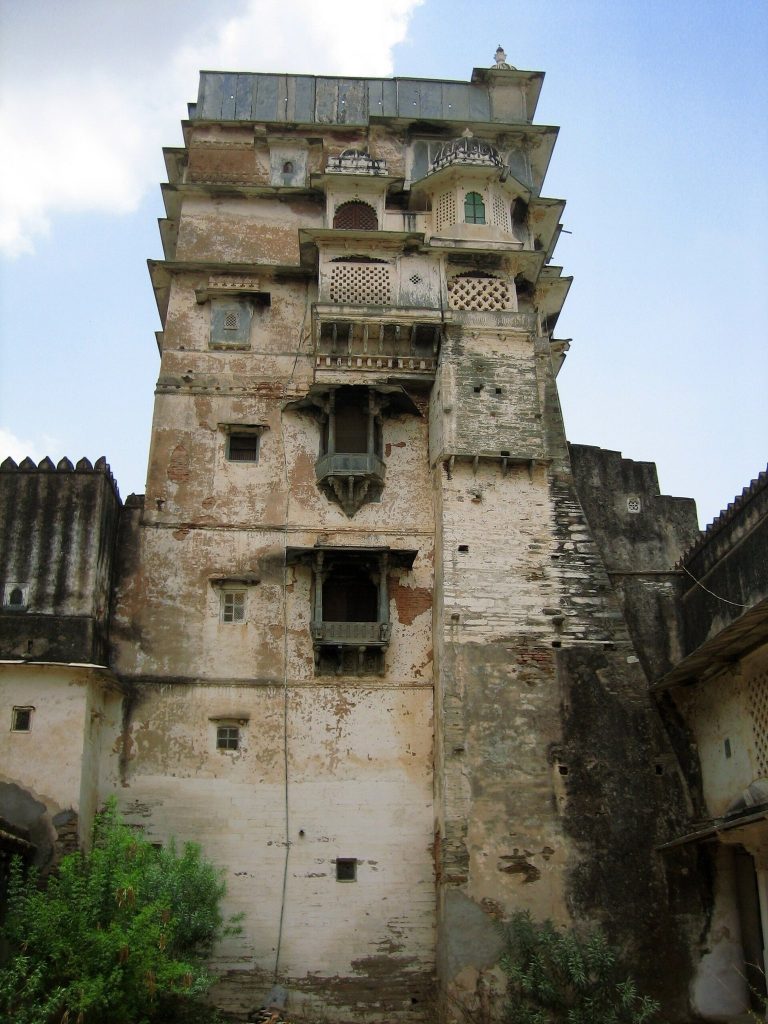
Udai Bilas Palace: A Royal Residence in Dungarpur, India
Site at a Glance
- Popularity
- Medium
- Country
- India
- Primary era
- Modern
- Eras represented
- Early Modern, Modern
- Civilizations
- British
- Site type
- Domestic
- Remains
- Palace
On this page9 sections
History
Udai Bilas Palace is a Rajput royal residence in Dungarpur, Rajasthan, India, built by Maharawal Udai Singh II in the mid-19th century. Maharawal was the title used by Dungarpur’s rulers. The palace cost more than 100,000 rupees and began as a weekend retreat for the royal family.
Eighteenth-century structures
Before the palace was built, Maharawal Shiv Singh commissioned Ek Thambiya Mahal between 1730 and 1785 in memory of Gyan Kanwar. Also known as Krishna Prakash, it was built as Shivjaneshwar Shivalay, a shrine to Shiva, a major Hindu deity. Shiv Singh also built the Shiva Rajeshwar temple beside Gaib Sagar Lake. The temple hosted an annual fair that lasted a month.
Palace construction and royal use
The royal family’s earlier home was Juna Mahal, a 13th-century palace. Udai Bilas Palace later became the family’s main residence, and they moved there in the mid-20th century. Descendants added three wings between 1940 and 1944. During the princely era, a guard force ranging from 59 to 101 served at Udai Bilas and the older palaces, and escorted the Maharawal and Maharani.
Modern use
Udai Bilas Palace is the principal residence of Dungarpur’s former royal family and operates as a heritage hotel, with part of the palace used as a museum. The Maharani Manhar Kumari Museum, named for the wife of Dungarpur ruler Laxman Singh, opened to the public on 31 May 2015, when Mahipal Singh opened it.
Remains
The palace stands beside Gaib Sagar Lake and is divided into three sections: Raniwas, Udai Bilas, and Ek Thambiya Mahal. Its Rajput design draws on architectural traditions associated with Rajput-ruled regions, particularly Rajasthan. One wing, built from bluish-grey local stone known as pareva, overlooks the lake.
Palace architecture and interiors
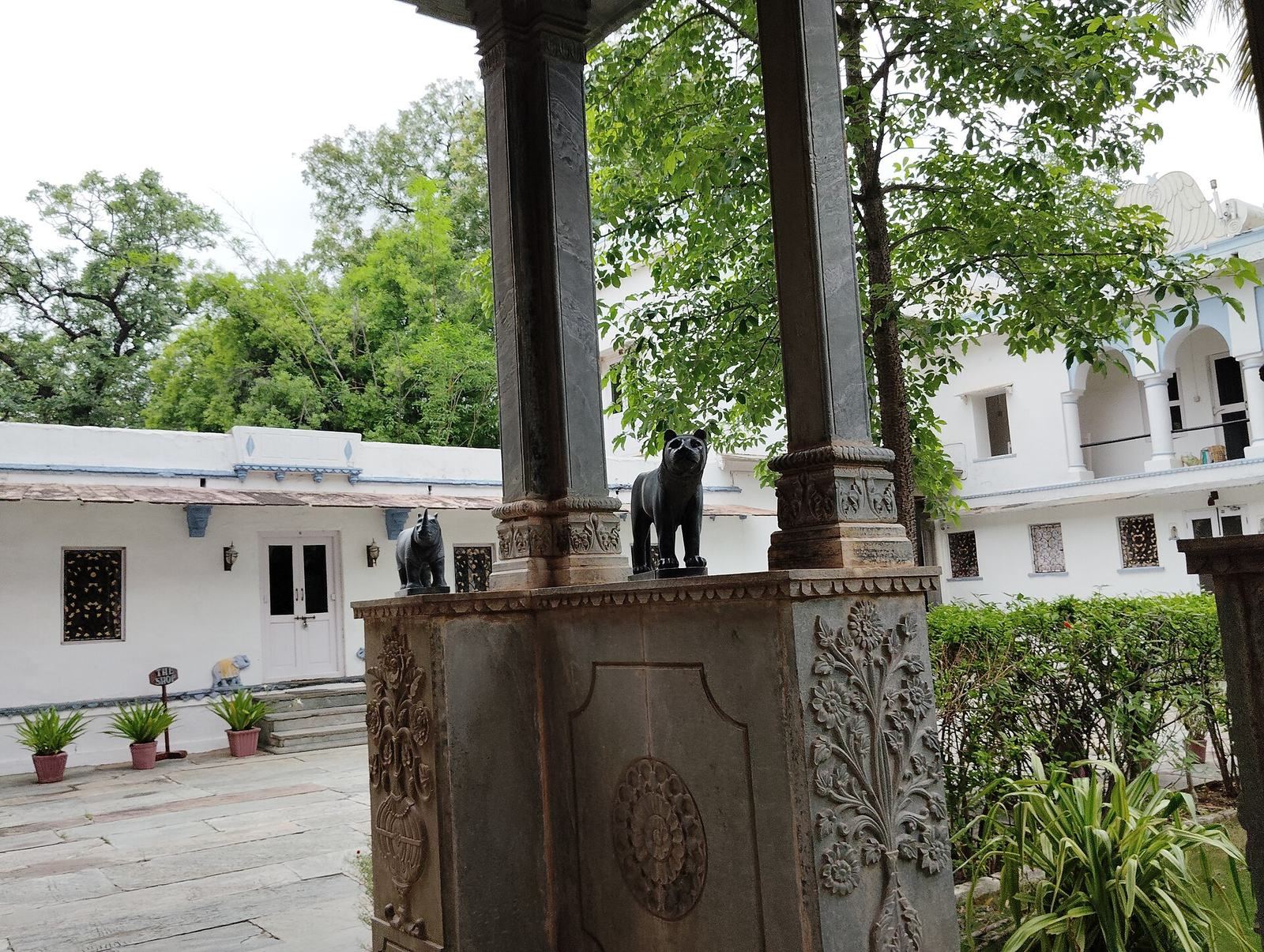
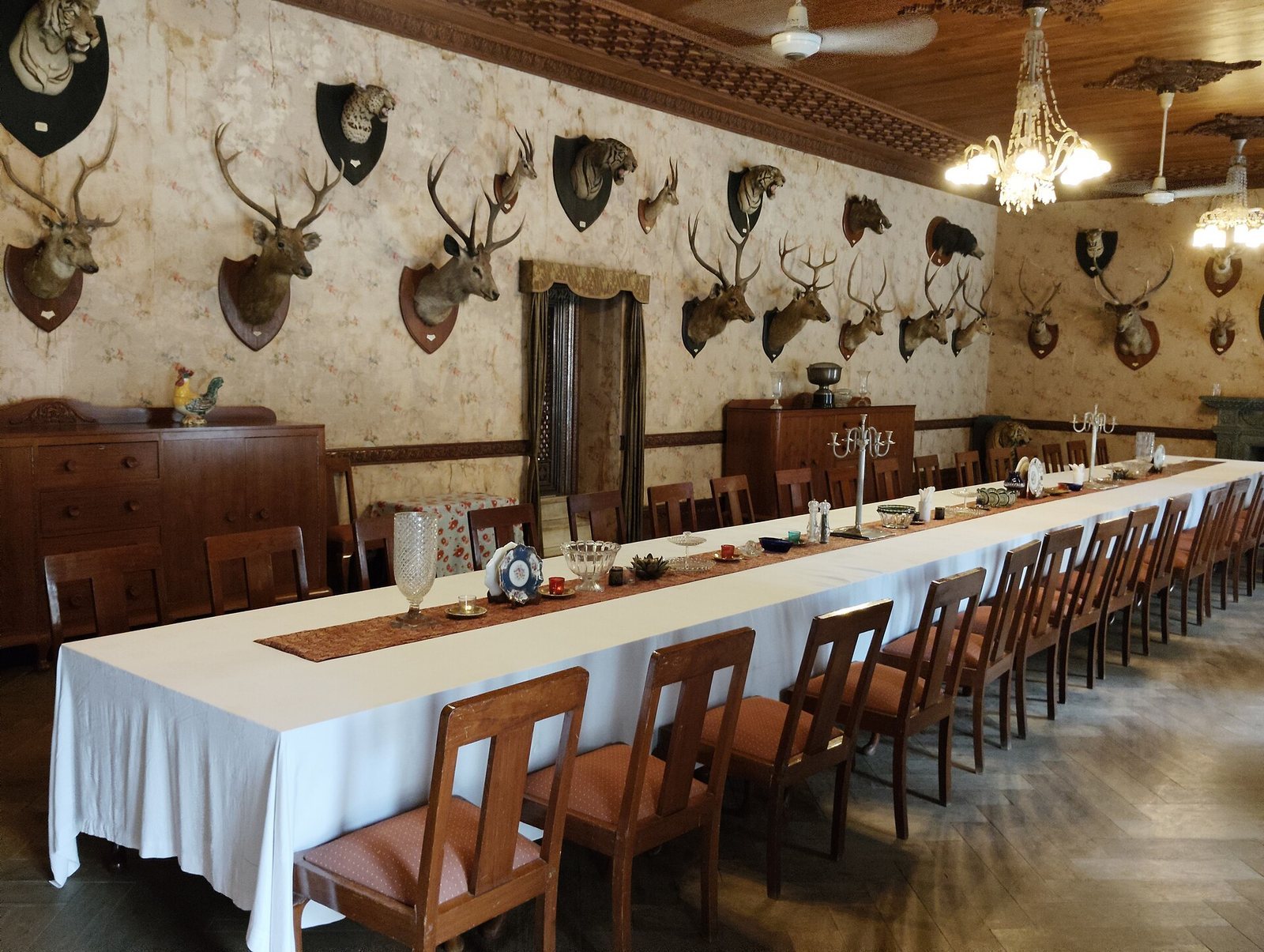
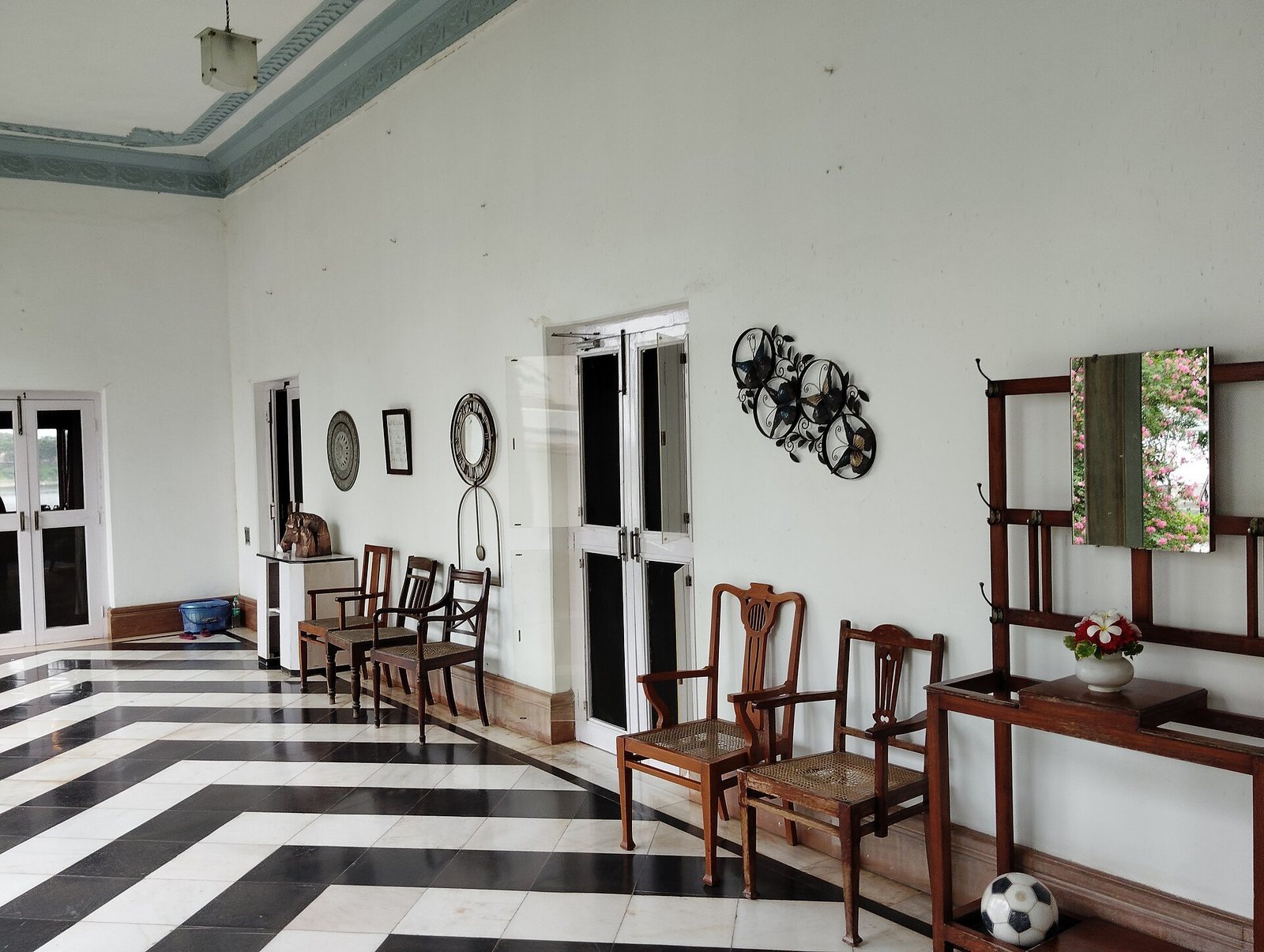
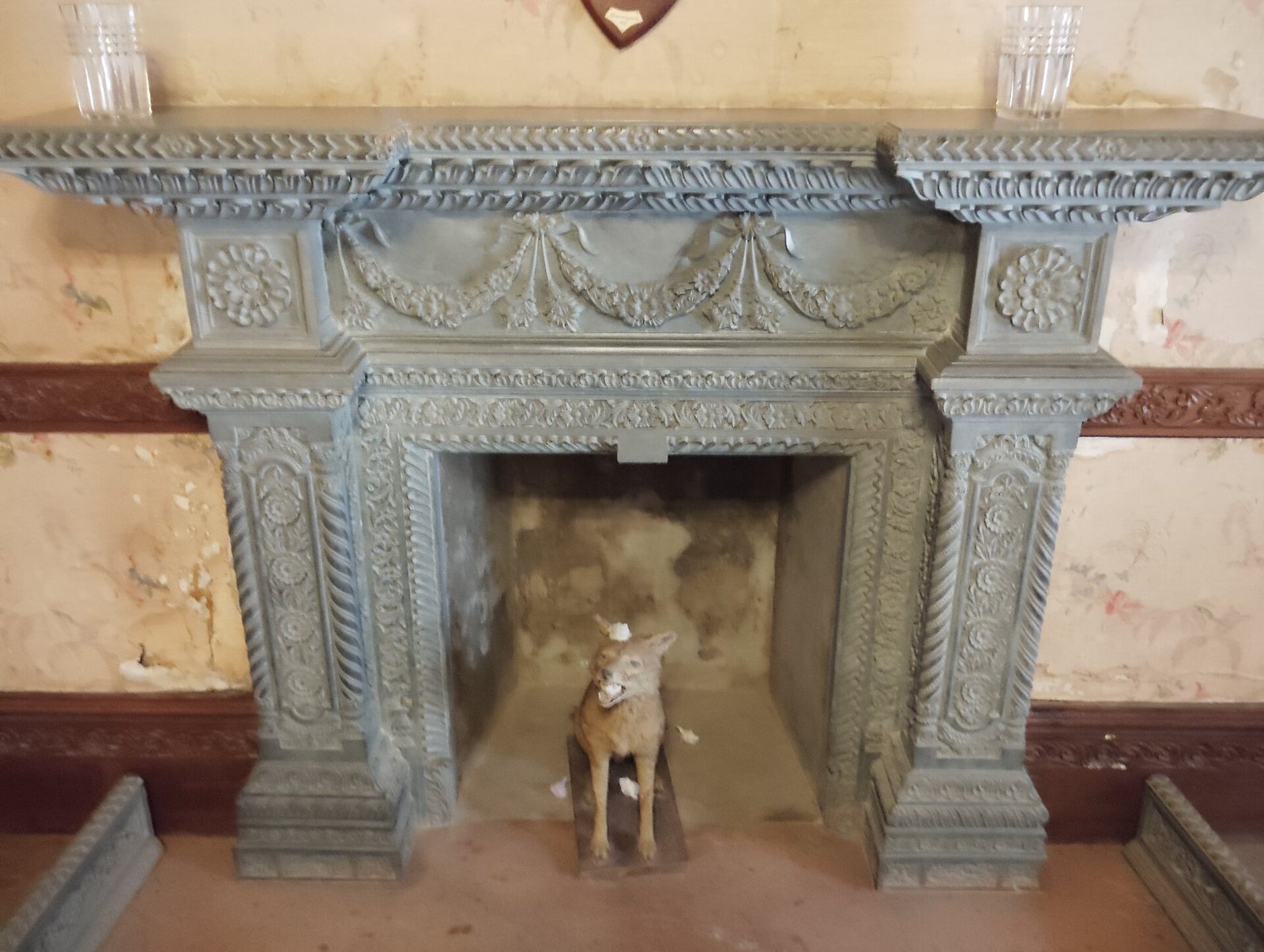
Detailed designs decorate the palace’s balconies, arches, and windows. Inside, Indian and European styles appear together in rooms with British floral wallpaper, decorative mirrorwork, stained glass, and Art Deco furniture. Art Deco is a decorative style that became prominent in the early 20th century.
Ek Thambiya Mahal
The name Ek Thambiya Mahal means “single-pillared palace.” Its features include sculpted pillars and panels, ornate balconies, ornamental railings, and windows supported by brackets. A horizontal band of marble carvings adds further detail.
Shiva Rajeshwar temple
The Shiva Rajeshwar temple lies within the palace precincts at the southeastern edge of Gaib Sagar Lake.
Museums and palace collections
The palace houses Dungarpur Mews, a museum displaying classic and vintage cars, as well as the Maharani Manhar Kumari Museum. The African Room contains hunting trophies, and the palace also has a car bar.