Tveit Church: A Medieval Romanesque Church in Kristiansand
Site at a Glance
- Popularity
- Low
- Country
- Norway
- Primary era
- Medieval
- Eras represented
- Medieval, Modern
- Civilizations
- Norwegian
- Site type
- Religious
- Remains
- Church
On this page12 sections
History
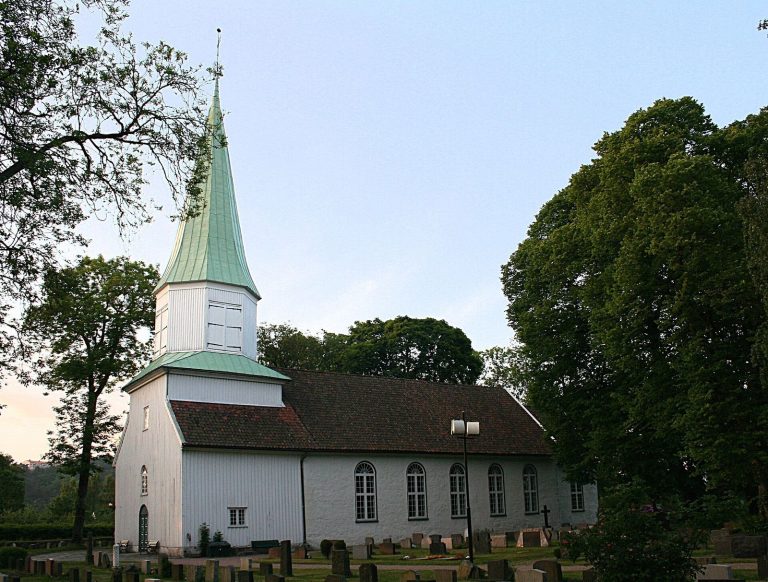
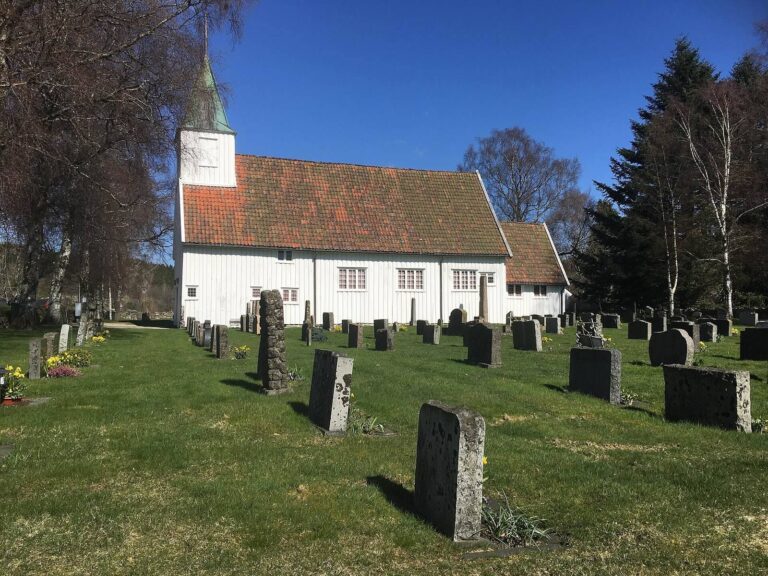
Tveit Church is a white-stone Romanesque church, a medieval style marked by massive masonry and rounded forms, in Kristiansand, Norway. It was built in stone sometime between 1050 and 1150, although its exact construction date is unknown. A wooden stave church, built with a frame of upright posts, may have stood on the site earlier.
The earliest surviving historical record of the church dates to 1379. Its earlier denomination was Catholic; it now belongs to the Church of Norway, the Lutheran national church. Tveit Church serves the Tveit parish in the Kristiansand cathedral deanery, an ecclesiastical administrative district within the Diocese of Agder og Telemark.
Early changes and civic role
Major alterations to the church took place in 1660 and 1770. Further work in the 19th century included a sacristy and extensions to the building.
In 1814, Tveit Church was used as a polling place in Norway’s first national elections. The elections chose representatives for the Constituent Assembly, which drafted the Norwegian Constitution. Parish voters first elected “electors,” who then chose the assembly’s representatives at county level.
Later use and protection
An organ was installed in 1911, and electric lighting followed in 1918. The chancel and pulpit were restored in 1949. The historic church is protected under Norwegian cultural-heritage law.
Remains
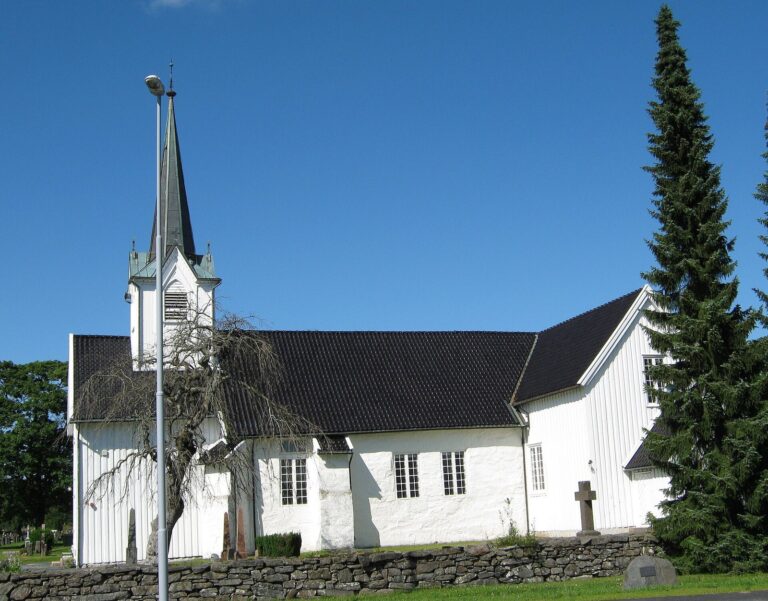
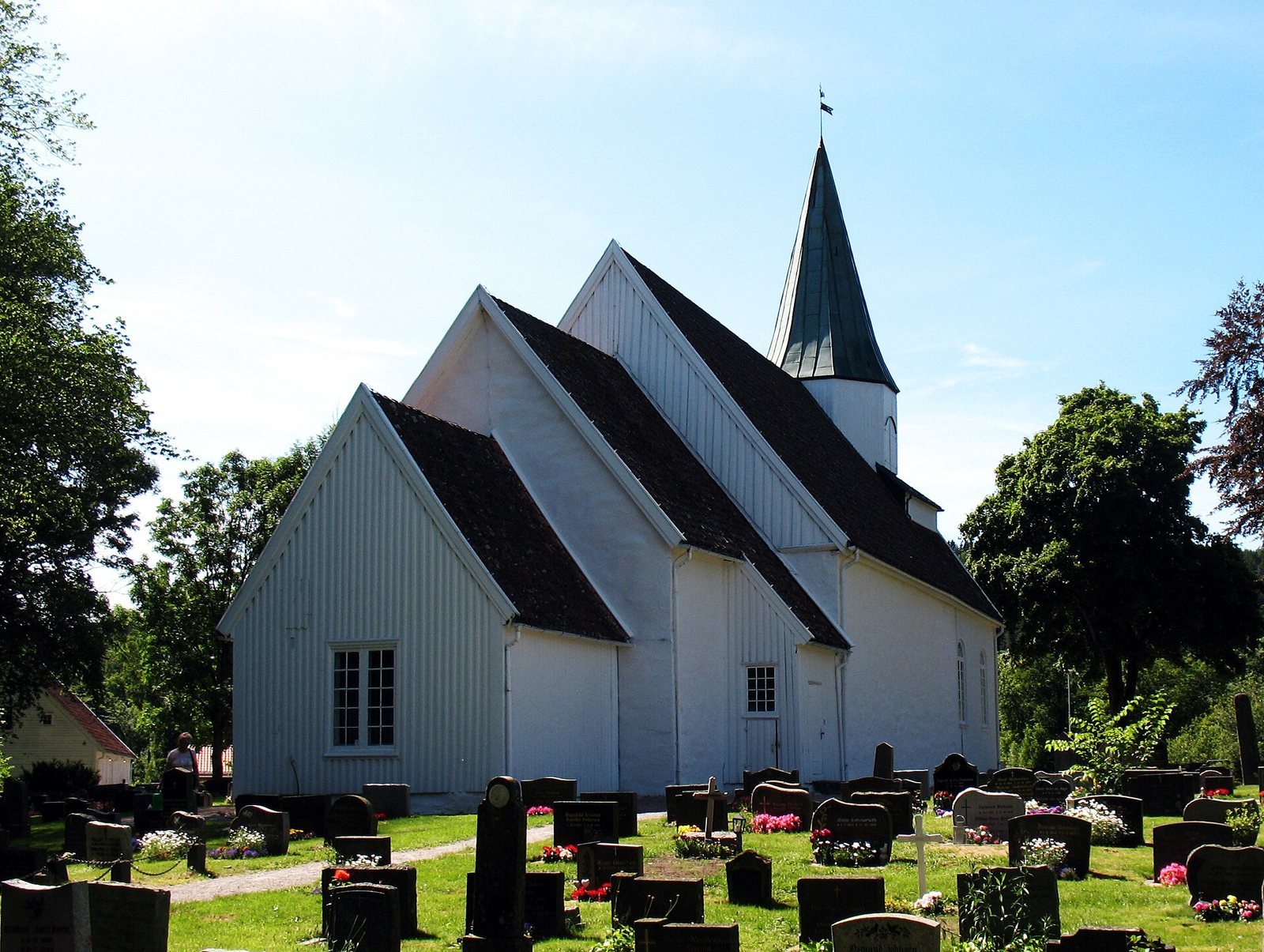
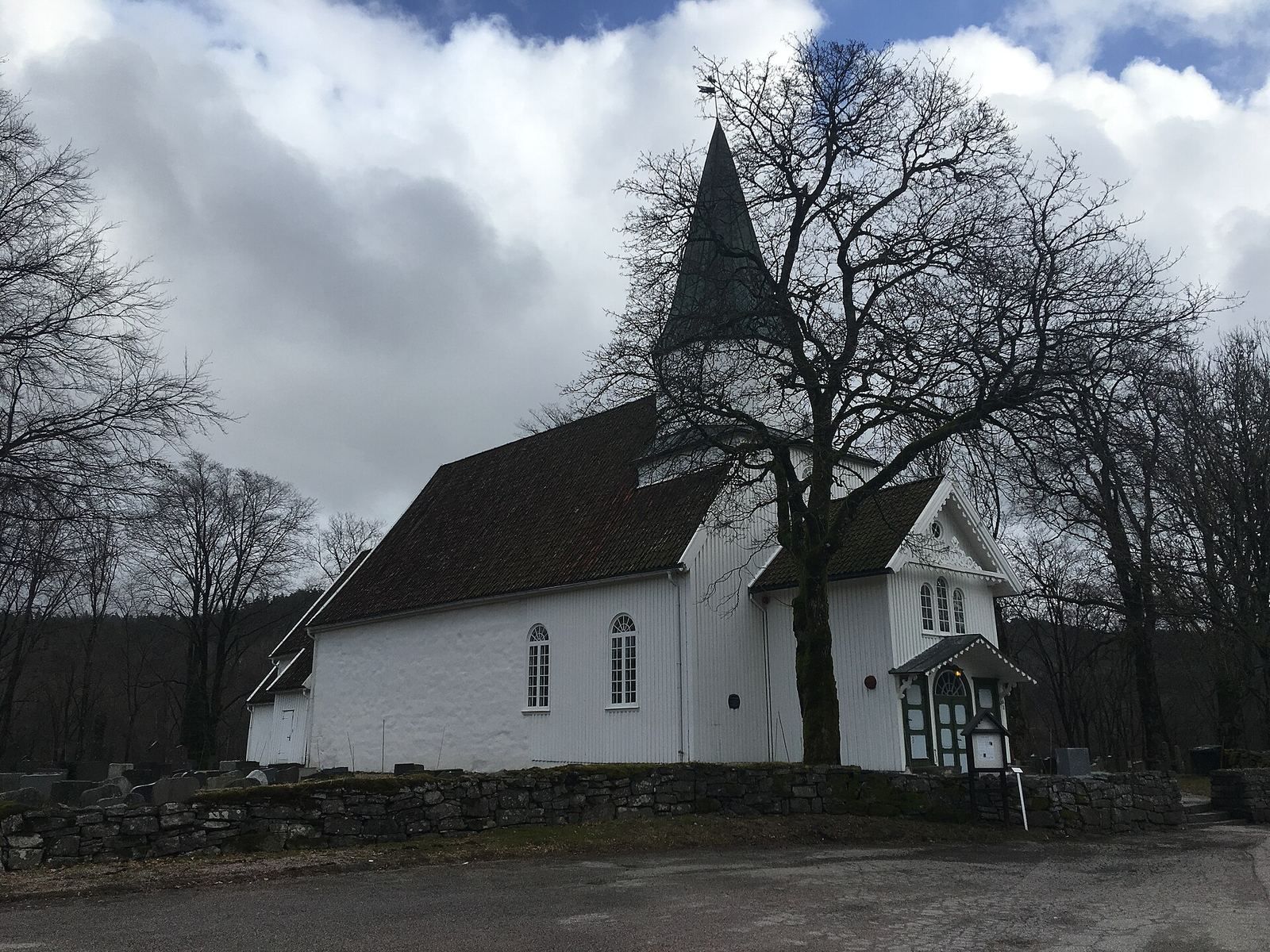
The church stands beside the Tovdalselva, just outside Ryen, and a cemetery surrounds it. Its white-stone long-church design arranges the worship space along an elongated axis. The original plan and later additions remain central to the building’s form, and the church can accommodate several hundred people.
Architecture
Original plan
The original structure had a narrow rectangular nave, the main worship space, and a smaller rectangular chancel, the area around the altar. The chancel ended in an apse, a recess at the end of the building. The church was built of stone in the Romanesque style.
Later additions and entrances
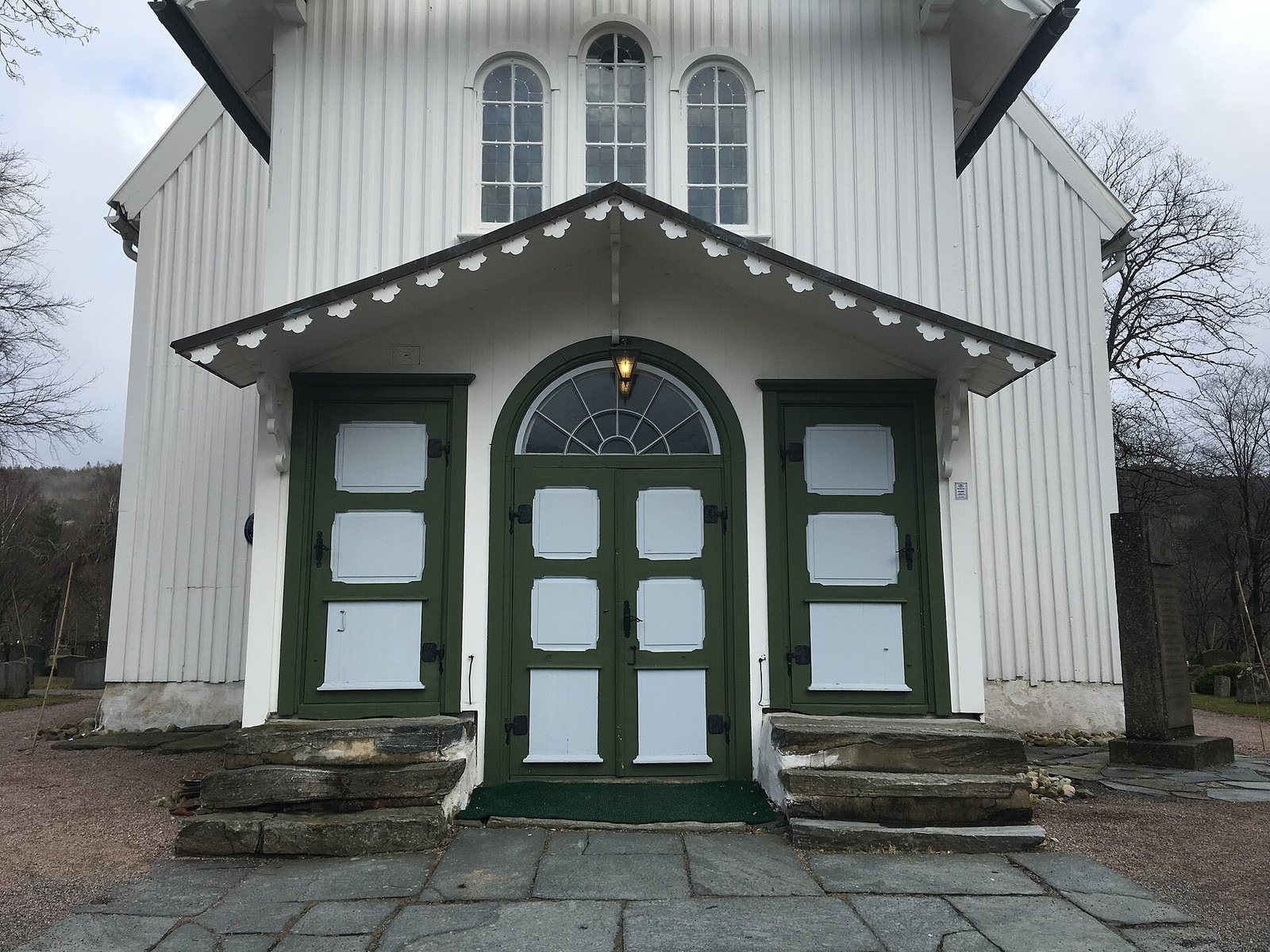
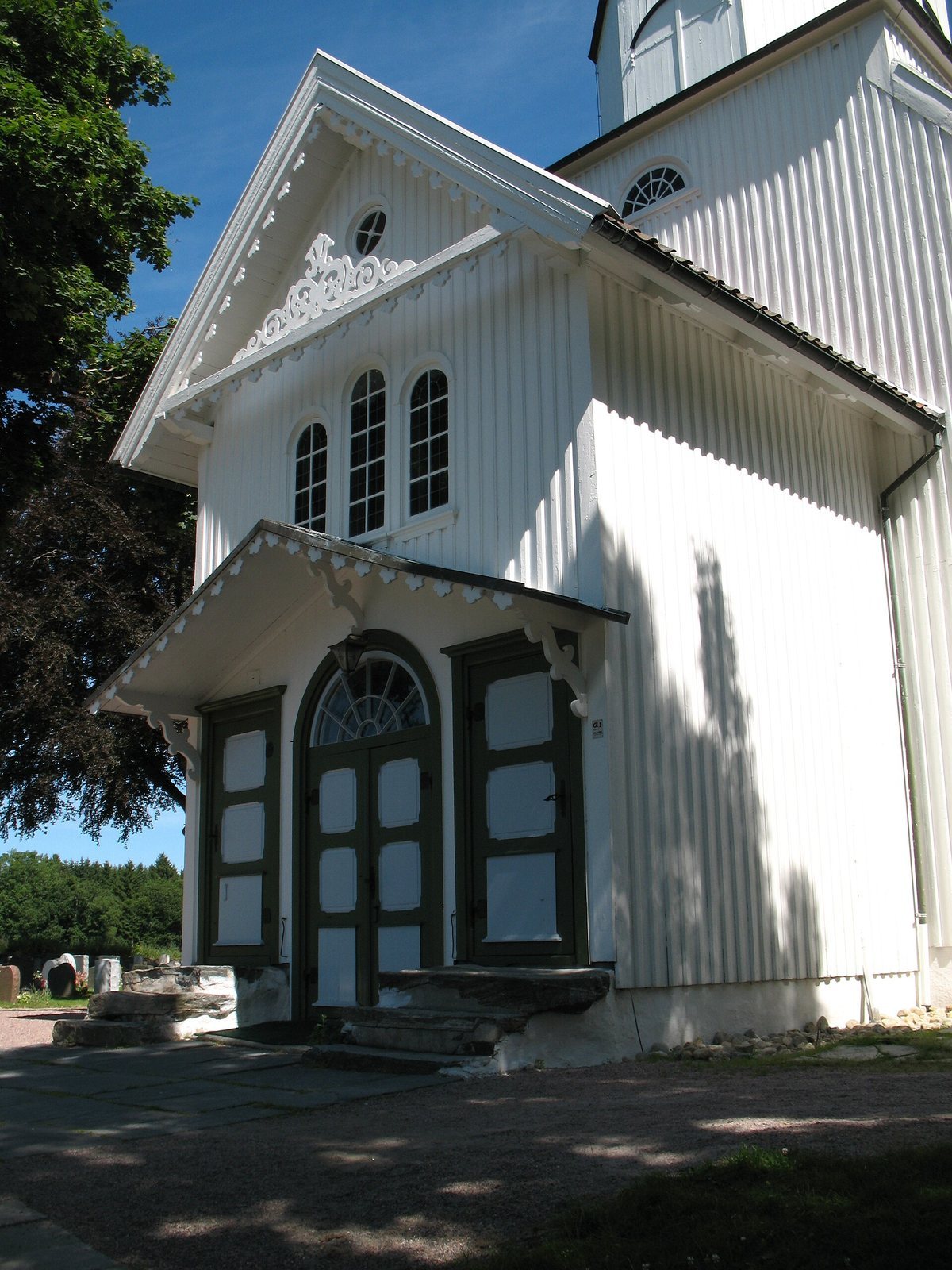
A sacristy, a room for preparing services and storing church furnishings, was added in the late 1820s. In 1831, a tower and main entrance were added, and the earlier entrance porch became part of the nave. A timber extension at the west end followed in 1867, enlarging the nave and providing a new entrance porch.
Interior furnishings
Fonts and religious images
A sandstone baptismal font dates to 1250–1350, while a wooden font was made in 1885. A Madonna figure, depicting Mary, the mother of Jesus, is believed to date to the 13th century.
Altarpiece and pulpit
The altarpiece, made around 1650 by Gottfried Hendtzschel, a German-born painter and woodcarver active in Norway, is in the Baroque style, a later European style associated with elaborate ornament and dramatic composition. It depicts the Last Supper, Jesus’ final meal with his disciples, and the Ascension, the Christian belief that the risen Jesus entered heaven. The pulpit is in a late Gothic style, a medieval artistic style. An altar cloth dates to 1930.
Bells
The church has two bells, one dating to 1876 and the other recast in 1928. The newer bell bears an inscription stating that Hans Stallemo cast it in 1790 and O.O. Nauen recast it in 1928. A reference from 1620 probably describes two bells, though damage to the smaller left only the larger in use. From 1680, the church had two bells, which were recast several times.
Other furnishings and organ
The church’s silver furnishings include a chalice dated 1704, a communion plate dated 1781, a communion bowl, and two candlesticks dated 1792. Two copper candlesticks date to 1620 and 1662, and a curtain from the 17th century also survives. An organ built in Denmark in 1983 was made by Bruno Christensen og sønner, an organ-building firm.