Toddington Manor: A Gothic Revival Country House in Gloucestershire
Site at a Glance
- Rating
- 3.3
- Popularity
- Very Low
- Country
- United Kingdom
- Primary era
- Modern
- Eras represented
- Modern
- Civilizations
- British
- Site type
- Domestic
- Remains
- Elite Residence
On this page6 sections
History
Design and construction
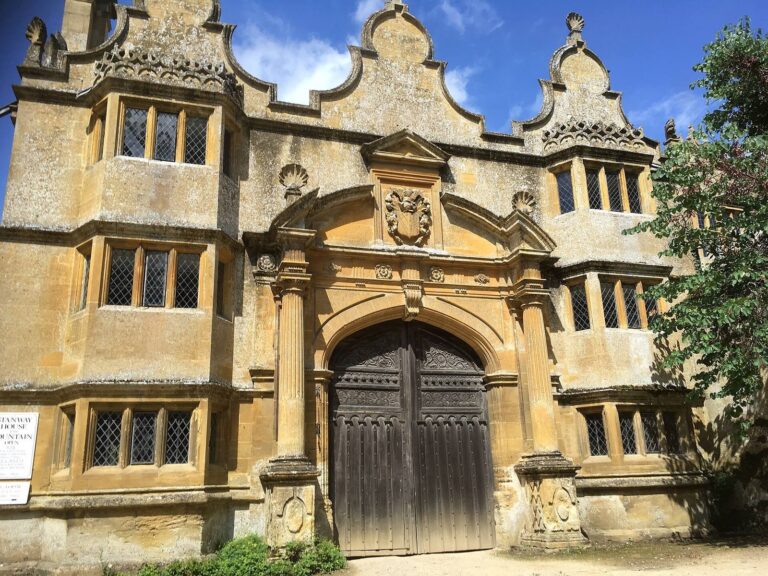
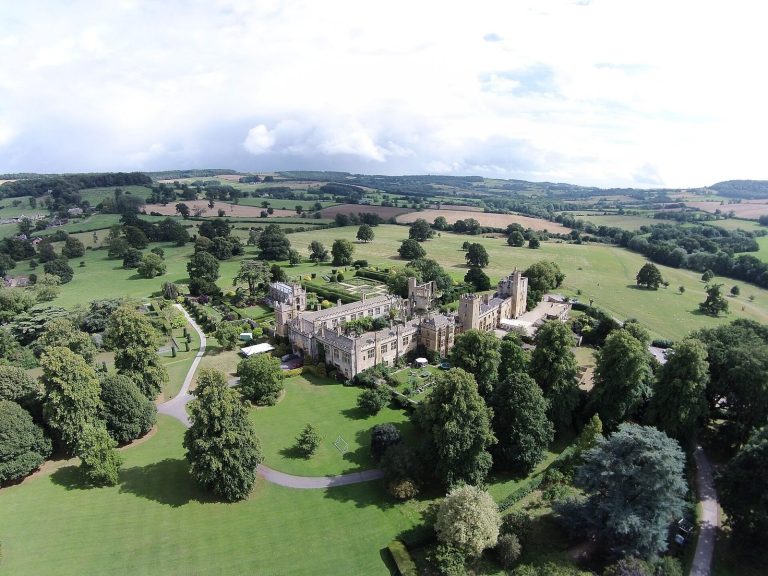
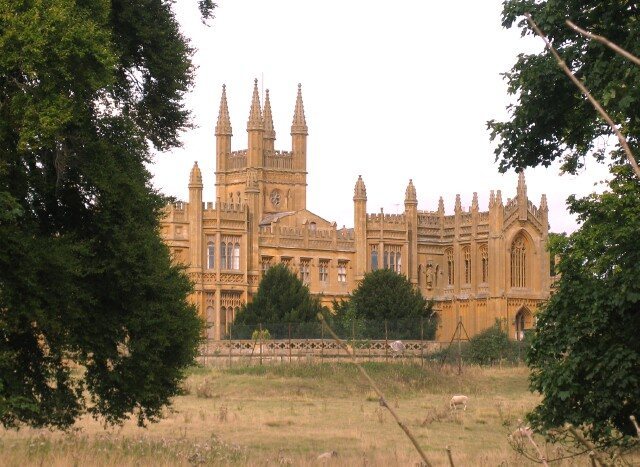
Toddington Manor is a Gothic Revival country house near the village of Toddington in Gloucestershire, United Kingdom. Designed for his own use by Charles Hanbury-Tracy, 1st Baron Sudeley, it was built from 1819 to 1840. Gothic Revival was an architectural movement that renewed forms associated with medieval Gothic buildings. Toddington was among the earliest houses in this style.
Hanbury-Tracy, a British peer and architect, was influenced by John Carter, an antiquary, or scholar of historical remains and records, associated with the Society of Antiquaries. After fire damaged the Houses of Parliament in 1834, Hanbury-Tracy chaired the jury for the rebuilding-design competition. The winning architect, Charles Barry, adapted his proposal to the architectural taste exemplified at Toddington, giving the manor an indirect influence on British architecture. After the house was completed, antiquary John Britton published a volume on its architecture.
Family ownership and wartime use
Hanbury-Tracy’s family owned the manor until 1893, when Charles Hanbury-Tracy, 4th Baron Sudeley, and his wife Ada, a writer, had to sell it because of bankruptcy. Isabel Andrews was its last private owner. Her husband acquired the estate in 1901, and after Andrews died in 1935 the house stood empty until September 1939. The National Union of Teachers (NUT), a teachers’ organization, bought it after leaving London to avoid air raids. Its staff lived and worked at the manor.
Following the 1940 Dunkirk evacuation, a tented camp in the grounds temporarily housed men evacuated from the beaches. British Army units later followed. In 1942 the Pioneer Corps, an Army unit responsible for pioneer and labour duties, built a more permanent camp of huts. United States Army units occupied the camp from October. In August 1943 the NUT returned to London, and the United States Army also took over the house.
Educational use and later ownership
After the war, the Congregation of Christian Brothers, a Catholic teaching order, rented the property. The NUT sold it to the congregation in 1948, and the brothers operated a teacher-training college there until 1971. Businessman David Wickens bought the manor in 1972 and used it as a private residence.
In late 1975 Mohammad Ali Kaveh bought the property and converted it into a boarding school for overseas students. Toddington Manor College opened in 1976. Kaveh, formerly a journalist for the Tehran newspaper Kayhan, sold the college in 1979 to an international charitable educational foundation and moved his school to the former Abbey School site at Malvern. It continued there as Abbey College, Malvern.
The foundation reopened the manor in 1980 as Avicenna College, a boarding school for boys from Arab and Iranian families. Its director, Mehrdad Khonsari, had formerly served as a press attaché, a diplomatic staff member responsible for relations with the press, at the Iranian embassy in London. The college closed in early 1985 after the foundation judged it financially unviable. Its remaining students transferred to other schools, and its staff were dismissed.
Recent ownership and protection
Planning permission to turn the manor into a hotel was refused in 2004 after considerable local opposition. Artist Damien Hirst bought it in 2005, intending to restore it as his family home and as a gallery for his work and collection. By 2025, restoration had been stalled for more than 20 years. The manor is Grade I listed, England’s highest category of listed-building protection, and appears on Historic England’s Heritage at Risk Register, which identifies historic places considered at risk.
Remains
The manor is a Gothic Revival country house, drawing on forms associated with medieval Gothic architecture. A severe fire damaged the building in 1965. After Wickens acquired it in 1972, he undertook extensive renovation. Another fire broke out in November 1974 while he was inside; he escaped, and the damage was estimated at £50,000.