The Theatre of Chersonesus: An Ancient Greek Theatre in Crimea
Site at a Glance
- Popularity
- Medium
- Country
- Russia
- Primary era
- Classical
- Eras represented
- Classical
- Civilizations
- Ancient Greek
- Site type
- Entertainment
- Remains
- Theatre
On this page7 sections
History
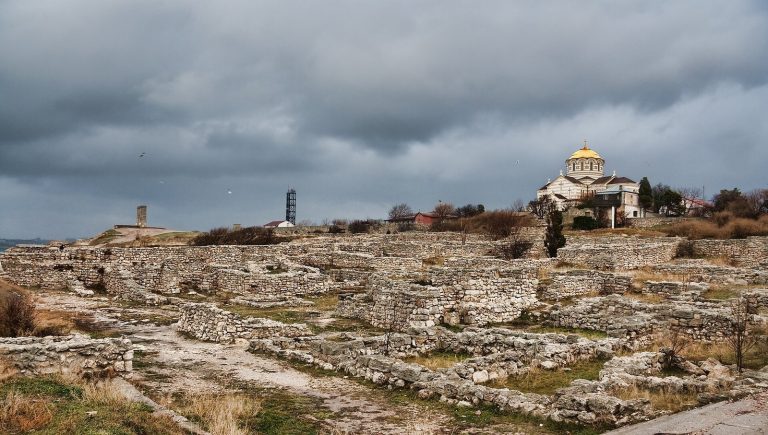
The Theatre of Chersonesus is an ancient Greek theatre at Chersonesus in Crimea, Russia, near present-day Sevastopol. Greeks built it in the first half of the third century BC, during the Hellenistic period. It served as a place for public performances and civic gatherings.
Greek drama and civic festivals
Theatre performances formed part of a multi-day festival honoring Dionysus, the Greek god associated with wine and theatre. Before dramatic contests, citizens gathered for a ceremony recognizing people who had served the city exceptionally. The repertory included works by established Greek playwrights and local authors, with particular interest in dramas set around the northern Black Sea. Euripides’ Iphigenia in Tauris is the only named play from this repertory that survives. Sophocles’ Scythians and Antiphanes’ Scythians and Tauri are known by name but are lost.
A Roman-period inscription records musical contests and names comic playwrights among the participants, indicating that the venue also hosted concerts. Singing and dancing took place in the theatre and the city’s public squares on a day commemorating the father of a local heroine.
Roman spectacles and decline
In the first century AD, a Roman military detachment was stationed at Chersonesus. Greek dramatic and musical performances continued in part, but Roman entertainments, including gladiatorial contests, also took place. As Christianity spread and pagan practices declined, the theatre fell out of use by late antiquity. It was later quarried for building stone and used for a time as a dump; its stones were reused in other structures.
Churches and later history
Churches and residential buildings were subsequently built on the theatre site. A church erected directly on an earlier theatre wall in the eighth or ninth century remained until Chersonesus was destroyed. Another church, built in the tenth or eleventh century and associated with a reliquary, was destroyed by fire in the fourteenth century.
The theatre is identified as the only ancient theatre in Crimea and the former Soviet Union. Its ruins form part of the Chersonesus archaeological site, a UNESCO World Heritage property, and the theatre is designated a cultural heritage site of federal significance in Russia.
Remains
Layout and performance area
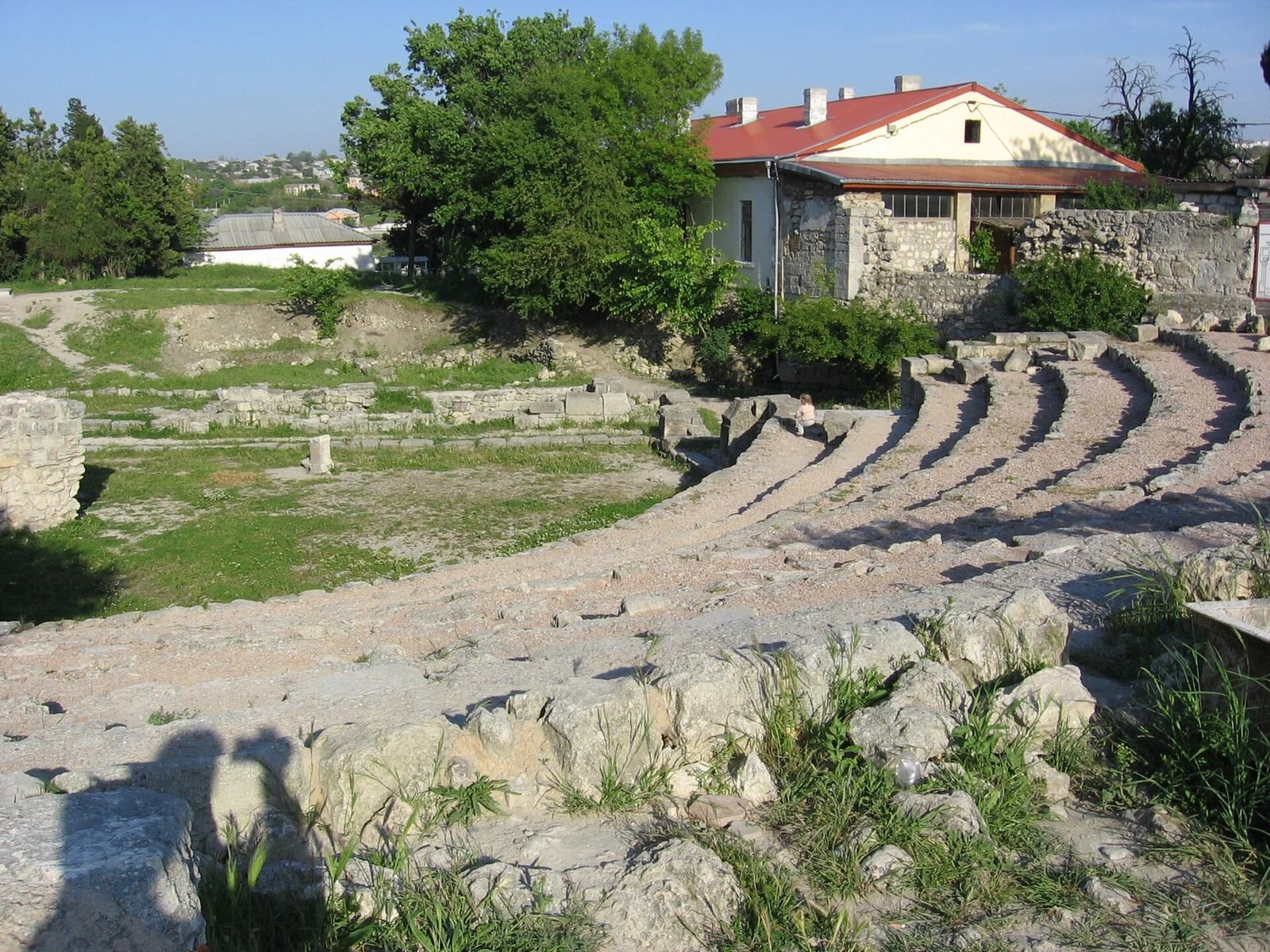
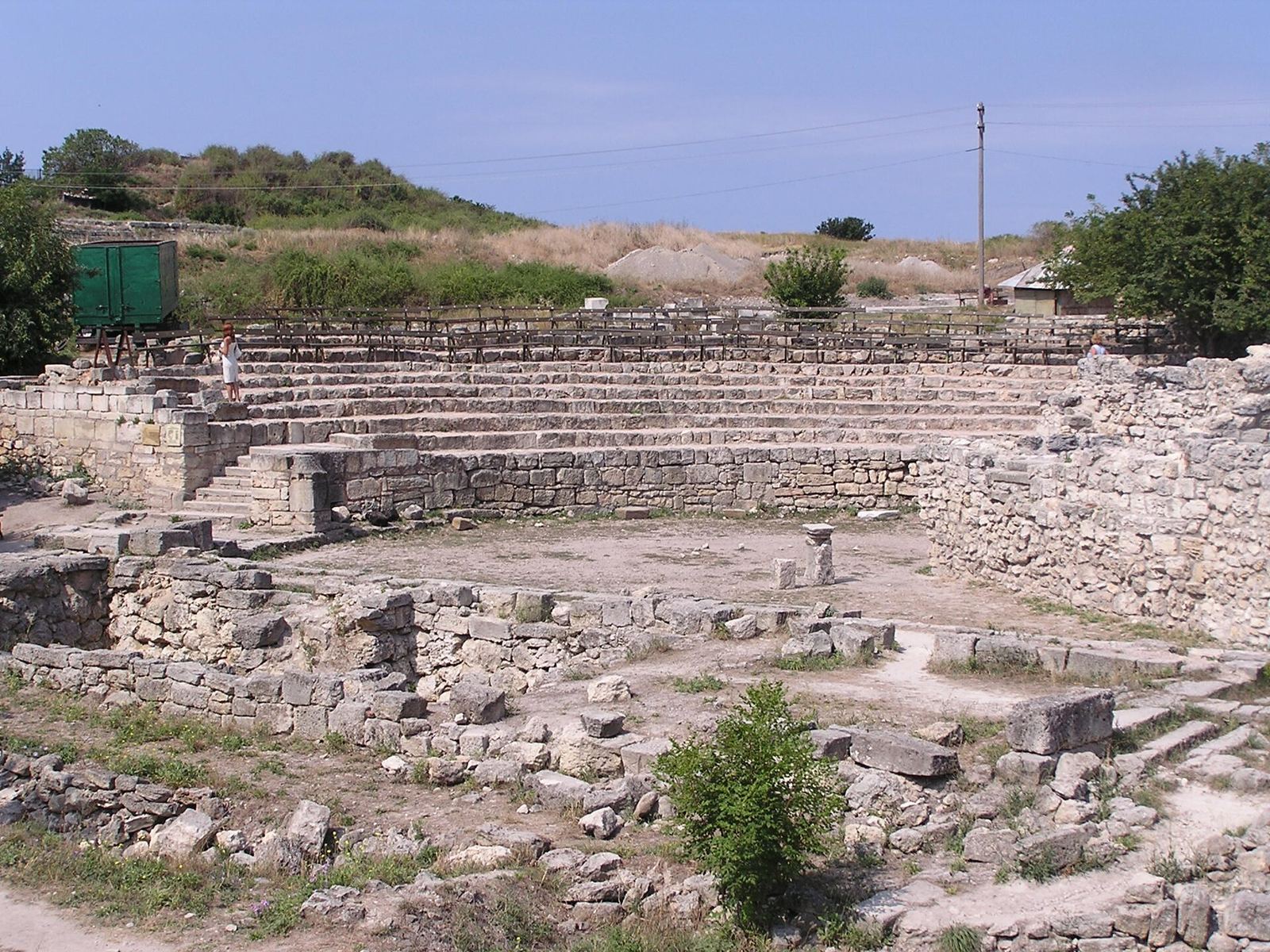
The theatre stood on a natural slope south of the agora, the city’s central public space, and its main street. Its semicircular auditorium faced southeast around a circular orchestra, the central performance area. Eight stairways divided the seating into seven sections, each with 12 rows. Estimates of capacity range from about 1,500 to 2,000 people to as many as 3,200; the lower estimate would have accommodated nearly all the city’s free male citizens. The orchestra measured about 23 metres across and contained an altar. In front of the three-space stage building, the proscenium, or raised stage platform, stood 1.5 to 2 metres above the orchestra.
Church and archaeological finds
A church with a cross-shaped plan occupied the northern part of the auditorium. A small silver reliquary, a container for sacred remains, was found concealed beneath a church altar. Dated to the sixth century, it held the relics of an unidentified saint wrapped in silk. A fragment of a Chersonese relief depicts the final moment of a contest between two gladiators.