The Sailors’ Chapel: A Catholic Chapel in Triana, Seville
Site at a Glance
- Rating
- 4.8
- Popularity
- High
- Country
- Spain
- Primary era
- Early Modern
- Eras represented
- Early Modern, Modern
- Civilizations
- Spanish
- Site type
- Religious
- Remains
- Chapel
On this page12 sections
History
Origins and construction
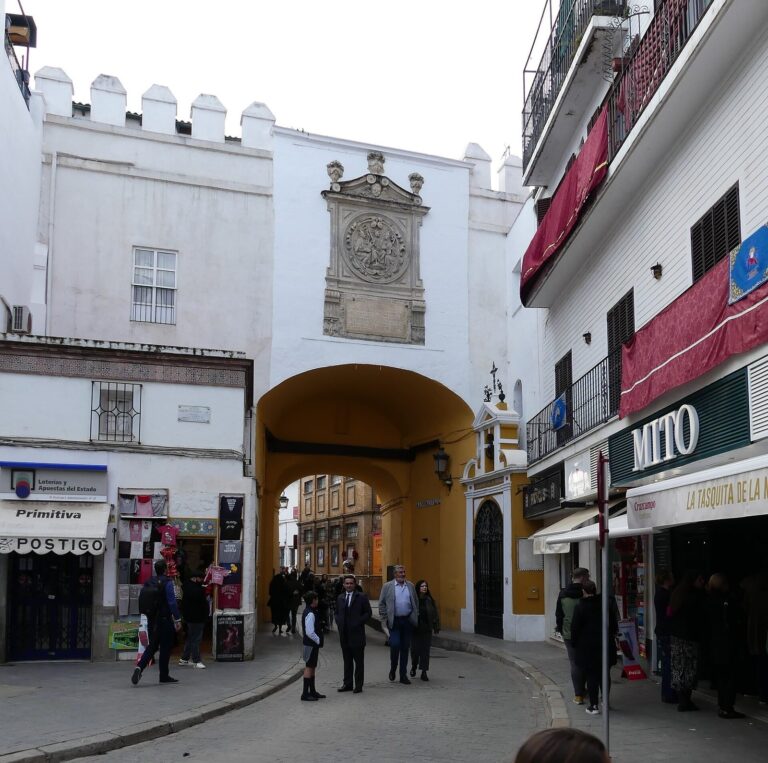
The Sailors’ Chapel is a Catholic chapel in Triana, Seville, Spain, dedicated to Our Lady of Hope and serving as the seat of the Esperanza de Triana confraternity, a Catholic devotional association. The confraternity was founded at Santa Ana church in 1418. The chapel belongs to the Archdiocese of Seville, a Catholic district overseen by an archbishop.
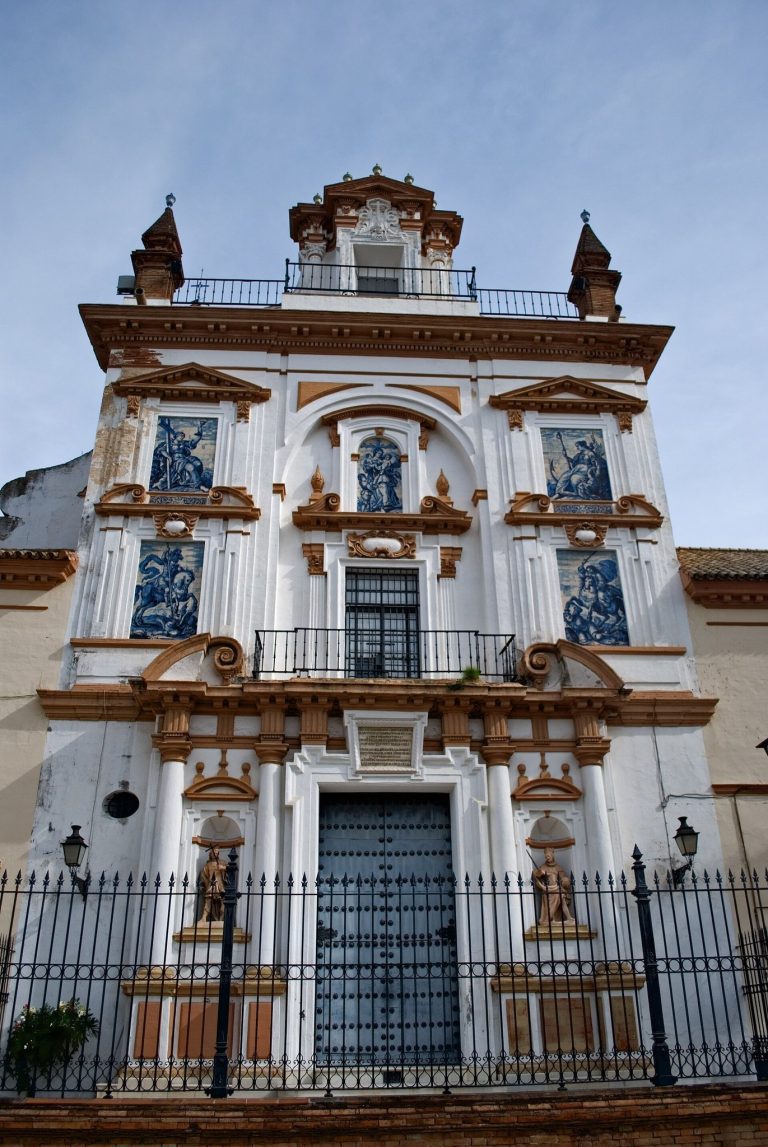
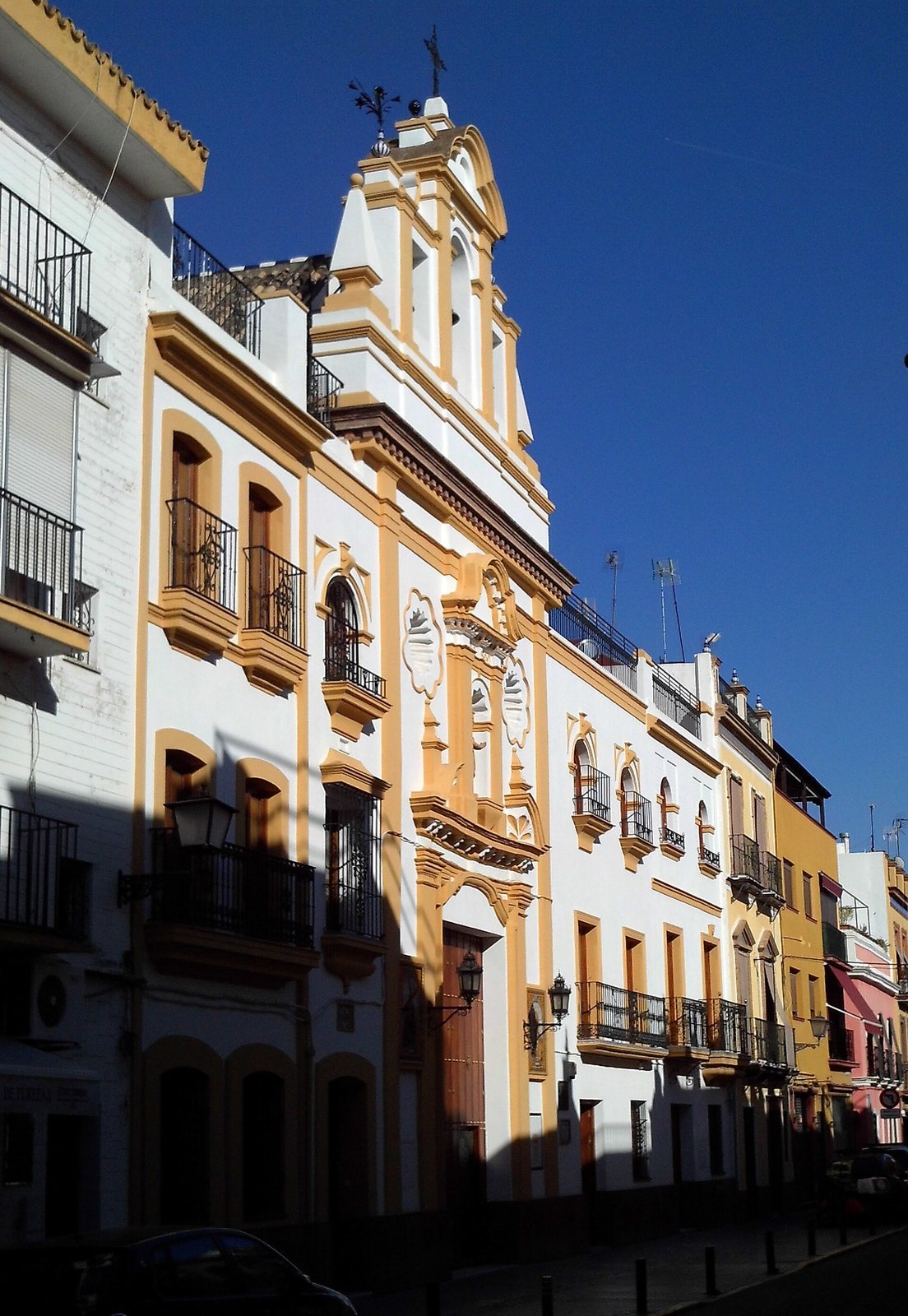
In 1758, the confraternity acquired use of a plot with two houses belonging to a vacant chaplaincy of Santa Ana parish, founded by Sebastián Bernal. The agreement required an annual payment of three reales, and the confraternity undertook to spend 10,000 reales on a chapel. Construction was completed in 1815. The building is described as Baroque and Sevillian in style.
Confiscation and changing uses
After the Liberal Revolution of 1868, the Spanish uprising that ended Queen Isabella II’s reign, the state confiscated the chapel. Its religious images were moved to the nearby Church of San Jacinto. In 1873, Francisco Augusto Bevan and Lewen Street Tugwell bought the building at public auction and converted it into an Anglican church. It later served as a theatre, cabaret, cinema, cork warehouse, and coal warehouse.
Carlos Jorge Welton Niño bought the chapel in 1917. On 8 October 1940, he sold it to the confraternity for a symbolic sum, returning the building to its religious association.
Return and renewal
Repairs began in 1959 under a project by Aurelio Gómez Millán. The chapel was blessed in 1962, and on Good Friday that year the confraternity concluded its penitential procession, a public Holy Week act of devotion, at its new seat.
In 1987, José Sebastián y Bandarán was buried in the chapel. He had served as the confraternity’s spiritual director and received its Gold Medal in 1967. An expansion began in 2010 after the confraternity bought adjoining properties. The comprehensive renovation, designed by José Ramón Rodríguez Gautier, included two new altarpieces and modern security systems for the religious images. Archbishop Juan José Asenjo Pelegrina blessed the chapel on 29 April 2010.
Remains
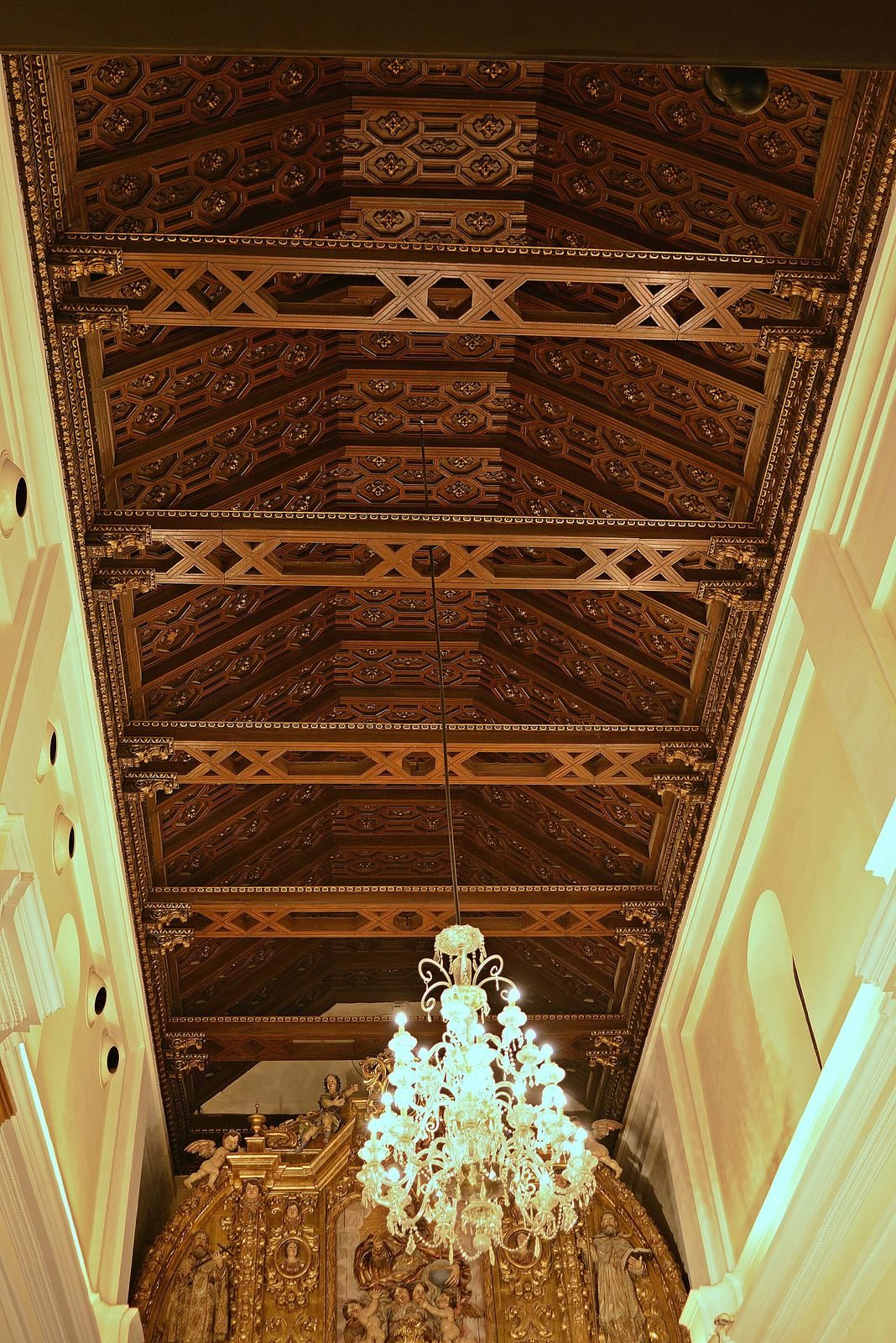
The chapel has three parallel, lengthwise naves, or main interior spaces, although its exterior presents a single structural section. The central nave retains the dimensions of the original chapel. Its ceiling is painted interlaced timber from Colegio Villasís, made in the Neo-Mudéjar revival style, which draws on forms associated with medieval Spanish architecture shaped by Islamic and Christian traditions.
Altarpieces and devotional images
Main altarpiece
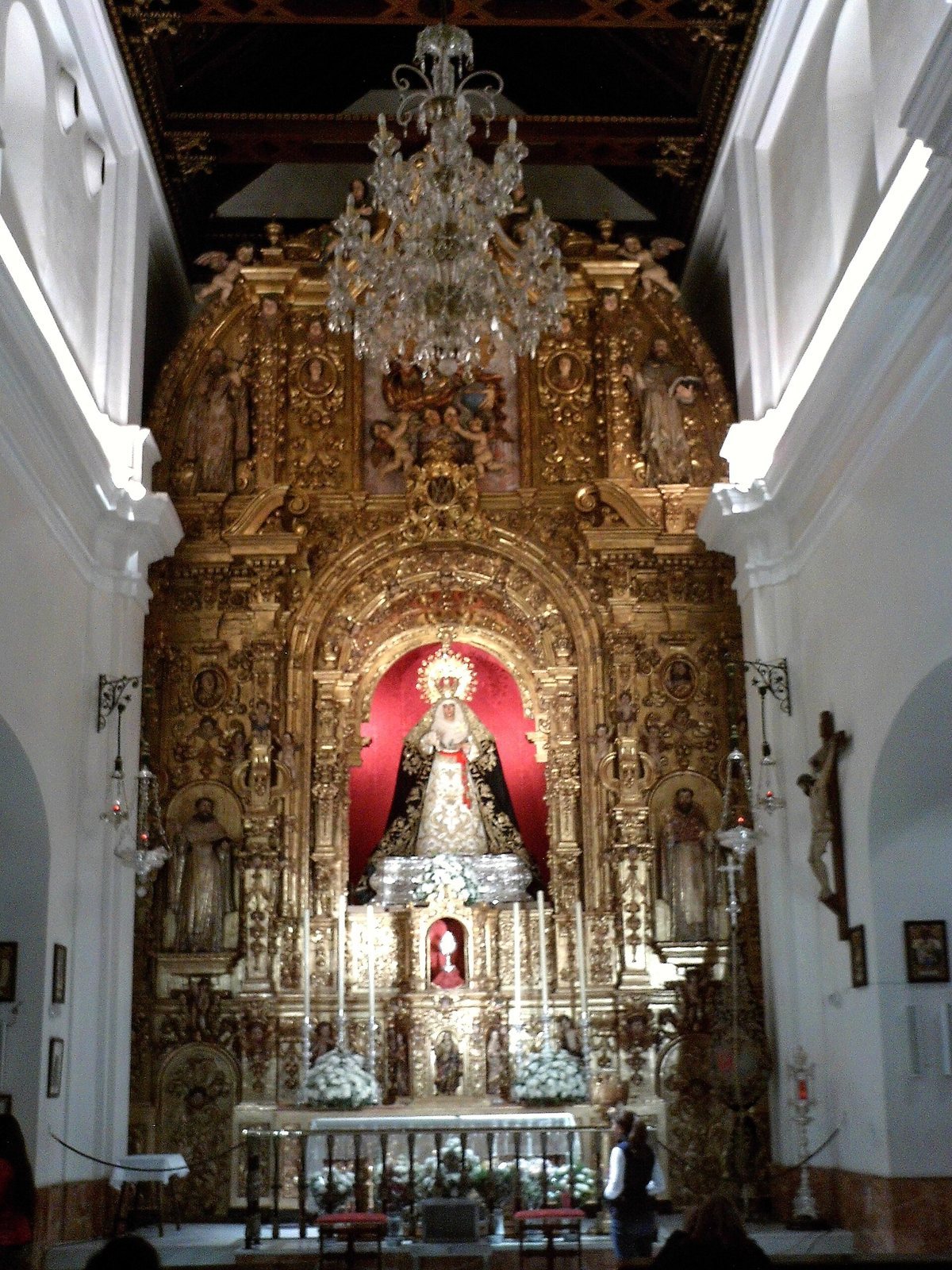
The Baroque main altarpiece came from the Merced convent in Osuna and was made around 1775. Its two tiers are arranged in three vertical sections, separated by tapering supports and decorated with foliage. A statue of Our Lady of Hope, attributed to Gabriel de Astorga and dated to 1816, occupies the center. A relief of God the Father appears above, while a figure of Christ the Redeemer is set on the tabernacle door. Other images in the chapel include Our Lady of Guidance, a Holy Cross, a Virgin shown in her Sorrowful Mysteries, and a small sculpture of Jesus bound to a column.
Tabernacle chapel and the Christ of the Three Falls
A smaller nave on the Gospel side contains the Tabernacle chapel. Gospel and Epistle are traditional labels for the two sides of a church. Its eighteenth-century altarpiece is described as Neo-Baroque woodwork and attributed to the sculptor Blas de Santamaría. It holds a dressed statue of the Christ of the Three Falls, attributed to Marcos Cabrera and dated to the first third of the seventeenth century. The figure shows Jesus during one of his falls on the way to Calvary, with the cross beside him. The side niches contain an eighteenth-century statue of Saint Elmo, patron of sailors, and a nineteenth-century statue of Saint Anthony of Padua.
Epistle-side altarpieces
At the end of another nave, on the Epistle side, an altarpiece dedicated to Saint John the Evangelist includes a statue by Luis Álvarez Duarte. This was assembled from surplus pieces of the altarpiece for the Christ of the Three Falls. Two further altarpieces on this side are dedicated to the Souls in Purgatory and Jesus of Humility and Patience. The former includes a 1964 painting by José Antonio Rodríguez showing the souls undergoing purification after death, with the Virgin of Carmel holding the infant Jesus. The Virgin of Carmel is a title for Mary and a patron of sailors. The altarpiece of Jesus of Humility and Patience is an eighteenth-century work.
Façade images
Niche above the portico
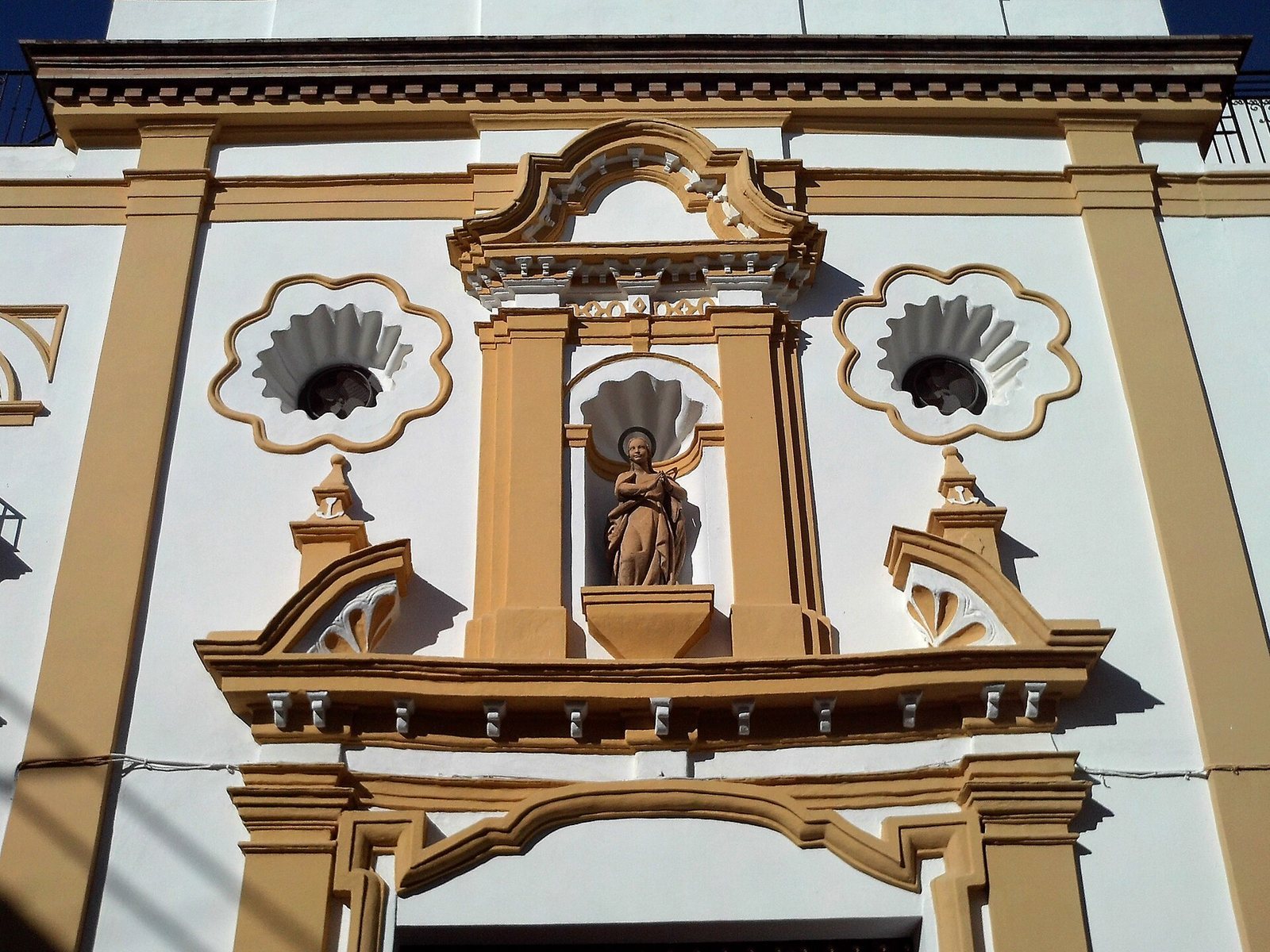
A niche above the portico holds a terracotta statue of the Immaculate Conception, made by Antonio Illanes Rodríguez in 1962. In Catholic teaching, the Immaculate Conception refers to Mary’s conception without original sin.
Ceramic tile images
A ceramic tile image of Our Lady of Hope, made by the El Carmen factory in the 1940s, was installed on the chapel’s right side in December 2012. It had previously been at the Casa de los Artistas on Calle Covadonga. A tile image of the Christ of the Three Falls, made by Emilio Sánchez Palacios, was placed on the left side of the façade and blessed on 31 May 2013. Its frame resembles that of the Our Lady of Hope tile.