The Bass and Little Bass: A Motte-and-Bailey Castle near Inverurie
Site at a Glance
- Popularity
- Medium
- Country
- United Kingdom
- Primary era
- Medieval
- Eras represented
- Medieval
- Civilizations
- Kingdom of Scotland
- Site type
- Military
- Remains
- Castle
On this page10 sections
History
The Bass and Little Bass are the earthwork remains of a motte-and-bailey castle, a fortification with a raised mound and adjoining enclosed area, near Inverurie in the United Kingdom.
Castle and administration
During the 12th century, the natural hill of the Bass was reshaped into a motte. In 1100, the Earls of Garioch, high-ranking nobles, erected a timber tower and palisade on it. The castle served as the administrative centre of the Garioch, a historic district in Aberdeenshire, during the 12th and 13th centuries. Its hereditary constables, officers whose castle-related positions passed through inheritance, belonged to the De Lesselyn (Leslie) family.
Military use in 1308
In 1308, Robert the Bruce, king of Scots, used the castle as a base before defeating the Earl of Buchan at the first Battle of Inverurie, also called the Battle of Barra. The fighting took place northeast of Inverurie, near the Hills of Barra.
Cemetery and symbol stones
The surrounding area was later converted into a cemetery. Four Pictish symbol stones, carved stones bearing designs associated with the Picts, an early medieval people of northern Britain, were first built into the walls of an old church. After the church was demolished, the stones were incorporated into the cemetery wall. They are believed to have come from the surrounding area. The castle is protected as a Scheduled Monument, a legally protected archaeological or historic site in Scotland; the four stones have separate Scheduled Monument protection.
Remains
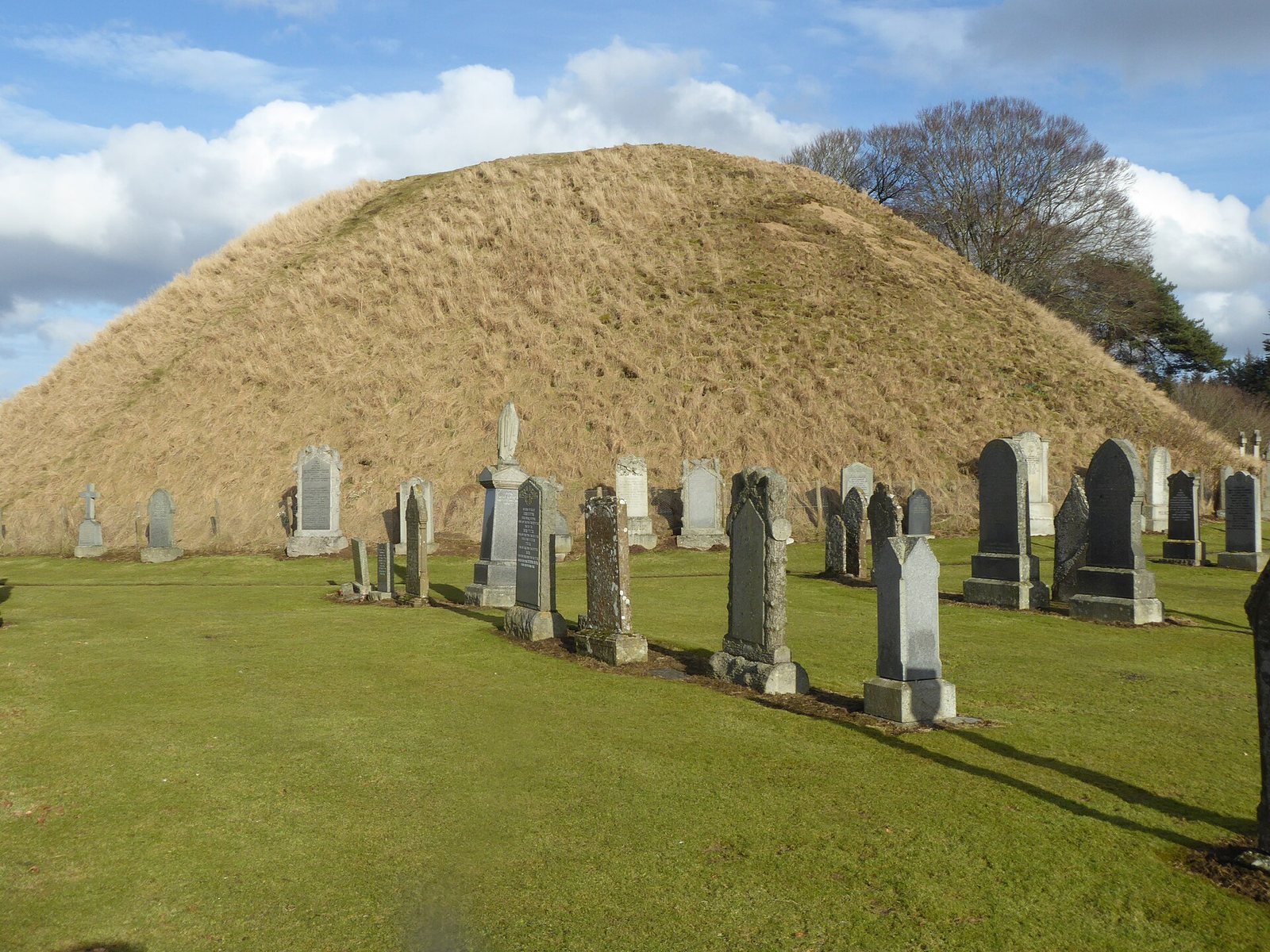
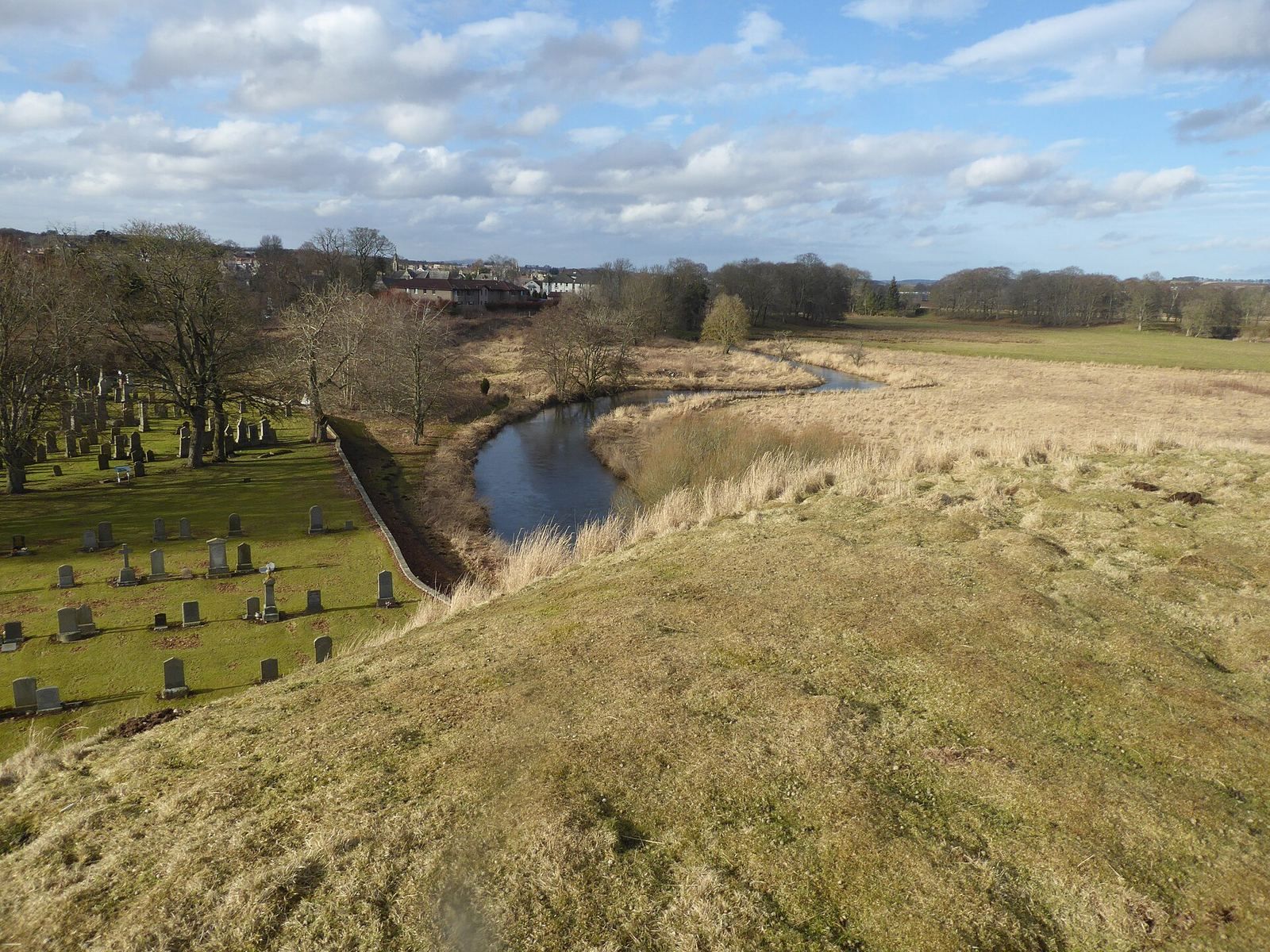
The castle’s surviving layout consists of the Bass, a modified natural mound, and Little Bass, the former bailey to its east. The earthworks lie within Inverurie Cemetery, south of Inverurie, between the River Urie and the B993.
Castle earthworks
The Bass
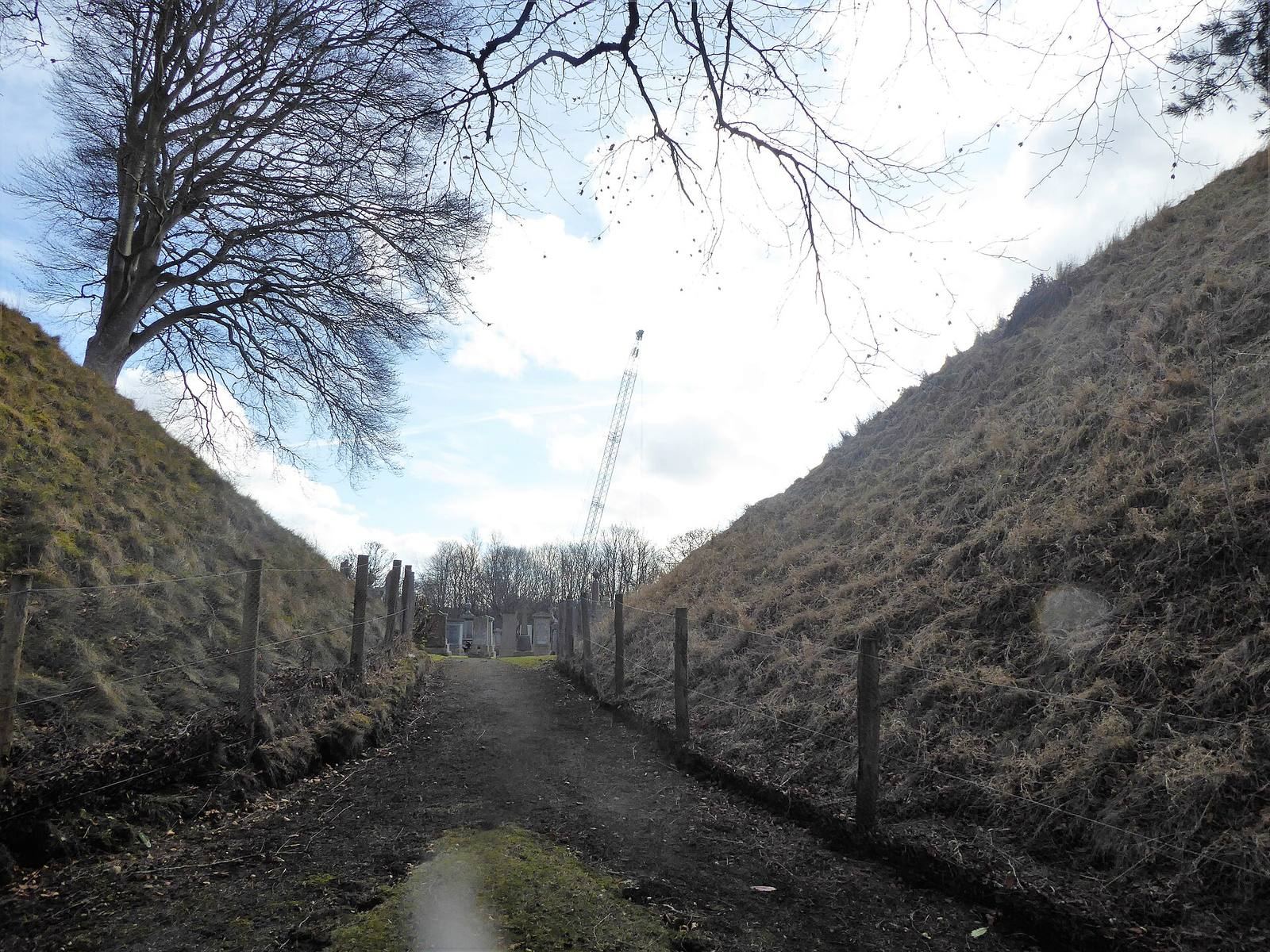
The sides of the Bass were cut back and a ditch dug around it. The mound rises approximately 12–15 metres, with a summit platform about 18–20 metres across. A timber tower and palisade formerly stood on the summit.
Little Bass
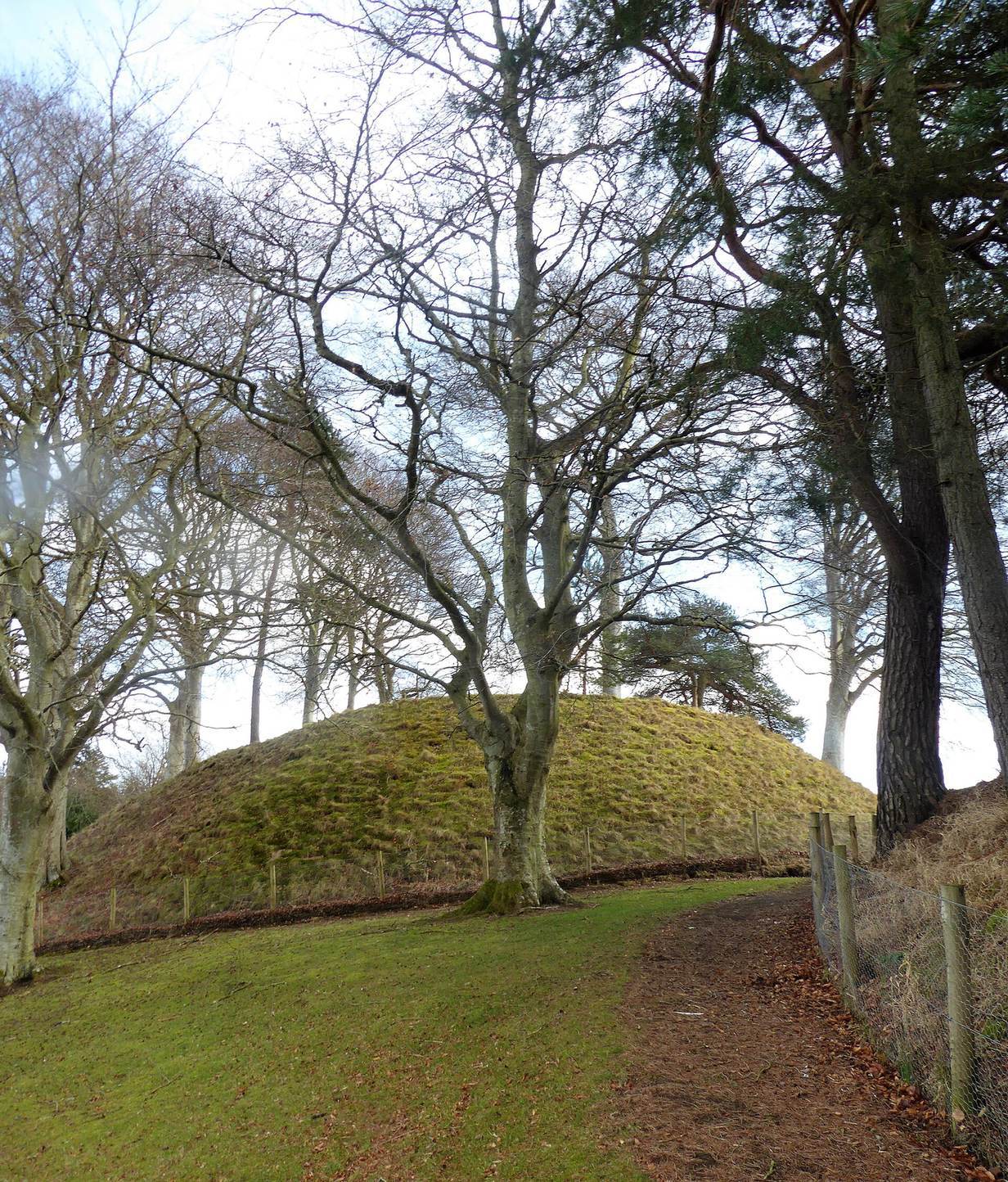
The Little Bass is an oval mound measuring approximately 30 metres east to west and 23 metres across, and about 5 metres high. It formed the castle’s bailey.
Archaeological finds
Nineteenth-century excavations uncovered remains of an oak gangway on the motte. Medieval pottery from the surrounding ditch included fragments of a green-glazed 14th-century jug decorated with a mask. Other finds from the area include stone flakes and a club.
Pictish symbol stones
Four stones stand in a row in the cemetery. One bears a crescent and V-shaped rod above a disc and rectangle, together with a snake and Z-shaped rod above a double disc and another Z-shaped rod. A second has a disc and rectangle above an arch. A third shows a disc above a double disc and Z-shaped rod, while the fourth is decorated with a horse.