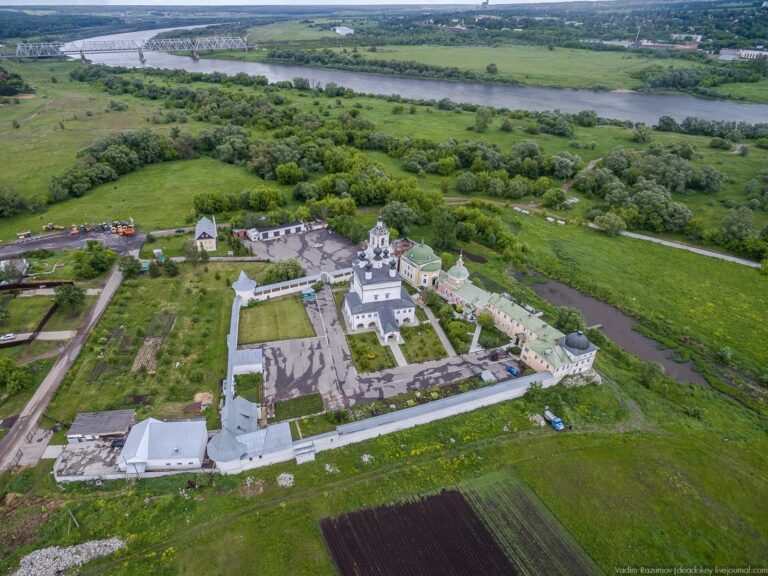
Teshilov Hillfort: The Fortified Site of a Medieval Oka River Town
Site at a Glance
- Popularity
- Medium
- Country
- Russia
- Primary era
- Medieval
- Eras represented
- Medieval, Early Modern
- Civilizations
- Unclassified
- Site type
- Military
- Remains
- Fort
On this page10 sections
History
Teshilov Hillfort, on the right bank of the Oka River west of Pushchino in Russia, preserves the site of the medieval town of Teshilov, whose history extended approximately from the twelfth to the sixteenth centuries. Its position beside a river crossing made it a frontier settlement exposed to changing military and political pressures.
Origins and first recorded mention
One interpretation traces Teshilov’s beginnings to a settlement of the Vyatichi, an East Slavic tribal group, and links the town’s name to the personal name Teshilo. Another proposes that princes of the Chernigov principality established it as a fortress to defend their northern Oka frontier, develop the local Vyatichi region, and collect tribute.
The town first appears in written history in the twelfth century. The sixteenth-century Nikon Chronicle says that in 1147 Sviatoslav Olgovich, prince of Novgorod-Seversk, travelled through Teshilov from Koltesk toward Moscow. He was going to meet Yuri Dolgorukiy, prince of Suzdal, and they met on April 4. Sviatoslav had fled Kyiv after the Chernigov princes lost their struggle for its throne in 1146.
Under Ryazan and Moscow
Mongols burned Teshilov in 1237. The town later came under the Ryazan princes and served for about two centuries as a border settlement facing the neighboring Serpukhov princes. A list of Russian towns compiled in the late fourteenth century includes Teshilov.
In the fifteenth century, Vasily II of Moscow, known as Vasily the Blind, purchased the town. An agreement made in 1483 between Ivan III, grand prince of Moscow, and the prince of Ryazan refers to Teshilov among the lands acquired by Ivan’s father. Ivan IV, a later ruler of Russia, still listed it as a town in his testament of August 1572.
A changing frontier and later settlement
Teshilov’s strategic value rested partly on the threat of Crimean and Nogai raids and its location near an Oka crossing on a route from Crimea. Three crossings were associated with the area: the Teshilov ferry, Senkin Ford, and another near the mouth of the Nara by Serpukhov. As Serpukhov’s defenses grew stronger and the Russian state expanded south, Teshilov’s frontier role diminished.
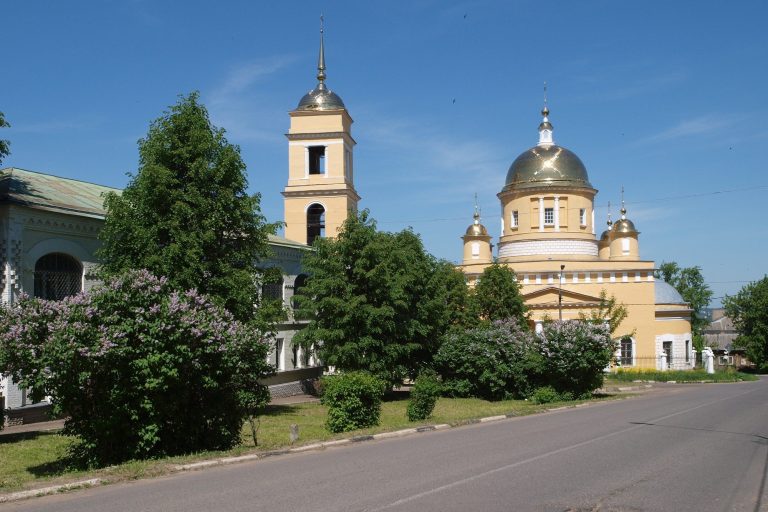
In 1591, Crimean Khan Kazy-Girey crossed the Oka at Teshilov during his campaign against Moscow, after breaking through the Great Abatis Line, a fortified defensive frontier of the Russian state. The construction of this line reflected the frontier’s southward shift and the town’s declining strategic importance. After Peter I’s administrative reorganization in 1708, Teshilov was listed as a village. It had a Church of the Transfiguration of the Savior, and the settlement also came to be called Spas-Teshilovo. Soviet archaeologist A. V. Artsikhovsky investigated the hillfort. It is designated a federal-level archaeological monument and a cultural heritage site of federal significance in Russia.
Remains
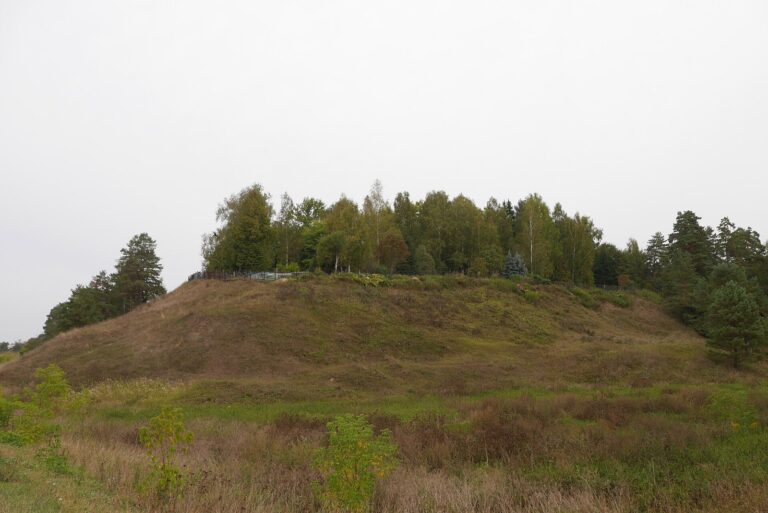
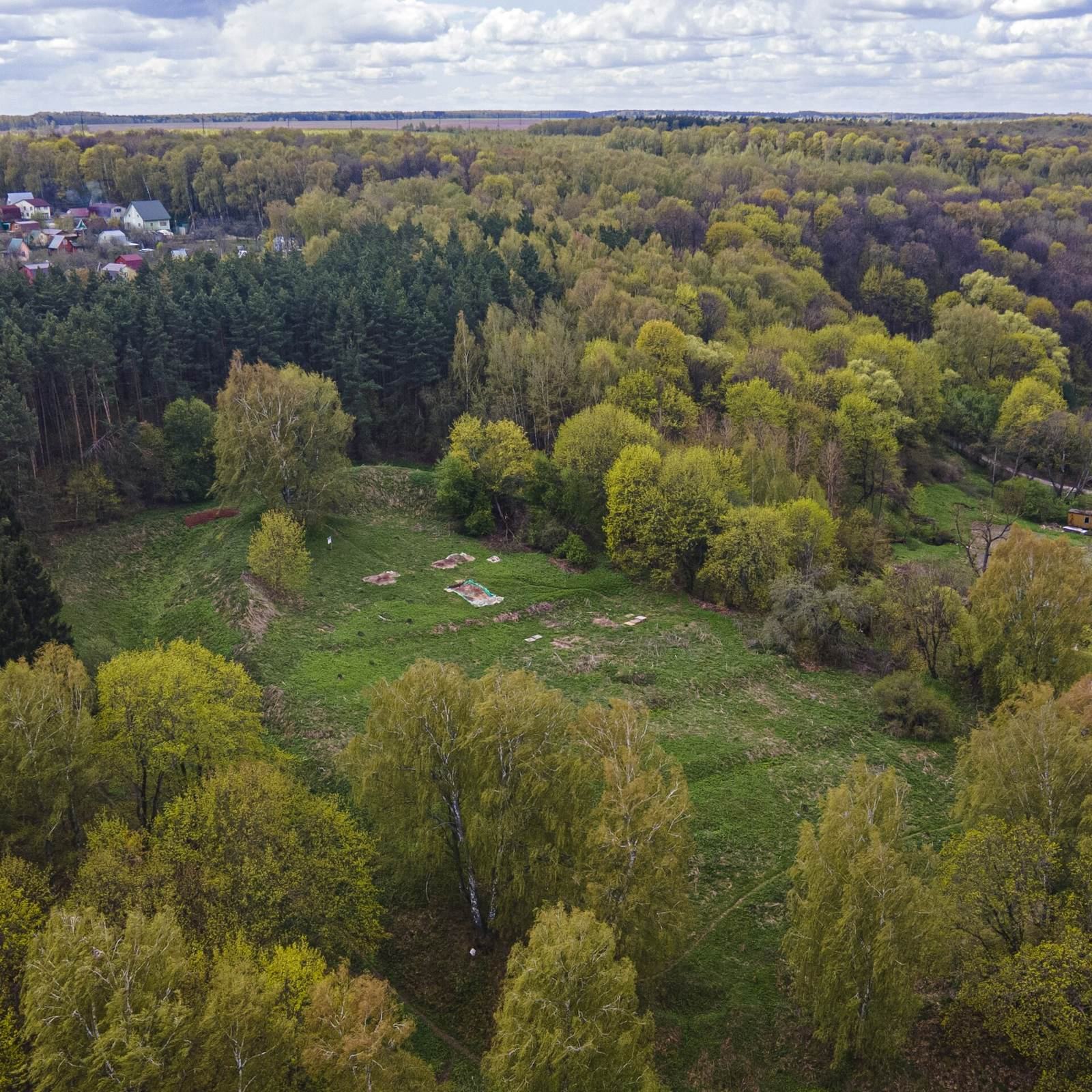
The surviving settlement has two main parts: an oval fortified enclosure and an unfortified area that extended west along the Oka. Earthworks, dwelling remains, a cemetery, and archaeological deposits provide evidence of its development.
Fortified enclosure and settlement
Rampart and ditch
The oval enclosure measures about 80 by 50 metres and is bounded by an earthen rampart and a ditch. On the side facing open ground, the rampart rises to about five metres. The defensive earthworks were rebuilt more than once, and part of the rampart survives.
Dwellings and cemetery
Excavations within the hillfort revealed remains of above-ground dwellings. An ancient cemetery lay in its southern part.
Western settlement
An unfortified settlement extended for about 200 metres west of the hillfort along the Oka, beyond the enclosed area.
Archaeological deposits and finds
Deposits formed through human activity span the twelfth to sixteenth centuries. Finds include pottery, arrowheads, fishing hooks, knives, fire-strikers, nails, and a chisel. Personal and household objects include bronze bracelets, seven-lobed rings worn at the temples, other rings, small bells, a gold bead, fragments of glass bracelets, beads, spindle whorls, bone handles, and combs. The spindle whorls were small weights used in hand spinning.